


Capacitance operated alarm to foil purse snatchers
#touch plate
#alarm circuit
#security
#timer
#capacitance
#purse snatcher deterrent
#disable switch
#delay circuit
#sensor
#personal safety
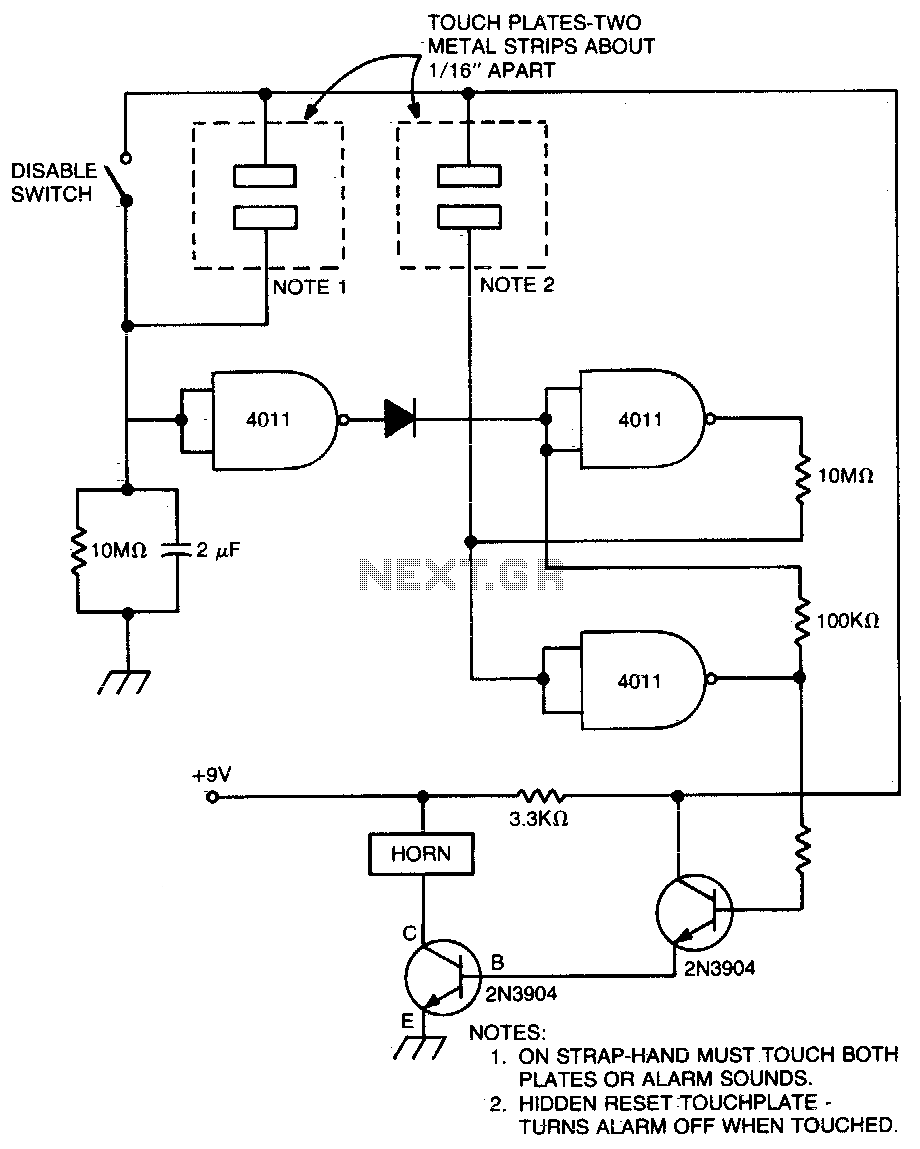
Description: The touch plates (1) must be pressed together to keep the alarm off. If they are not held together for approximately 30 seconds, the alarm will activate. The circuit can be disabled either by a switch or by touching the plates (2). The alarm is powered by a battery and utilizes a bicycle horn.
The described circuit functions as a simple touch-sensitive alarm system. It consists of two primary touch plates (1) that, when pressed together, create a closed circuit, thereby preventing the alarm from sounding. The alarm system is designed to remain inactive as long as the plates are in contact. However, should the user release the plates for a duration exceeding 30 seconds, the circuit will trigger the alarm, activating a battery-operated bicycle horn.
To enhance functionality, the circuit includes a switch that allows for manual disabling of the alarm system. This feature provides flexibility for the user, enabling them to deactivate the alarm without needing to maintain contact between the touch plates (2). The choice of a bicycle horn as the alarm sound source is advantageous due to its loudness and clear audibility, making it suitable for alerting individuals in various environments.
The power supply for this circuit is derived from a battery, ensuring portability and ease of installation. The design can be further optimized by incorporating a resistor-capacitor (RC) timing circuit to ensure a precise 30-second delay before the alarm activates, thereby preventing false alarms from brief interruptions. Additionally, the implementation of LED indicators could provide visual feedback regarding the status of the alarm system, indicating whether it is active, inactive, or in the process of timing out.
Overall, this circuit offers a straightforward yet effective solution for a touch-sensitive alarm system, suitable for various applications where security and alertness are paramount.As long as touch plates (1) are touched together, the alarm is off. If not held for about 30 seconds, the alarm goes off. The circuit can be disabled with switch or by touching the plates (2) The alarm is battery operated by a bicycle horn.
The described circuit functions as a simple touch-sensitive alarm system. It consists of two primary touch plates (1) that, when pressed together, create a closed circuit, thereby preventing the alarm from sounding. The alarm system is designed to remain inactive as long as the plates are in contact. However, should the user release the plates for a duration exceeding 30 seconds, the circuit will trigger the alarm, activating a battery-operated bicycle horn.
To enhance functionality, the circuit includes a switch that allows for manual disabling of the alarm system. This feature provides flexibility for the user, enabling them to deactivate the alarm without needing to maintain contact between the touch plates (2). The choice of a bicycle horn as the alarm sound source is advantageous due to its loudness and clear audibility, making it suitable for alerting individuals in various environments.
The power supply for this circuit is derived from a battery, ensuring portability and ease of installation. The design can be further optimized by incorporating a resistor-capacitor (RC) timing circuit to ensure a precise 30-second delay before the alarm activates, thereby preventing false alarms from brief interruptions. Additionally, the implementation of LED indicators could provide visual feedback regarding the status of the alarm system, indicating whether it is active, inactive, or in the process of timing out.
Overall, this circuit offers a straightforward yet effective solution for a touch-sensitive alarm system, suitable for various applications where security and alertness are paramount.As long as touch plates (1) are touched together, the alarm is off. If not held for about 30 seconds, the alarm goes off. The circuit can be disabled with switch or by touching the plates (2) The alarm is battery operated by a bicycle horn.
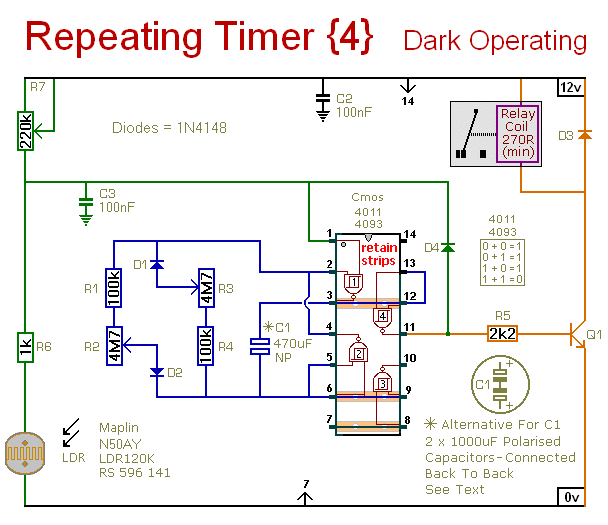
Repeating Timer 4
This circuit is the inverse of Repeating Timer No. 3. Its operation can be restricted to nighttime hours. The variable resistor (preset) allows selection of the darkness level at which the timer will activate.
The described circuit functions as a light-activated...
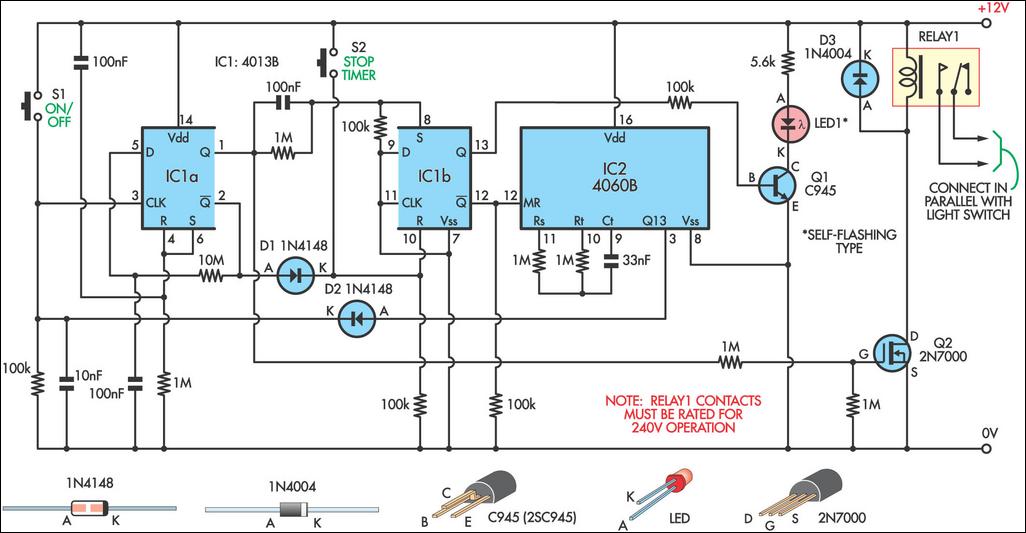
Switch Timer For Bathroom Light
This 9-minute timer switch can be utilized to control lighting in a toilet or bathroom. The timer is activated by pressing switch S1 and deactivated by pressing S1 again. If the timer is not manually turned off, the light will...
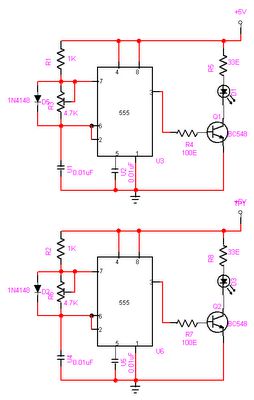
Automatic Room light Control With Bi Directional Visitor Counter
The objective of this project is to create a controller-based model that counts the number of individuals entering a specific room and activates the lighting accordingly. This is achieved through the use of sensors that detect the current number of...
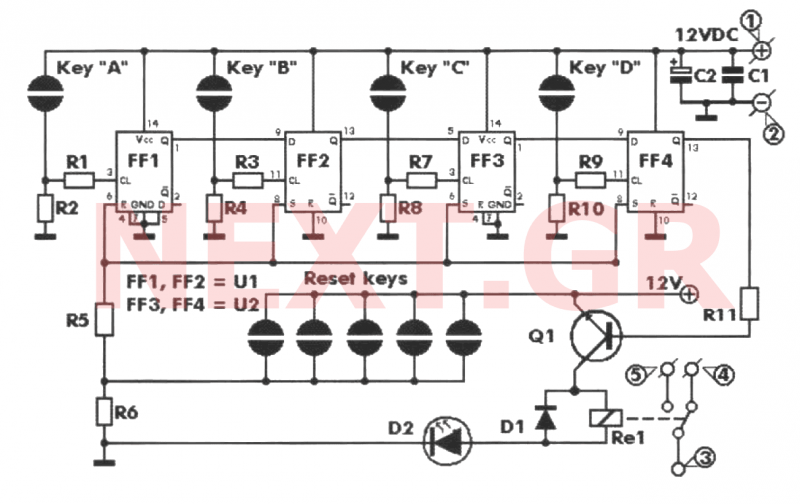
Key Code Combination High Security Door Lock
This project involves an electronic lock that supports numerous combinations, which can be easily modified. It unlocks only with the correct sequence of four consecutive numbers. A significant feature of this electronic lock is that the four numbers must be...
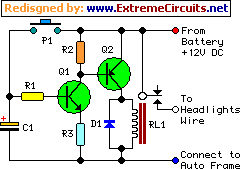
car headlights timer schematics
This device functions as a simple timer that keeps the vehicle's headlights on for approximately 1 minute and 30 seconds, allowing access to dark areas without the need to return and switch off the lights. Pressing switch P1 enables capacitor...
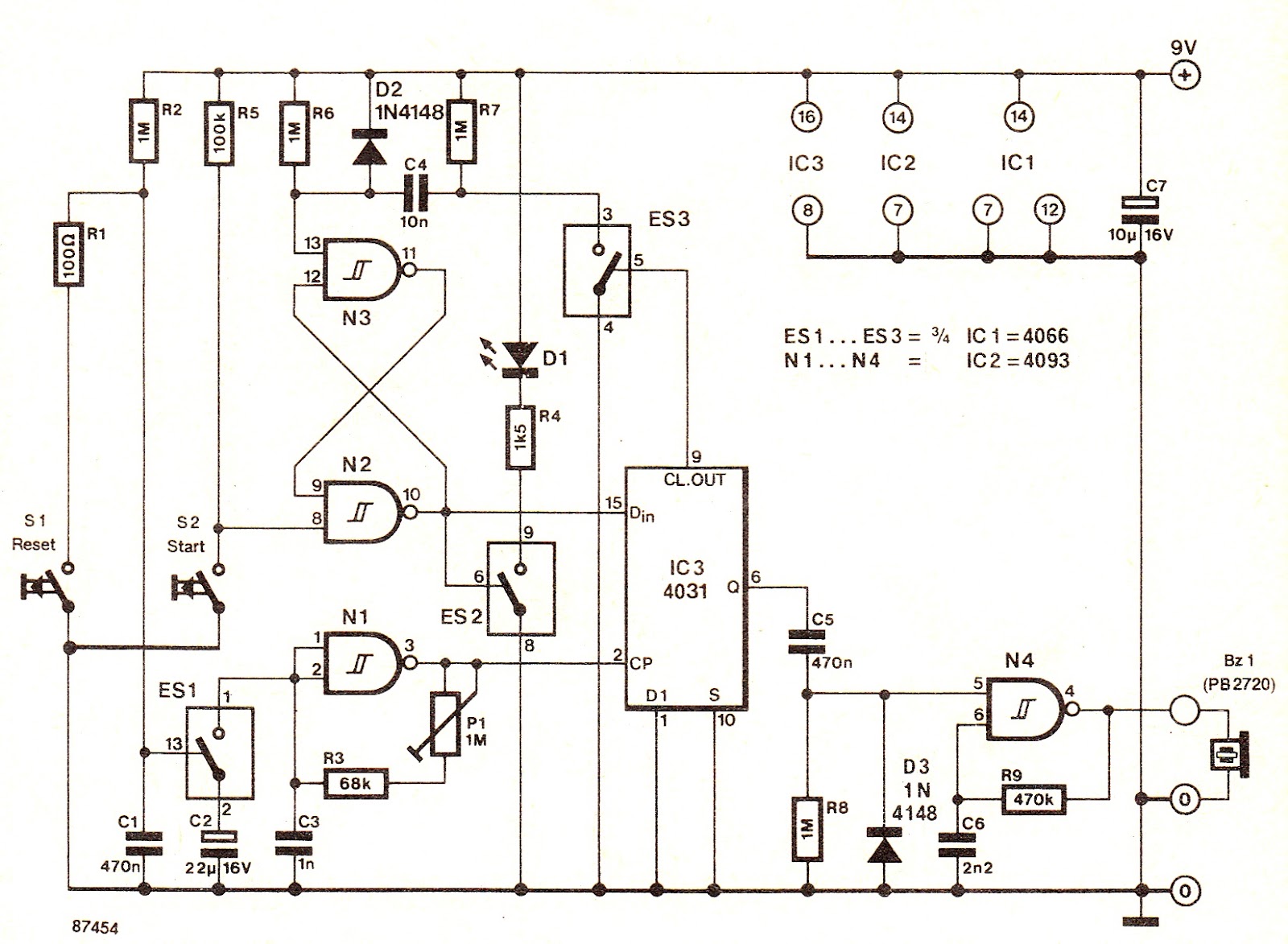
Bathroom Water Heater Timer
The electronic switch ES1 connects the frequency-determining capacitor to the input of clock oscillator N1. The logic level present at the Dm terminal of the integrated circuit is shifted to output Q at a speed defined by P1, allowing for...
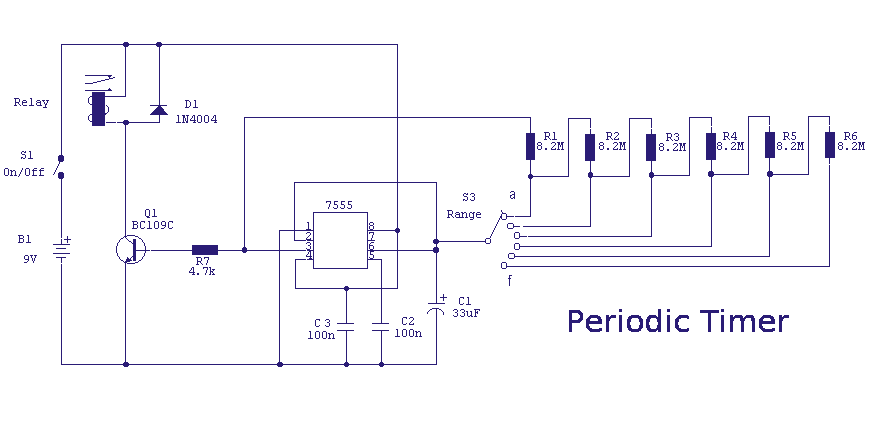
Periodic Timer
A switched timer with equal make and equal space periods timing adjustable from over 6 minutes to 38 minutes. This timer circuit is similar to the 5 to 30 minute timer except that when switch S1 is closed, the on/off...

repeating interval timer
This circuit features an adjustable output timer that can re-trigger at specified intervals. The output duration can range from a fraction of a second to over half an hour, with the ability to repeat at consistent intervals from seconds to...
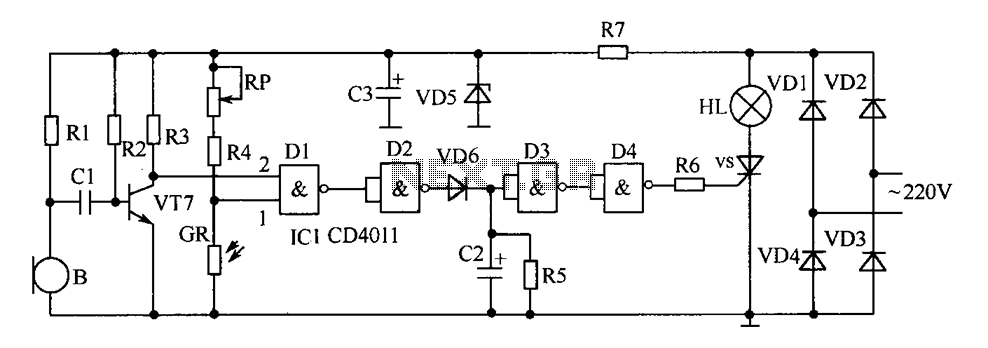
Delay circuit diagram of energy-saving lamps
The delay-saving lamp circuit functions as a sound and light control delay energy-saving lighting system. It can directly replace a standard light switch without modifying the existing lighting circuits. In bright or daytime conditions, the sound control feature ensures that...