


Human infrared thermal release alarm
#infrared sensor
#operational amplifier
#sound alarm
#light alarm
#security system
#heat detection
#electronic guard
#sensor control
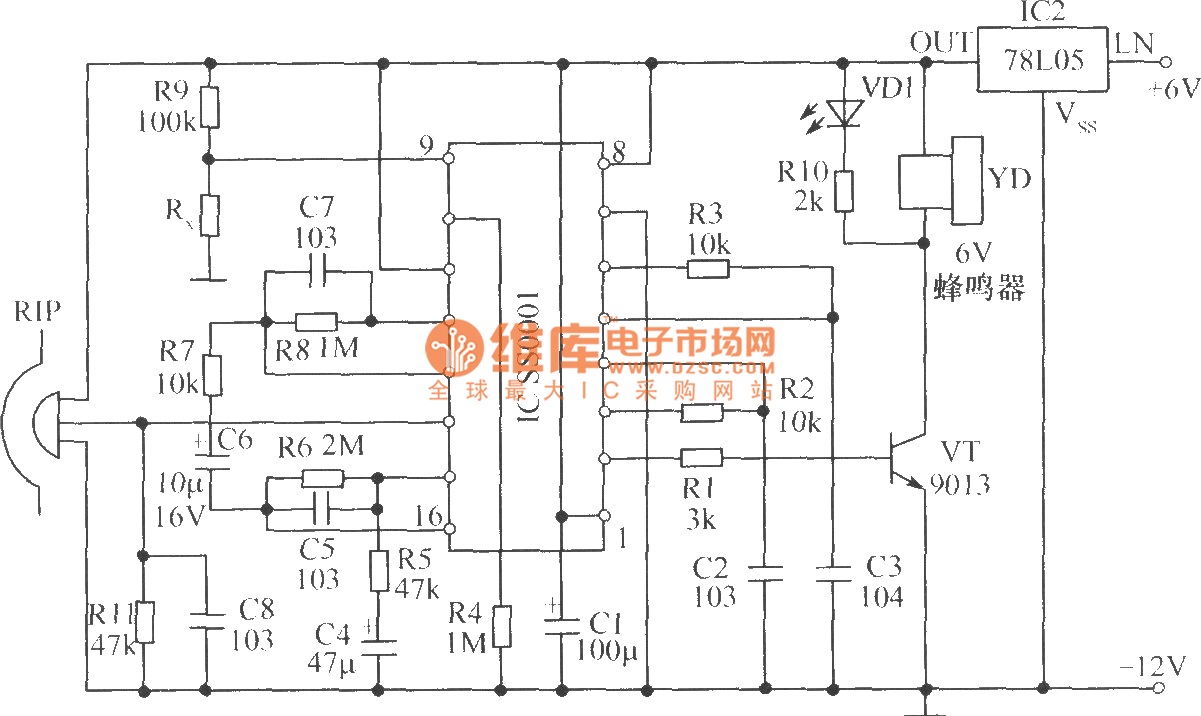
Description: The human infrared thermal release alarm can detect the infrared radiation emitted by the human body at any time of the day or night, triggering both sound and light alarms. This device is particularly suitable for electronic security applications. The operational principle involves a circuit that utilizes an imported integrated circuit (IC), a general-purpose sensor control circuit, and a high input impedance operational amplifier.
The human infrared thermal release alarm is designed to enhance security by detecting the presence of individuals through their emitted infrared radiation. The core of the system is an integrated circuit that processes signals from a passive infrared (PIR) sensor. This sensor is sensitive to changes in infrared levels, which occur when a person enters its detection range.
The operational amplifier in the circuit serves to amplify the weak signals received from the PIR sensor. The high input impedance of the operational amplifier ensures that it does not load the sensor output, allowing for accurate detection of even minimal infrared variations. The amplified signal is then fed to a microcontroller or logic circuit that interprets the signal and determines if it exceeds a predefined threshold, indicating the presence of a human.
Once the presence is confirmed, the system activates both an audible alarm and visual indicators, such as LEDs. This dual alert mechanism serves to notify nearby individuals of a potential security breach. The alarm can be configured for various settings, including sensitivity adjustments and alarm duration, making it adaptable for different environments and security needs.
For installation, the device should be positioned to maximize its field of view while minimizing false alarms from environmental factors such as pets or moving objects. Proper calibration and testing are essential to ensure reliable operation in the intended application. Overall, the human infrared thermal release alarm presents a robust solution for enhancing security through effective human detection.Human infrared thermal release alarm can receive the heat releasing infrared ray issued by the body during the day or night, then it willgive the sound and light alarm. It is ideal for electronic guard. Working principle: The circuit uses imported IC, general-purpose sensor control circuit, high input impedance operational amplifier, it consists of the tim..
The human infrared thermal release alarm is designed to enhance security by detecting the presence of individuals through their emitted infrared radiation. The core of the system is an integrated circuit that processes signals from a passive infrared (PIR) sensor. This sensor is sensitive to changes in infrared levels, which occur when a person enters its detection range.
The operational amplifier in the circuit serves to amplify the weak signals received from the PIR sensor. The high input impedance of the operational amplifier ensures that it does not load the sensor output, allowing for accurate detection of even minimal infrared variations. The amplified signal is then fed to a microcontroller or logic circuit that interprets the signal and determines if it exceeds a predefined threshold, indicating the presence of a human.
Once the presence is confirmed, the system activates both an audible alarm and visual indicators, such as LEDs. This dual alert mechanism serves to notify nearby individuals of a potential security breach. The alarm can be configured for various settings, including sensitivity adjustments and alarm duration, making it adaptable for different environments and security needs.
For installation, the device should be positioned to maximize its field of view while minimizing false alarms from environmental factors such as pets or moving objects. Proper calibration and testing are essential to ensure reliable operation in the intended application. Overall, the human infrared thermal release alarm presents a robust solution for enhancing security through effective human detection.Human infrared thermal release alarm can receive the heat releasing infrared ray issued by the body during the day or night, then it willgive the sound and light alarm. It is ideal for electronic guard. Working principle: The circuit uses imported IC, general-purpose sensor control circuit, high input impedance operational amplifier, it consists of the tim..

PC interfaced Security System
Creating a modular, networked, home control system was greatly simplified by using common 4-wire phone cable with stake-on connectors. The cable feeds both power and network signals to the various modules. Each module is made on a single sided circuit...
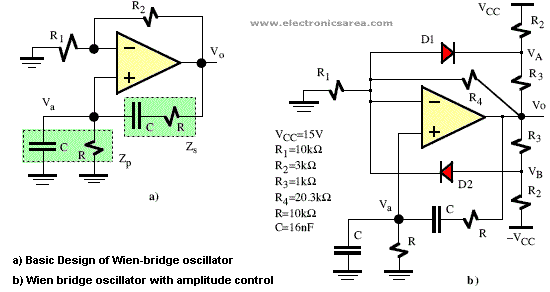
Opamp Wien-bridge oscillator
The Wien-bridge oscillator consists of an operational amplifier (OA) in a non-inverting configuration with a gain of 1 + R2/R1 and an RC feedback network.
The Wien-bridge oscillator is a type of electronic oscillator that generates sine waves. It employs a...

Infrared sensing automatic door control circuit diagram with KC778B
The circuit is depicted in the diagram. It is a control circuit that consists of the infrared-specific integrated circuit KC778B, which serves as the central component. Surrounding it are a pyroelectric infrared sensor head (PIR), a light control and adjustment...
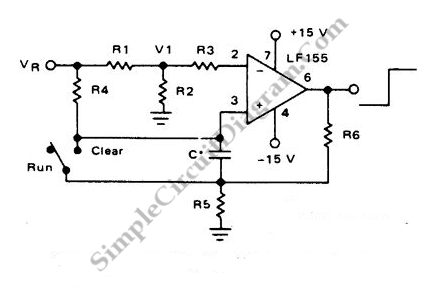
Long Interval RC Timer Using Op-Amp
By utilizing a high-gain, high-impedance operational amplifier, it is possible to construct a long time delay circuit using a resistor-capacitor (RC) configuration, as it allows for high...
An operational amplifier (op-amp) is a versatile component widely used in electronic circuits, particularly...
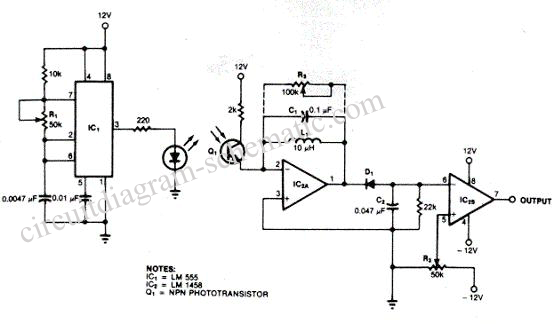
Motion Detectors with Infrared Sensors
Motion detectors commonly utilize ultrasonic sensors due to their sensitivity and rapid response. However, a significant drawback of these sensors is their tendency to react to environmental vibrations, such as sounds from passing cars or planes, leading to unexpected false...
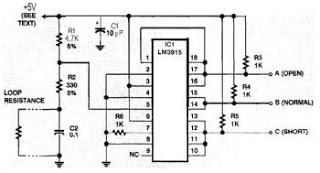
safe and security system
This security system is essential for homes, offices, and factories. It includes a circuit diagram that is simple and easy to construct, making it accessible for anyone. The circuit is cost-effective. Many security systems utilize a closed loop of wires...
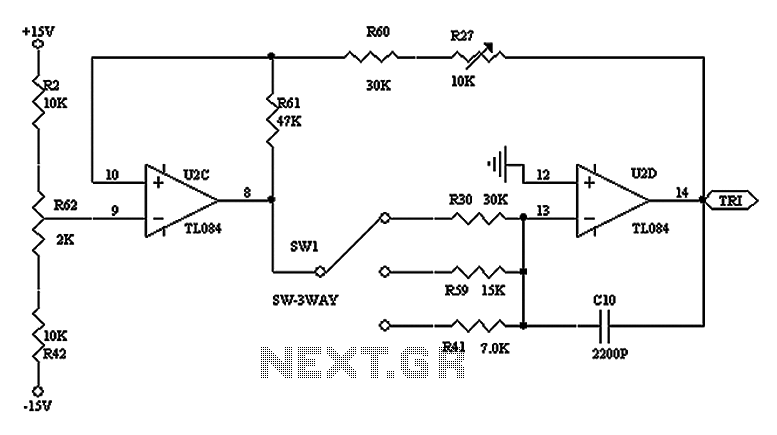
The triangular wave carrier generator circuit diagram
The triangular wave circuit consists of two operational amplifiers (OPs). R62 serves as the offset adjustment, while R27 is utilized for peak adjustment. A switch is included to select different resistances, allowing for the generation of triangular waves at varying...

Homemade whole integrated circuit amplifiers 01
The circuit depicted in Figure 5-60 and Figure 6 utilizes an operational amplifier (op-amp) configured as a channel pre-amplifier to address the signal loss introduced by the tone control circuit. Additionally, another group of op-amps forms a channel-driven stage amplifier...
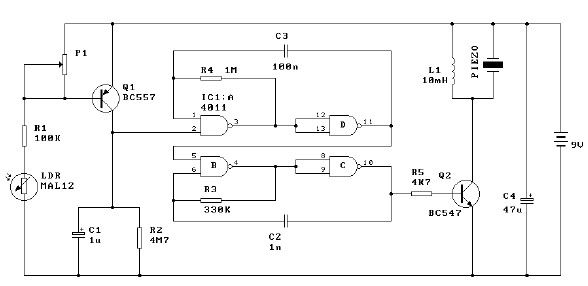
Light alarm schematic circuit diagram
This light alarm schematic circuit is designed using common electronic components, as illustrated in the circuit diagram below. The light alarm circuit will activate an alarm as soon as the drawer is opened and light falls on the Darlington phototransistor....