


Simple Knock Alarm With Piezo Sensor
#piezoelectric sensor
#vibration sensor
#knock detection
#alarm circuit
#amplifier
#security
#sensor circuit
#sound detection
#DIY alarm
#home security
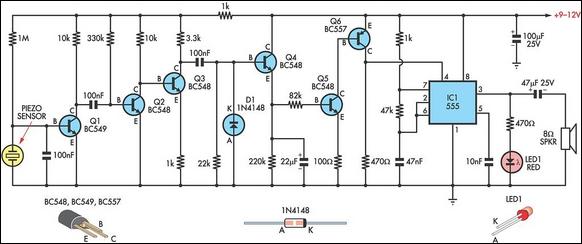
Description: This circuit utilizes a thin piezoelectric sensor to detect vibrations caused by impacts on a surface, such as a door or table. Essentially, it amplifies and...
The circuit design incorporates a piezoelectric sensor, which is sensitive to mechanical stress and converts it into an electrical signal. When a surface is struck, the sensor generates a voltage proportional to the intensity and frequency of the vibrations. This signal is typically very weak and requires amplification for further processing.
An operational amplifier (op-amp) is commonly used in the circuit to amplify the sensor's output. The op-amp can be configured in a non-inverting mode to provide a gain that is adjustable, allowing for fine-tuning based on the specific application and sensitivity requirements. The gain can be set using resistors in the feedback loop of the op-amp.
To filter out noise and enhance the accuracy of the signal, a band-pass filter may be implemented. This filter allows only the desired frequency range of vibrations to pass through while attenuating unwanted signals. Capacitors and resistors are arranged in a specific configuration to define the cutoff frequencies of the filter.
The amplified output can then be connected to a microcontroller or a digital signal processor (DSP) for further analysis. The microcontroller can be programmed to respond to specific vibration patterns, enabling applications such as security systems, where the detection of a knock on a door could trigger an alarm or notification.
Power supply considerations are also essential in the design. The circuit may require a stable voltage source, which can be achieved using a battery or a power adapter, depending on the intended use case.
Overall, this circuit effectively transforms mechanical vibrations into an electrical signal, amplifies it, and prepares it for further processing, making it suitable for various applications in sensing and monitoring environments.This circuit uses a thin piezoelectric sensor to sense the vibrations generated by knocking on a surface; eg, a door or table. Basically, it amplifies and..
The circuit design incorporates a piezoelectric sensor, which is sensitive to mechanical stress and converts it into an electrical signal. When a surface is struck, the sensor generates a voltage proportional to the intensity and frequency of the vibrations. This signal is typically very weak and requires amplification for further processing.
An operational amplifier (op-amp) is commonly used in the circuit to amplify the sensor's output. The op-amp can be configured in a non-inverting mode to provide a gain that is adjustable, allowing for fine-tuning based on the specific application and sensitivity requirements. The gain can be set using resistors in the feedback loop of the op-amp.
To filter out noise and enhance the accuracy of the signal, a band-pass filter may be implemented. This filter allows only the desired frequency range of vibrations to pass through while attenuating unwanted signals. Capacitors and resistors are arranged in a specific configuration to define the cutoff frequencies of the filter.
The amplified output can then be connected to a microcontroller or a digital signal processor (DSP) for further analysis. The microcontroller can be programmed to respond to specific vibration patterns, enabling applications such as security systems, where the detection of a knock on a door could trigger an alarm or notification.
Power supply considerations are also essential in the design. The circuit may require a stable voltage source, which can be achieved using a battery or a power adapter, depending on the intended use case.
Overall, this circuit effectively transforms mechanical vibrations into an electrical signal, amplifies it, and prepares it for further processing, making it suitable for various applications in sensing and monitoring environments.This circuit uses a thin piezoelectric sensor to sense the vibrations generated by knocking on a surface; eg, a door or table. Basically, it amplifies and..
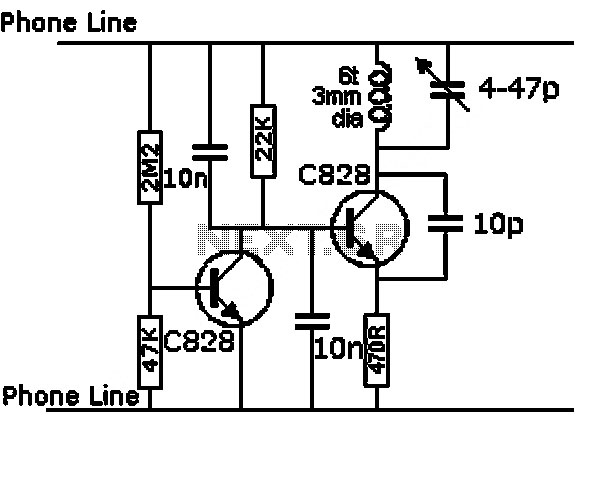
Door Knock Alarm Circuit
In some buildings, there is a need for effective security measures. An example of this is the door knock alarm, which is a simple design intended for basic home security. This circuit utilizes a piezoelectric sensor to detect knocking sounds....
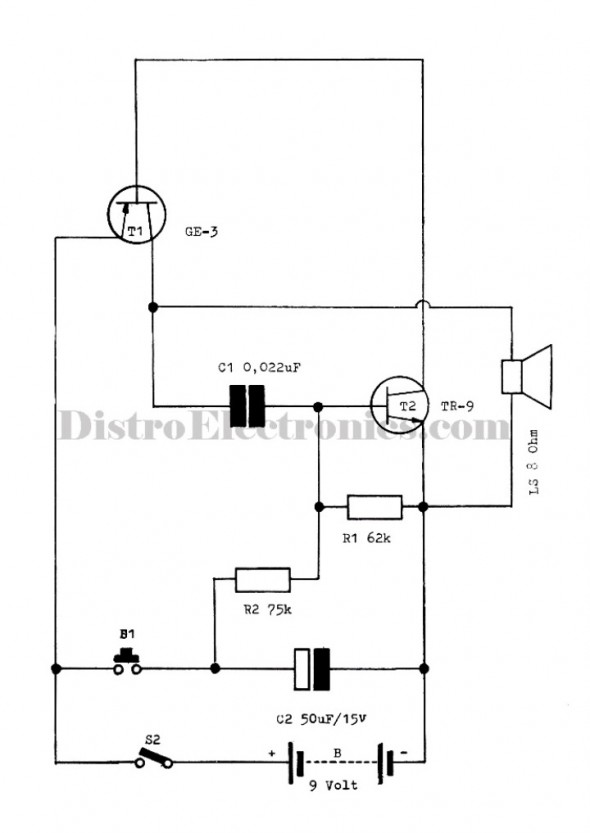
Easy Alarms Police / Ambulance Electronic
The following circuit illustrates the electronic diagram design for police and ambulance alarms. Features include simplicity and ease of assembly, as well as cost-effectiveness.
This electronic schematic represents a basic alarm system intended for use in police and ambulance applications. The...
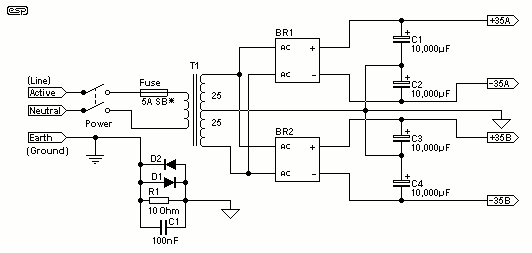
Power Supply For Amplifiers
For the 60W amplifier, a nominal (full load) supply of +/- 35V is required, so a 25-0-25 secondary is ideal - however, see Updates, below. The circuit for the supply is shown below, and uses separate rectifiers, capacitors and fuses...
Stereo audio power amplifier circuit using TDA2822
Circuit stereo TDA2822 audio power amplifier circuit schematics. In this series, the TDA2822M IC is utilized as the primary amplifier. Additionally, alternatives such as KA2209 and NJM2073 can also be employed.
The TDA2822 audio power amplifier circuit is designed to provide...
amplifier timer
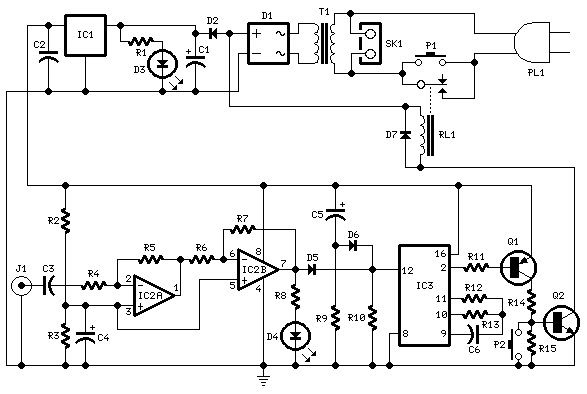
This circuit deactivates an amplifier or any other device when a low-level audio signal at its input is absent for at least 15 minutes. By pressing P1, the device is powered on, allowing any appliance connected to SK1 to operate....
Amplifiers connecting Bridge
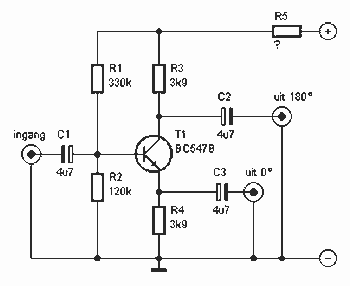
This is a circuit that ensures that you can connect two amplifiers together so you get more power. When called in bridge linking two amplifiers plus you can link the outputs of the amplifiers to the speaker. One of the...

Induction high pressure alarm circuit
It utilizes the KD153 type "ding-dong" music integrated circuit (IC) to produce a "ding-dong" sound alarm. The reference number is 221611, and it is related to a refrigerator door alarm circuit.
The KD153 integrated circuit is designed specifically for generating melodic...
Security-door-ajar-alarm
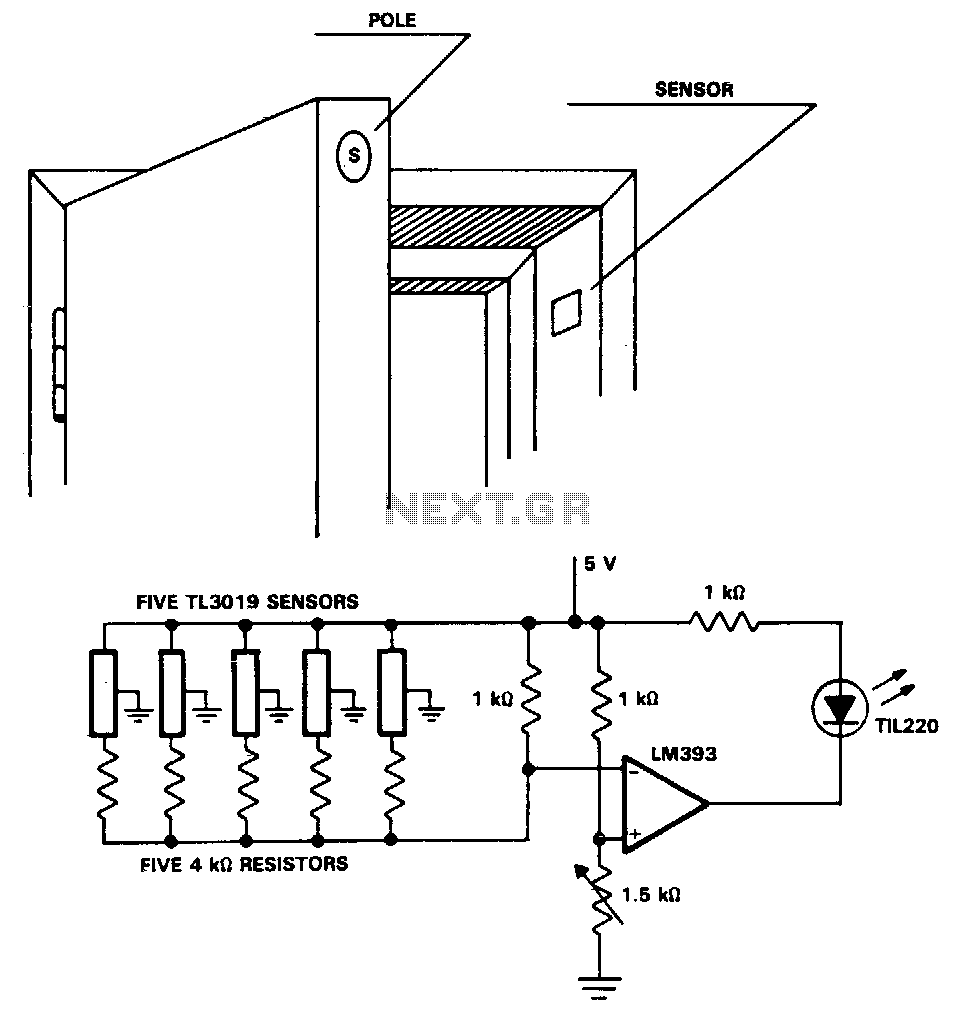
The TL3019 device activates, or goes low, when a south pole of a magnet approaches the chip face. In this example, there are five doors, each equipped with a magnet embedded in its edge, with the south pole facing outward....
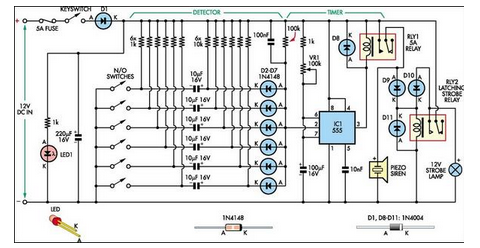
Simple 6-Input Alarm
This simple alarm circuit was designed for use in a combined garage and rumpus room. It can be assembled on Veroboard and uses just one IC plus a handful of additional components.
The alarm circuit is based on a single integrated...