


Wire Loop AlarmCircuit Project
#trip wire
#alarm circuit
#security
#hookup wire
#sensitive trigger
#loop circuit
#wire resistance
#DIY alarm
#intrusion detection
#home security
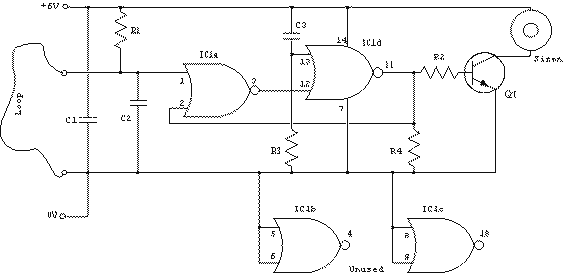
Description: The loop can be any type of hookup wire, with a maximum resistance of about 90K. Using very thin wire (40AWG, for example) will create a highly sensitive trip wire, but will reduce the distance it can be strung due to the high resistance.
In the context of electronic circuits, a trip wire is an essential component often used in alarm systems, security devices, or automated triggering mechanisms. The choice of wire type for the loop is critical, as it directly influences the circuit's performance. Hookup wire can vary in gauge, with thinner wires, such as 40AWG, providing increased sensitivity due to their higher resistance. This sensitivity makes them ideal for applications where even minor disturbances need to be detected. However, the trade-off is that thinner wires can only be strung over limited distances before the resistance becomes too high, potentially leading to false triggers or failure to complete the circuit.
When designing a trip wire system, it is important to consider the maximum resistance of 90K ohms. This limitation ensures that the circuit remains functional while maintaining the desired sensitivity. The circuit can be configured to include a resistor in parallel with the trip wire to help manage the overall resistance and improve performance over longer distances. Additionally, the use of a suitable microcontroller or comparator circuit can enhance the detection capabilities, allowing for precise monitoring of the trip wire's status.
In summary, the selection of hookup wire gauge, along with proper circuit design considerations, plays a crucial role in the effectiveness of a trip wire system. By balancing sensitivity and operational range, a reliable and efficient triggering mechanism can be achieved.The loop can be any type of hookup wire, with a maximum resistance of about 90K. Using very thin wire (40AWG, for example) will make a very sensitive trip wire, but will shorten the distance it can be strung due to the high resistance.
In the context of electronic circuits, a trip wire is an essential component often used in alarm systems, security devices, or automated triggering mechanisms. The choice of wire type for the loop is critical, as it directly influences the circuit's performance. Hookup wire can vary in gauge, with thinner wires, such as 40AWG, providing increased sensitivity due to their higher resistance. This sensitivity makes them ideal for applications where even minor disturbances need to be detected. However, the trade-off is that thinner wires can only be strung over limited distances before the resistance becomes too high, potentially leading to false triggers or failure to complete the circuit.
When designing a trip wire system, it is important to consider the maximum resistance of 90K ohms. This limitation ensures that the circuit remains functional while maintaining the desired sensitivity. The circuit can be configured to include a resistor in parallel with the trip wire to help manage the overall resistance and improve performance over longer distances. Additionally, the use of a suitable microcontroller or comparator circuit can enhance the detection capabilities, allowing for precise monitoring of the trip wire's status.
In summary, the selection of hookup wire gauge, along with proper circuit design considerations, plays a crucial role in the effectiveness of a trip wire system. By balancing sensitivity and operational range, a reliable and efficient triggering mechanism can be achieved.The loop can be any type of hookup wire, with a maximum resistance of about 90K. Using very thin wire (40AWG, for example) will make a very sensitive trip wire, but will shorten the distance it can be strung due to the high resistance.
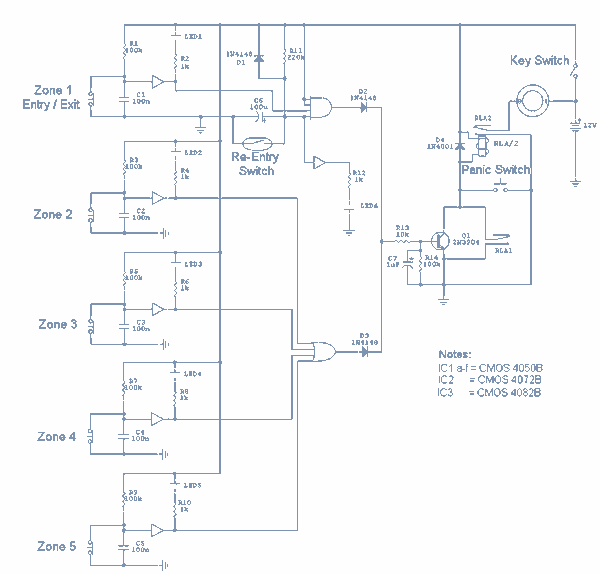
5 Zone Alarm Circuit
Each zone uses a normally closed contact. These can be micro switches or standard alarm contacts (usually reed switches). Zone 1 is a timed zone which must be used as the entry and exit point of the building. Zones 2...

Induction high pressure alarm circuit
It utilizes the KD153 type "ding-dong" music integrated circuit (IC) to produce a "ding-dong" sound alarm. The reference number is 221611, and it is related to a refrigerator door alarm circuit.
The KD153 integrated circuit is designed specifically for generating melodic...

Security alarm
This alarm features both open-loop and closed-loop detection systems along with an automatic alarm shutoff mechanism. It provides a 15-second delay for exit and entrance. Additionally, the alarm activation time can be adjusted from 1 to 15 minutes.
The alarm system...
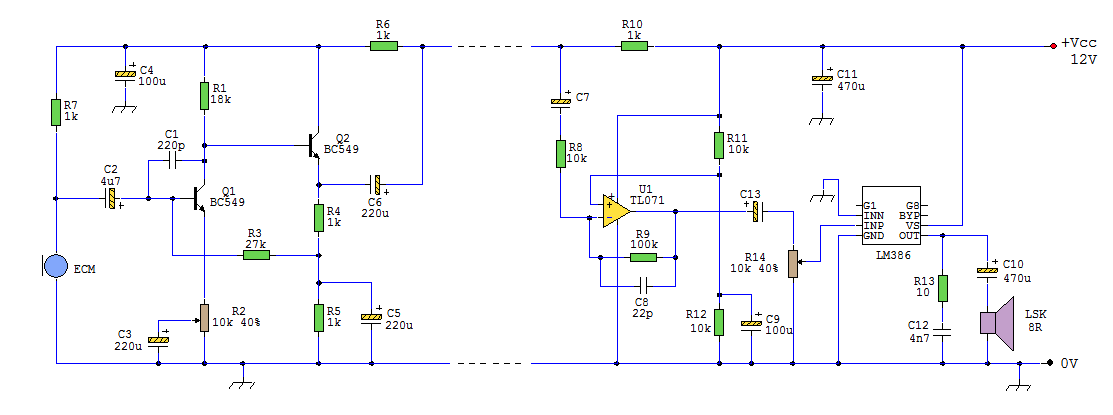
Security Monitor
This circuit can be utilized in a garden setting to detect unusual sounds or wildlife noises. It can also monitor sounds around a car parked in a remote location. The cable used for the setup can either be visible or...

electronic hotel door vulnerability using stealth lock circuit
The term "pentester" refers to a penetration tester, individuals who assess security vulnerabilities. Many high-end hotels globally depend on keycard locks for securing hotel rooms. However, recent incidents of theft have shown that these locks may not be as secure...
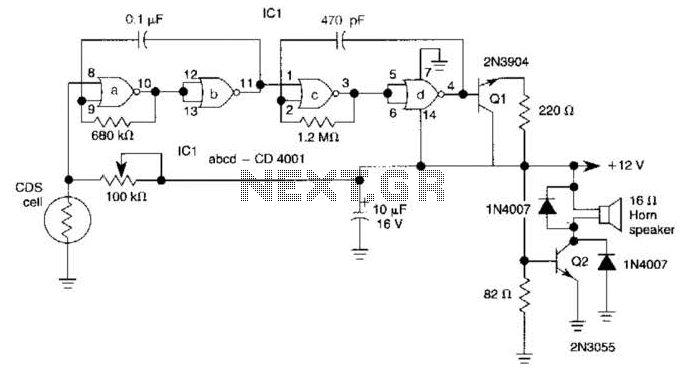
High-Output Pulsed-Tone/Light-Activated Alarm Circuit
This circuit is capable of generating up to 1 W of audio power to drive a speaker or horn. When the CDS cell is exposed to light, its resistance decreases, activating NOR gate (a). This activation causes gates (a) and...
5 Zone Alarm Circuit
Each zone uses a normally closed contact. These can be micro switches or standard alarm contacts (usually reed switches). Zone 1 is a timed zone which must be used as the entry and exit point of the building. Zones 2...
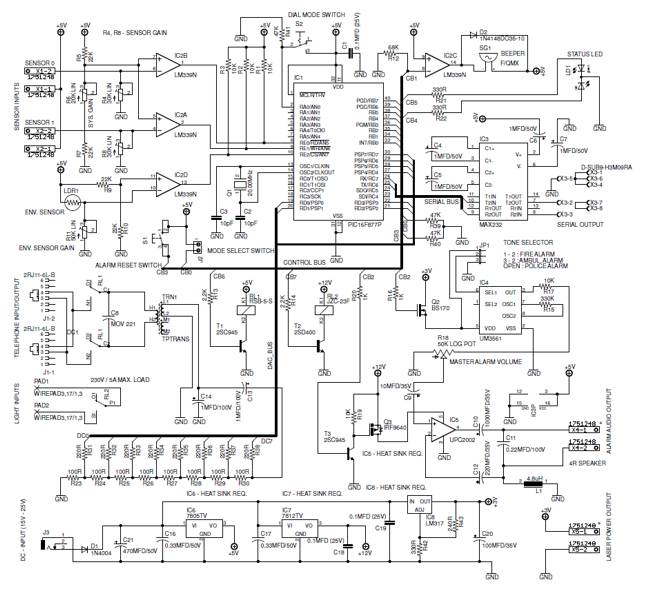
Programmable Home Security Alarm System
A low-cost, high-performance programmable home security system utilizing a few LDRs as input sensors. When the sensors are triggered, the system can dial a user-specified phone number using a built-in DTMF generator and activate a high-power audio alarm and lights....
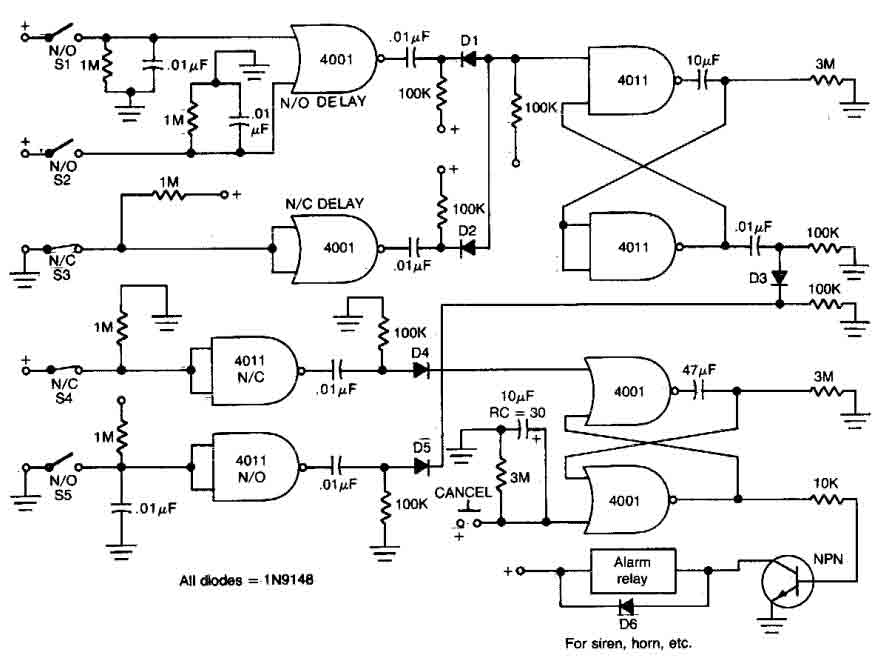
House Alarm Loop
This circuit features open and closed loop contacts (switches 1, 2, 3) that activate the alarm, which remains activated for 5 to 10 minutes. The triggering delay for entrance and exit is set to 27 seconds. Additionally, this simple alarm...