


Building an B-15-inspired amp
#tube amp
#audio amplifier
#bias fix
#re-capping
#B-15
#guitar amp
#vacuum tube
#electronics repair
#sound equipment
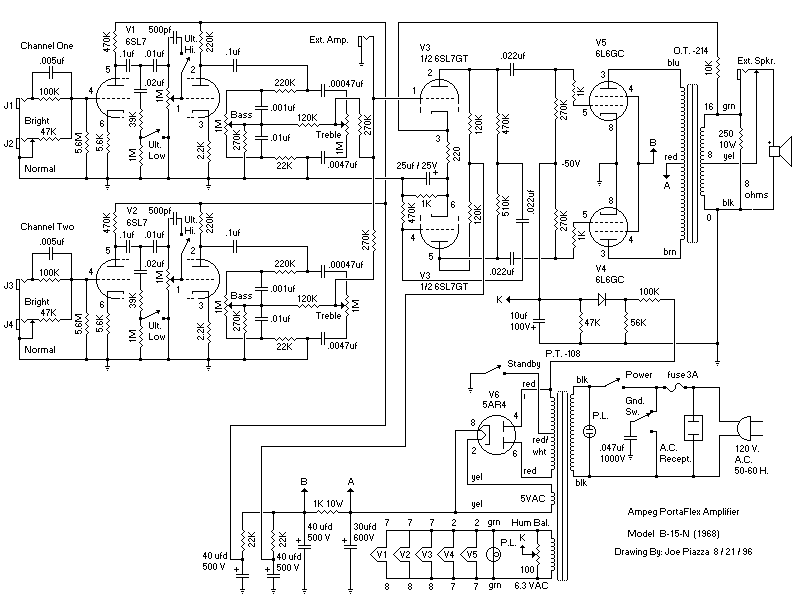
Description: A newcomer has entered the field after completing several repairs and minor upgrades on tube amplifiers, including re-capping and addressing bias issues.
The process of repairing and upgrading tube amplifiers involves several critical steps to ensure optimal performance and reliability. Re-capping refers to the replacement of old capacitors, which can degrade over time, leading to reduced audio quality and potential circuit failures. It is essential to select capacitors that meet or exceed the original specifications to maintain the amplifier's intended performance characteristics.
Addressing bias problems is another crucial aspect of tube amplifier maintenance. Biasing involves adjusting the operating point of the output tubes to achieve the best performance while minimizing distortion. Incorrect bias settings can lead to overheating, reduced lifespan of the tubes, and suboptimal sound quality. Proper biasing techniques often require using a multimeter to measure the current flowing through the tubes and adjusting the bias potentiometer accordingly.
In addition to these tasks, various minor upgrades may include replacing outdated components with modern equivalents that offer improved performance, such as resistors with tighter tolerances or higher-quality connectors. Each modification should be carefully considered, as it can significantly impact the amplifier's overall sound and reliability.
Overall, the maintenance and upgrading of tube amplifiers require a thorough understanding of electronic principles and meticulous attention to detail to ensure that the final product meets the desired performance standards.Hello, everyone, new kid on the block here After some tube amp reparations, fixes and minor upgrades (re-capping, fixing bias problems, various..
The process of repairing and upgrading tube amplifiers involves several critical steps to ensure optimal performance and reliability. Re-capping refers to the replacement of old capacitors, which can degrade over time, leading to reduced audio quality and potential circuit failures. It is essential to select capacitors that meet or exceed the original specifications to maintain the amplifier's intended performance characteristics.
Addressing bias problems is another crucial aspect of tube amplifier maintenance. Biasing involves adjusting the operating point of the output tubes to achieve the best performance while minimizing distortion. Incorrect bias settings can lead to overheating, reduced lifespan of the tubes, and suboptimal sound quality. Proper biasing techniques often require using a multimeter to measure the current flowing through the tubes and adjusting the bias potentiometer accordingly.
In addition to these tasks, various minor upgrades may include replacing outdated components with modern equivalents that offer improved performance, such as resistors with tighter tolerances or higher-quality connectors. Each modification should be carefully considered, as it can significantly impact the amplifier's overall sound and reliability.
Overall, the maintenance and upgrading of tube amplifiers require a thorough understanding of electronic principles and meticulous attention to detail to ensure that the final product meets the desired performance standards.Hello, everyone, new kid on the block here After some tube amp reparations, fixes and minor upgrades (re-capping, fixing bias problems, various..

250mW audio Amplifier
This design can be used as a small booster. The amplifier is built around a balance stage. The quiescent current is set by diodes D1 and D2. The simplicity of the circuit, the quiescent current depends on the temperature of...
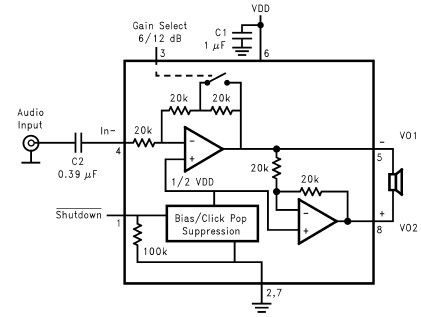
LM4096 audio amplifier circuit design
The LM4096 audio amplifier circuit diagram represents a straightforward audio amplifier capable of delivering a maximum output power of 1 watt, utilizing a minimal number of external electronic components. The LM4906, an audio power amplifier, is specifically engineered for demanding...
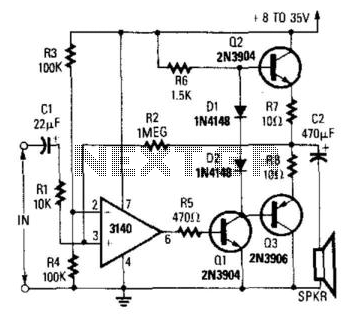
Simple Op Amp Audio Amplifier
A CA3140 operational amplifier drives a complementary output stage consisting of transistors Q1, Q2, and Q3. The output power is influenced by the supply voltage and the thermal dissipation limits of transistors Q2 and Q3. Under optimal conditions, the output...
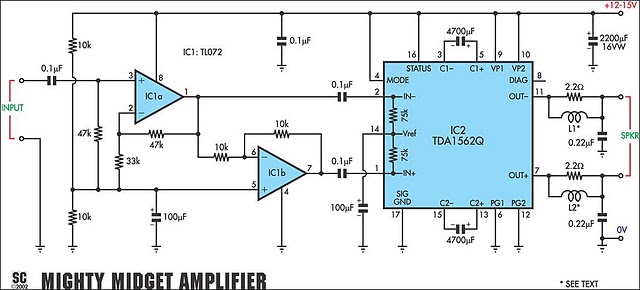
36 watt audio power amplifier using tda1562q
It is based on a Philips class-H audio amplifier integrated circuit and can deliver 36W RMS or 70W music power, all from a 13.8V supply. The new Mighty Midget Amplifier can produce approximately 36W RMS continuously into a 4-ohm load...
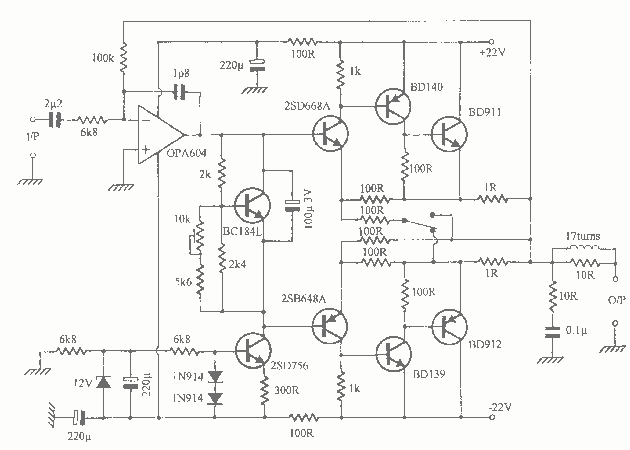
A New Audio Amplifier Circuit Design
The problem with class-B amplifier design is that we start with an output stage in two halves, each with a non-linear response, which we then add together to try to give a linear response, i.e. so that a graph of...
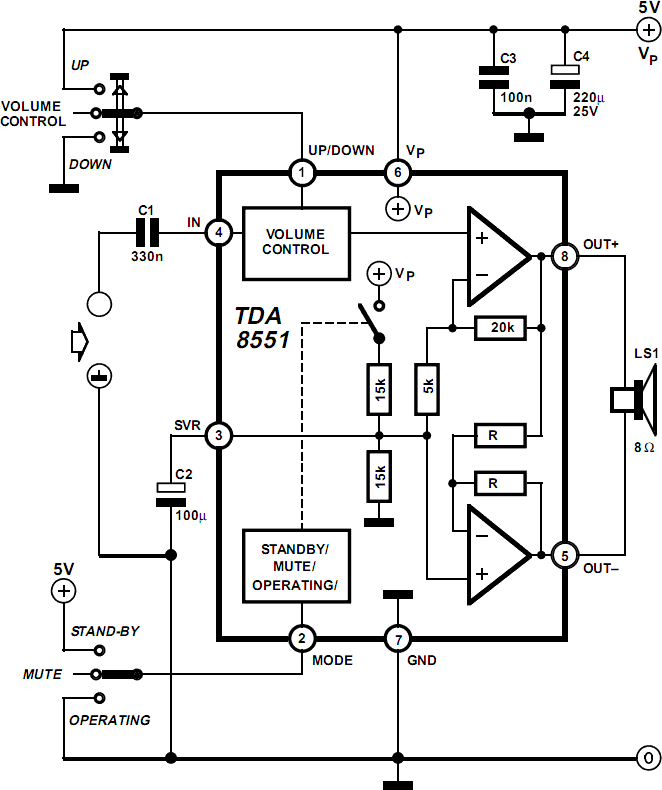
1W BTL Audio Amplifier
The TDA8581(T) from Philips Semiconductors is a 1-watt Bridge Tied Load (BTL) audio power amplifier capable of delivering 1 watt of output power into an 8-ohm load at a total harmonic distortion (THD) of 10% while using a 5V power...

Audio Amplifier Schematic
A very high-power amplifier with 10 pairs of power transistors. It can utilize MJ15024 and MJ15025 or MJ21193 and MJ21194. These 20 transistors function as the final active components. The design is based on four integrated circuits: TL072, TL074, MN3101,...
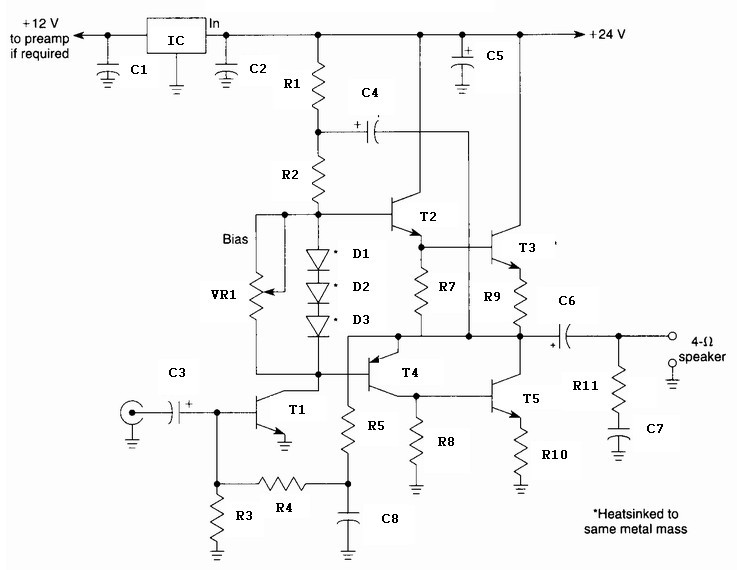
10 Watt Audio Amplifier
A 10 Watt audio amplifier circuit diagram is presented. This circuit serves as a general-purpose 10-W power audio amplifier, suitable for medium power applications or for use in modulation within AM transmitters. To achieve higher power levels, up to 30...
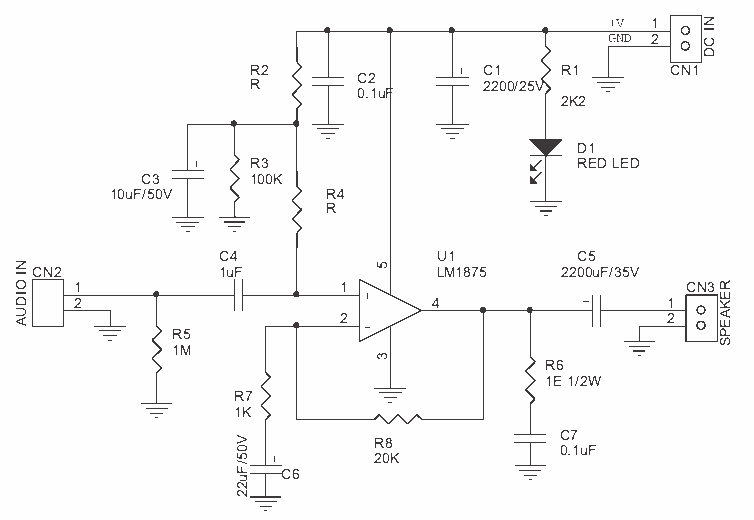
20 watt amplifier with LM1875
This is a nice amplifier and very easy to make it. Its an 20W Audio Amplifier based on LM1875 IC. More: Power supply - 48 VDC Output - 20 W, 4 ? Very low distortion (THD - 0.015%), good channel...