


High fidelity amplifier circuit
#high fidelity
#op amp
#compressor
#gain
#bandwidth
#compensation network
#rectifier capacitor
#stability
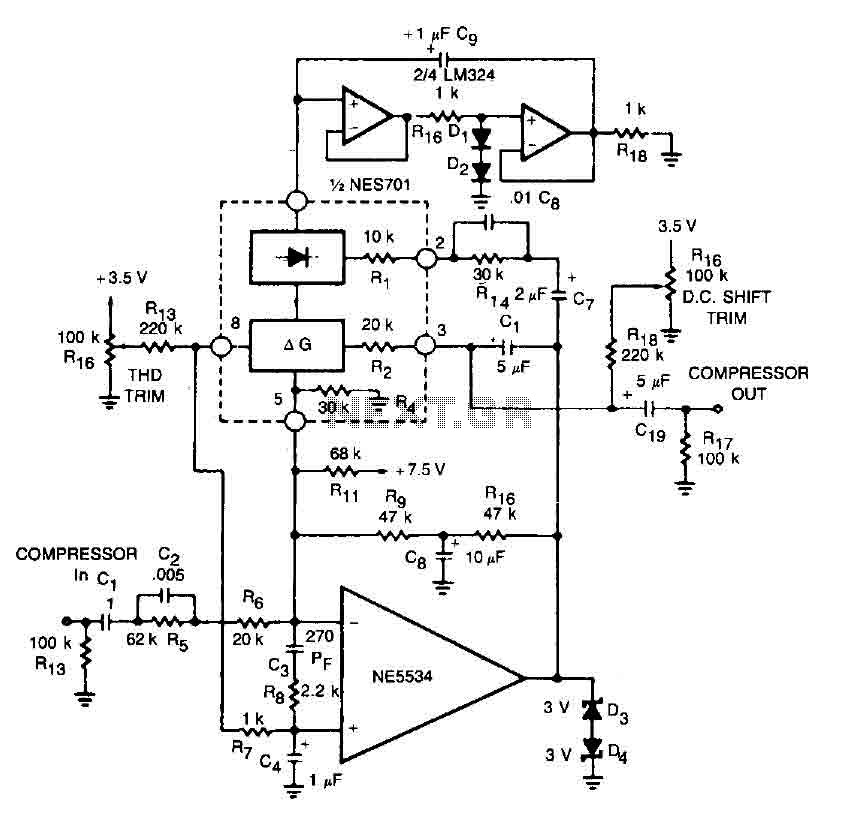
Description: This circuit for a compressor utilizes a high-fidelity external operational amplifier (op amp) with high gain and wide bandwidth. A compensation network at the input is required for stability. The rectifier capacitor (Cg) is not grounded; instead, it is connected to the output of an op amp circuit.
When the compressor operates at high gain with a small input signal, it may experience overload when subjected to a sudden signal.
The described compressor circuit is designed to achieve high fidelity and dynamic range through the use of an external op amp, which provides the necessary gain and bandwidth for effective signal processing. The inclusion of a compensation network at the input stage is critical to maintaining stability, as it mitigates potential oscillations that could arise due to the high gain characteristics of the op amp.
The rectifier capacitor (Cg) plays a significant role in the circuit by smoothing the output signal. Its unique connection to the op amp output, rather than a direct ground reference, allows for improved performance in terms of transient response and signal integrity. This configuration helps prevent distortion that can occur when the circuit is subjected to sudden increases in signal amplitude.
During operation, if the compressor is set to high gain and receives a small input signal, it is susceptible to overload conditions when a sudden, larger signal is introduced. This can lead to clipping and distortion in the output if not properly managed. Therefore, careful consideration must be given to the design parameters, including the selection of the op amp, the values of the compensation network components, and the specifications of the rectifier capacitor, to ensure that the compressor operates effectively across a wide range of input signal conditions.
In summary, the performance of this compressor circuit hinges on the effective integration of high-fidelity components, careful attention to stability through compensation, and strategic design choices that enhance the handling of dynamic input signals.This circuit for a compressor uses a high-fidelity external op amp, and a high gain and wide bandwidth. A compensation network input is necessary for stability. The rectifier capacitor (Cg) is not grounded. but it is linked to the output of an op amp circuit. When a compressor is running at high gain (input signal of small size), and is suddenly struck by a signal, overload.
When the compressor operates at high gain with a small input signal, it may experience overload when subjected to a sudden signal.
The described compressor circuit is designed to achieve high fidelity and dynamic range through the use of an external op amp, which provides the necessary gain and bandwidth for effective signal processing. The inclusion of a compensation network at the input stage is critical to maintaining stability, as it mitigates potential oscillations that could arise due to the high gain characteristics of the op amp.
The rectifier capacitor (Cg) plays a significant role in the circuit by smoothing the output signal. Its unique connection to the op amp output, rather than a direct ground reference, allows for improved performance in terms of transient response and signal integrity. This configuration helps prevent distortion that can occur when the circuit is subjected to sudden increases in signal amplitude.
During operation, if the compressor is set to high gain and receives a small input signal, it is susceptible to overload conditions when a sudden, larger signal is introduced. This can lead to clipping and distortion in the output if not properly managed. Therefore, careful consideration must be given to the design parameters, including the selection of the op amp, the values of the compensation network components, and the specifications of the rectifier capacitor, to ensure that the compressor operates effectively across a wide range of input signal conditions.
In summary, the performance of this compressor circuit hinges on the effective integration of high-fidelity components, careful attention to stability through compensation, and strategic design choices that enhance the handling of dynamic input signals.This circuit for a compressor uses a high-fidelity external op amp, and a high gain and wide bandwidth. A compensation network input is necessary for stability. The rectifier capacitor (Cg) is not grounded. but it is linked to the output of an op amp circuit. When a compressor is running at high gain (input signal of small size), and is suddenly struck by a signal, overload.
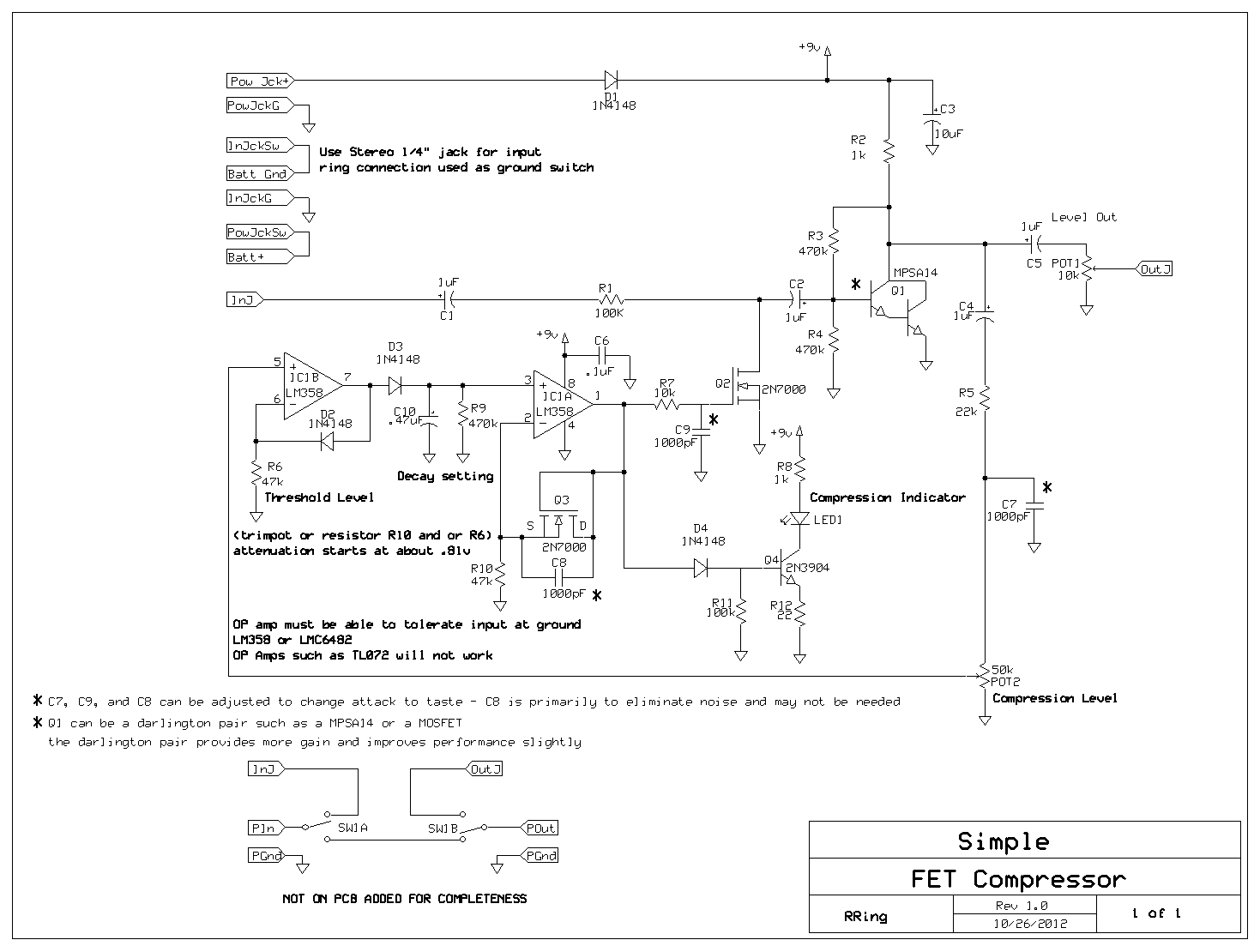
Board layout and final schematic for Mosfet Compressor
Here is a link to the ExpressPCB layout for this compressor. If you are not familiar with ExpressPCB, look it up. They provide a layout tool that is very easy to use, and you can have boards manufactured for $60.00...
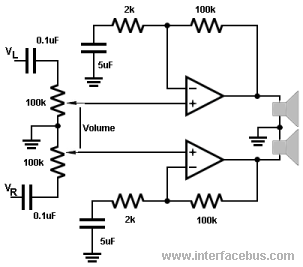
Op Amp Stereo Amplifier
The 100k potentiometers adjust the voltage levels reaching the operational amplifiers (Op Amps). A dual ganged 100K-Ohm audio-taper potentiometer is preferred over a linear taper potentiometer. In some instances, this component may be referred to as a ganged stereo taper....
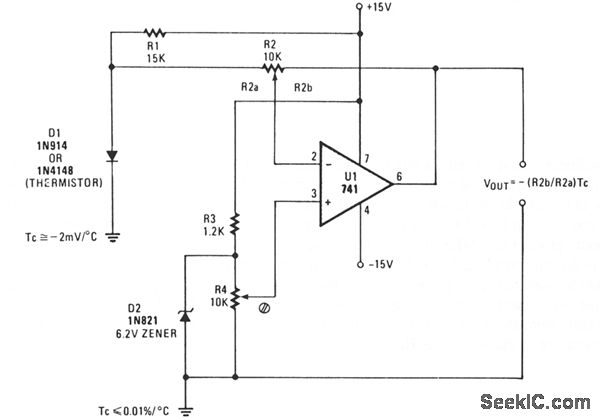
THERMOMETER ADAPTER
A simple operational amplifier and silicon diode form the core of a temperature-to-voltage converter, allowing the use of a standard voltmeter—either analog or digital—to measure temperature. User adjustments enable readings of either 10 mV or 100 mV to correspond to...
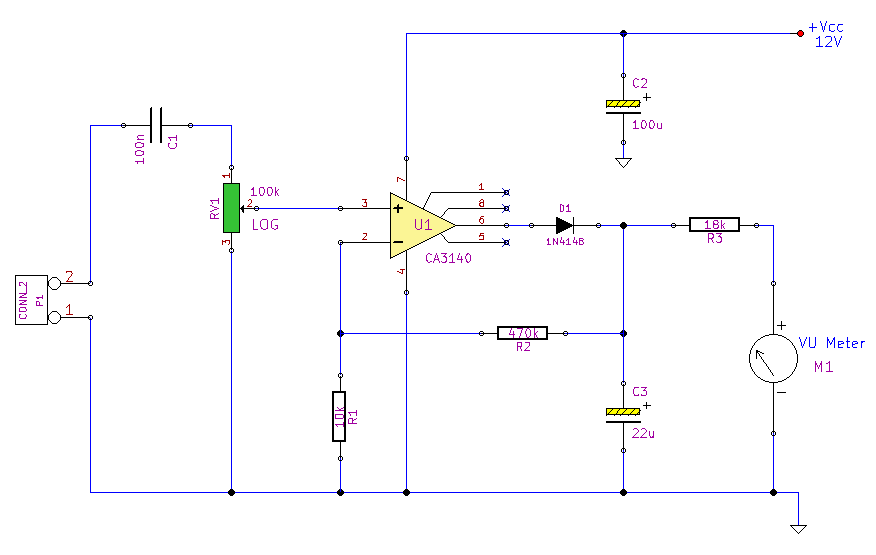
Peak Reading Audio Level Meter
This simple circuit, designed with a minimal component count, indicates peak audio response on an analog meter, similar to a tape recorder's meter. It employs an operational amplifier configured as a non-inverting amplifier, with the addition of a diode in...
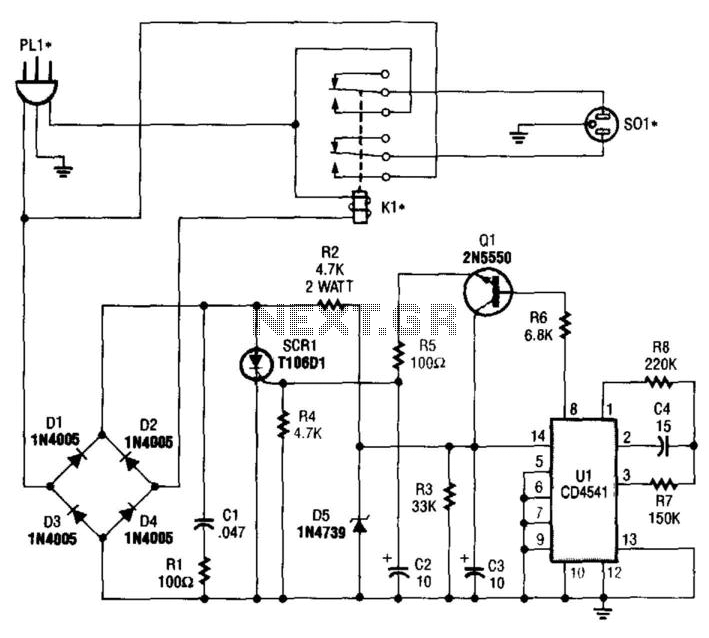
Compressor Protector
This circuit monitors the AC voltage of the power line. Upon a power failure, when power is restored, the circuit introduces a five-minute delay before energizing relay K1, which safeguards the compressor against low voltage conditions. U1 is a 16-stage...
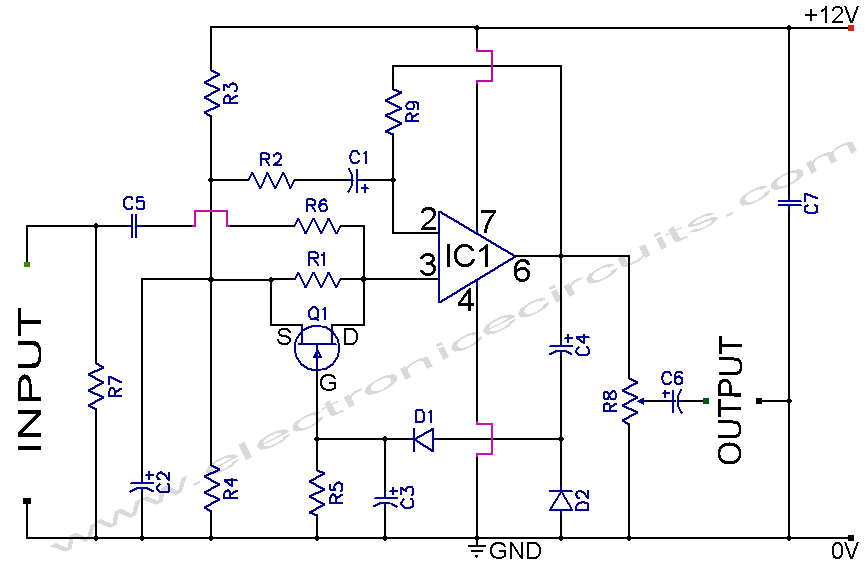
Automatic Gain Control Pre-Amplifier
A section of the operational amplifier's output signal is rectified using 1N4148 diodes, followed by filtering, and is then directed to the gate of the FET input shunting circuit. As the output voltage increases, additional input shunting occurs, which means...
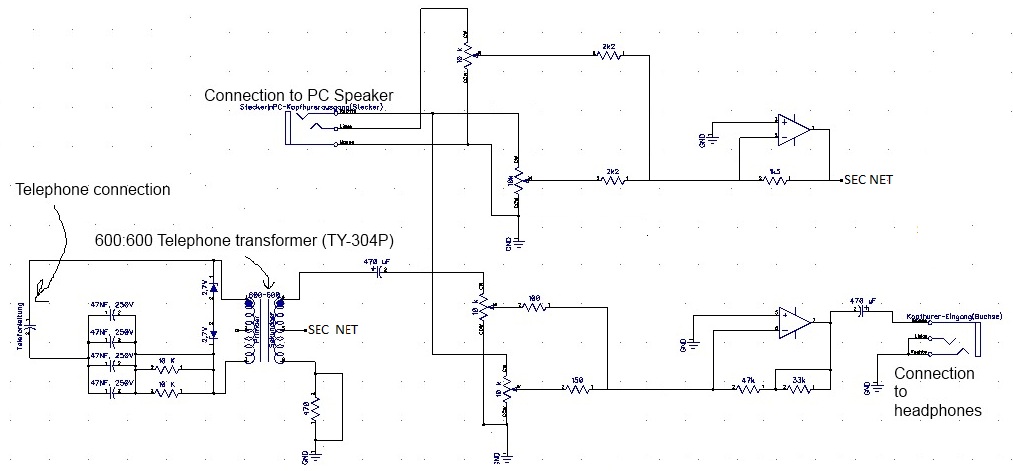
Humming and Transmission issues
An inquiry regarding operational amplifier (op-amp) humming and transmission issues in the context of electrical engineering.
Operational amplifiers (op-amps) are widely used in various electronic circuits for signal amplification, filtering, and other applications. Humming issues in op-amp circuits often arise from...
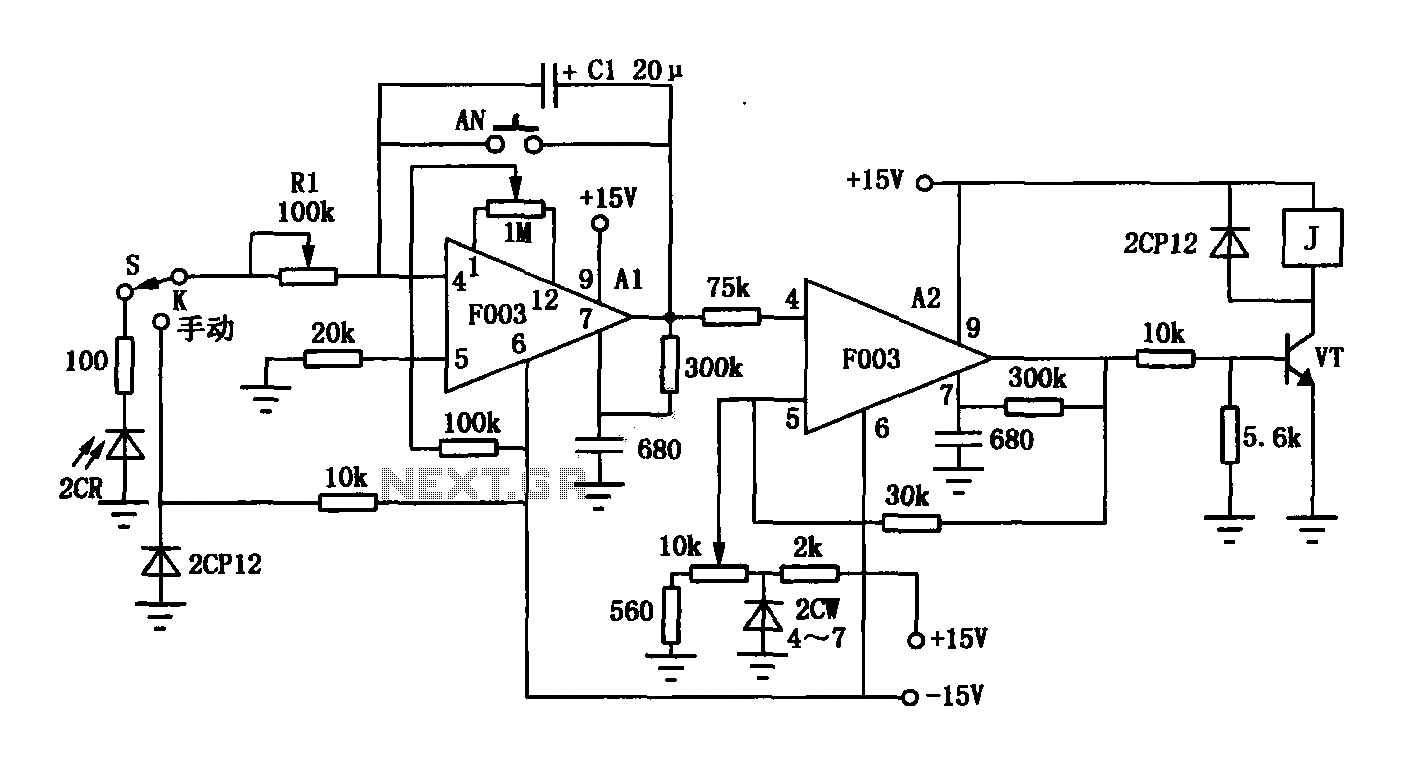
Op amp F003 composition of automatic exposure timer circuit
The F003 circuit is a versatile photographic component that functions as an operational amplifier amplifying automatic timer circuit. The operational amplifier A1 serves as an integrator, while operational amplifier A2 is configured as a comparator. A 2CR silicon photocell generates...
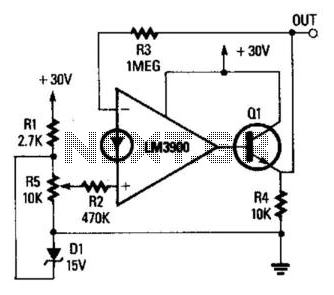
Variable Voltage Regulator
The operational amplifier (op amp) is configured as a non-inverting DC amplifier with a gain determined by the ratio of resistors R3 and R2. The input voltage to the op amp can vary between 0 and 15 V through resistor...