


LM1877 amplifier having a control circuit diagram of the bass
#LM1877
#stereo control
#bass amplifier
#audio signal
#cermet
#microphone pickup
#turntable
#left channel
#right channel
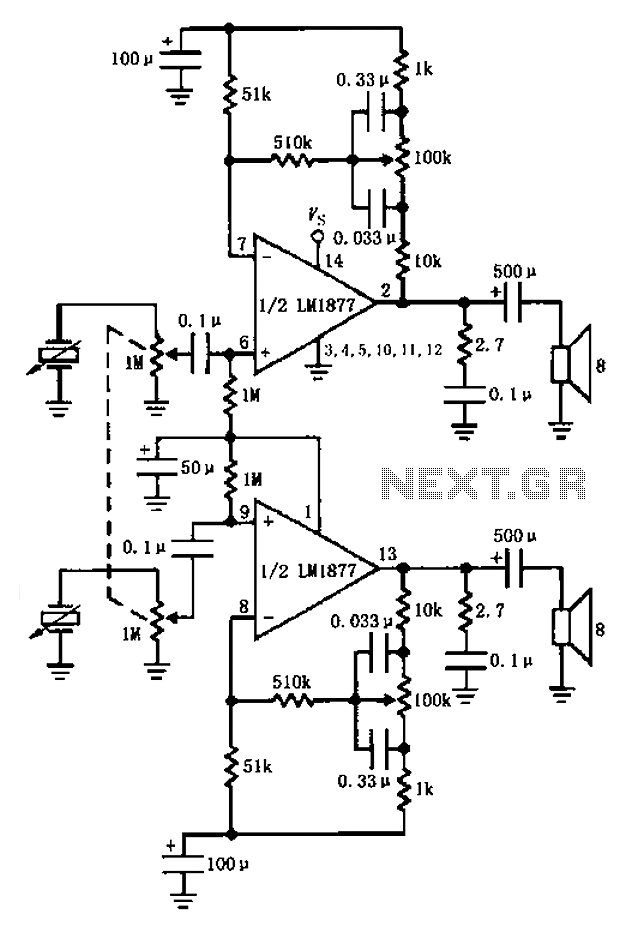
Description: A bass player setup utilizing a stereo control is implemented through an LM1877 amplifier circuit. A cermet stereo microphone pickup is used to capture audio signals from a stereo turntable, with left and right channel outputs. The audio signals are processed through two 1M potentiometers, each followed by 0.1 µF coupling capacitors, which feed into the inputs of the LM1877 at pins 6 and 9. The amplified output is provided at pins 13 and 12, directing audio to the left and right channel speakers, respectively. The two 1M potentiometers serve as volume controls, allowing for independent volume adjustment. Additionally, a 1M resistor connected to pin 2 helps set the amplifier's DC bias operating point, while the coupling capacitors function as a high-pass filter. A feedback loop is established between the amplifier's pins 2 and 7, linked by a 100k potentiometer, which serves as the bass control. Similarly, a 100k potentiometer is connected between pins 13 and 8 for further bass adjustment. Each left and right channel speaker is paralleled with a 2.7 ohm resistor and a 0.1 µF capacitor to filter out high-frequency noise.
The circuit utilizes the LM1877 integrated circuit, which is designed for audio amplification applications, particularly in bass-heavy environments. The configuration allows for effective manipulation of audio signals, ensuring that both the left and right channels are balanced and provide a rich sound output. The use of cermet potentiometers is advantageous due to their stability and longevity, making them suitable for audio applications where precision is critical.
In this setup, the two 1M potentiometers not only control the volume but also help in maintaining the integrity of the audio signal by minimizing distortion. The coupling capacitors of 0.1 µF act as high-pass filters, eliminating unwanted low-frequency noise that could interfere with the audio clarity. The feedback loop involving the 100k potentiometers is crucial for fine-tuning the bass response, allowing the user to adjust the tonal quality of the sound output to their preference.
The addition of 2.7 ohm resistors in parallel with the speakers serves to dampen any high-frequency oscillations that may arise, enhancing the overall sound quality by providing a smoother response. The capacitors in this configuration act as bypass elements, ensuring that high-frequency noise is filtered out before reaching the speakers, resulting in a cleaner sound reproduction.
Overall, this circuit design effectively combines various components to create a robust bass amplification system suitable for performance settings, where sound quality and control are of utmost importance. Bass player with a stereo control as shown by LM1877 amplifier circuit configured. Cermet stereo microphone pickup stereo turntable on the left and right channel audio signals through two 1M potentiometer input, respectively, by two 0.1 F capacitive coupling is applied to the input of LM1877 6,9 feet, amplified by two, 13 feet respectively output, respectively, to the left and right channel speaker. Among them, two 1M potentiometer for the volume potentiometer, two potentiometers linkage for adjusting the volume.
1 and connected to two feet 1M resistor is used to set the amplifier operating point of DC bias, and coupling capacitors and 0.1 F input high-pass filter. Connected in a feedback loop between the amplifier 2 feet and 7 feet 100k potentiometer (Similarly, connected between the amplifier 13 feet and 8 feet feedback loop 100k potentiometer) for the bass control potentiometer.
Respectively, of the left and right channel loudspeaker parallel 2.7 resistor, 0.1 F capacitor for filtering high frequency noise.
The circuit utilizes the LM1877 integrated circuit, which is designed for audio amplification applications, particularly in bass-heavy environments. The configuration allows for effective manipulation of audio signals, ensuring that both the left and right channels are balanced and provide a rich sound output. The use of cermet potentiometers is advantageous due to their stability and longevity, making them suitable for audio applications where precision is critical.
In this setup, the two 1M potentiometers not only control the volume but also help in maintaining the integrity of the audio signal by minimizing distortion. The coupling capacitors of 0.1 µF act as high-pass filters, eliminating unwanted low-frequency noise that could interfere with the audio clarity. The feedback loop involving the 100k potentiometers is crucial for fine-tuning the bass response, allowing the user to adjust the tonal quality of the sound output to their preference.
The addition of 2.7 ohm resistors in parallel with the speakers serves to dampen any high-frequency oscillations that may arise, enhancing the overall sound quality by providing a smoother response. The capacitors in this configuration act as bypass elements, ensuring that high-frequency noise is filtered out before reaching the speakers, resulting in a cleaner sound reproduction.
Overall, this circuit design effectively combines various components to create a robust bass amplification system suitable for performance settings, where sound quality and control are of utmost importance. Bass player with a stereo control as shown by LM1877 amplifier circuit configured. Cermet stereo microphone pickup stereo turntable on the left and right channel audio signals through two 1M potentiometer input, respectively, by two 0.1 F capacitive coupling is applied to the input of LM1877 6,9 feet, amplified by two, 13 feet respectively output, respectively, to the left and right channel speaker. Among them, two 1M potentiometer for the volume potentiometer, two potentiometers linkage for adjusting the volume.
1 and connected to two feet 1M resistor is used to set the amplifier operating point of DC bias, and coupling capacitors and 0.1 F input high-pass filter. Connected in a feedback loop between the amplifier 2 feet and 7 feet 100k potentiometer (Similarly, connected between the amplifier 13 feet and 8 feet feedback loop 100k potentiometer) for the bass control potentiometer.
Respectively, of the left and right channel loudspeaker parallel 2.7 resistor, 0.1 F capacitor for filtering high frequency noise.
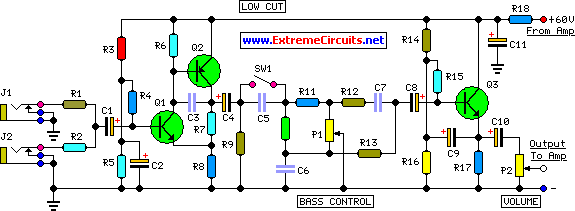
60 watt bass amplifier
The advantages of a guitar amplifier include its straightforward circuitry, even with relatively high power outputs, and a built-in degree of loudspeaker protection provided by capacitor C8, which prevents voltage supply from reaching the loudspeakers in the event of output...
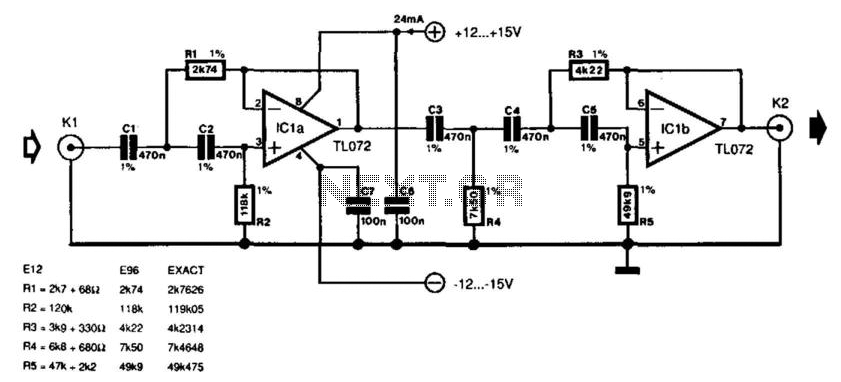
Turntable Rumble Filter
Many record players unfortunately exhibit two undesired side effects: rumble (noise caused by the motor and the turntable) and other low-frequency spurious signals. The active high-pass Chebyshev filter presented here was designed to suppress those noises. The filter has a...
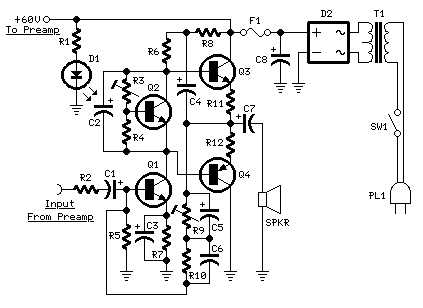
60W Bass Amplifier
60W Bass Amplifier. It features low-cut and bass controls. The output power is 40W on 8 Ohm loads and 60W on 4 Ohm loads. An amplifier circuit diagram is provided.
The 60W bass amplifier is designed to deliver robust audio performance...
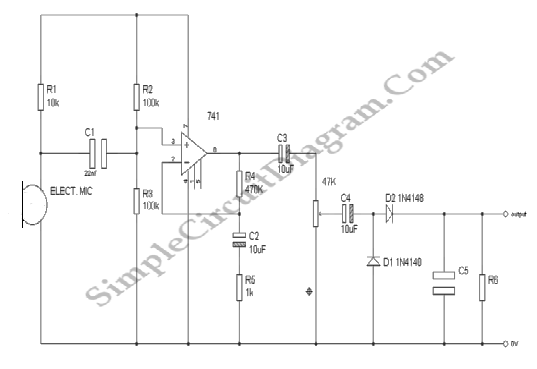
Audio Signal Strength Detector/Converter
Below is the schematic diagram of an audio input module. This module is capable of producing a DC output voltage that is proportional to the amplitude of the input signal.
The audio input module typically consists of several key components that...
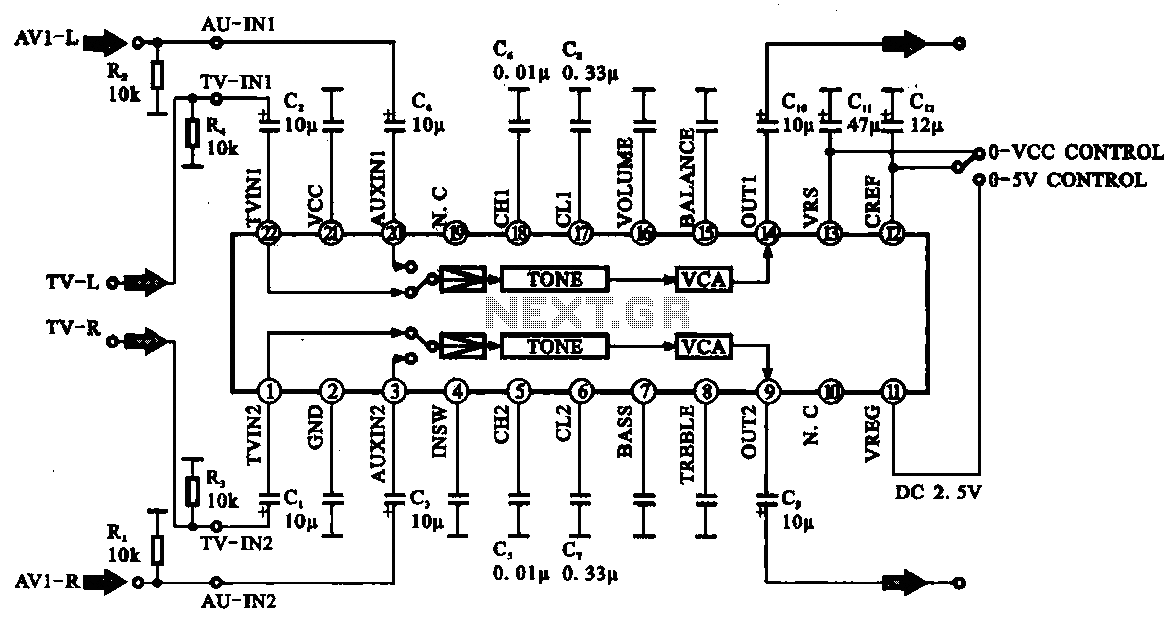
Audio signal control circuit
Audio signal control circuit. It illustrates a typical audio signal control circuit where two audio signals enter the integrated circuit through switching and tone controls (treble and bass), subsequently adjusting the output sent to the audio power amplifier.
The audio signal...
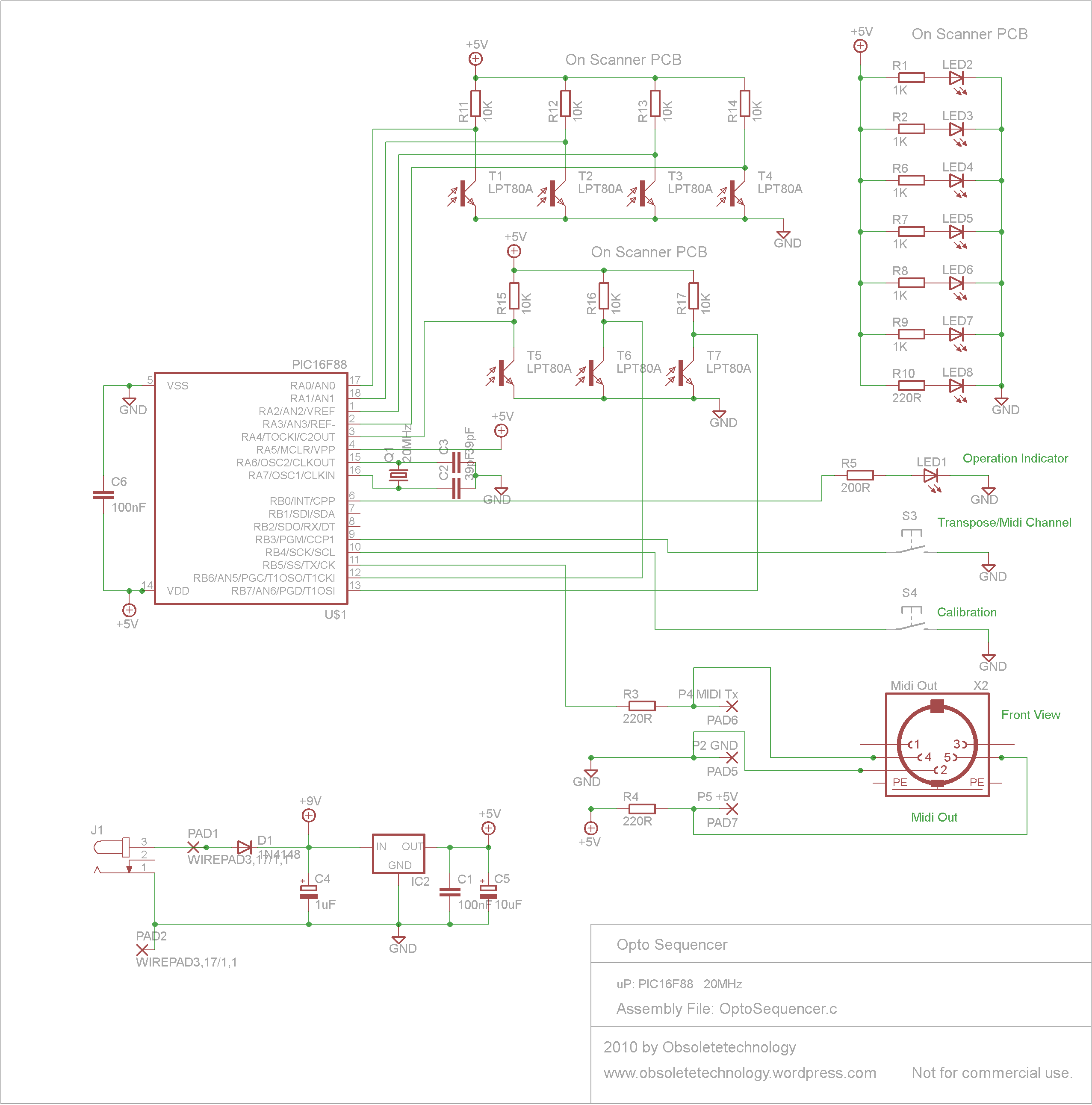
turntable sequencer
This project has been contemplated since the first attendance at a concert by Institut für Feinmotorik, a German band known for their unconventional use of turntables to produce sound and noise. What was most striking about their performance, aside from...
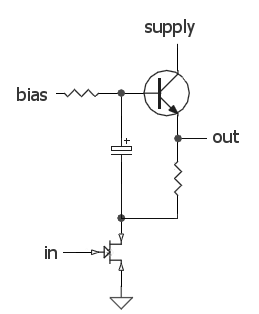
DC biasing audio signal
The audio source will be a line-level audio signal ranging from -2V to +2V AC, which will be passed through a 220µF coupling capacitor followed by a two-pole low-pass filter (RC). The signal will be processed by an Analog-to-Digital Converter...
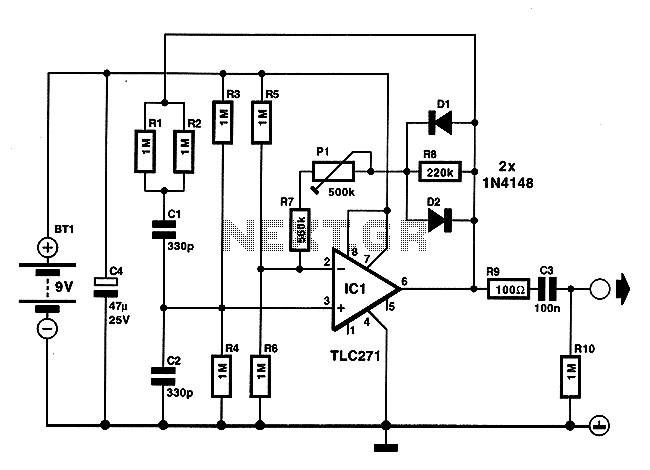
Low energy consumption audio signal generator
On occasions when it is necessary to determine if an amplifier is functioning, the most effective tool is an acoustic signal source with a frequency around 1 kHz. The specifications can be considered flexible, as rapid tests typically do not...
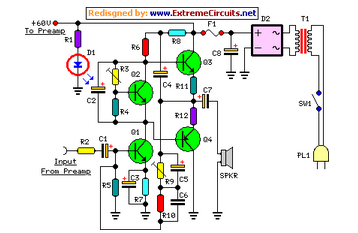
60 Watt Bass Amplifier
The circuit features low-cut and bass controls, with an output power of 40W into an 8 Ohm load and 60W into a 4 Ohm load. This design utilizes a well-established circuit topology for the power amplifier.
The described circuit is a...