


Univox 1221 1220 mods
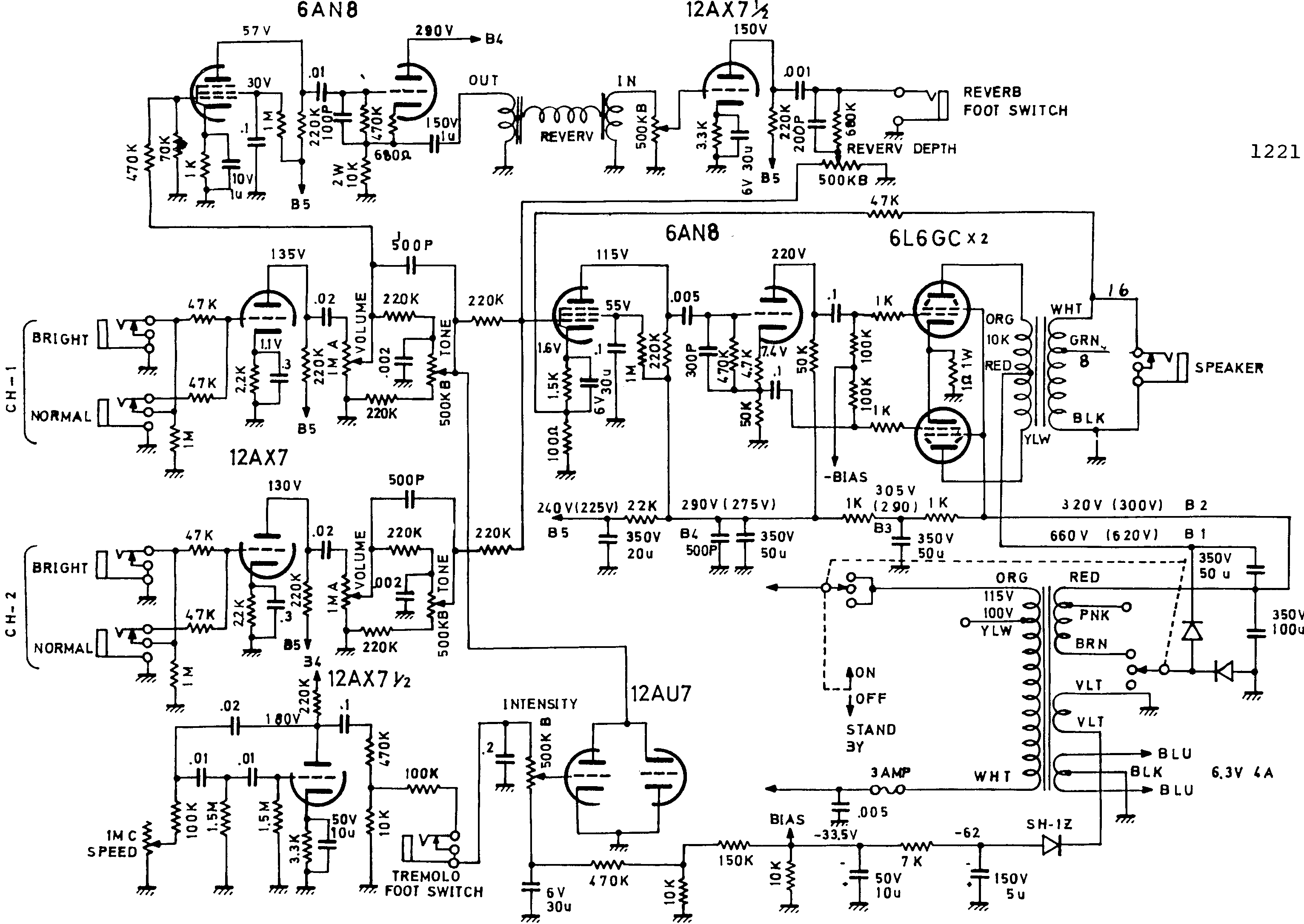
Description: Inquiry regarding the old Uni's Model 1221 amplifier, specifically seeking advice on switching from 6L6 tubes to EL34 tubes. The individual expresses a lack of expertise in tube amplifiers.
The Uni's Model 1221 is a vintage tube amplifier that typically utilizes 6L6 power tubes, known for their warm sound and reliability. The transition to EL34 tubes, which are characterized by a distinct tonal quality and higher gain, can significantly alter the amplifier's performance and sound characteristics.
When considering this modification, it is essential to understand the differences in electrical specifications between the two tube types. EL34 tubes generally require a different biasing configuration due to their unique operating characteristics. The amplifier's power supply may also need adjustments to accommodate the different voltage and current requirements of the EL34 tubes.
The socket configuration for both tube types is the same, which simplifies the physical replacement process. However, it is advisable to consult the amplifier's schematic to ensure that the output transformer and other components can handle the changes in load and power output.
Furthermore, the change in tubes may necessitate modifications to the bias circuit. Proper biasing is critical to ensure optimal performance and longevity of the tubes. It is recommended to use a multimeter to measure the plate voltage and adjust the bias accordingly.
In summary, switching from 6L6 to EL34 tubes in the Uni's Model 1221 amplifier is feasible but requires careful consideration of the electrical characteristics, biasing requirements, and potential modifications to the amplifier's circuitry. Engaging with experienced technicians or enthusiasts familiar with tube amplifiers can provide valuable insights and assistance during this process.To my new bestest pals: Anyone with experience on the old Uni`s? Model 1221. Looking to switch her to el34`s from 6l6`s. Not the savviest in the tuber..
The Uni's Model 1221 is a vintage tube amplifier that typically utilizes 6L6 power tubes, known for their warm sound and reliability. The transition to EL34 tubes, which are characterized by a distinct tonal quality and higher gain, can significantly alter the amplifier's performance and sound characteristics.
When considering this modification, it is essential to understand the differences in electrical specifications between the two tube types. EL34 tubes generally require a different biasing configuration due to their unique operating characteristics. The amplifier's power supply may also need adjustments to accommodate the different voltage and current requirements of the EL34 tubes.
The socket configuration for both tube types is the same, which simplifies the physical replacement process. However, it is advisable to consult the amplifier's schematic to ensure that the output transformer and other components can handle the changes in load and power output.
Furthermore, the change in tubes may necessitate modifications to the bias circuit. Proper biasing is critical to ensure optimal performance and longevity of the tubes. It is recommended to use a multimeter to measure the plate voltage and adjust the bias accordingly.
In summary, switching from 6L6 to EL34 tubes in the Uni's Model 1221 amplifier is feasible but requires careful consideration of the electrical characteristics, biasing requirements, and potential modifications to the amplifier's circuitry. Engaging with experienced technicians or enthusiasts familiar with tube amplifiers can provide valuable insights and assistance during this process.To my new bestest pals: Anyone with experience on the old Uni`s? Model 1221. Looking to switch her to el34`s from 6l6`s. Not the savviest in the tuber..
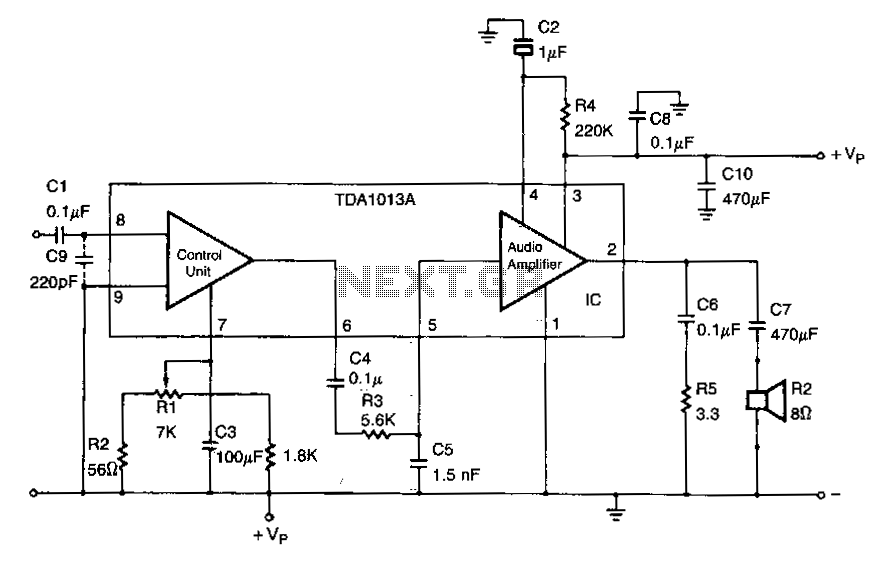
Audio-amplifier
C9 is necessary to filter out RF input interferences. R3 in combination with C5 is used to limit the AF frequency bandwidth. The 470-f.IF power supply decoupling capacitor is C10.
C9 serves a critical role in the circuit by acting as...
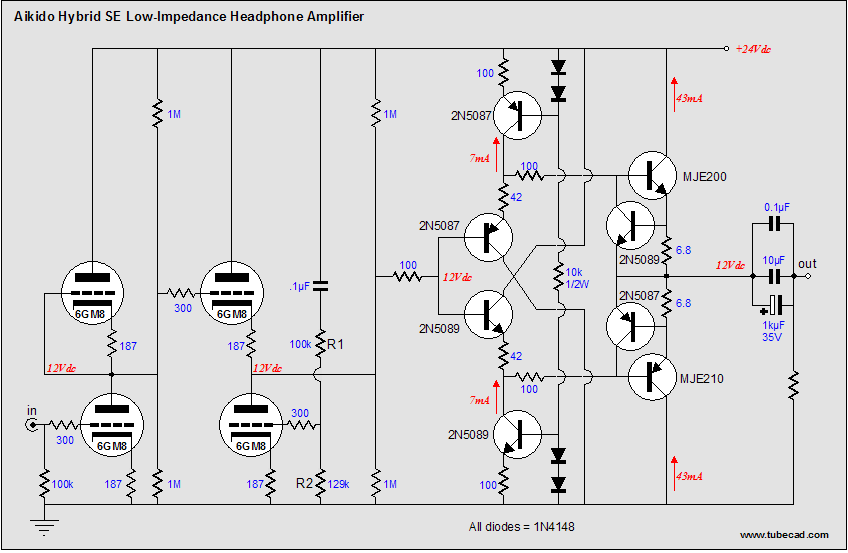
Aikido octal mono PCBs and 5687 PCBs and Aikido and 300B amplifiers
Buffers are a specific category of amplifiers, and power buffers are a subset of power amplifiers. The defining characteristics of all buffers include unity gain and a low impedance output, ideally accompanied by low distortion. When examining commercially available buffers,...
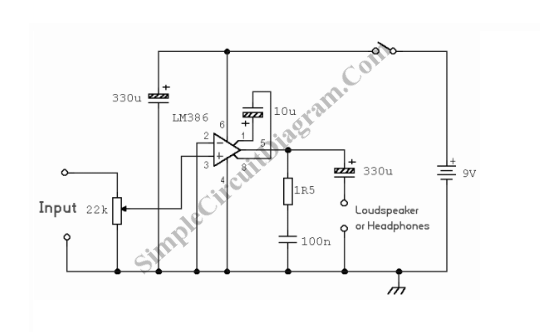
Small High Quality Audio Power Amplifier
This audio power amplifier is highly suitable for portable devices or as a headphone amplifier. The circuit design of this audio power amplifier is straightforward.
This audio power amplifier circuit is designed to enhance audio signals for portable devices and headphones,...
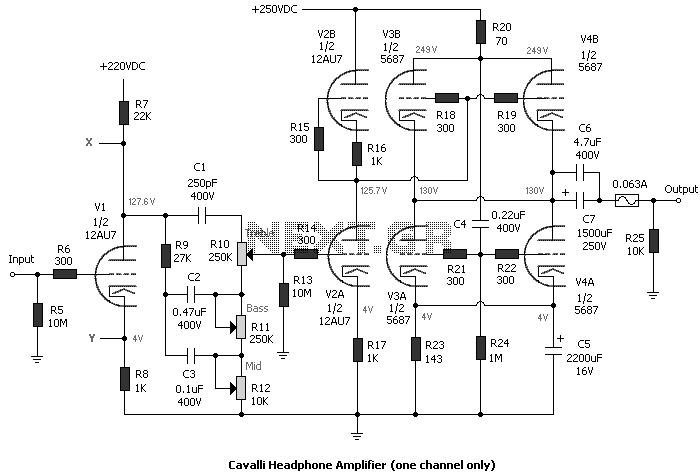
Tube Headphone Amplifier II
This is the schematic of the final design including the tone stack but leaving out the volume, balance, and sonic controls. The right half of the circuit is John Broskie's original White cathode amplifier with a pair of 5687s as...
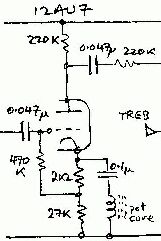
Amplifier Stages
The XLR or Cannon-type connector is a superior audio connector compared to a 6.5mm jack plug and socket. However, tradition mandates the use of the 6.5mm socket, despite its significant connection issues. Inputs can vary from a single socket directly...
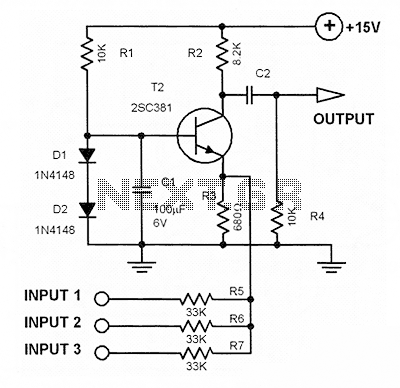
Audio Mixer with one transistor
This single transistor audio mixer is utilized in an amplifier circuit design featuring a base-driven transistor, where the emitter is current-controlled. The majority of the driving current flows through the collector.
This audio mixer circuit employs a single transistor to mix...
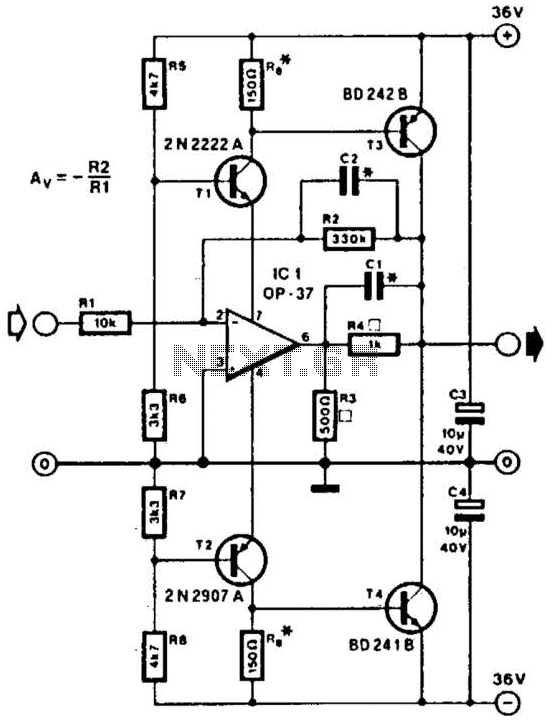
Audio Line Driver Circuit
This line driver is capable of driving low-impedance lines with a maximum output of 70 V peak-to-peak. IC1 functions as a low-noise operational amplifier suitable for operation at 15 V. T1 and T2 serve as voltage regulators for the power...
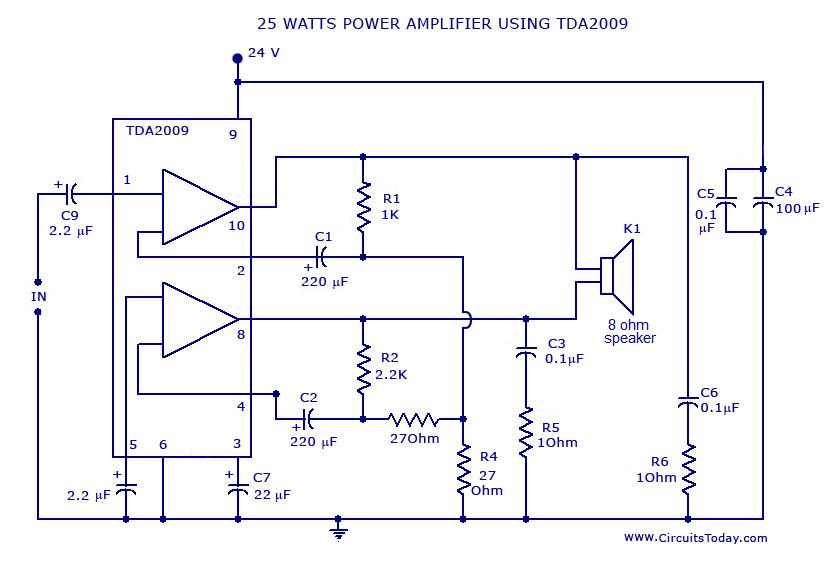
Power AmplifierCircuit and Schematics for 25 Watts-IC TDA2009
Power amplifier circuit diagram with schematics. This simple audio power amplifier circuit is designed for 25 watts output power using TDA 2009 IC, which has two channels (stereo), 12.5 W for each channel.
The described power amplifier circuit utilizes the TDA...
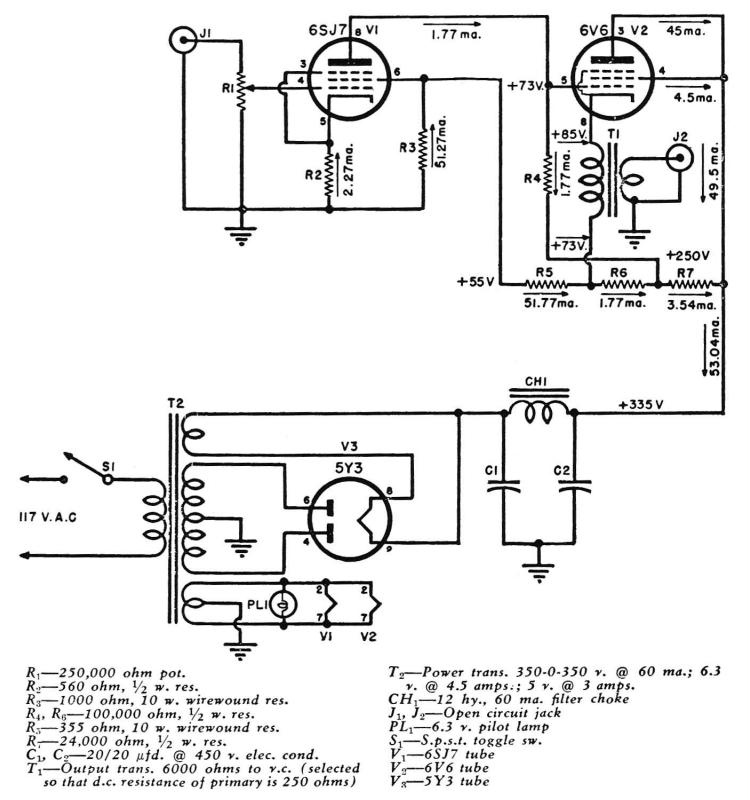
A Direct-Coupled Amplifier with Cathode Follower by Raymond H. Bates
A Direct-Coupled 6V6 Tube Amplifier with Cathode Follower by Raymond H. Bates from Radio & Television News magazine, November 1949.
The Direct-Coupled 6V6 Tube Amplifier is designed to utilize a 6V6 vacuum tube, which is known for its warm sound and...