


arduino Circuit with switching MOSFET not working
#arduino
#mosfet
#switching
#power supply
#ground loop
#circuit troubleshooting
#electronics
#microcontroller
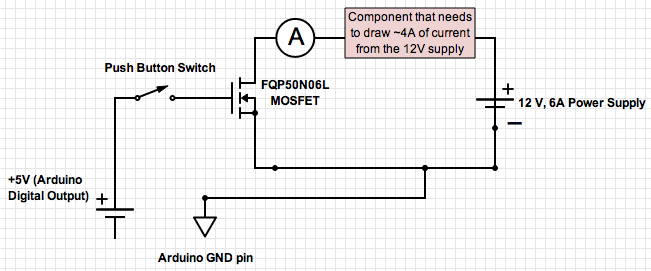
Description: If the ground of the Arduino is disconnected from the negative terminal of the power supply, current flows through the MOSFET, even when the switch is not closed.
In an electronic circuit involving an Arduino and a MOSFET, maintaining a common ground reference is crucial for proper operation. The Arduino microcontroller typically requires a stable ground connection to function correctly. When the ground of the Arduino is disconnected from the negative terminal of the power supply, it creates a floating ground condition. This can lead to unexpected behavior in the circuit.
In this scenario, the MOSFET, which is a type of transistor used for switching or amplifying electronic signals, may still conduct current even when the control switch is open (not closed). This phenomenon occurs because the gate-source voltage (Vgs) may still exceed the threshold voltage (Vth) required to turn the MOSFET on, due to the floating ground. This can happen if there are stray voltages or capacitive coupling in the circuit, which can inadvertently turn on the MOSFET.
To prevent such issues, it is essential to ensure that all components in the circuit share a common ground. This can be achieved by connecting the ground pin of the Arduino directly to the negative terminal of the power supply. Additionally, careful circuit design should include decoupling capacitors and proper layout techniques to minimize noise and ensure stable operation. Implementing these practices will enhance the reliability of the circuit and prevent unintended current flow through the MOSFET when the switch is open.If I disconnect the ground of the Arduino from the negative terminal of the power supply, current flows through the MOSFET, even when the switch isn`t closed!
In an electronic circuit involving an Arduino and a MOSFET, maintaining a common ground reference is crucial for proper operation. The Arduino microcontroller typically requires a stable ground connection to function correctly. When the ground of the Arduino is disconnected from the negative terminal of the power supply, it creates a floating ground condition. This can lead to unexpected behavior in the circuit.
In this scenario, the MOSFET, which is a type of transistor used for switching or amplifying electronic signals, may still conduct current even when the control switch is open (not closed). This phenomenon occurs because the gate-source voltage (Vgs) may still exceed the threshold voltage (Vth) required to turn the MOSFET on, due to the floating ground. This can happen if there are stray voltages or capacitive coupling in the circuit, which can inadvertently turn on the MOSFET.
To prevent such issues, it is essential to ensure that all components in the circuit share a common ground. This can be achieved by connecting the ground pin of the Arduino directly to the negative terminal of the power supply. Additionally, careful circuit design should include decoupling capacitors and proper layout techniques to minimize noise and ensure stable operation. Implementing these practices will enhance the reliability of the circuit and prevent unintended current flow through the MOSFET when the switch is open.If I disconnect the ground of the Arduino from the negative terminal of the power supply, current flows through the MOSFET, even when the switch isn`t closed!

mosfet low dropout charger circuit
This circuit is designed as a low dropout charger using a MOSFET as the pass element; however, it does not incorporate current limiting. The circuit diagram illustrates a straightforward design. It utilizes Q3 and a Schottky diode to isolate the...

MAX668 16V 4.4A switching power supply circuit design electronic project
A simple 16-volt switching power supply circuit can be constructed using the provided diagram, which is based on the MAX668 constant-frequency, pulse-width modulating (PWM), current-mode DC-DC controller. This integrated circuit is designed for a wide range of DC-DC conversion applications...

Arduino Based Current Sensor Circuit
The primary component utilized is the ACS712 sensor from Allegro MicroSystems, designed for measuring current. It offers cost-effective and accurate solutions for AC or DC current sensing in industrial, commercial, and communication systems. A precise, low-offset, linear Hall sensor is...
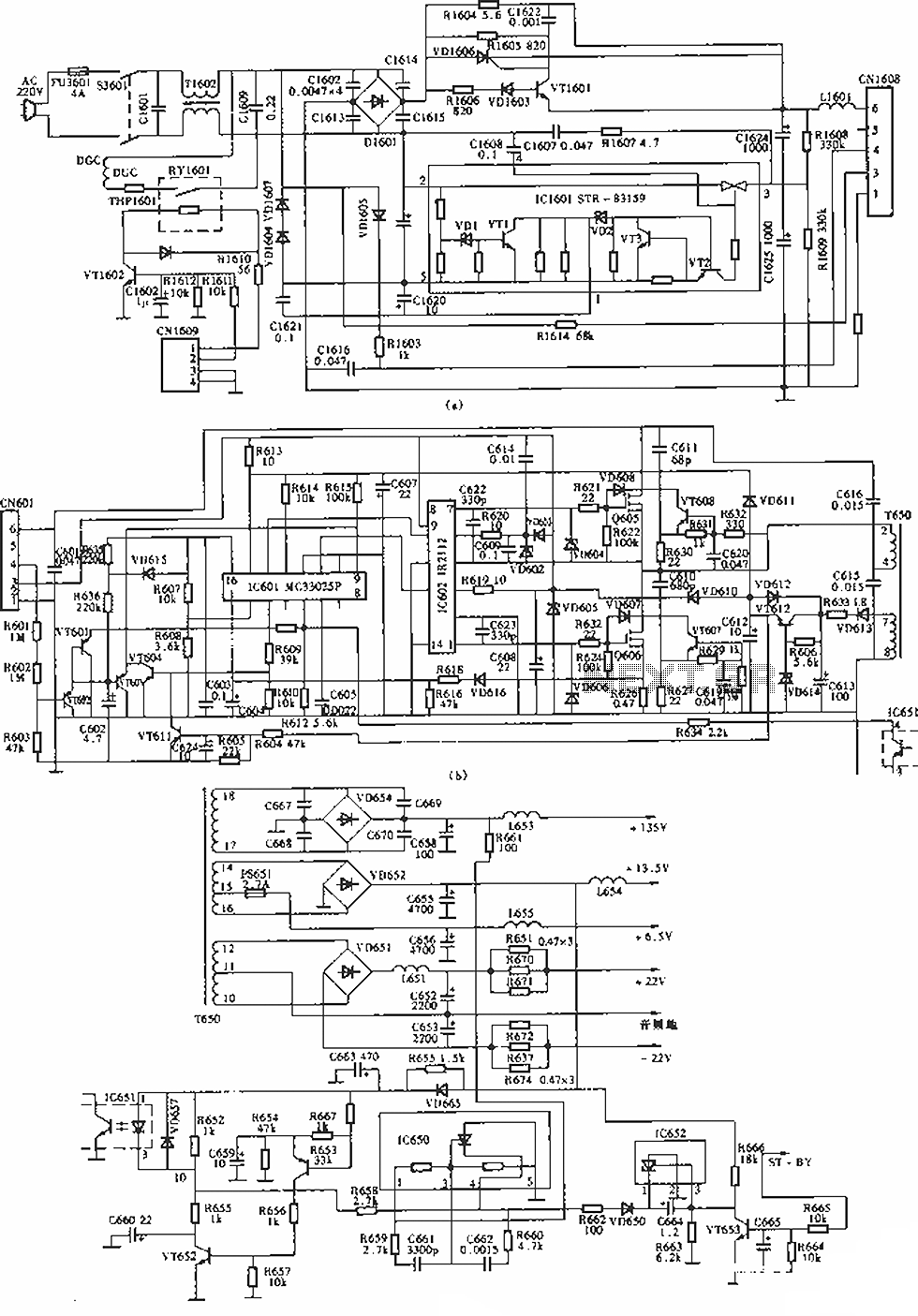
Sony KV-S29MHl TV switching power supply (SIR a 80145A) circuit diagram
The circuit of the Sony KV-S29MHl (S Movement series) TV switching power supply (SIR a 80145A) consists of three main sections: (A) the power oscillation part, (B) the regulator part, and (C) the output section.
The Sony KV-S29MHl TV switching power...
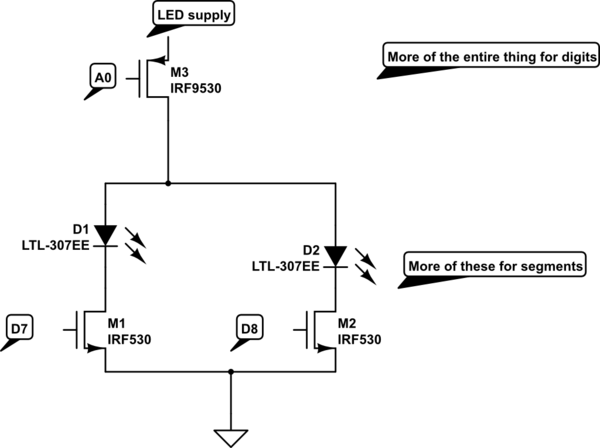
arduino How can I display a scoreboard on stage for a play
A scoreboard is located in the center of the room, which will be controlled from backstage. The scoreboard features two individual 3-digit numbers. Whenever the score changes, a sound will be emitted. The simplest, most efficient, and cost-effective solution identified...
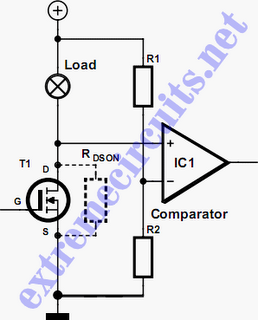
MOSFET short-circuit protection Schematic Diagram
In applications where a MOSFET is used to switch a load, it is relatively straightforward to incorporate short-circuit or overload protection. This can be achieved by utilizing the internal resistance RDS(ON), which generates a voltage drop proportional to the current...
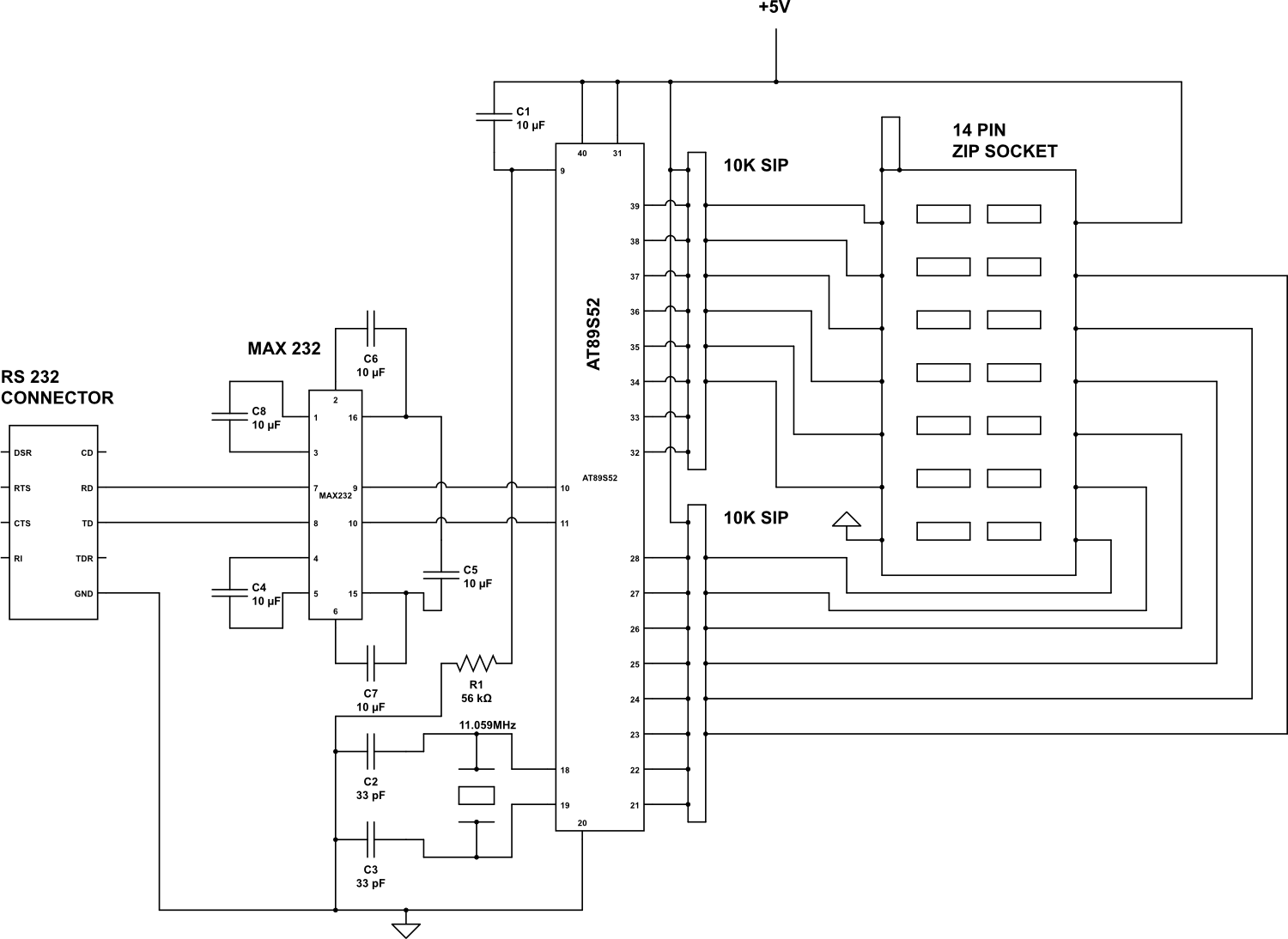
pc based digital ic tester
Check the following ICs: 7400, 7402, 7404, 7408, 7432, 7486. A Visual Basic program is utilized to display the results on the PC. The microcontroller AT89S52 receives the IC number from the PC, verifies the logic gates with the truth...
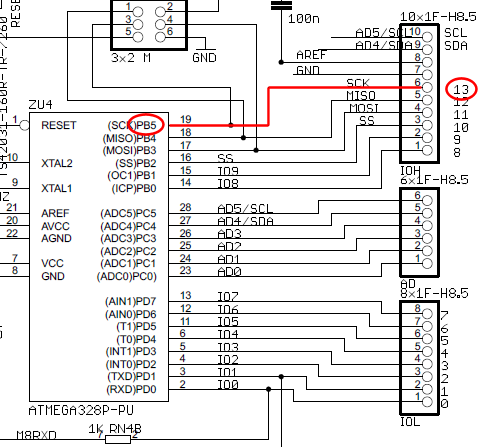
breadboard How does current flow through this Arduino circuit
The wire connected to the 5V pin is linked to the positive pins of the breadboard, which are not connected to any other components. There are no additional connections on the positive column. While this may seem like a basic...
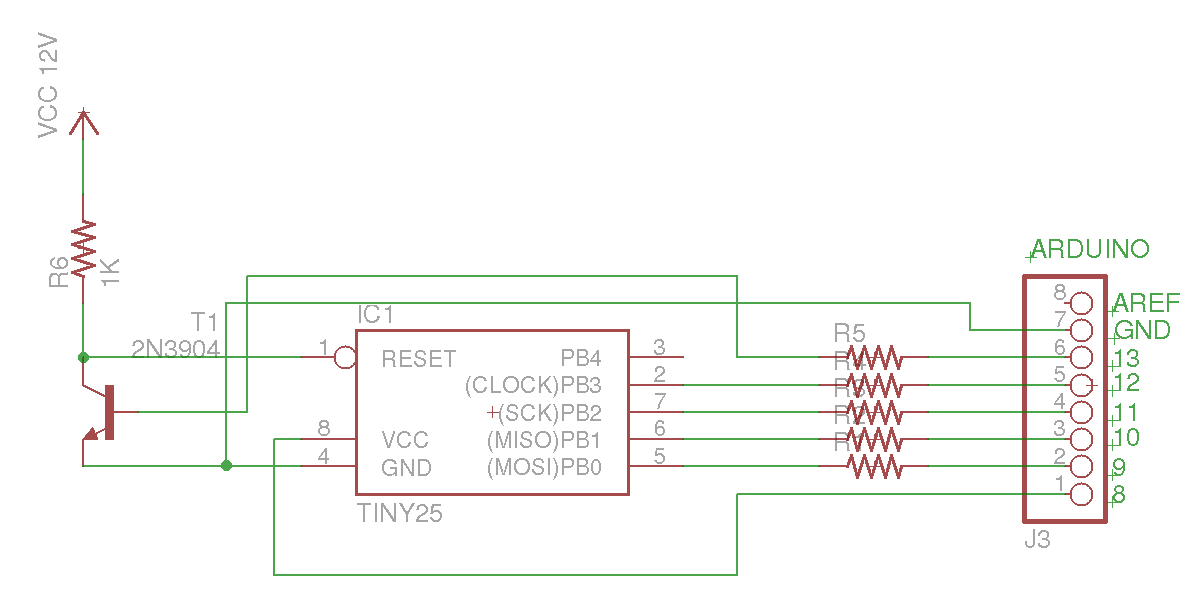
Arduino AVR High-Voltage Serial Programmer
This Arduino sketch is designed to recover ATtiny microcontrollers that have become non-functional due to incorrect fuse settings. It achieves this by placing the affected ATtiny into high-voltage serial programming mode and rewriting the fuses to safe values. The Arduino...