


Guitar Loop with Arduino
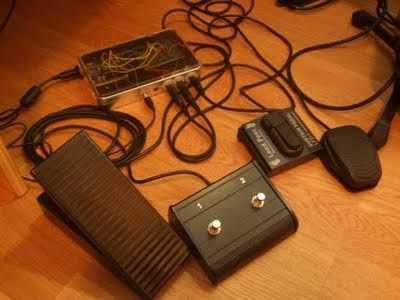
Description: Build a Guitar Looper with an Arduino board. Here is how to produce a pedalboard for electric guitar. The idea is to connect pedals to the Arduino and to use them to control a software of sound processing in Pure Data. Here I show you the example of a looper, but one can be also made a rack of effects without problem.
To construct a guitar looper using an Arduino board, the project requires several key components and a systematic approach to wiring and programming. The primary components include the Arduino board (e.g., Arduino Uno), a breadboard, various guitar pedals, a power supply, and the necessary cables for connections.
The schematic will typically involve connecting the output of the guitar to the input of the first pedal in the chain, with subsequent pedals connected in series. The output from the last pedal will then be routed to the Arduino's analog or digital input pins. The Arduino can be programmed to interpret the signals from the pedals, which can be used to control playback and recording functions in the Pure Data software.
For the control interface, the Arduino can be equipped with buttons or footswitches that correspond to various functions of the looper, such as record, play, stop, and overdub. Each of these controls can be connected to digital input pins on the Arduino, with pull-down resistors used to ensure stable readings. The Arduino code will need to implement debouncing for the buttons to avoid multiple triggers from a single press.
The communication between the Arduino and Pure Data can be established using a serial connection, allowing for real-time control of audio processing parameters based on the pedal inputs. This setup enables the creation of complex audio loops and effects, making it a versatile tool for live performances and studio work.
In summary, the guitar looper project with an Arduino board integrates hardware and software components to create an interactive and customizable audio processing system, suitable for musicians looking to enhance their performance capabilities.Build a Guitar Looper with an Arduino board. Here is how to produce pedalboard for electric guitar. The idea is to connect pedals to the Arduino, and to use them to control a software of sound processing in Pure Data. Here I show you the example of a looper, but one can be also made a rack of effects without problem.
To construct a guitar looper using an Arduino board, the project requires several key components and a systematic approach to wiring and programming. The primary components include the Arduino board (e.g., Arduino Uno), a breadboard, various guitar pedals, a power supply, and the necessary cables for connections.
The schematic will typically involve connecting the output of the guitar to the input of the first pedal in the chain, with subsequent pedals connected in series. The output from the last pedal will then be routed to the Arduino's analog or digital input pins. The Arduino can be programmed to interpret the signals from the pedals, which can be used to control playback and recording functions in the Pure Data software.
For the control interface, the Arduino can be equipped with buttons or footswitches that correspond to various functions of the looper, such as record, play, stop, and overdub. Each of these controls can be connected to digital input pins on the Arduino, with pull-down resistors used to ensure stable readings. The Arduino code will need to implement debouncing for the buttons to avoid multiple triggers from a single press.
The communication between the Arduino and Pure Data can be established using a serial connection, allowing for real-time control of audio processing parameters based on the pedal inputs. This setup enables the creation of complex audio loops and effects, making it a versatile tool for live performances and studio work.
In summary, the guitar looper project with an Arduino board integrates hardware and software components to create an interactive and customizable audio processing system, suitable for musicians looking to enhance their performance capabilities.Build a Guitar Looper with an Arduino board. Here is how to produce pedalboard for electric guitar. The idea is to connect pedals to the Arduino, and to use them to control a software of sound processing in Pure Data. Here I show you the example of a looper, but one can be also made a rack of effects without problem.
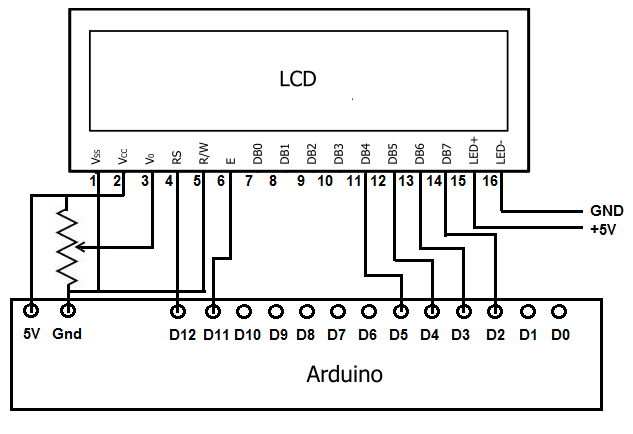
Display Text on an HD44780 LCD with an Arduino
To achieve this, the first step involves establishing the necessary physical connections between the Arduino board and the LCD. Following this, code must be written to display the desired text on the LCD. LCDs have become the standard means of...
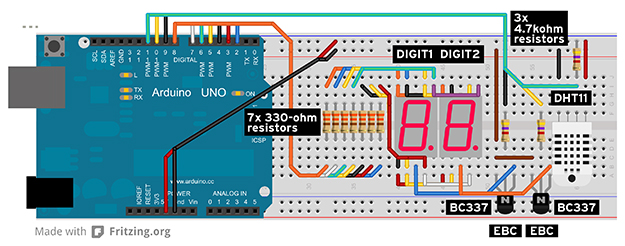
Arduino Build LED weather station
In Part 2 of the Arduino masterclass, a weather station is built to measure temperature in degrees Celsius and relative humidity as a percentage. New components and theory are introduced, and practical application is emphasized. While LEDs are effective indicators,...
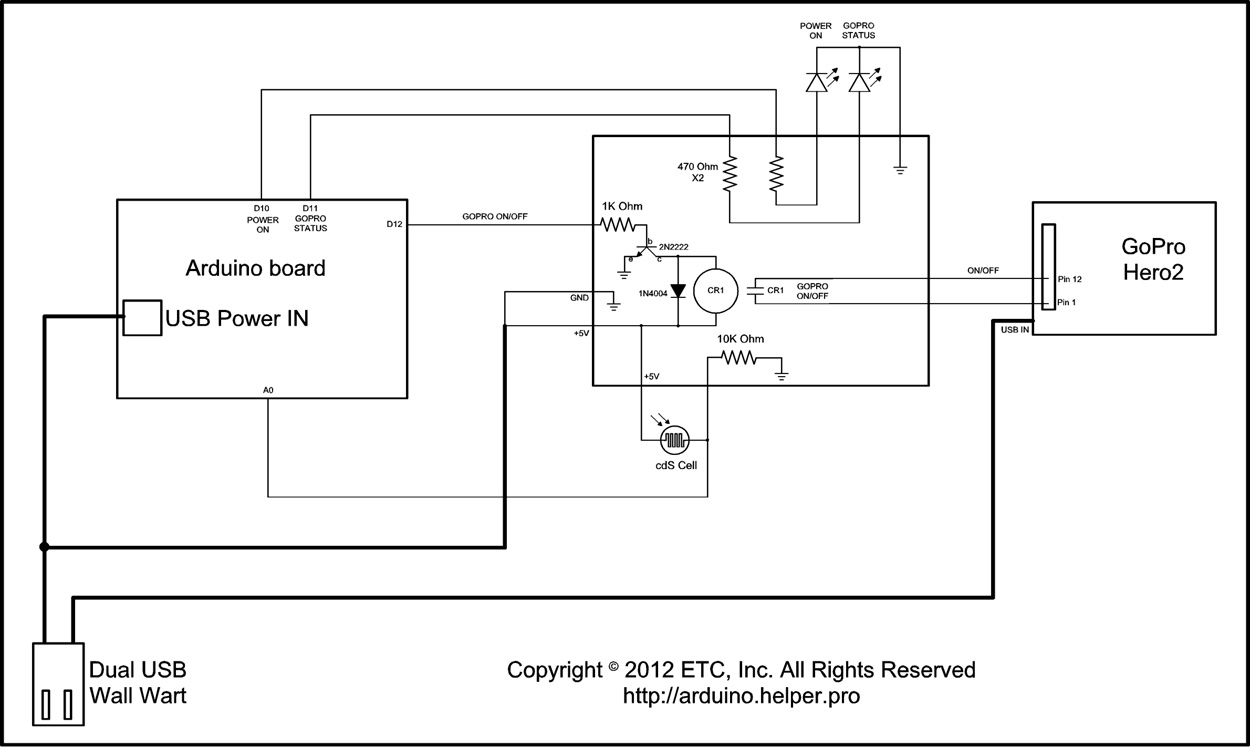
Arduino GoPro Hero2 Control
The project involves creating a time-lapse photography setup using a GoPro Hero2 camera to capture images of a race car chassis fabrication project at 20-minute intervals. Although the GoPro has a built-in time-lapse feature, it cannot manage long intervals between...
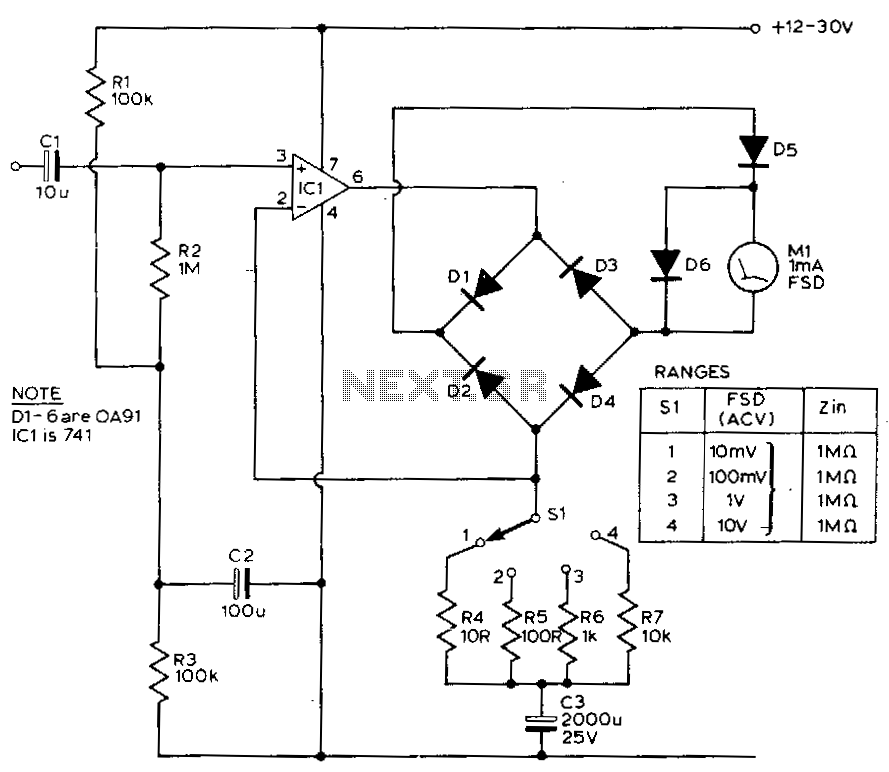
Audio-millivoltmeter
This circuit exhibits a flat frequency response from 8 Hz to 50 kHz, maintaining a -3 dB level at the 10 mV range. Furthermore, while the upper frequency limit remains consistent across less sensitive ranges, the lower frequency limit extends...
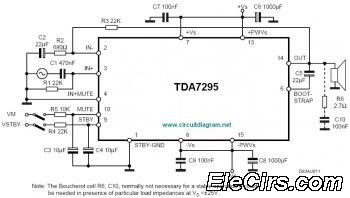
TDA7295 80W Audio Amplifier
The IC TDA7295 is a monolithic integrated circuit designed for use as an audio class AB amplifier in high-fidelity applications, including home theaters and high-end televisions.
The TDA7295 is a versatile audio amplifier that delivers high-quality sound reproduction, making it suitable...
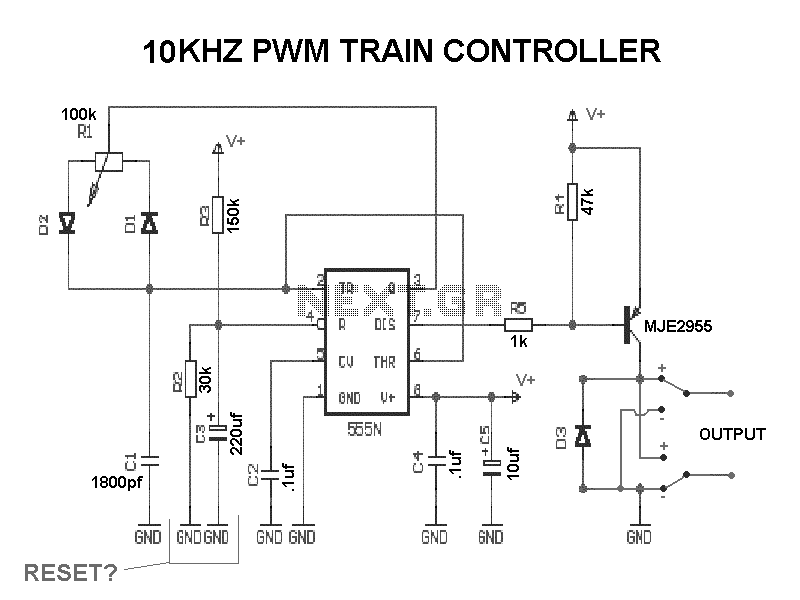
Guitar Patch Cord
The PhoneAxe is a unique design that incorporates a passive filter network within a 1/4" phone plug/coaxial cable. It is specifically engineered to facilitate the matching of electric guitars to the magnetic phono input found on standard hi-fi amplifiers. Electric...
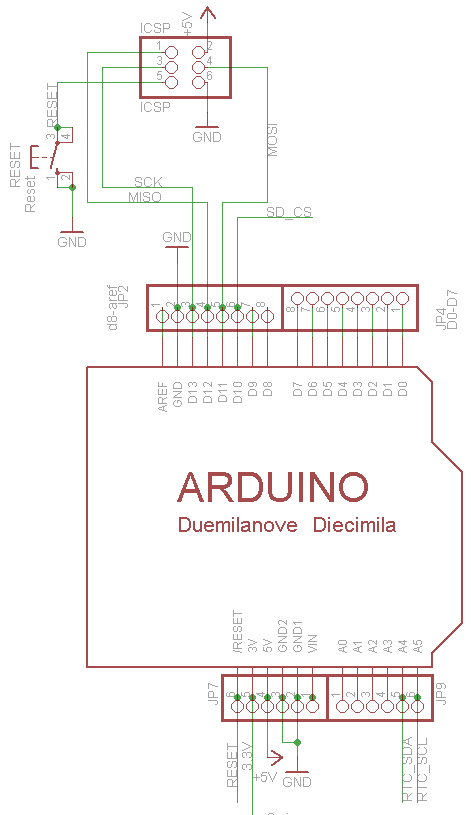
Datalogging for Arduino
Here is a practical Arduino shield designed specifically for data logging. It has been engineered to be an affordable yet comprehensive solution. The design is user-friendly, allowing for easy assembly and customization, and it includes extensive documentation and libraries. Users...

audiohackers jamcat design
During the recent audio hackers meetup at Hacker Dojo, discussions were held with Laura and Kevin regarding the challenges faced in creating a small local network referred to as "JamLan." There was mention of the consideration to develop a straightforward...
Guitar Stompbox & Effects Projects
The classic Rangemaster is considered a source of some of the finest tones in rock guitar, from Clapton's Beano sound to Brian May's singing sustain tones. Although the effect is a simple one-transistor booster, finding a high-quality germanium transistor for...