


Laser-guided Ghost Climber using an Arduino
Description: Climber A ascends a route while Climber B remains on the ground, tracking Climber A's progress with a laser pointer. The Redpointer device records the exact route taken. In Mode 1, the recorded route is played back in real-time, projecting a laser point onto the climbing wall to illustrate the path of the previous climber. For instance, Climber C arrives late to the climbing session. Climbers A, B, and C observe as the laser turret replays Climber A's recorded route in Mode 1. Climber C can see where to climb to imitate Climber A. This mode combines Modes 1 and 2, specifically designed for competition against a previously set route. Once a route is recorded in Mode 1, another climber can race against it in Mode 3, receiving live feedback on whether they are ahead or behind the recorded pace. For example, Climber C climbs the same route as Climber A while Climber B uses a laser pointer to track Climber C's progress. Simultaneously, a separate laser pointer illustrates Climber A's path on the same wall, allowing Climber C to determine if they are winning or losing the race. A buzzer sounds whenever Climber C overtakes or is overtaken by Climber A's ghost. At the end of the route, the Redpointer indicates whether Climber A or Climber C won the race. Several serious safety issues must be considered before starting this project. Rock climbing is inherently dangerous, and while this danger is mitigated by the careful use of ropes, harnesses, and other safety equipment, it is always present. Individuals should not attempt rock climbing unless they are fully competent and confident in the various techniques involved (belaying, leading, rigging, etc.). This project also involves soldering and working with electrical circuits, which should be done in well-ventilated, uncluttered, and dry environments, with sensible precautions to avoid burns, fires, and electric shocks.
The described system involves an innovative approach to enhancing rock climbing training and competition through the use of a laser-based tracking and feedback mechanism. The Redpointer device serves as the core component, integrating multiple functionalities to assist climbers in both training and competitive scenarios.
The system operates in three distinct modes, each tailored to specific climbing scenarios. In Mode 1, the route taken by Climber A is meticulously recorded using a laser pointer, which captures the trajectory of the climb. This data is stored and can be replayed in real-time, projecting a visual representation of the path onto the climbing wall. This feature not only aids in visualization for other climbers but also serves as a valuable training tool, allowing climbers to analyze and learn from the recorded routes.
Mode 2 is designed to facilitate direct competition. Once a route is established in Mode 1, Climber C can use Mode 3 to race against Climber A's recorded performance. This mode provides real-time feedback, indicating whether Climber C is maintaining a pace that is ahead or behind that of Climber A. The integration of two laser pointers allows for simultaneous tracking of both climbers, with one pointer illustrating Climber A's path, while the other monitors Climber C's progress. The use of auditory feedback, such as a buzzer that sounds upon overtaking or being overtaken, adds an element of excitement and motivation to the competition.
Safety considerations are paramount in the development and use of this system. Rock climbing inherently carries risks, and the implementation of this technology must be accompanied by strict adherence to safety protocols. Climbers must ensure they possess the necessary skills and experience before engaging in climbing activities. Furthermore, the electronic components involved in the project require careful handling and assembly, emphasizing the importance of working in safe environments to prevent accidents related to electrical hazards.
Overall, the Redpointer system represents a significant advancement in rock climbing training and competition, merging technology with physical activity to enhance performance and safety in the sport.A ascends a route while Climber B stays on the ground and tracks Climber A`s progress with the laser pointer. The Redpointer then records exactly what route was followed. Here, the route recorded in Mode 1 is played back in real-time, projecting a laser point onto the climbing wall to illustrate the path of the previous climber as a g
host . E. g. Climber C now turns up late to the climbing session. Climbers A, B and C all stand back and watch the laser turret replay the route Climber A took when recording in Mode 1. Climber C now knows where to climb if she wants to imitate A. This mode is a combination of modes 1 and 2 and is designed specifically for competing against a previously set route.
Once a route has been recorded in Mode 1, another climber can race against it in Mode 3 and be given live feedback saying whether he/she is ahead of or behind the pace set in the recording. E. g. Climber C now climbs the same route as Climber A, while Climber B uses one laser pointer to track C`s progress.
Meanwhile a separate laser pointer illustrates A`s ghost on the same wall so that C can tell if she is winning or losing the race. Every time C overtakes A`s ghost or is overtaken by A`s ghost, a buzzer sounds. At the end of the route, The Redpointer indicates whether A or C won the race. There are a few serious safety issues to consider before beginning this project. Please do not skip to the next step without first carefully considering these. Rock climbing is inherently dangerous. Obviously, this danger is largely mitigated by the careful use of ropes, harnesses and other safety equipment but the danger is always present.
Never go rock climbing if you are not fully competent and confident in the various techniques involved (belaying, leading, rigging, etc. ). This project involves soldering and working with electrical circuits. Always do both of these in well-ventilated, uncluttered and dry environments, using sensible precautions to avoid burns, fires and electric shocks.
The described system involves an innovative approach to enhancing rock climbing training and competition through the use of a laser-based tracking and feedback mechanism. The Redpointer device serves as the core component, integrating multiple functionalities to assist climbers in both training and competitive scenarios.
The system operates in three distinct modes, each tailored to specific climbing scenarios. In Mode 1, the route taken by Climber A is meticulously recorded using a laser pointer, which captures the trajectory of the climb. This data is stored and can be replayed in real-time, projecting a visual representation of the path onto the climbing wall. This feature not only aids in visualization for other climbers but also serves as a valuable training tool, allowing climbers to analyze and learn from the recorded routes.
Mode 2 is designed to facilitate direct competition. Once a route is established in Mode 1, Climber C can use Mode 3 to race against Climber A's recorded performance. This mode provides real-time feedback, indicating whether Climber C is maintaining a pace that is ahead or behind that of Climber A. The integration of two laser pointers allows for simultaneous tracking of both climbers, with one pointer illustrating Climber A's path, while the other monitors Climber C's progress. The use of auditory feedback, such as a buzzer that sounds upon overtaking or being overtaken, adds an element of excitement and motivation to the competition.
Safety considerations are paramount in the development and use of this system. Rock climbing inherently carries risks, and the implementation of this technology must be accompanied by strict adherence to safety protocols. Climbers must ensure they possess the necessary skills and experience before engaging in climbing activities. Furthermore, the electronic components involved in the project require careful handling and assembly, emphasizing the importance of working in safe environments to prevent accidents related to electrical hazards.
Overall, the Redpointer system represents a significant advancement in rock climbing training and competition, merging technology with physical activity to enhance performance and safety in the sport.A ascends a route while Climber B stays on the ground and tracks Climber A`s progress with the laser pointer. The Redpointer then records exactly what route was followed. Here, the route recorded in Mode 1 is played back in real-time, projecting a laser point onto the climbing wall to illustrate the path of the previous climber as a g
host . E. g. Climber C now turns up late to the climbing session. Climbers A, B and C all stand back and watch the laser turret replay the route Climber A took when recording in Mode 1. Climber C now knows where to climb if she wants to imitate A. This mode is a combination of modes 1 and 2 and is designed specifically for competing against a previously set route.
Once a route has been recorded in Mode 1, another climber can race against it in Mode 3 and be given live feedback saying whether he/she is ahead of or behind the pace set in the recording. E. g. Climber C now climbs the same route as Climber A, while Climber B uses one laser pointer to track C`s progress.
Meanwhile a separate laser pointer illustrates A`s ghost on the same wall so that C can tell if she is winning or losing the race. Every time C overtakes A`s ghost or is overtaken by A`s ghost, a buzzer sounds. At the end of the route, The Redpointer indicates whether A or C won the race. There are a few serious safety issues to consider before beginning this project. Please do not skip to the next step without first carefully considering these. Rock climbing is inherently dangerous. Obviously, this danger is largely mitigated by the careful use of ropes, harnesses and other safety equipment but the danger is always present.
Never go rock climbing if you are not fully competent and confident in the various techniques involved (belaying, leading, rigging, etc. ). This project involves soldering and working with electrical circuits. Always do both of these in well-ventilated, uncluttered and dry environments, using sensible precautions to avoid burns, fires and electric shocks.
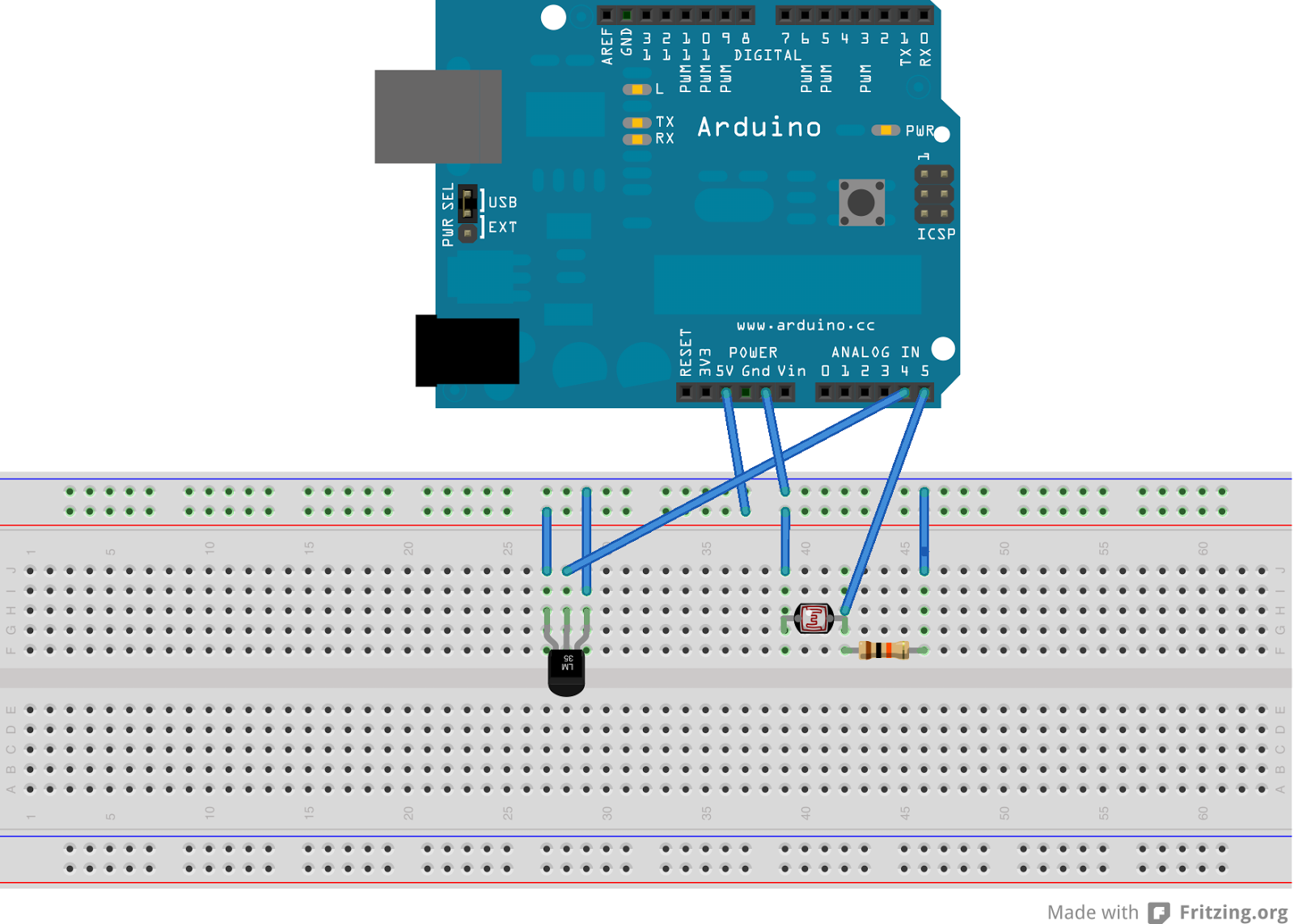
arduino temperature and light sensor
This device transmits data regarding the state of an office to Twitter, as it is deemed slightly more relevant than sharing similar information about a residence. It holds potential significance for biodiversity-related activities, especially when integrated with long-range WiFi technologies....
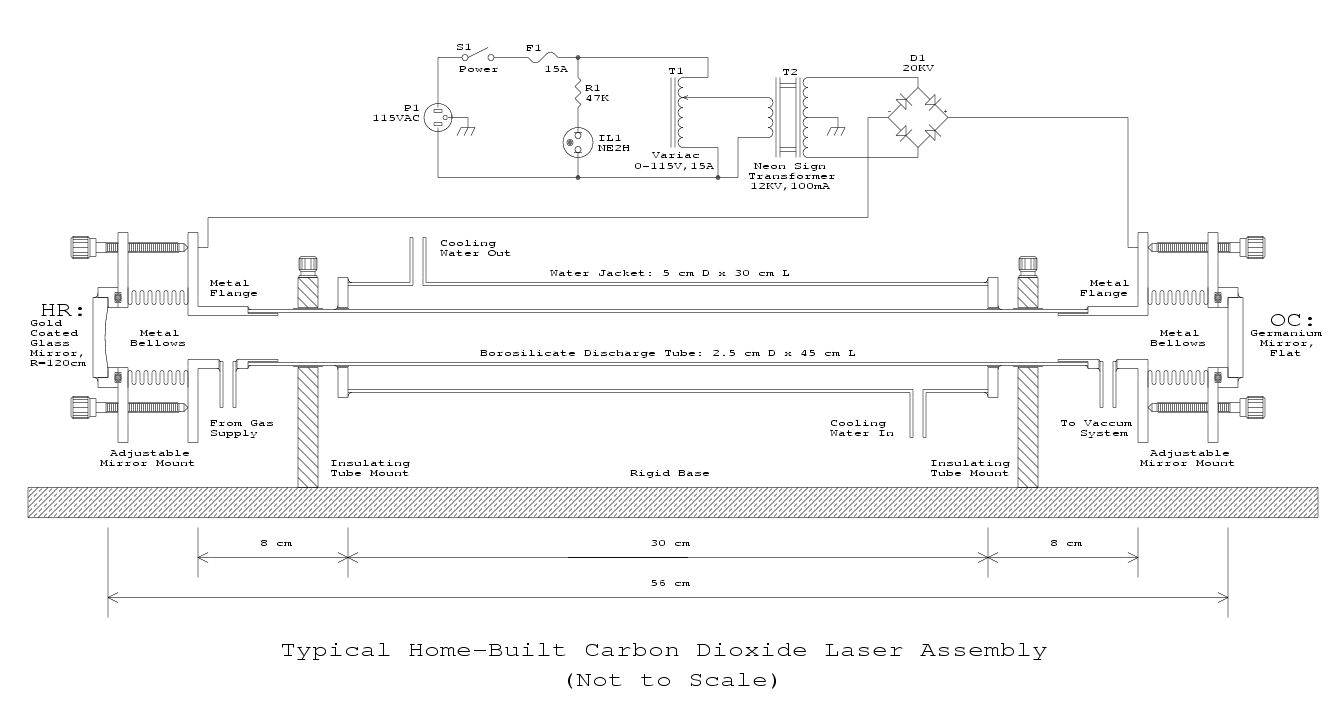
Home-Built Carbon Dioxide (CO2) Laser
The carbon dioxide (CO2) laser serves as a critical tool in high-tech industrial applications such as cutting and welding various materials, including metals. Smaller CO2 lasers are utilized for marking metals, wood, and composites, as well as in medical and...
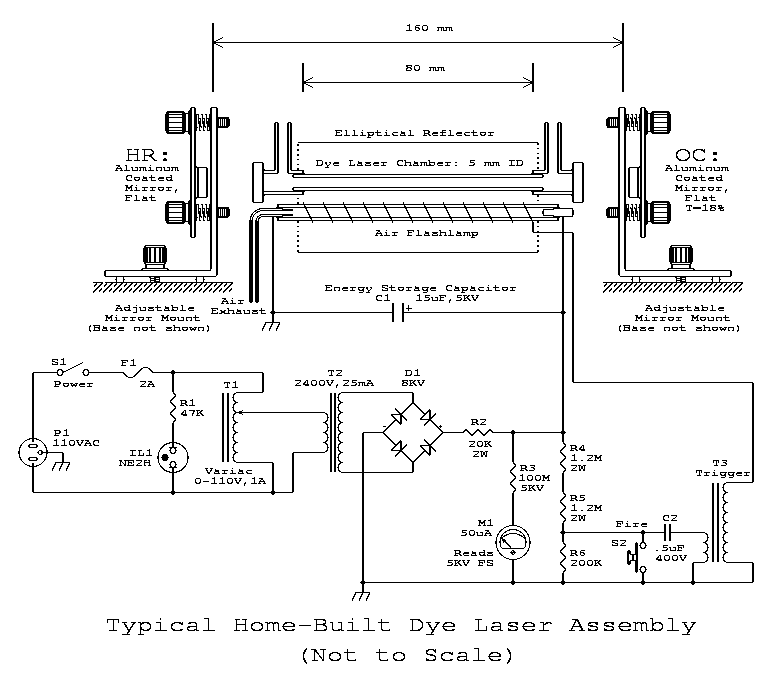
Home-Built Dye Laser
Dye lasers are a distinct category of lasers that utilize a liquid as their lasing medium. Depending on the specific dye employed, these lasers can produce output across a wide range of wavelengths, including the visible spectrum and beyond. Typically,...
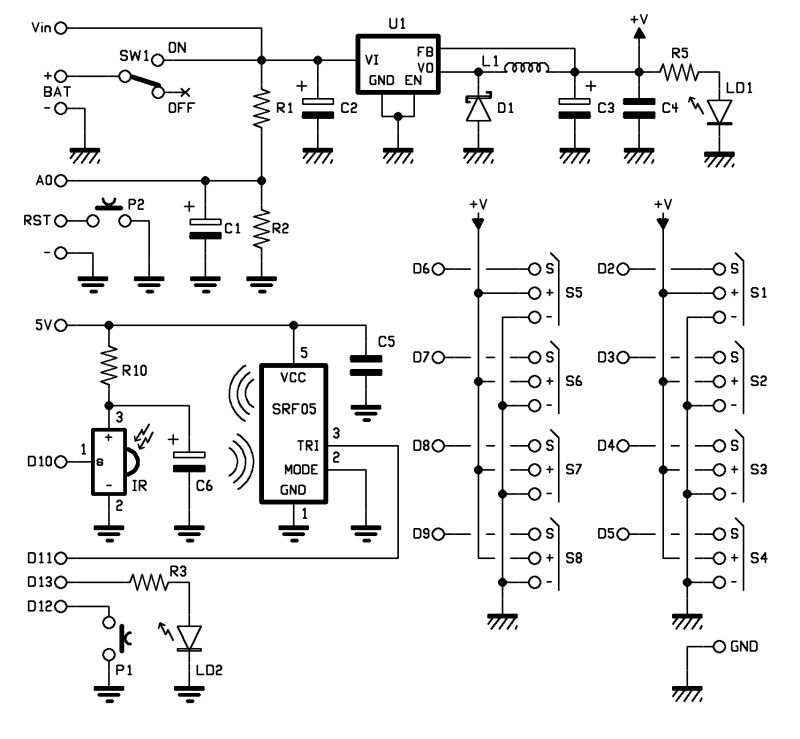
Robot shield for Arduino
The objective of this project is to consolidate various robot designs and transform them into a new device featuring updated hardware and standardized software, specifically utilizing Arduino for ease of use. These robots share three key components: a mechanical structure,...
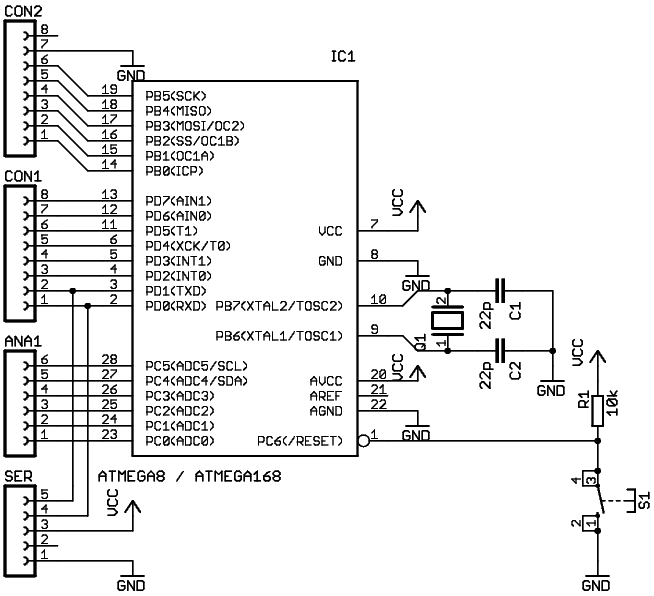
Arduino-Board
When starting with Arduino, one often accumulates more Arduino boards than RS232 or USB ports available on the computer. Therefore, it is more practical to use an external signal level converter rather than placing it directly on the Arduino board....
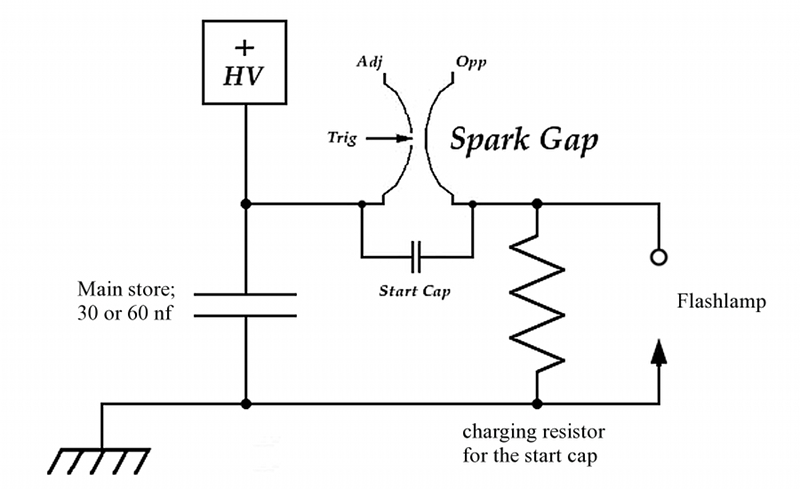
diy dye laser
This page outlines the construction of a prototype dye laser designed for initial parameter testing. The primary objective is to determine whether a straightforward design can effectively threshold certain dyes with minimal input energy. Although the theoretical answer is affirmative,...
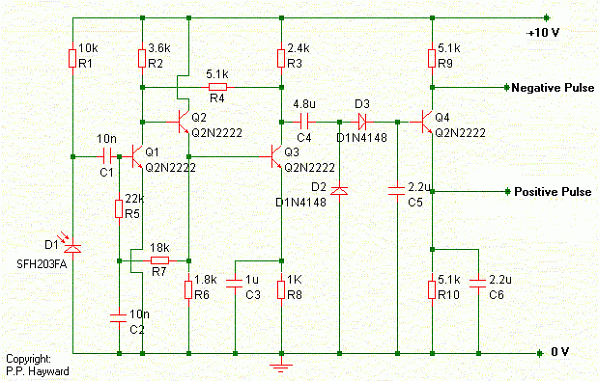
police laser lidar jammers
The use of HID headlights combined with slim line plates decreases the distance at which a police vehicle can effectively target a driver using laser or LIDAR technology.
The integration of High-Intensity Discharge (HID) headlights in conjunction with slim line plates...
laser asc
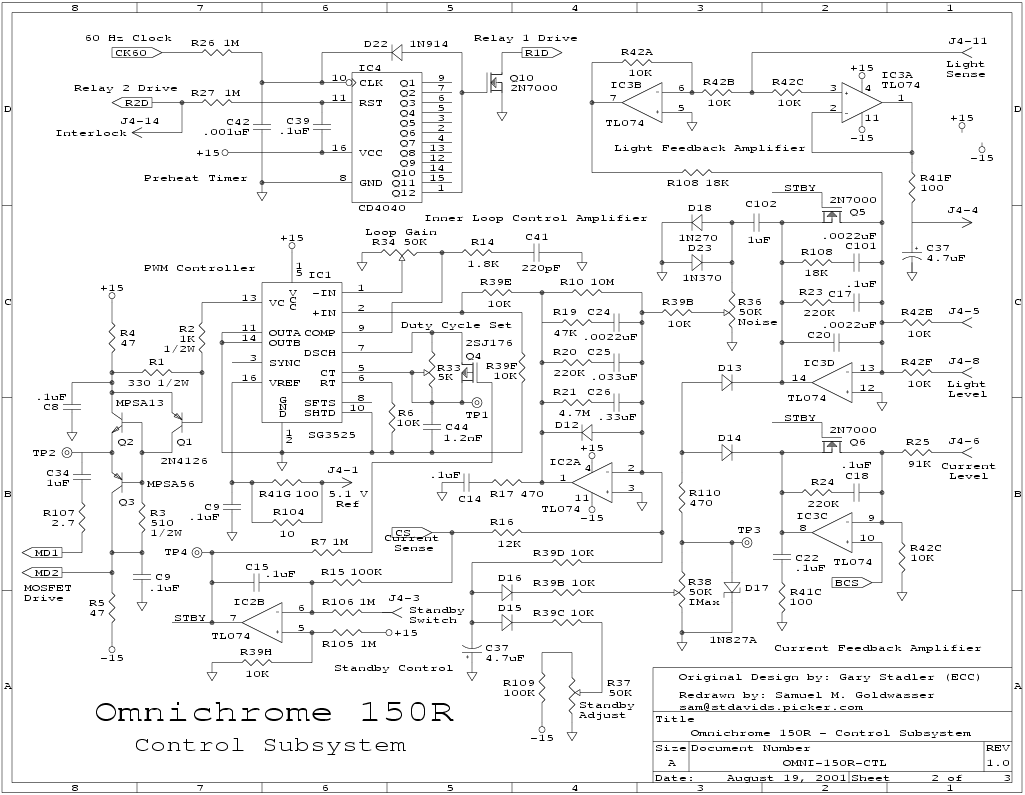
This chapter presents detailed schematics for various power supplies designed for use with common Ar/Kr ion tubes available to hobbyists in the surplus market. Included are examples of commercial designs such as the Omnichrome 150R and 532 head, and the...
DIY Arduino Nebulophone Synth
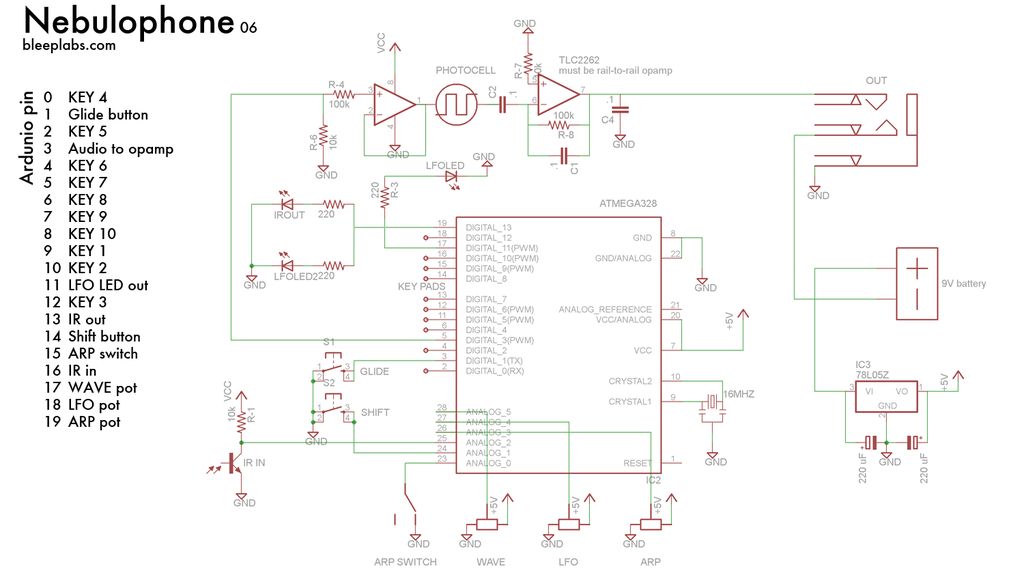
The initial intention was to purchase a Nebulophone; however, the price exceeded the budget. It was discovered that programming an AtMega 328 using ArduinoISP was a feasible alternative. If the code was compatible with Arduino, it was logical to utilize...