


Guitar Tone Control
#guitar
#tone control
#preamplifier
#pick-up
#battery operated
#low power
#portable
#acoustic
#instrument
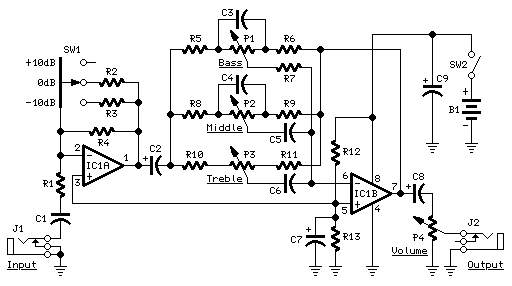
Description: This preamplifier was designed as a stand-alone portable unit, useful to control the signals generated by guitar pick-ups, particularly the contact "bug" types applied to acoustic instruments. Obviously it can be used with any type of instrument and pick-up. It features a -10dB, 0dB and +10dB pre-set input selector to adjust input sensitivity, in order to cope with almost any pick-up type and model. A very long battery life is ensured by the incredibly low current consumption of this circuit, i.e. less than µA.
The described preamplifier circuit is a compact and efficient device tailored for enhancing the audio signals from various types of guitar pick-ups, with a particular emphasis on contact "bug" pick-ups commonly used in acoustic instruments. The unit's design prioritizes portability, making it suitable for musicians who require a lightweight and easily transportable solution.
The input section of the preamplifier includes a multi-position selector switch that allows the user to choose between three preset gain levels: -10dB, 0dB, and +10dB. This feature is crucial for adapting the circuit's sensitivity to different pick-up outputs, ensuring optimal signal integrity and preventing distortion. The ability to adjust gain levels makes the preamplifier versatile, accommodating a wide range of instruments and pick-up configurations.
In terms of power management, the preamplifier circuit is engineered for extremely low power consumption, operating at less than one microampere (µA). This characteristic not only contributes to the longevity of the battery life but also enhances the overall efficiency of the device, making it ideal for extended use during performances or practice sessions without the need for frequent battery replacements.
The circuit design likely incorporates operational amplifiers (op-amps) configured in a non-inverting amplifier setup, allowing for high input impedance and low output impedance, which is essential for interfacing with various pick-up types without loading them down. Additionally, the use of high-quality components and careful layout considerations can further reduce noise and improve signal fidelity.
Overall, this preamplifier serves as a practical solution for musicians seeking to enhance their instrument's sound while maintaining portability and efficiency. The thoughtful design elements, such as gain selection and low power consumption, make it a valuable tool for a wide range of acoustic applications.This preamplifier was designed as a stand-alone portable unit, useful to control the signals generated by guitar pick-ups, particularly the contact "bug" types applied to acoustic instruments. Obviously it can be used with any type of instrument and pick-up. It features a -10dB, 0dB and +10dB pre-set input selector to adjust input sensitivity, in order to cope with almost any pick-up type and model.
A very long battery life is ensured by the incredibly low current consumption of this circuit, i.e. less than µA.
The described preamplifier circuit is a compact and efficient device tailored for enhancing the audio signals from various types of guitar pick-ups, with a particular emphasis on contact "bug" pick-ups commonly used in acoustic instruments. The unit's design prioritizes portability, making it suitable for musicians who require a lightweight and easily transportable solution.
The input section of the preamplifier includes a multi-position selector switch that allows the user to choose between three preset gain levels: -10dB, 0dB, and +10dB. This feature is crucial for adapting the circuit's sensitivity to different pick-up outputs, ensuring optimal signal integrity and preventing distortion. The ability to adjust gain levels makes the preamplifier versatile, accommodating a wide range of instruments and pick-up configurations.
In terms of power management, the preamplifier circuit is engineered for extremely low power consumption, operating at less than one microampere (µA). This characteristic not only contributes to the longevity of the battery life but also enhances the overall efficiency of the device, making it ideal for extended use during performances or practice sessions without the need for frequent battery replacements.
The circuit design likely incorporates operational amplifiers (op-amps) configured in a non-inverting amplifier setup, allowing for high input impedance and low output impedance, which is essential for interfacing with various pick-up types without loading them down. Additionally, the use of high-quality components and careful layout considerations can further reduce noise and improve signal fidelity.
Overall, this preamplifier serves as a practical solution for musicians seeking to enhance their instrument's sound while maintaining portability and efficiency. The thoughtful design elements, such as gain selection and low power consumption, make it a valuable tool for a wide range of acoustic applications.This preamplifier was designed as a stand-alone portable unit, useful to control the signals generated by guitar pick-ups, particularly the contact "bug" types applied to acoustic instruments. Obviously it can be used with any type of instrument and pick-up. It features a -10dB, 0dB and +10dB pre-set input selector to adjust input sensitivity, in order to cope with almost any pick-up type and model.
A very long battery life is ensured by the incredibly low current consumption of this circuit, i.e. less than µA.
Sub-Harmonic Bass Converter for Electric Guitars
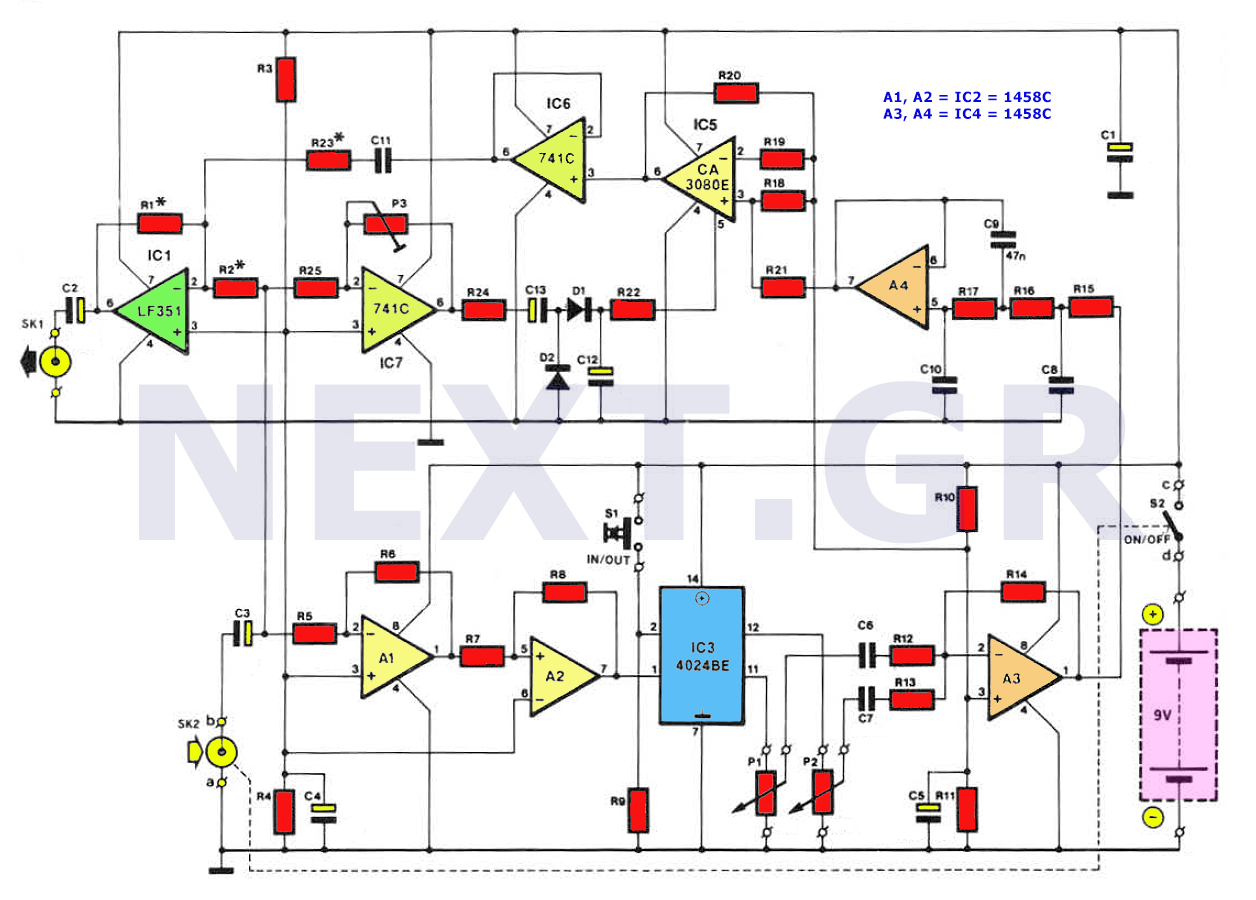
The sub-harmonic bass generator is a sound-producing unit designed for guitars, capable of generating sounds similar to those of a bass guitar. This device employs an octave generator that operates differently from traditional sound coloring methods such as filtering or...
Acoustic thermometer
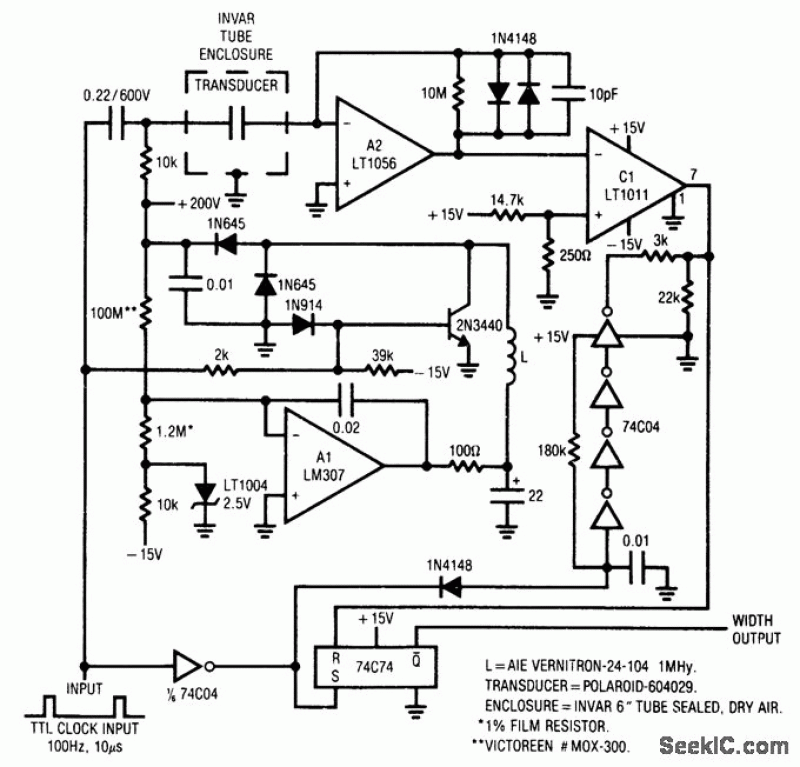
Acoustic thermometry is utilized in environments with extreme operating temperatures, such as cryogenics and nuclear reactors. The transducer consists of Polaroid ultrasonic material, which is mounted at one end of a sealed 6-inch long Invar tube. The medium within the...
RIAA Phono Preamplifier
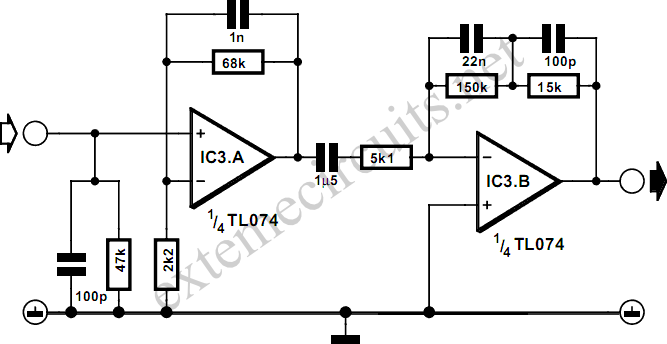
Modern sound systems often lack inputs for record players, leading to a rise in the popularity of separate MD preamplifiers. These devices are essential not only for vinyl enthusiasts but also for individuals looking to digitize their LP collections onto...
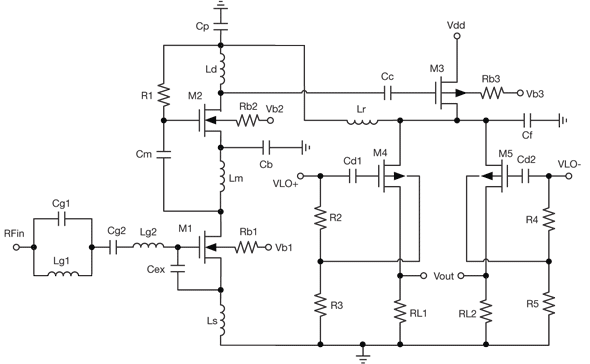
low power receiver serves multiple wireless standards
By combining a current-reuse amplifier and a switch-based mixer, a dual-band receiver front end offers excellent performance with extremely low power consumption.
The dual-band receiver front end integrates a current-reuse amplifier and a switch-based mixer to achieve high performance while maintaining...
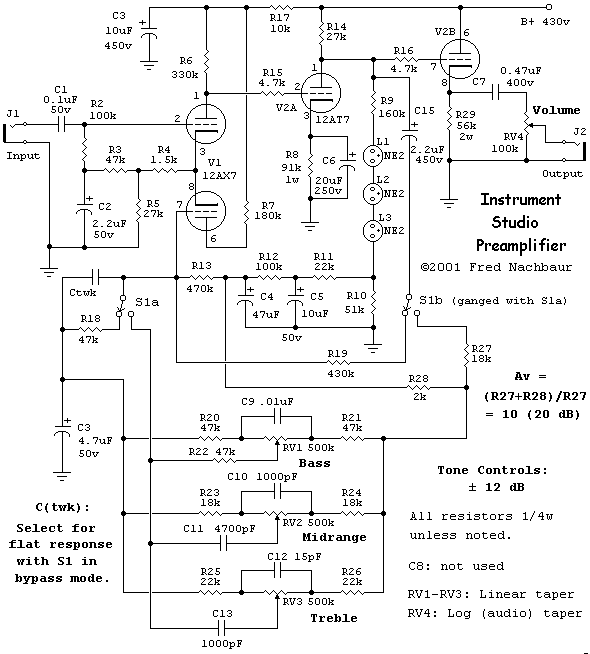
A Studio Preamplifier
The initial request was for a flexible preamplifier suitable for a high-end acoustic guitar equipped with a piezoelectric bridge pickup, while the second inquiry involved a preamp for a guitar emulator to introduce warmth reminiscent of vacuum tubes. Both requirements...
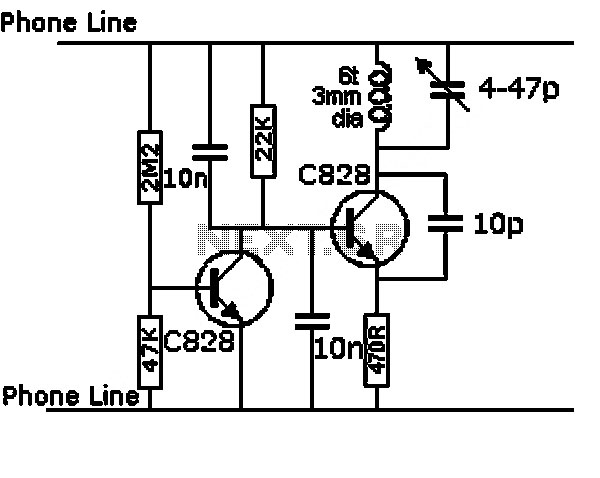
micro power pulse generator
This circuit generates clean logic pulses with minimal current consumption. It is designed to produce short 2 ms pulses at a frequency of one pulse per second, drawing only 1 microamp from a 9-volt battery.
The described circuit operates efficiently by...
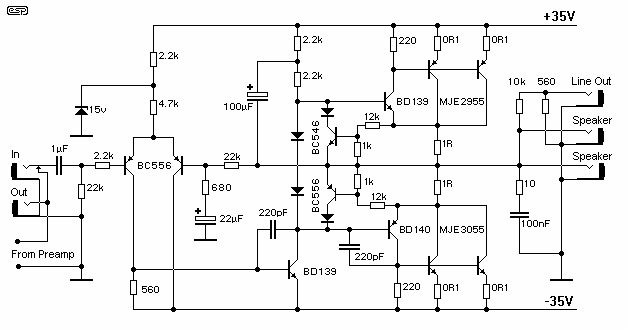
Schematics 100W Power Amplifier for Guitar
This schematic is essential. Visit this page to find a comprehensive pre-amplifier and power amplifier design for your guitar, which includes a complete explanation of its operation and instructions on how to construct the enclosure.
The provided schematic outlines a pre-amplifier...
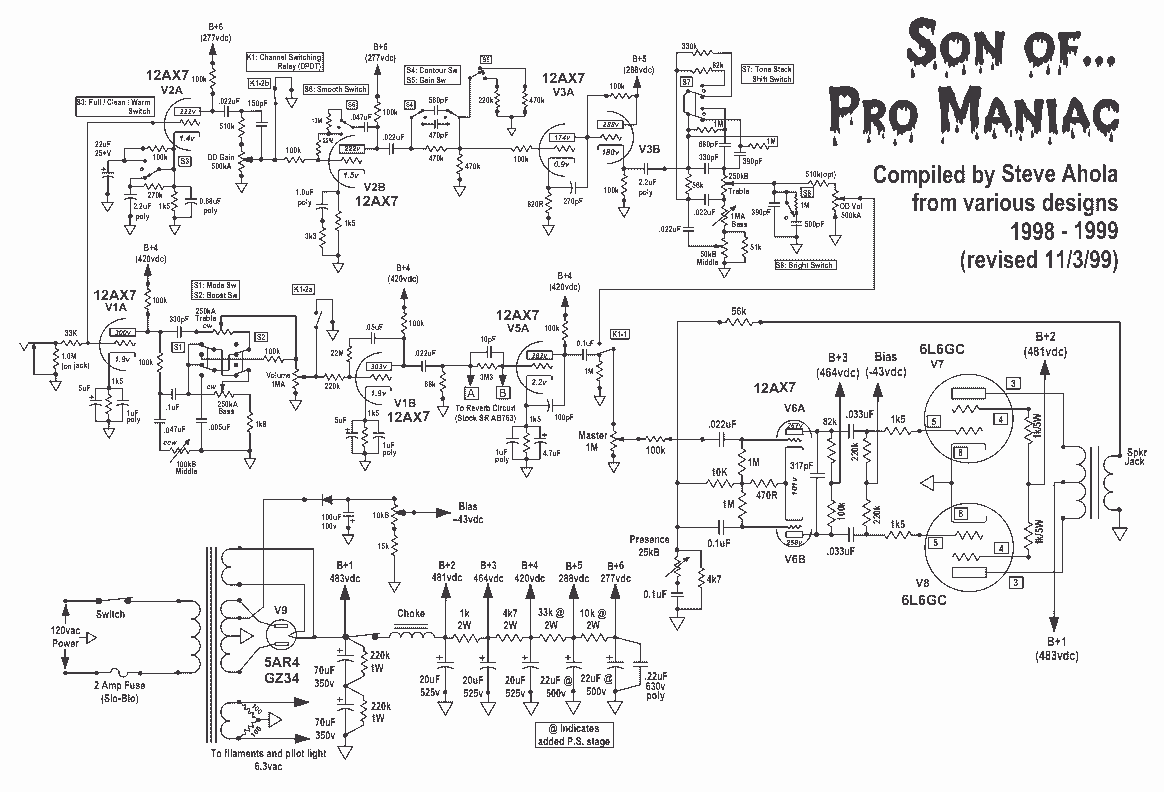
Pro Maniac Guitar tube power amplifier II
This schematic is an improved version of the Pro Maniac Guitar tube power amplifier.
The improved version of the Pro Maniac Guitar tube power amplifier features several enhancements aimed at increasing performance, reliability, and sound quality. The schematic typically includes a...
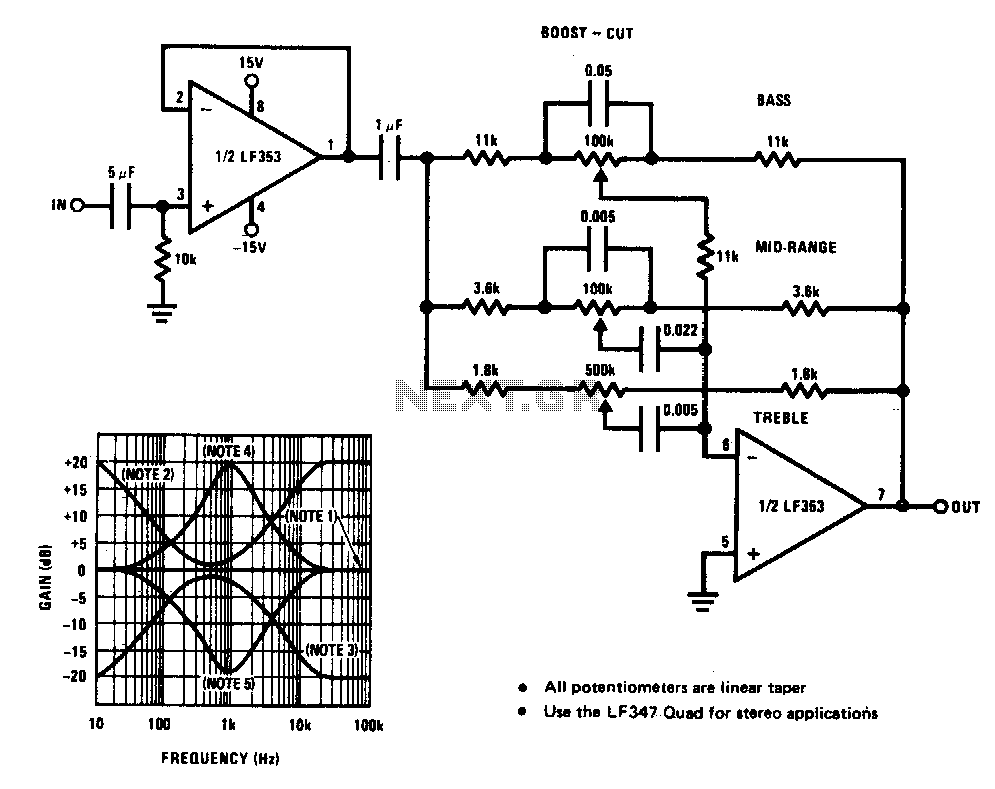
Tone control circuit
A simple single-transistor circuit provides an approximate 15 dB boost at 100 Hz and a 15 dB cut at 15 kHz. A low-noise audio transistor is utilized, and the output can be directly connected to any existing amplifier volume control...