


im3500
#audio tone
#code practice oscillator
#telegraph sounder
#DC voltage
#Radio Shack
#short wave receiver
#audio conversion
#telegraph
#sound output
#vintage electronics
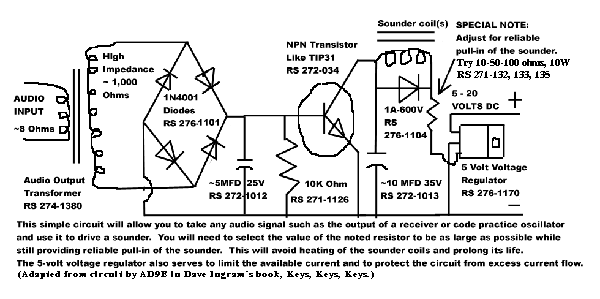
Description: This circuit is straightforward to construct and utilizes standard components readily available at any Radio Shack store. It accepts the audio tone output from a code practice oscillator or shortwave receiver and converts those tones into the DC voltage required to operate an old-fashioned telegraph sounder. This charming set, complete with its original shipping box, was exclusively used for practice. A small key knob is mounted directly on the sounder arm, producing a pronounced "click" whenever it is pressed.
The circuit operates by first receiving audio tones generated by a code practice oscillator or shortwave receiver. The audio signals are typically in the form of alternating current (AC) waveforms, which are then processed to extract the necessary information for operation. A rectifier circuit, commonly utilizing diodes, is employed to convert the AC audio tones into direct current (DC) voltage. This DC voltage is essential for energizing the telegraph sounder, allowing it to produce audible clicks that correspond to the Morse code signals being transmitted.
The sounder itself is a mechanical device that operates on the principle of electromagnetism. When the DC voltage is applied, it energizes a coil within the sounder, creating a magnetic field that attracts a metal armature. This movement generates a click sound as the armature strikes a metal surface. The small key knob mounted on the sounder arm allows the user to manually generate these clicks, providing an interactive experience for practicing Morse code.
In addition to the basic components, the design may include a variable resistor or potentiometer to adjust the sensitivity of the circuit, enabling users to fine-tune the response of the sounder to different audio signal strengths. Furthermore, capacitors may be integrated into the circuit to filter out any unwanted noise from the audio input, ensuring that only the desired tones are converted into DC voltage.
Overall, this circuit design is a practical and effective solution for anyone interested in learning or practicing Morse code, leveraging readily available components to create a functional telegraph sounder.This circuit is easy to build and uses standard components available at any Radio Shack store. It accepts the audio tone output of a code practice oscillator or short wave receiver and converts those tones into the DC voltage necessary to operate an old-time telegraph sounder. This lovely set with original shipping box was used for practice only. A small key knob is mounted directly on the sounder arm and produces a resounding "click whenever it is depressed. (Same as number 315. ) 3051 * BUNNELL SIMPLE NON-ELECTRIC PRACTICE SET: (12KB) This interesting set was used for practice only. A small key knob is mounted directly on the sounder arm and produces a resounding "click whenever it is depressed.
3053 * BUNNELL ARTICULATED NON-ELECTRIC PRACTICE SET:(15KB) Interesting combination of a brass sounder and telegraph key with a mechanical connection whereby pressing the key causes the sounder to move downward to make a click. It was used to provide practice sounds for people learning the Morse code without the need for batteries and wiring.
(Same as item 325. ) 3055 * "AUDIO ALPHABET" MANUAL CODE PRACTICE SENDER:(22KB) This set consisted of a manually operated device which pulled a paper tape past a set of contacts which sensed holes in the tape and sent dots and dashes for code practice purposes. (This unit is in the John Casale - W2NI collection. ) 3060 "OMNIGRAPH" AUTOMATIC CODE PRACTICE SENDER:(41KB) This mainspring-driven Omnigraph was used to key a sounder to provide random morse code characters for practice.
It has fifteen code wheels which are notched with dots and dashes and can be shuffled or replaced to provide an unlimited number of combinations of characters. A mechanical speed governor adjusts sending speed. It shifts from wheel to wheel according to settings of "Kicker strips". Key-wound drive mechanism, code wheel turntable, and contact assembly are mounted on a wooden board labeled "THE OMNIGRAPH, The Omnigraph mfg.
Co. 13-19 Hudson St. N. Y. U. S. A. " 3064 * MANUALLY OPERATED "OMNIGRAPH": (30KB) Very early model with 3 thin code wheels and a tiny hand crank on old style wooden base stamped only PAT Aug 25, 1883. Top wheel reads TRANSMITTER, Omnigraph Mfg. Co. New York, N. Y. , & around the outside it says: JOHN QUICKLY EXTEMPORIZED FIVETOW BAGS corresponding to the notches. >>W2PM 3066 * "NATROMETER" AUTOMATIC CODE PRACTICE SET: (51KB) This set consists of an automatic spring-wound morse code sender, a nickel cased enclosed buzzer, an inductor, and a nickel plated, black metal based telegraph key on a wooden base labeled:"THE NATROMETER, Made Exclusively For: NATIONAL RADIO INSTITUTE, Washington, D.
C. Patents Pending. The speed-governed code wheel has 9 levels and consists of alternating metal and insulating areas which are contacted by 9 brass strips which are automatically selected by programmable wooden pins. Has 2 wheels. The Instructograph was produced from the 1920s until at least 1983! Instructographs were used by many thousands of would-be telegraph operators to learn and increase their code-copying ability.
The original versions used a hand-wound spring driven motor with a centrifugal governor and were supplied with American Morse Code paper tapes with short holes for dots and long holes for dashes. They were sometimes also supplied with KOB sets as shown. Later models used electric motor drives and included a battery powered and later AC line powered oscillator to produce tones for trai
The circuit operates by first receiving audio tones generated by a code practice oscillator or shortwave receiver. The audio signals are typically in the form of alternating current (AC) waveforms, which are then processed to extract the necessary information for operation. A rectifier circuit, commonly utilizing diodes, is employed to convert the AC audio tones into direct current (DC) voltage. This DC voltage is essential for energizing the telegraph sounder, allowing it to produce audible clicks that correspond to the Morse code signals being transmitted.
The sounder itself is a mechanical device that operates on the principle of electromagnetism. When the DC voltage is applied, it energizes a coil within the sounder, creating a magnetic field that attracts a metal armature. This movement generates a click sound as the armature strikes a metal surface. The small key knob mounted on the sounder arm allows the user to manually generate these clicks, providing an interactive experience for practicing Morse code.
In addition to the basic components, the design may include a variable resistor or potentiometer to adjust the sensitivity of the circuit, enabling users to fine-tune the response of the sounder to different audio signal strengths. Furthermore, capacitors may be integrated into the circuit to filter out any unwanted noise from the audio input, ensuring that only the desired tones are converted into DC voltage.
Overall, this circuit design is a practical and effective solution for anyone interested in learning or practicing Morse code, leveraging readily available components to create a functional telegraph sounder.This circuit is easy to build and uses standard components available at any Radio Shack store. It accepts the audio tone output of a code practice oscillator or short wave receiver and converts those tones into the DC voltage necessary to operate an old-time telegraph sounder. This lovely set with original shipping box was used for practice only. A small key knob is mounted directly on the sounder arm and produces a resounding "click whenever it is depressed. (Same as number 315. ) 3051 * BUNNELL SIMPLE NON-ELECTRIC PRACTICE SET: (12KB) This interesting set was used for practice only. A small key knob is mounted directly on the sounder arm and produces a resounding "click whenever it is depressed.
3053 * BUNNELL ARTICULATED NON-ELECTRIC PRACTICE SET:(15KB) Interesting combination of a brass sounder and telegraph key with a mechanical connection whereby pressing the key causes the sounder to move downward to make a click. It was used to provide practice sounds for people learning the Morse code without the need for batteries and wiring.
(Same as item 325. ) 3055 * "AUDIO ALPHABET" MANUAL CODE PRACTICE SENDER:(22KB) This set consisted of a manually operated device which pulled a paper tape past a set of contacts which sensed holes in the tape and sent dots and dashes for code practice purposes. (This unit is in the John Casale - W2NI collection. ) 3060 "OMNIGRAPH" AUTOMATIC CODE PRACTICE SENDER:(41KB) This mainspring-driven Omnigraph was used to key a sounder to provide random morse code characters for practice.
It has fifteen code wheels which are notched with dots and dashes and can be shuffled or replaced to provide an unlimited number of combinations of characters. A mechanical speed governor adjusts sending speed. It shifts from wheel to wheel according to settings of "Kicker strips". Key-wound drive mechanism, code wheel turntable, and contact assembly are mounted on a wooden board labeled "THE OMNIGRAPH, The Omnigraph mfg.
Co. 13-19 Hudson St. N. Y. U. S. A. " 3064 * MANUALLY OPERATED "OMNIGRAPH": (30KB) Very early model with 3 thin code wheels and a tiny hand crank on old style wooden base stamped only PAT Aug 25, 1883. Top wheel reads TRANSMITTER, Omnigraph Mfg. Co. New York, N. Y. , & around the outside it says: JOHN QUICKLY EXTEMPORIZED FIVETOW BAGS corresponding to the notches. >>W2PM 3066 * "NATROMETER" AUTOMATIC CODE PRACTICE SET: (51KB) This set consists of an automatic spring-wound morse code sender, a nickel cased enclosed buzzer, an inductor, and a nickel plated, black metal based telegraph key on a wooden base labeled:"THE NATROMETER, Made Exclusively For: NATIONAL RADIO INSTITUTE, Washington, D.
C. Patents Pending. The speed-governed code wheel has 9 levels and consists of alternating metal and insulating areas which are contacted by 9 brass strips which are automatically selected by programmable wooden pins. Has 2 wheels. The Instructograph was produced from the 1920s until at least 1983! Instructographs were used by many thousands of would-be telegraph operators to learn and increase their code-copying ability.
The original versions used a hand-wound spring driven motor with a centrifugal governor and were supplied with American Morse Code paper tapes with short holes for dots and long holes for dashes. They were sometimes also supplied with KOB sets as shown. Later models used electric motor drives and included a battery powered and later AC line powered oscillator to produce tones for trai
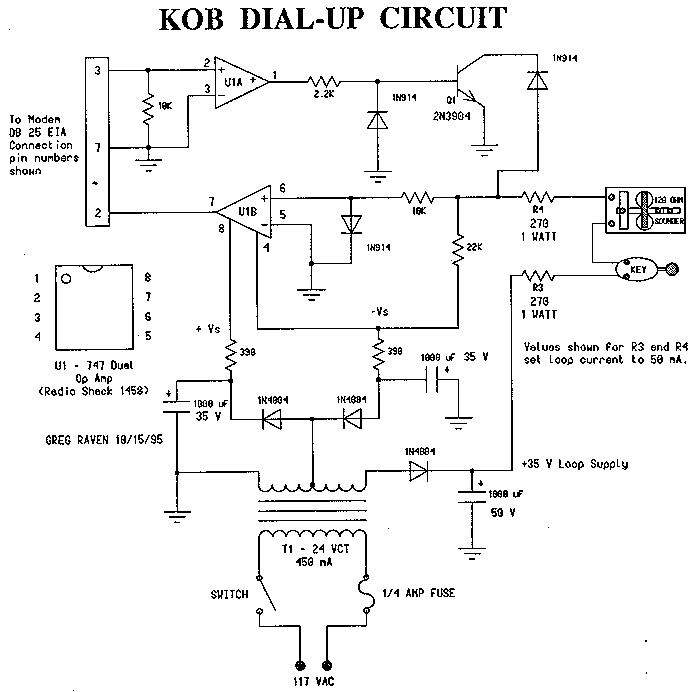
The Telegraph Time Machine
The extensive network of telegraph wires that once enveloped the nation has disappeared, much like a spider's web is swept away by a broom. Please note that the information below is outdated. Dial-up Morse is no longer commonly used. This...
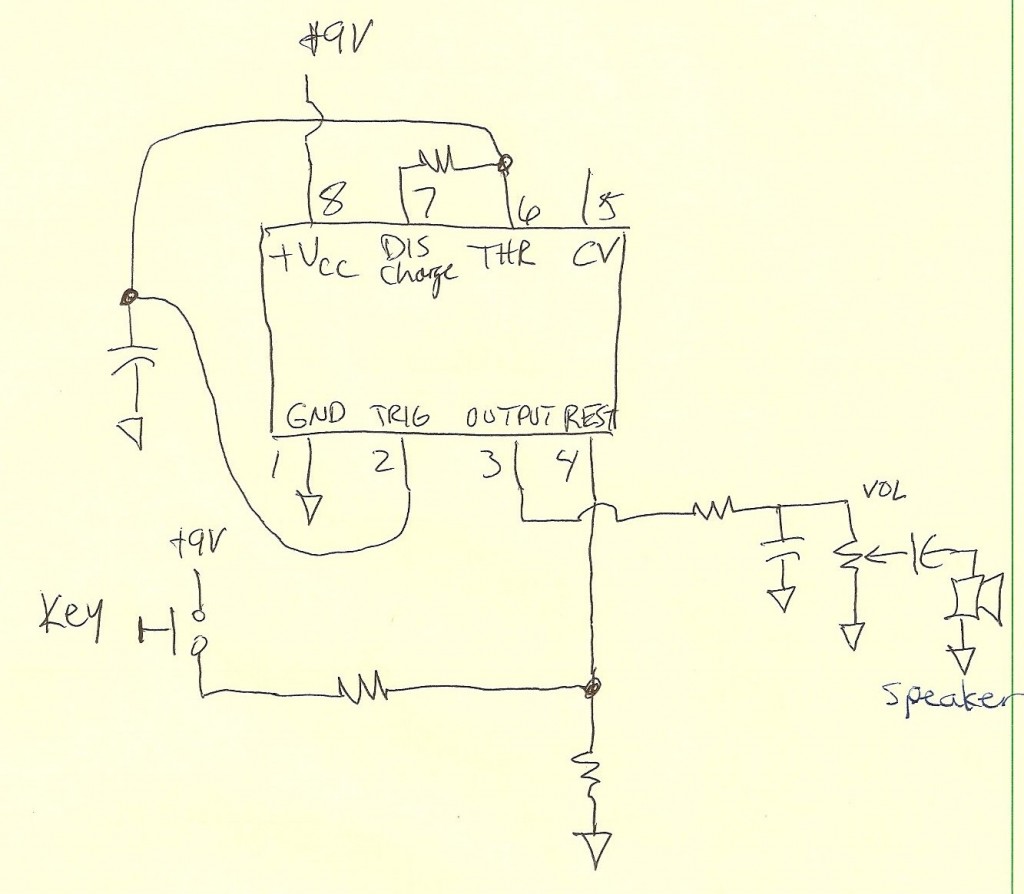
Circuit From the Past
A code practice oscillator was built some time ago, and there is a vague recollection of the project. It featured a straight key that plugged directly into the key jack. Upon opening the device, a circuit board populated with through-hole...
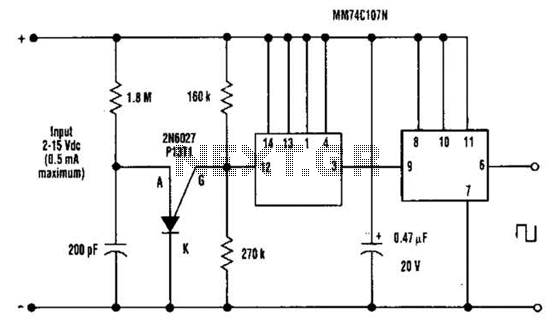
Dc Output Chopper Circuit
A direct current (DC) voltage source within the range of 2 to 15 volts can be converted into a unipolar square wave. This square wave has a peak amplitude that is nearly equal to the DC source voltage, with lightly...
Basics 06 Mod
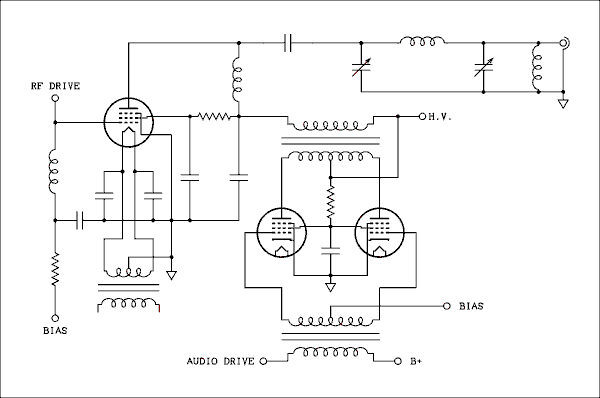
The earliest form of radio communication was radio telegraphy, which differed from wired telegraphy. A telegraph key activates the transmitter when closed and deactivates it when open. The operator sends messages using a series of long and short signals, represented...
voltage regulators
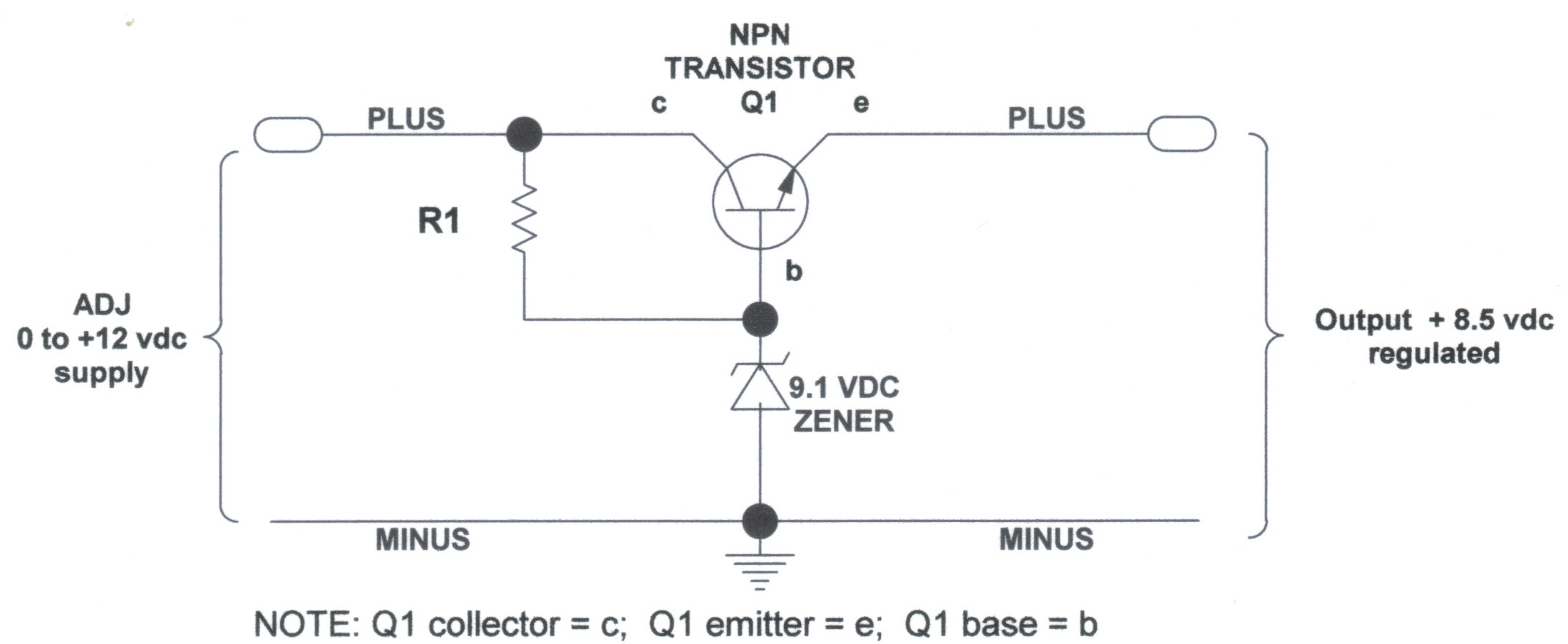
DC Voltage Regulator (NPN & Zener Regulator) There are instances where it is handy to have a regulated DC voltage power supply for use on your model.
A DC voltage regulator is an essential component in electronic circuits that provides a...