


ITU-R 468 noise weighting
#noise measurement
#audio systems
#weighting filter
#quasi-peak rectifier
#ITU-R 468
#CCIR
#International Telecommunications Union
#tone-burst tests
#noise weighting
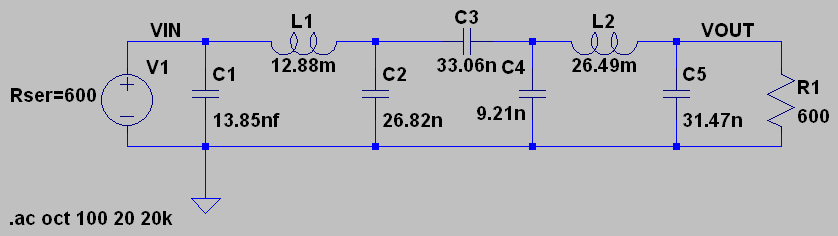
Description: ITU-R 468 is a standard related to noise measurement, widely utilized in audio systems. This standard specifies a weighting filter curve alongside a quasi-peak rectifier with unique characteristics defined by designated tone-burst tests. The International Telecommunications Union, which succeeded the CCIR, currently maintains this standard. It is particularly prevalent in the UK, Europe, and former British Empire countries such as Australia and South Africa. In contrast, it is less recognized in the USA, where A-weighting has traditionally been employed. While many audio engineers are familiar with the A-weighting curve, based on the 40 phon equal-loudness contour established by Fletcher and Munson in 1933, the CCIR-468 weighting curve, now recognized as an ITU standard, is less known outside the UK and Europe.
Originally included in an ANSI standard for sound level meters, A-weighting was designed for measuring the audibility of sounds in isolation. It was not specifically intended for assessing the more random noise, such as near-white or pink noise, in electronic equipment, although it has been utilized for this purpose by most microphone manufacturers since the 1970s. The human ear reacts differently to clicks and bursts of random noise, which led to the development of the 468-weighting. This, combined with quasi-peak measurement (as opposed to the RMS measurement used with A-weighting), became widely adopted by broadcasters in Britain, Europe, and former British Commonwealth countries, influenced significantly by BBC test methods.
Globally, telephone companies have also employed methods similar to 468 weighting with quasi-peak measurement to characterize objectionable interference caused by switching transients in telephone circuits. The advancements of the 1960s, particularly the rise of FM broadcasting and the introduction of the compact audio cassette with Dolby-B Noise Reduction, highlighted the necessity for a weighting curve that provided subjectively meaningful results regarding the typical random noise that limited the performance of broadcast circuits and equipment. A-weighting was found to yield inconsistent results, especially in FM radio transmissions and Compact Cassette recordings, where high-frequency pre-emphasis resulted in increased noise readings that did not align with subjective perception.
Initial attempts to develop a superior weighting curve resulted in a DIN standard that was temporarily adopted for European Hi-Fi equipment measurements. Experiments conducted by the BBC, documented in the BBC Research Department Report EL-17, titled "The Assessment of Noise in Audio Frequency Circuits," involved various test subjects comparing numerous noises, from clicks to tone-bursts to pink noise, against a 1kHz tone. The final scores were then compared with measured noise levels using different combinations of weighting filters and quasi-peak detectors, including those defined in a now-discontinued German DIN standard. This research culminated in the establishment of the CCIR-468 standard, which defined a new weighting curve and quasi-peak rectifier.
The current ITU-R 468 weighting curve has its origins traced back to 1956. The 1968 BBC EL-17 report discusses several weighting curves, including one designated as D.P.B., which was deemed superior to alternatives such as A.S.A., C.C.I.F., and O.I.R.T. The graph representing the DPB curve is identical to that of the ITU-R 468 curve, although the latter extends to slightly lower and higher frequencies. The BBC report indicates that this curve was included in a contribution by the D.B.P. (The Telephone Administration of the Federal German Republic) in the Red Book Vol. 1, 1957.ITU-R 468 is a standard relating to noise measurement, widely used when measuring noise in audio systems. The standard defines a weighting filter curve, together with a quasi-peak rectifier having special characteristics as defined by specified tone-burst tests.
It is currently maintained by the International Telecommunications Union who took it over from the CCIR. It is used especially in the UK, Europe, and former countries of the British Empire such as Australia and South Africa. [ citation needed ] It is less well known in the USA where A-weighting has always been used. [ citation needed ] While most audio engineers are familiar with the A-weighting curve, which was based on the 40 phon equal-loudness contour derived initially by Fletcher and Munson (1933) the later CCIR-468 weighting curve, now supported as an ITU standard is less well known outside of the UK and Europe. Originally incorporated into an ANSI standard for sound level meters, A-weighting was intended for measurement of the audibility of sounds by themselves.
It was never specifically intended for the measurement of the more random (near- white or pink ) noise in electronic equipment, though has been used for this purpose by most microphone manufacturers since the 1970s. The human ear responds quite differently to clicks and bursts of random noise, and it is this difference that gave rise to the 468-weighting, which together with quasi-peak measurement (rather than the rms measurement used with A-weighting) became widely used by broadcasters throughout Britain, Europe, and former British Commonwealth countries, where engineers were heavily influenced by BBC test methods.
Telephone companies worldwide have also used methods similar to 468 weighting with quasi-peak measurement to describe objectionable interference induced in one telephone circuit by switching transients in another. Developments in the 1960s, in particular the spread of FM broadcasting and the development of the compact audio cassette with Dolby-B Noise Reduction, alerted engineers to the need for a weighting curve that gave subjectively meaningful result on the typical random noise that limited the performance of broadcast circuits, equipment and radio circuits.
A-weighting was not giving consistent results, especially on FM radio transmissions and Compact Cassette recording where preemphasis of high frequencies was resulting in increased noise readings that did not correlate with subjective effect. Early efforts to produce a better weighting curve led to a DIN standard that was adopted for European Hi-Fi equipment measurement for a while.
Experiments in the BBC led to BBC Research Department Report EL-17, The Assessment of Noise in Audio Frequency Circuits, [1] in which experiments on numerous test subjects were reported, using a variety of noises ranging from clicks to tone-bursts to `pink` noise. Subjects were asked to compare these with a 1kHz tone, and final scores were then compared with measured noise levels using various combinations of weighting filter and quasi-peak detector then in existence (such as those defined in a now discontinued German DIN standard).
This led to the CCIR-468 standard which defined a new weighting curve and quasi-peak rectifier. The origin of the current ITU-R 468 weighting curve can be traced to 1956. The 1968 BBC EL-17 report discusses several weighting curves, including one identified as D. P. B. which was chosen as superior to the alternatives: A. S. A, C. C. I. F and O. I. R. T. The report`s graph of the DPB curve is identical to that of the ITU-R 486 curve, except that the latter extends to slightly lower and higher frequencies. The BBC report states that this curve was given in a "contribution by the D. B. P. (The Telephone Administration of the Federal German Republic) in the Red Book Vol. 1 1957 covering t
Originally included in an ANSI standard for sound level meters, A-weighting was designed for measuring the audibility of sounds in isolation. It was not specifically intended for assessing the more random noise, such as near-white or pink noise, in electronic equipment, although it has been utilized for this purpose by most microphone manufacturers since the 1970s. The human ear reacts differently to clicks and bursts of random noise, which led to the development of the 468-weighting. This, combined with quasi-peak measurement (as opposed to the RMS measurement used with A-weighting), became widely adopted by broadcasters in Britain, Europe, and former British Commonwealth countries, influenced significantly by BBC test methods.
Globally, telephone companies have also employed methods similar to 468 weighting with quasi-peak measurement to characterize objectionable interference caused by switching transients in telephone circuits. The advancements of the 1960s, particularly the rise of FM broadcasting and the introduction of the compact audio cassette with Dolby-B Noise Reduction, highlighted the necessity for a weighting curve that provided subjectively meaningful results regarding the typical random noise that limited the performance of broadcast circuits and equipment. A-weighting was found to yield inconsistent results, especially in FM radio transmissions and Compact Cassette recordings, where high-frequency pre-emphasis resulted in increased noise readings that did not align with subjective perception.
Initial attempts to develop a superior weighting curve resulted in a DIN standard that was temporarily adopted for European Hi-Fi equipment measurements. Experiments conducted by the BBC, documented in the BBC Research Department Report EL-17, titled "The Assessment of Noise in Audio Frequency Circuits," involved various test subjects comparing numerous noises, from clicks to tone-bursts to pink noise, against a 1kHz tone. The final scores were then compared with measured noise levels using different combinations of weighting filters and quasi-peak detectors, including those defined in a now-discontinued German DIN standard. This research culminated in the establishment of the CCIR-468 standard, which defined a new weighting curve and quasi-peak rectifier.
The current ITU-R 468 weighting curve has its origins traced back to 1956. The 1968 BBC EL-17 report discusses several weighting curves, including one designated as D.P.B., which was deemed superior to alternatives such as A.S.A., C.C.I.F., and O.I.R.T. The graph representing the DPB curve is identical to that of the ITU-R 468 curve, although the latter extends to slightly lower and higher frequencies. The BBC report indicates that this curve was included in a contribution by the D.B.P. (The Telephone Administration of the Federal German Republic) in the Red Book Vol. 1, 1957.ITU-R 468 is a standard relating to noise measurement, widely used when measuring noise in audio systems. The standard defines a weighting filter curve, together with a quasi-peak rectifier having special characteristics as defined by specified tone-burst tests.
It is currently maintained by the International Telecommunications Union who took it over from the CCIR. It is used especially in the UK, Europe, and former countries of the British Empire such as Australia and South Africa. [ citation needed ] It is less well known in the USA where A-weighting has always been used. [ citation needed ] While most audio engineers are familiar with the A-weighting curve, which was based on the 40 phon equal-loudness contour derived initially by Fletcher and Munson (1933) the later CCIR-468 weighting curve, now supported as an ITU standard is less well known outside of the UK and Europe. Originally incorporated into an ANSI standard for sound level meters, A-weighting was intended for measurement of the audibility of sounds by themselves.
It was never specifically intended for the measurement of the more random (near- white or pink ) noise in electronic equipment, though has been used for this purpose by most microphone manufacturers since the 1970s. The human ear responds quite differently to clicks and bursts of random noise, and it is this difference that gave rise to the 468-weighting, which together with quasi-peak measurement (rather than the rms measurement used with A-weighting) became widely used by broadcasters throughout Britain, Europe, and former British Commonwealth countries, where engineers were heavily influenced by BBC test methods.
Telephone companies worldwide have also used methods similar to 468 weighting with quasi-peak measurement to describe objectionable interference induced in one telephone circuit by switching transients in another. Developments in the 1960s, in particular the spread of FM broadcasting and the development of the compact audio cassette with Dolby-B Noise Reduction, alerted engineers to the need for a weighting curve that gave subjectively meaningful result on the typical random noise that limited the performance of broadcast circuits, equipment and radio circuits.
A-weighting was not giving consistent results, especially on FM radio transmissions and Compact Cassette recording where preemphasis of high frequencies was resulting in increased noise readings that did not correlate with subjective effect. Early efforts to produce a better weighting curve led to a DIN standard that was adopted for European Hi-Fi equipment measurement for a while.
Experiments in the BBC led to BBC Research Department Report EL-17, The Assessment of Noise in Audio Frequency Circuits, [1] in which experiments on numerous test subjects were reported, using a variety of noises ranging from clicks to tone-bursts to `pink` noise. Subjects were asked to compare these with a 1kHz tone, and final scores were then compared with measured noise levels using various combinations of weighting filter and quasi-peak detector then in existence (such as those defined in a now discontinued German DIN standard).
This led to the CCIR-468 standard which defined a new weighting curve and quasi-peak rectifier. The origin of the current ITU-R 468 weighting curve can be traced to 1956. The 1968 BBC EL-17 report discusses several weighting curves, including one identified as D. P. B. which was chosen as superior to the alternatives: A. S. A, C. C. I. F and O. I. R. T. The report`s graph of the DPB curve is identical to that of the ITU-R 486 curve, except that the latter extends to slightly lower and higher frequencies. The BBC report states that this curve was given in a "contribution by the D. B. P. (The Telephone Administration of the Federal German Republic) in the Red Book Vol. 1 1957 covering t