


Light-Wave Voice-Communication Receiver Circuit
#light-wave
#receiver
#741
#LM386
#preamplifier
#power amplifier
#phototransistor
#voice-communication
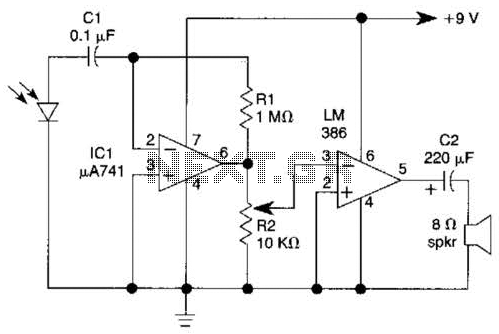
Description: This light-wave receiver comprises a 741 operational amplifier functioning as a preamplifier and an LM386 operational amplifier serving as a power amplifier. The gain control is managed by a potentiometer labeled R2. Various types of detectors can be utilized as the front end of the receiver. While phototransistors exhibit high sensitivity, their performance is compromised in environments with excessive ambient light. Additionally, a 100 kΩ series resistor is necessary when employing a phototransistor. Alternatives such as solar cells, photodiodes, and LEDs made from the same semiconductor material as the transmitter are also effective in this circuit.
This light-wave receiver circuit is designed to efficiently detect and amplify light signals. The core components include the 741 operational amplifier, which acts as a preamplifier to boost the weak signals received from the light detectors. The LM386 then serves as a power amplifier, increasing the signal strength further for transmission or processing.
The gain control potentiometer, R2, allows for fine-tuning of the amplification level, enabling the user to adapt the circuit's sensitivity based on the specific requirements of the application. This feature is particularly important when dealing with varying light conditions or when using different types of light detectors.
Phototransistors are a popular choice for light detection due to their high sensitivity; however, they are not ideal in high ambient light conditions. In such environments, the use of a 100 kΩ series resistor is recommended to limit current and protect the phototransistor from potential damage. The circuit can also accommodate other types of light detectors, such as solar cells, photodiodes, and LEDs. These alternatives can provide reliable performance, especially when matched with the semiconductor material of the light source, ensuring compatibility and optimal operation.
Overall, this light-wave receiver circuit is versatile and adaptable, making it suitable for various applications, including remote control systems, light-based communication, and environmental monitoring. Proper selection of components and careful consideration of gain settings will enhance the circuit's effectiveness in diverse operational conditions. This light-wave receiver consists of a 741 operated as a preamplifier and an LM386 operated as a power amplifier. Potentiometer R2 is the gain control. Various kinds of detectors can be used as the front end of the receiver. Phototransistors are very sensitive, but they do not work well in the presence of too much ambient light.
A 100-kQ series resistor is required if you use a phototransis-tor. Solar cells, photodiodes, and LEDs of the same semiconductor as the transmitter all work well in this circuit.
This light-wave receiver circuit is designed to efficiently detect and amplify light signals. The core components include the 741 operational amplifier, which acts as a preamplifier to boost the weak signals received from the light detectors. The LM386 then serves as a power amplifier, increasing the signal strength further for transmission or processing.
The gain control potentiometer, R2, allows for fine-tuning of the amplification level, enabling the user to adapt the circuit's sensitivity based on the specific requirements of the application. This feature is particularly important when dealing with varying light conditions or when using different types of light detectors.
Phototransistors are a popular choice for light detection due to their high sensitivity; however, they are not ideal in high ambient light conditions. In such environments, the use of a 100 kΩ series resistor is recommended to limit current and protect the phototransistor from potential damage. The circuit can also accommodate other types of light detectors, such as solar cells, photodiodes, and LEDs. These alternatives can provide reliable performance, especially when matched with the semiconductor material of the light source, ensuring compatibility and optimal operation.
Overall, this light-wave receiver circuit is versatile and adaptable, making it suitable for various applications, including remote control systems, light-based communication, and environmental monitoring. Proper selection of components and careful consideration of gain settings will enhance the circuit's effectiveness in diverse operational conditions. This light-wave receiver consists of a 741 operated as a preamplifier and an LM386 operated as a power amplifier. Potentiometer R2 is the gain control. Various kinds of detectors can be used as the front end of the receiver. Phototransistors are very sensitive, but they do not work well in the presence of too much ambient light.
A 100-kQ series resistor is required if you use a phototransis-tor. Solar cells, photodiodes, and LEDs of the same semiconductor as the transmitter all work well in this circuit.
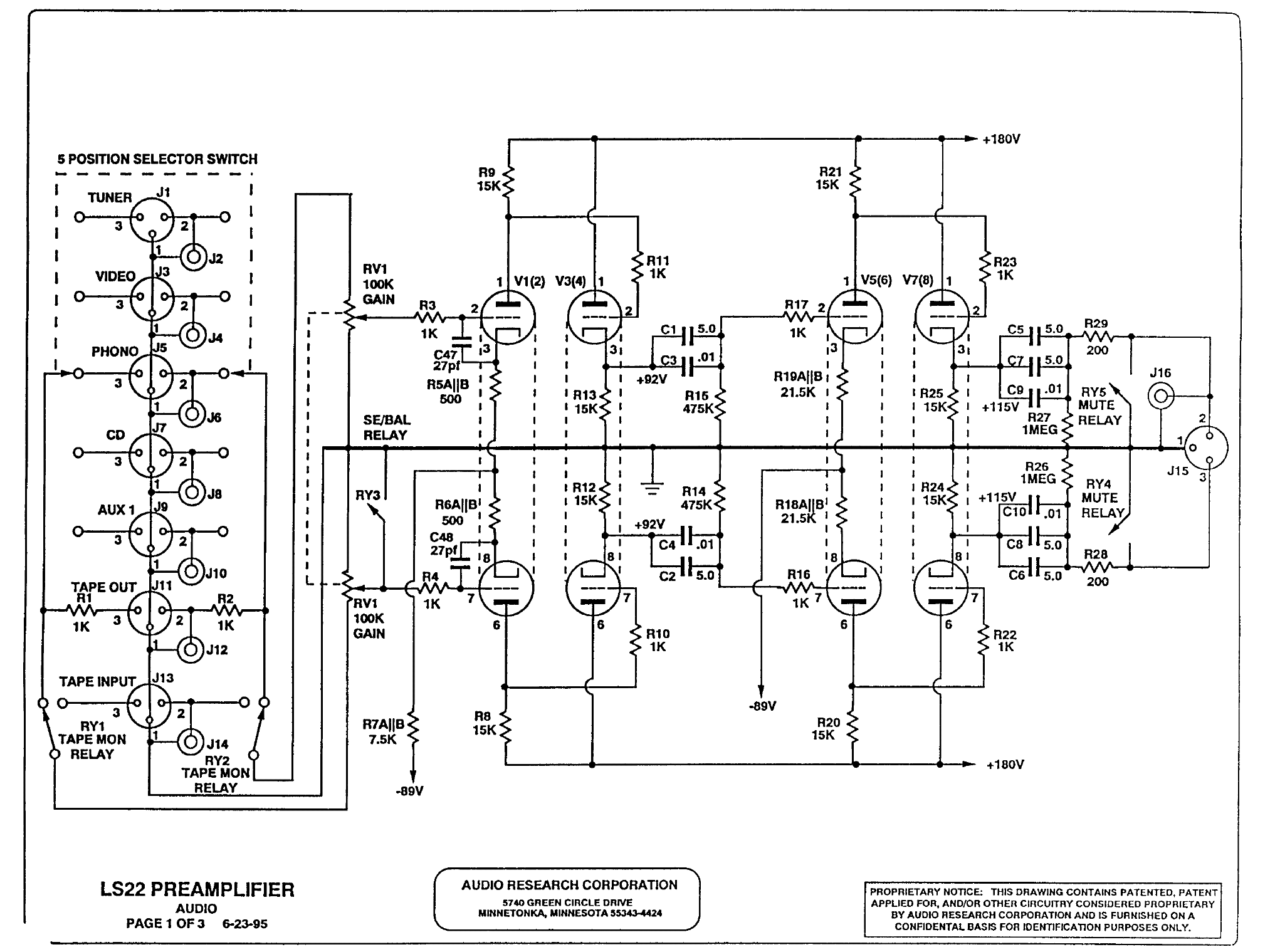
Audio Research LS22 Preamplifier
The Audio Research Corporation LS22 Line Stage Preamplifier was selected for this upgrade.
The Audio Research LS22 Line Stage Preamplifier is a high-performance audio component designed to enhance the quality of sound reproduction in audio systems. This preamplifier features a fully...
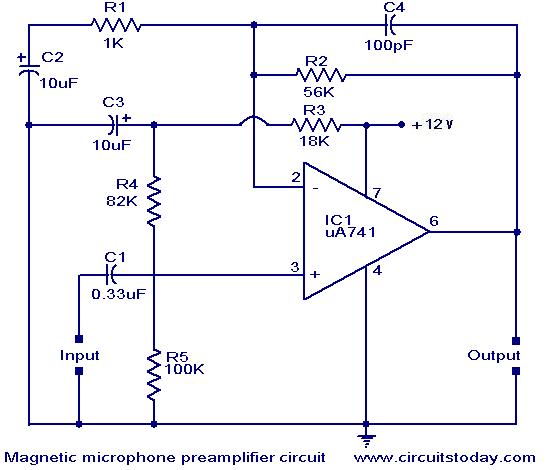
Magnetic pickup pre-amplifier circuit
A preamplifier for magnetic pickups of record players is presented. The uA 741 is utilized as an AC-coupled non-inverting amplifier operating on a single supply. The amplifier gain is determined by the feedback components, where C2 manages the low-frequency roll-off...
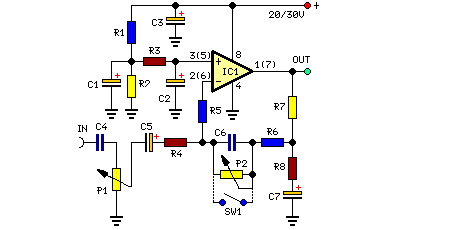
Stereo preamplifier with bass circuit
This preamplifier is designed to interface with CD players, tuners, tape recorders, and similar devices, providing an AC voltage gain of 4 to drive less sensitive power amplifiers. Given that modern Hi-Fi home equipment often comes with small loudspeaker cabinets,...
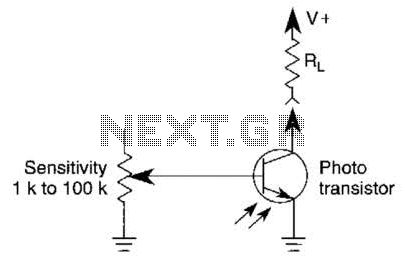
Variable-Sensitivity Phototransistor Circuit Circuit
A variable resistor is utilized to adjust the light-level response of a phototransistor. Phototransistors exhibit higher light sensitivity compared to photodiodes; however, they typically demonstrate a lower frequency response.
A variable resistor, often referred to as a potentiometer or rheostat, plays...
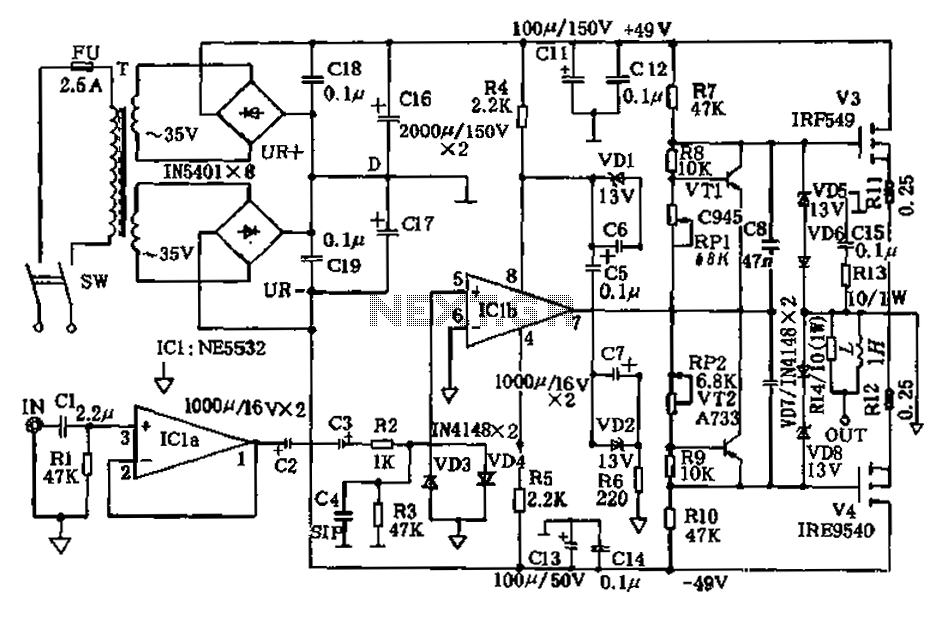
120W power amplifier circuit
The amplifier circuit presented in this paper introduces a floating power supply aimed at increasing output power. The output power of the amplifier is influenced primarily by the final stage amplifier supply voltage. The circuit's principle is illustrated in Figure...
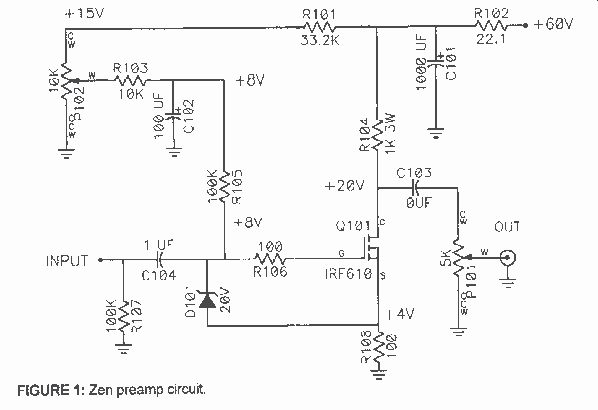
Line-level preamplifier
Since the volume control is after the gain stage, the preamp can be easily overloaded. I tried to limit the input signal by mounting a 470 k resistor in series with the CD input. A voltage divider is formed by...
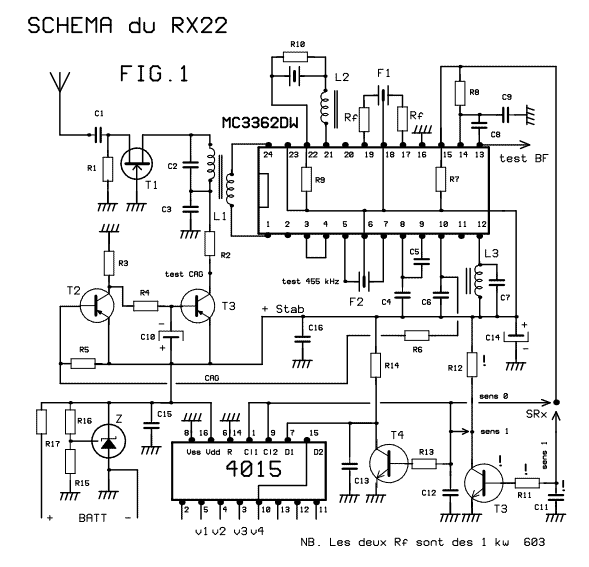
41-72MHz micro-receiver ( MC3362 )
This receiver weighs about 6 g, used in 41 and 72 MHz, met a great success with readers of the magazine. The RX22 is the subject of these lines is improved RX20. Adding a preamp-HF improving sensitivity. Establishment of an...
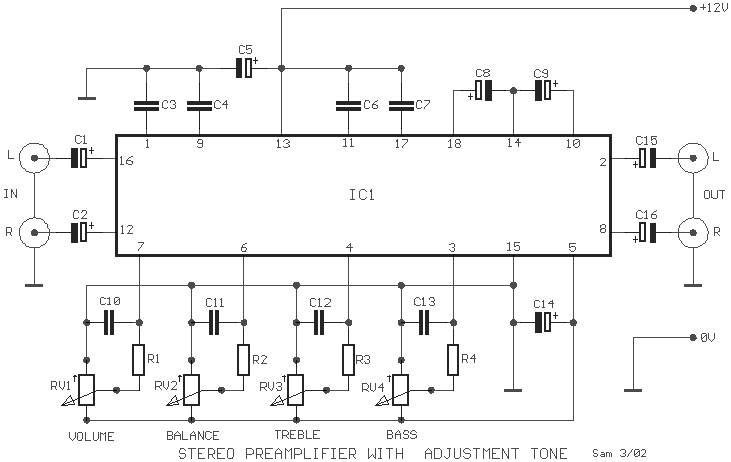
Stereo Preamplifier with adjustment tone circuit
A simple preamplifier circuit is often required, utilizing a few components for ease of construction. This circuit employs an operational amplifier, specifically the Motorola TCA5550, which features a dual amplifier configuration. It provides outputs for adjusting volume, balance, treble, and...
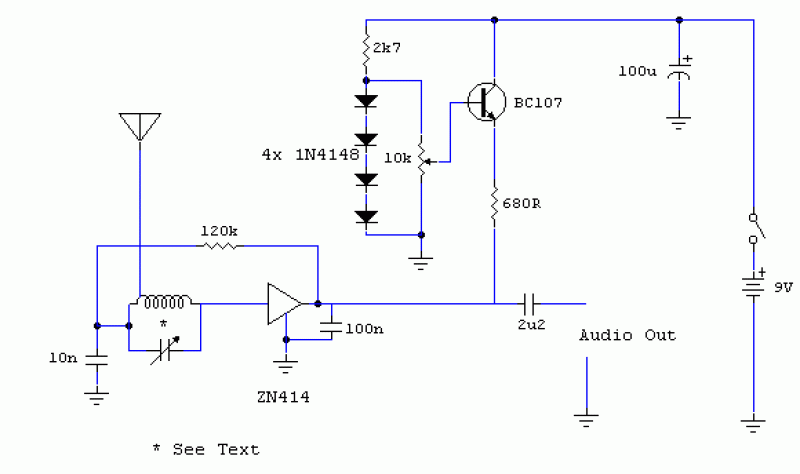
MK414 SW Receiver
The original data sheet for the MK414 indicates that the maximum working frequency is approximately 4 MHz. SW transmissions are sufficiently strong that this receiver can effectively operate with signals up to about 6 or 7 MHz. A 10k resistor...