


Loudness control circuit
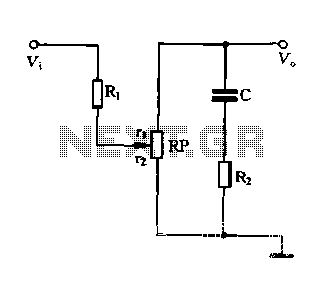
Description: Figure 1-87 illustrates an effective loudness volume control circuit that employs a standard potentiometer. The components used are minimal, yet the performance is notably impressive. The operation principle is as follows: when the internal impedance of the source is significantly lower than Rc, and the load impedance Rp is considerably greater than the resistances R1 and Rz, the capacitance C can be selected to a high value, allowing low audio frequencies to be treated as an open circuit.
This loudness volume control circuit is designed to enhance the listening experience by adjusting the perceived loudness of audio signals. The circuit configuration typically includes a potentiometer that serves as a variable resistor, enabling users to modify the resistance and, consequently, the loudness level. The choice of components, including resistors (Rc, R1, Rz) and capacitors (C), plays a critical role in defining the circuit's frequency response and overall performance.
In scenarios where the source's internal impedance is much smaller than Rc, the circuit effectively minimizes signal loss and distortion, ensuring that audio fidelity is maintained. The high load impedance (Rp) further contributes to this by allowing the circuit to operate efficiently without overloading the source. The selection of a high-value capacitor (C) is crucial, as it allows the circuit to filter out higher frequencies, thereby enhancing the low-frequency audio response.
When tuning this circuit, careful consideration must be given to the values of the resistors and capacitor to achieve the desired loudness effect. The circuit can be implemented in various audio applications, including home audio systems, musical instruments, and professional audio equipment, providing users with a versatile solution for controlling audio loudness while preserving sound quality.Figure 1-87 is a good loudness volume control circuit, it uses an ordinary potentiometer, used element pieces are scarce, but the effect is quite remarkable. The electric road works is: when the internal impedance of the source is much much smaller than Rc, big load impedance Rp, and Rp is much greater than when I ruler and Rz, the capacitance C taken only high value, audio works for low audio can be regarded as open
This loudness volume control circuit is designed to enhance the listening experience by adjusting the perceived loudness of audio signals. The circuit configuration typically includes a potentiometer that serves as a variable resistor, enabling users to modify the resistance and, consequently, the loudness level. The choice of components, including resistors (Rc, R1, Rz) and capacitors (C), plays a critical role in defining the circuit's frequency response and overall performance.
In scenarios where the source's internal impedance is much smaller than Rc, the circuit effectively minimizes signal loss and distortion, ensuring that audio fidelity is maintained. The high load impedance (Rp) further contributes to this by allowing the circuit to operate efficiently without overloading the source. The selection of a high-value capacitor (C) is crucial, as it allows the circuit to filter out higher frequencies, thereby enhancing the low-frequency audio response.
When tuning this circuit, careful consideration must be given to the values of the resistors and capacitor to achieve the desired loudness effect. The circuit can be implemented in various audio applications, including home audio systems, musical instruments, and professional audio equipment, providing users with a versatile solution for controlling audio loudness while preserving sound quality.Figure 1-87 is a good loudness volume control circuit, it uses an ordinary potentiometer, used element pieces are scarce, but the effect is quite remarkable. The electric road works is: when the internal impedance of the source is much much smaller than Rc, big load impedance Rp, and Rp is much greater than when I ruler and Rz, the capacitance C taken only high value, audio works for low audio can be regarded as open
Volume control circuit
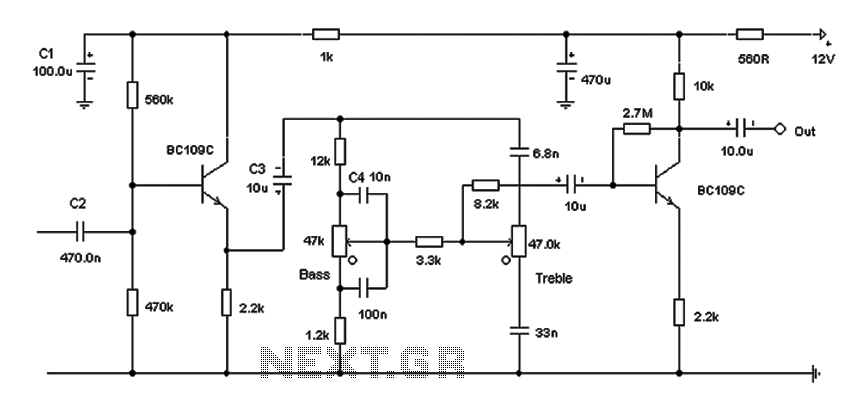
Based on the classic Baxendall tone control circuit, this design offers a maximum cut and boost of approximately 10 dB at 10 kHz and 50 Hz. Since the controls are passive, the final transistor provides a slight boost. The output...
AVC Automatic Volume Control Circuit
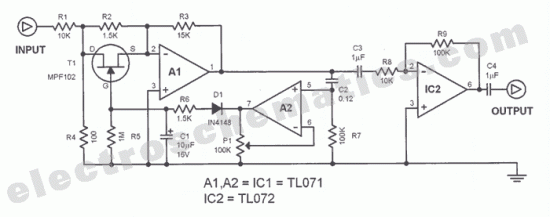
The function of this automatic volume control circuit is to amplify signals without distorting their dynamic compression. The amplitude differences in the signal are leveled off, eliminating disturbing effects. This technique avoids overcompensation in volume. The circuit is utilized to...
Practical loudness control circuit
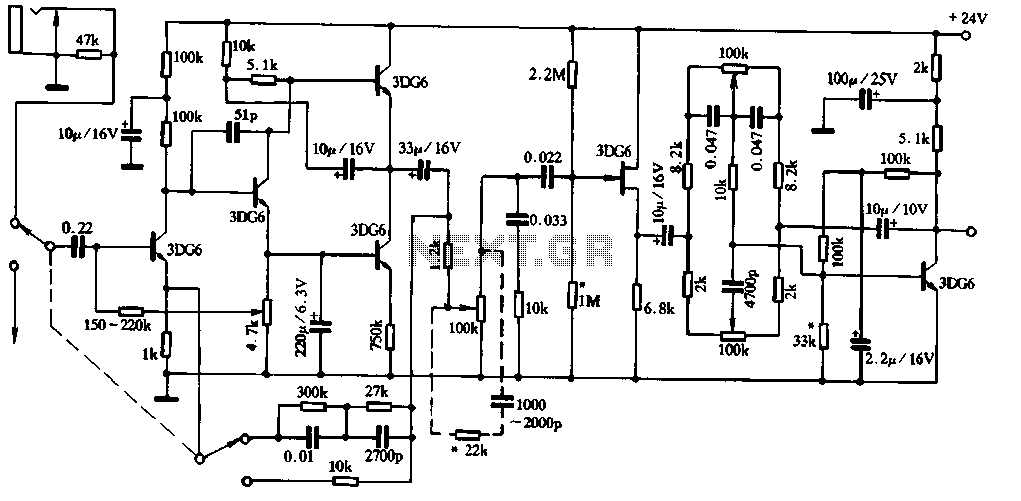
Figure 1-91 illustrates a practical loudness volume control circuit designed for integration with a preamplifier and tone control system. This circuit is positioned behind the output capacitor load (OCL) and can be connected to the main amplifier. Its effectiveness has...
Integrated digital volume potentiometer circuit
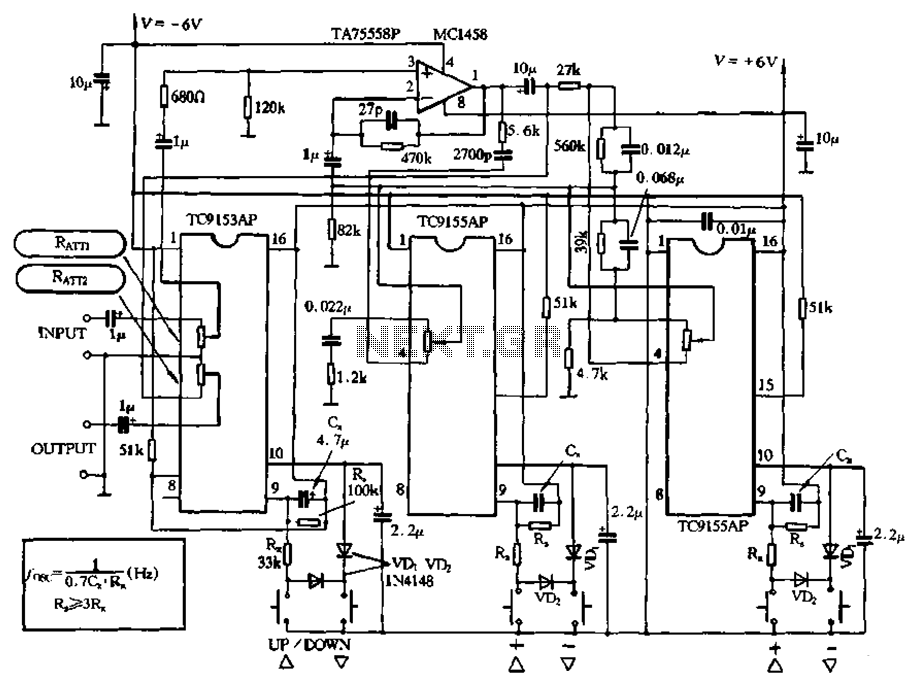
Figure 4-18 illustrates a volume potentiometer T (Xi 153AP) and a tone potentiometer T (155AP) that make up a volume and tone control circuit. This circuit includes Rx and Cx as clock oscillation elements, with values selectable based on the...
Pre or post PI Master Volume
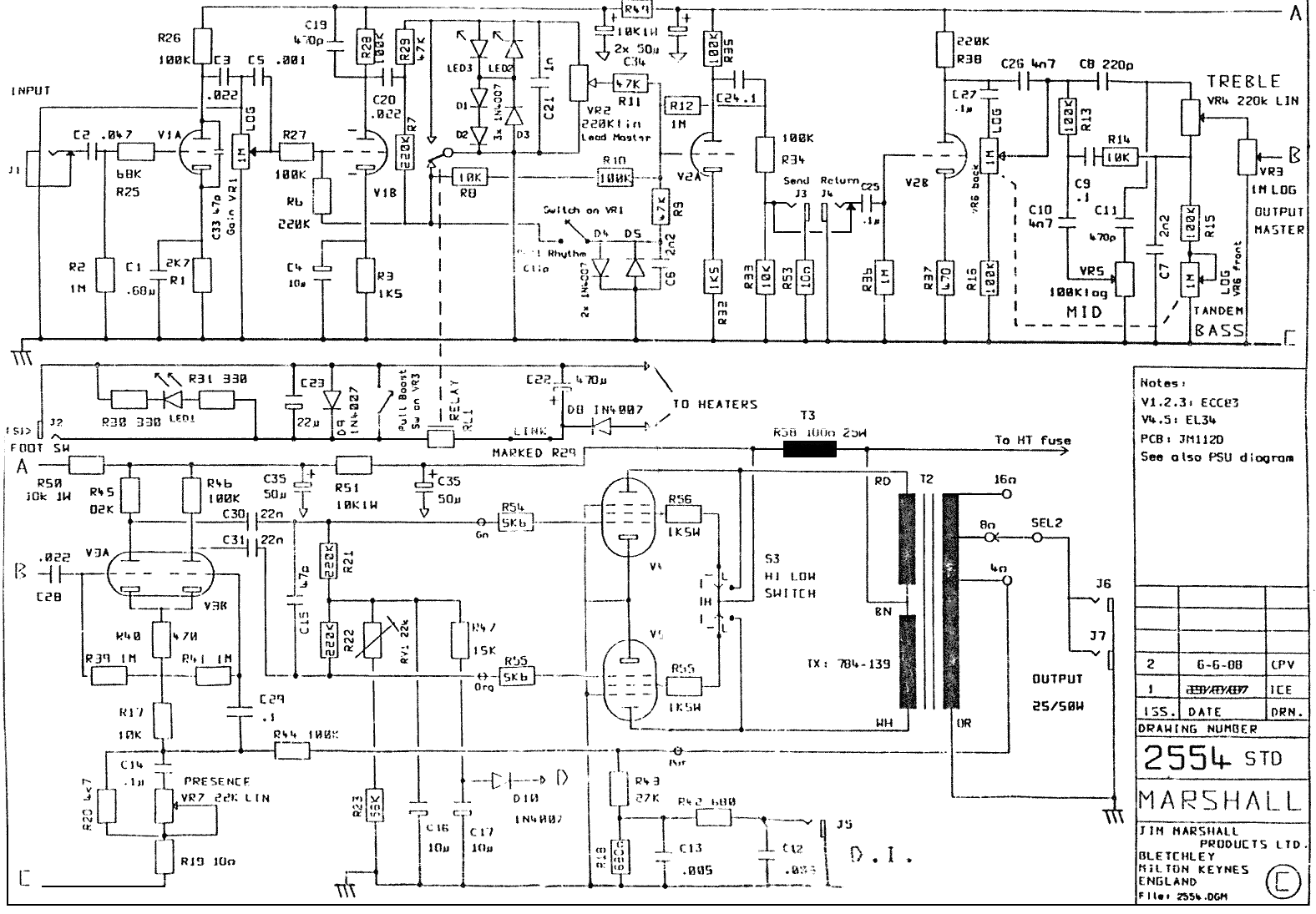
Research was conducted on the Silver Jubilees prior to purchasing a 2554 model, which included reviewing previously gathered information.
The Silver Jubilee amplifier series, particularly the 2554 model, is known for its distinctive sound and robust build quality. This series was...
MiniVol PGA2320 Volume Control
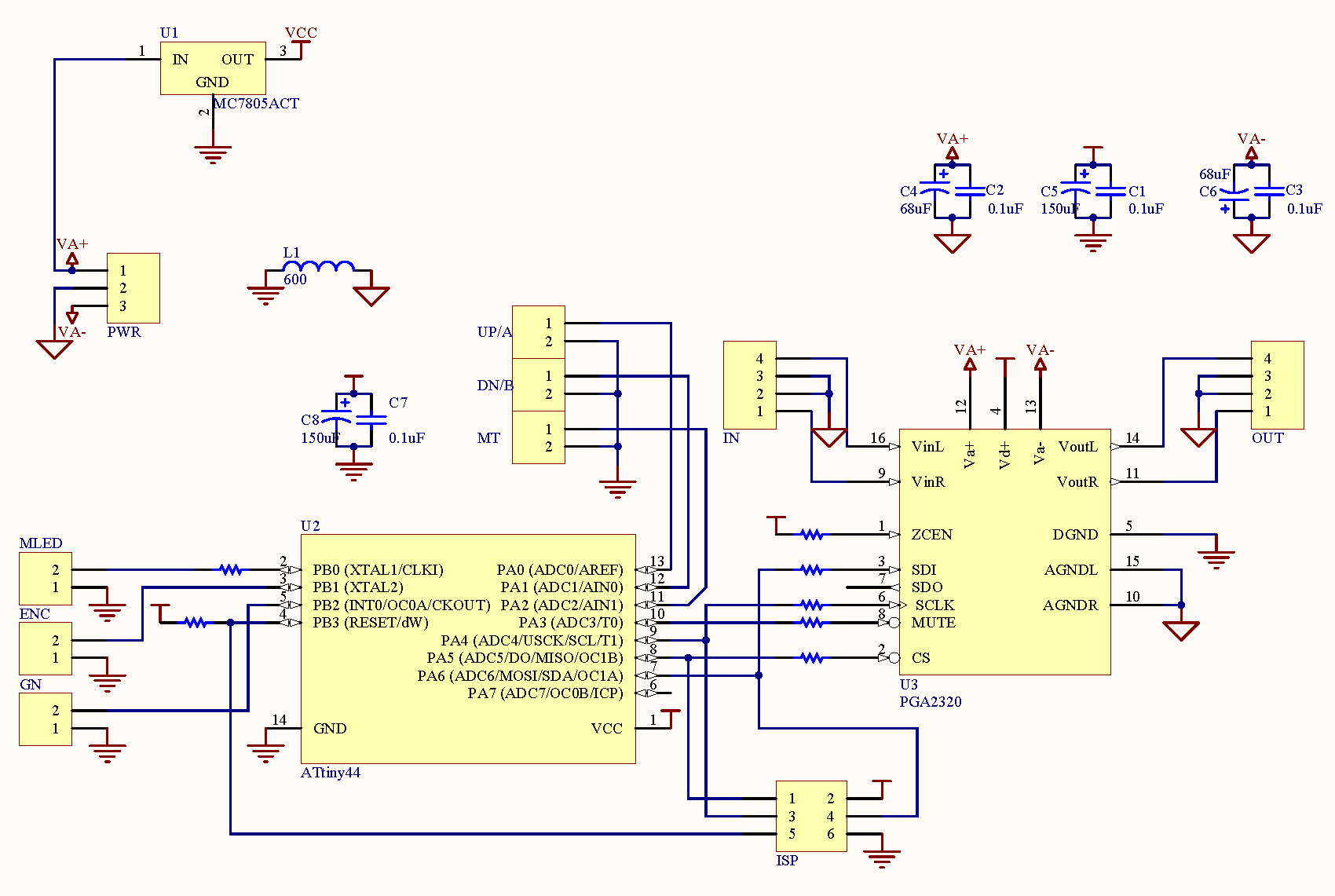
MiniVol is a straightforward volume control board utilizing the TI PGA2320 volume control IC, which operates over a range of -95.5 dB to +31.5 dB. It employs a small Atmel AVR microcontroller to manage the PGA2320 and allows users to...
electronic volume control
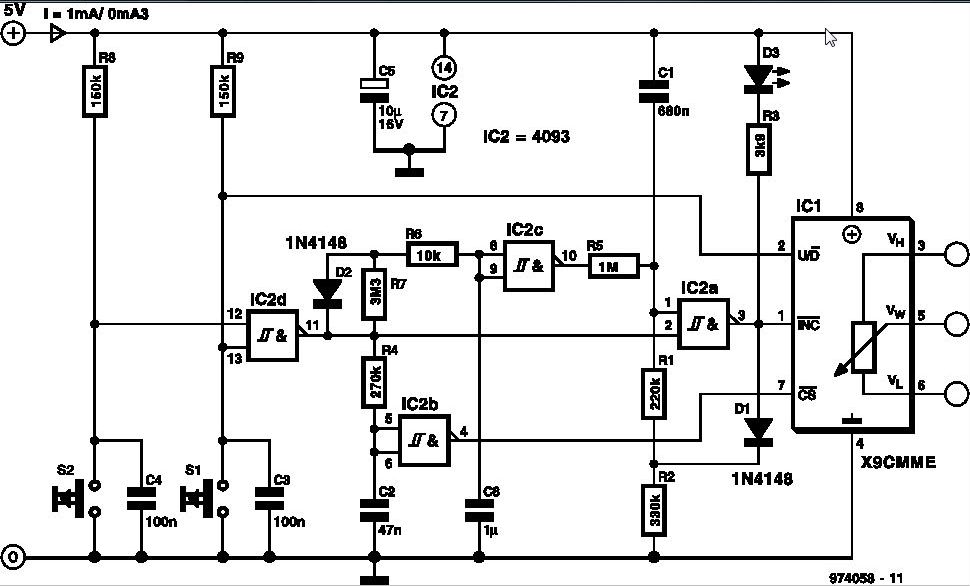
Assistance is requested for a project involving audio volume control utilizing 40 relay-operated L-pad attenuators for each stereo channel. Control will be sequentially assigned to the relay.
The proposed circuit design focuses on creating an advanced audio volume control system that...
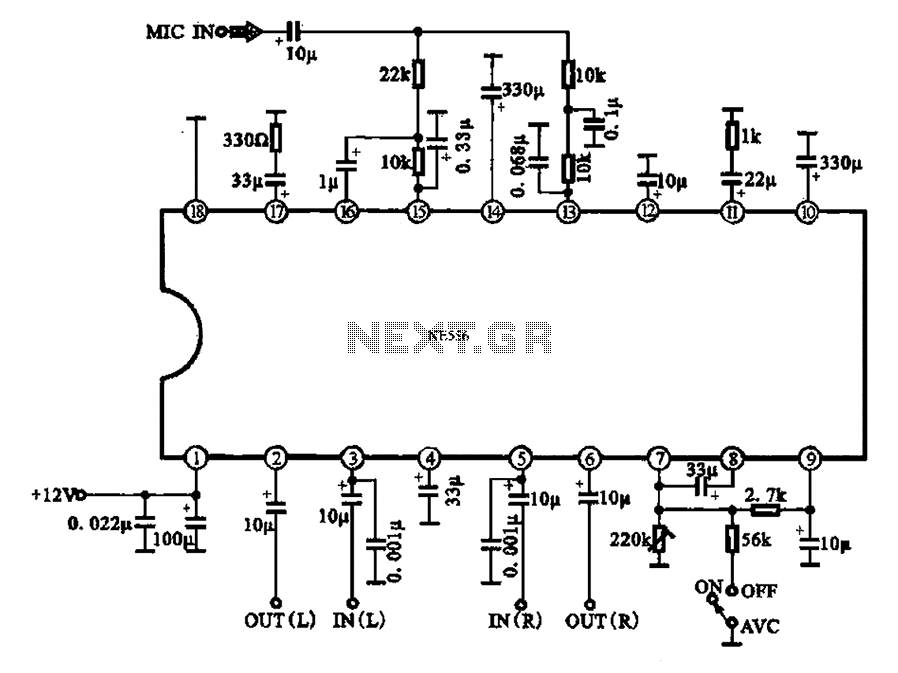
Automatic volume change with the ambient noise control circuit
Automatic volume adjustment with ambient noise control circuit. In car stereos and similar devices, the ambient noise level varies during high-speed and low-speed driving or while stationary, leading to different volume requirements. A fixed volume adjustment method may negatively impact...
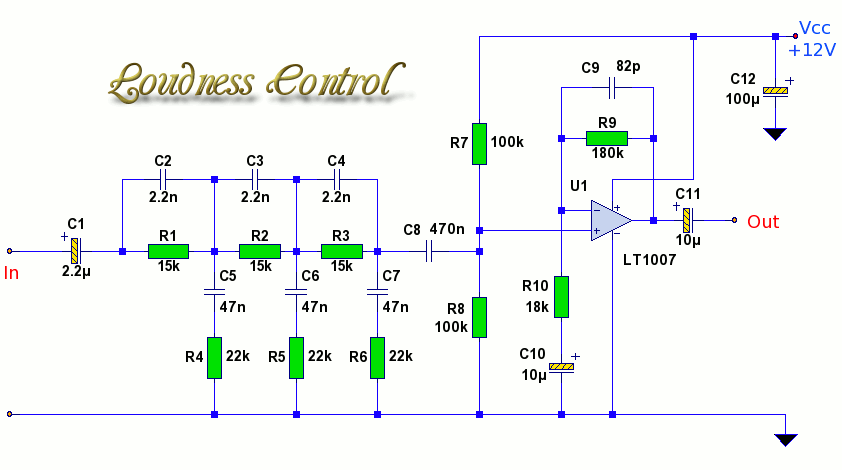
Loudness Control
When listening to music at low volume levels, bass and treble frequencies are attenuated more than mid frequencies. This loudness control alters the frequency response curve to correspond roughly with the equal loudness characteristic of the ear. The circuit shown...