


Metronome II
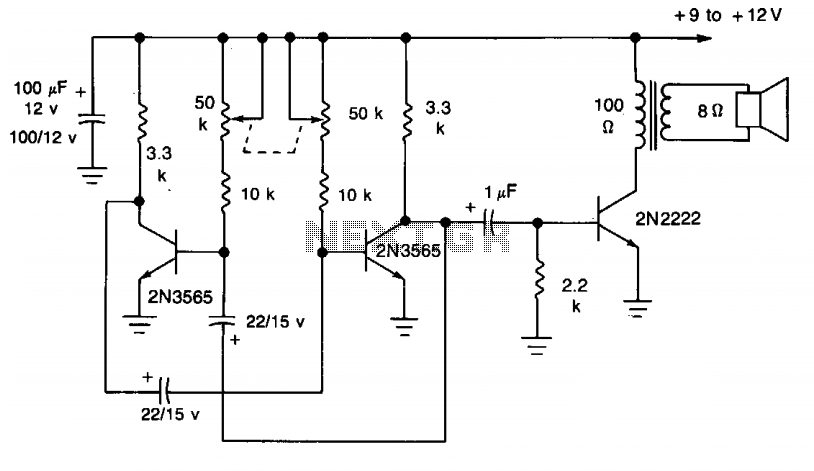
Description: This simple circuit utilizes a multivibrator to generate beats, followed by an audio amplifier stage to enhance the output level. The range of adjustment is approximately from 40 to 200 beats per minute, controlled by a gauged potentiometer.
The described circuit consists of two main functional blocks: a multivibrator and an audio amplifier. The multivibrator, typically configured as an astable multivibrator, produces a square wave output that corresponds to the desired beat frequency. The frequency of oscillation is determined by the values of resistors and capacitors in the circuit, along with the setting of the potentiometer, which allows for fine-tuning of the output frequency within the specified range of 40 to 200 beats per minute.
The audio amplifier stage is connected to the output of the multivibrator. This stage is designed to amplify the weak square wave signal generated by the multivibrator to a level suitable for driving speakers or other audio output devices. Commonly, an operational amplifier (op-amp) or a dedicated audio amplifier IC is employed for this purpose. The gain of the amplifier can be adjusted using feedback resistors, ensuring that the output signal maintains clarity and fidelity without distortion.
Power supply considerations for the circuit are essential, as both the multivibrator and audio amplifier require a stable voltage source to function effectively. Bypass capacitors may be included near the power supply pins of the ICs to filter out any noise and ensure stable operation.
In summary, this circuit effectively combines a multivibrator for beat generation with an audio amplifier for output enhancement, providing a versatile solution for applications requiring adjustable rhythmic sound. The design allows for user-friendly adjustments and can be utilized in various electronic projects, including metronomes, sound effects generators, or rhythm-based applications.This simple circuit uses a multivibrator to generate the beats and a subsequent audio amplifier stage to increase the output level. Range of adjustment is approximately from 40 to 200 beats per minute set by the gauged potentiometer.
The described circuit consists of two main functional blocks: a multivibrator and an audio amplifier. The multivibrator, typically configured as an astable multivibrator, produces a square wave output that corresponds to the desired beat frequency. The frequency of oscillation is determined by the values of resistors and capacitors in the circuit, along with the setting of the potentiometer, which allows for fine-tuning of the output frequency within the specified range of 40 to 200 beats per minute.
The audio amplifier stage is connected to the output of the multivibrator. This stage is designed to amplify the weak square wave signal generated by the multivibrator to a level suitable for driving speakers or other audio output devices. Commonly, an operational amplifier (op-amp) or a dedicated audio amplifier IC is employed for this purpose. The gain of the amplifier can be adjusted using feedback resistors, ensuring that the output signal maintains clarity and fidelity without distortion.
Power supply considerations for the circuit are essential, as both the multivibrator and audio amplifier require a stable voltage source to function effectively. Bypass capacitors may be included near the power supply pins of the ICs to filter out any noise and ensure stable operation.
In summary, this circuit effectively combines a multivibrator for beat generation with an audio amplifier for output enhancement, providing a versatile solution for applications requiring adjustable rhythmic sound. The design allows for user-friendly adjustments and can be utilized in various electronic projects, including metronomes, sound effects generators, or rhythm-based applications.This simple circuit uses a multivibrator to generate the beats and a subsequent audio amplifier stage to increase the output level. Range of adjustment is approximately from 40 to 200 beats per minute set by the gauged potentiometer.
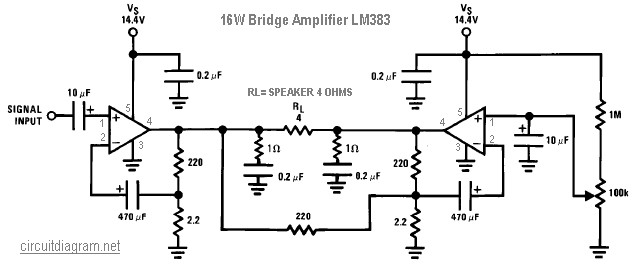
16w bridge amplifier using lm383
The following diagram illustrates a 16W bridge audio amplifier circuit. The design incorporates two LM383 power ICs in a head connection, making this amplifier a head amplifier. The LM383 is an older model that has been discontinued, which may make...
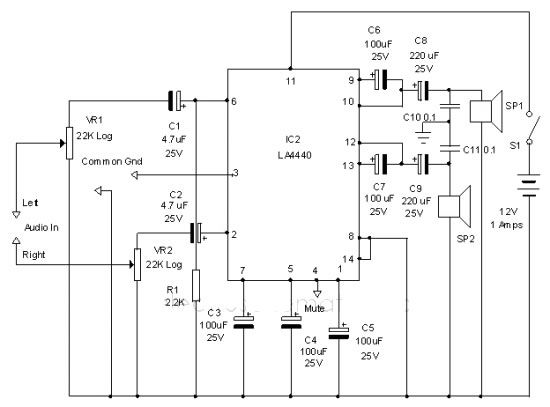
LA4440 audio amplifier circuit design electronic project
The LA4440 audio amplifier IC can be utilized to design a straightforward stereo power audio amplifier project, capable of delivering 6 watts of output power into an 8-ohm load. This audio amplifier IC features a minimal number of external components,...
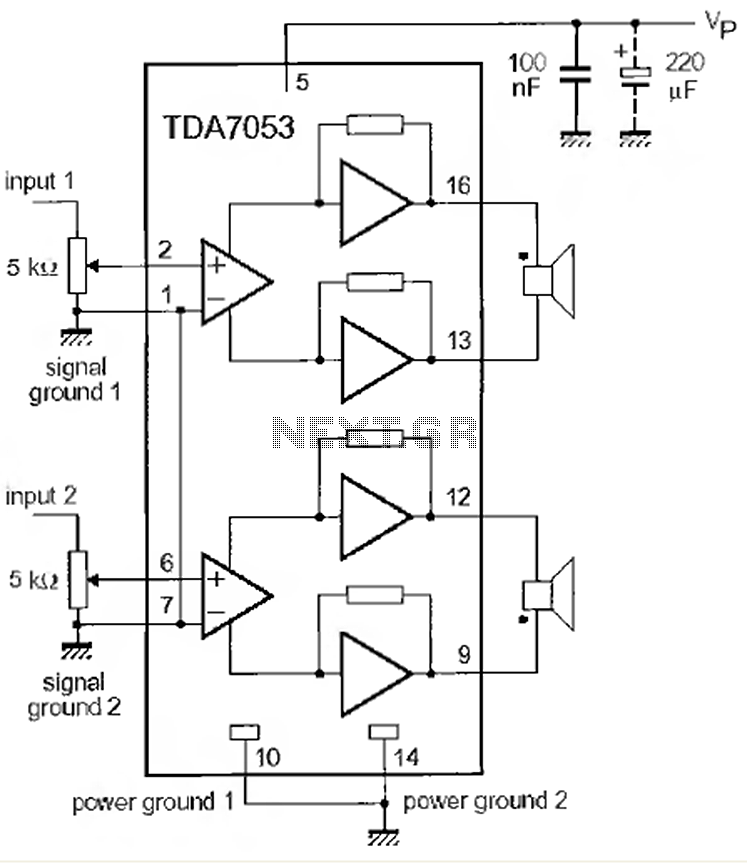
TDA 7053 Stereo Audio Amplifier Circuit
This is a 1-watt stereo audio amplifier circuit utilizing the TDA 7053 integrated circuit from Philips. It is specifically designed for battery operation, delivering 1 watt per channel from a 6V DC supply. The circuit operates optimally between 6V and...
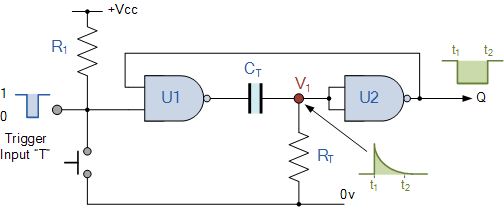
Multivibrators including Monostable Astable and Bistable
Electronics tutorial about multivibrators, including monostable multivibrator circuits, astable multivibrators, bistable oscillators, and clocks.
Multivibrators are essential electronic circuits that generate specific output waveforms based on their configuration. They are classified into three primary types: monostable, astable, and bistable multivibrators. Each...
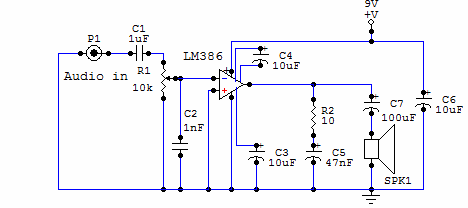
1Watt audio amplifier
Here is a simple audio amplifier circuit that is easy to build and has few components. This circuit is built around the LM386 audio amplifier integrated circuit, useful when you need to power medium-sized speakers from a music player that...
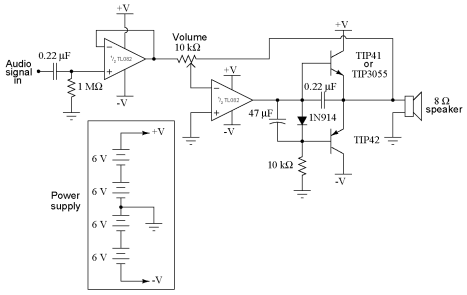
Fundamentals of Electrical Engineering and Class B audio amplifier
It is advisable to obtain TIP41 and TIP42 transistors, which are closely matched NPN and PNP power transistors with dissipation ratings of 65 watts each. If a TIP41 NPN transistor is unavailable, the TIP3055 (available from Radio Shack) serves as...
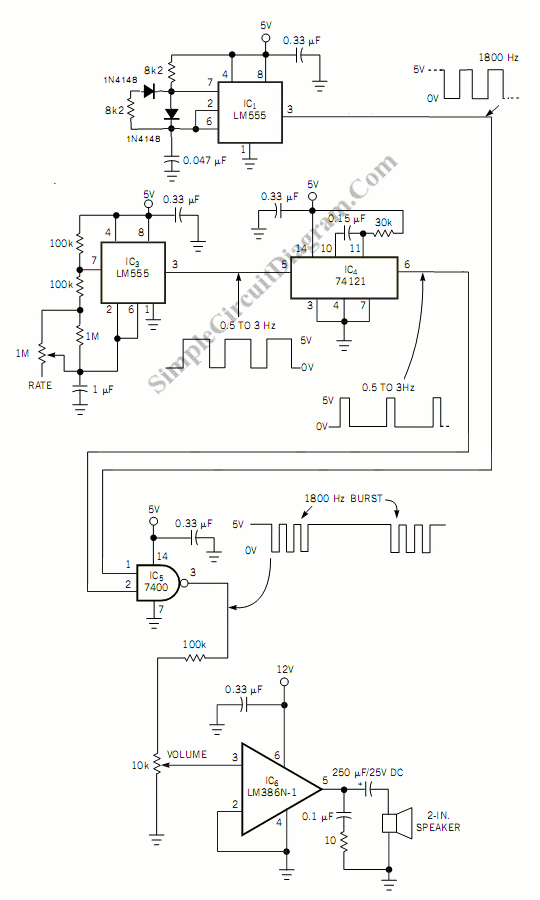
Electronic Metronome Generates Mechanical Sound
This is a metronome circuit that produces a mechanical sound characteristic. A metronome with a mechanical sound character enhances the enjoyment of musical practice and performance.
The metronome circuit is designed to generate a rhythmic sound that aids musicians in maintaining...
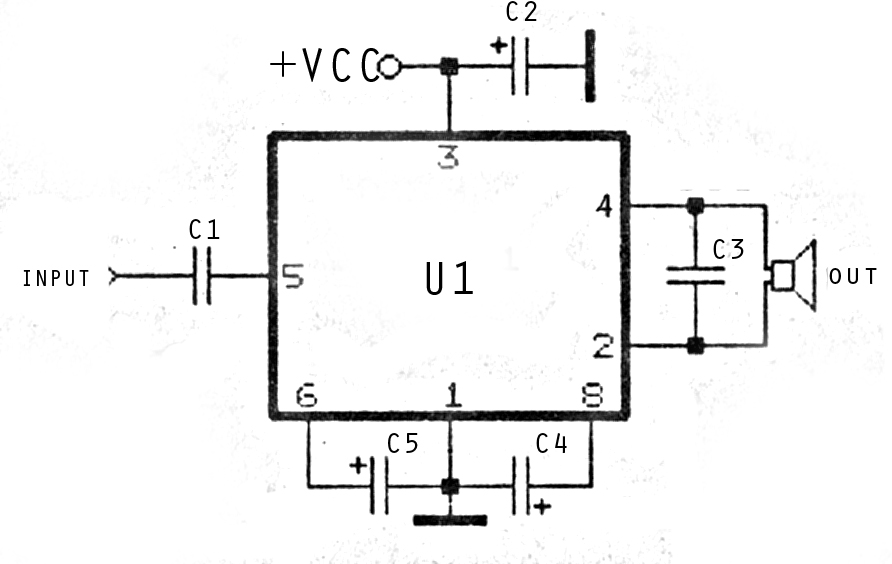
mini and simple power amplifier
The image above depicts a miniature audio amplifier that is quite simple in design. A schematic for this audio amplifier is provided, which requires only a few components, as detailed in the accompanying diagram. This amplifier is inexpensive to construct...
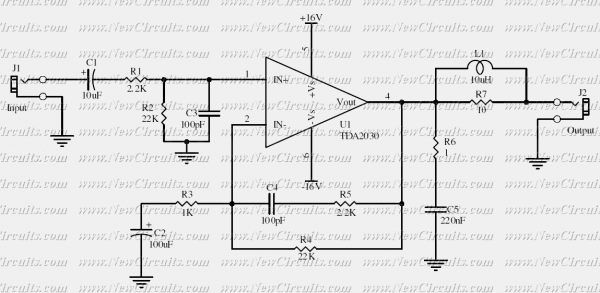
10 Watt Power Amplifier (TDA2030)
This simple 10 watts audio power amplifier is designed for home-brewed purpose. It is based on an Audio Power Amplifier IC that is called TDA2030. It is a monolithic integrated circuit in Pentawatt package, intended for use as a low...