


Musical chime generator
#bandpass filter
#resonance frequency
#percussive sounds
#decay time
#Q factor
#musical chime
#sound generator
#multiple feedback
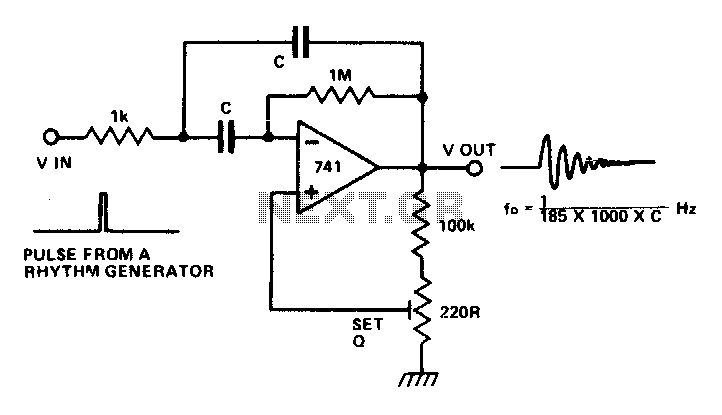
Description: The circuit is a multiple feedback bandpass filter. A brief click (pulse) causes it to resonate at its natural frequency. The oscillations diminish exponentially, closely resembling various naturally occurring percussive or plucked sounds. The higher the quality factor (Q), the longer the decay time constant. High-frequency resonances resemble chimes, while lower frequencies sound like claves or bongos. Multiple circuits, each with different tuning, driven by pulses from a rhythm generator, can create an intriguing pattern of sounds.
The multiple feedback bandpass filter circuit utilizes a combination of resistors, capacitors, and operational amplifiers to achieve its unique frequency-selective characteristics. At its core, the design includes a feedback loop that allows for both positive and negative feedback, enabling the circuit to selectively amplify signals within a specific frequency range while attenuating those outside of this range.
The natural resonance frequency of the circuit is determined by the values of the resistors and capacitors used in the design. By adjusting these component values, the filter can be tuned to resonate at various frequencies, allowing for a wide range of sound generation. The quality factor (Q) of the filter is a critical parameter that influences the sharpness of the resonance peak. A higher Q indicates a narrower bandwidth and longer decay time, resulting in a more pronounced ringing effect after the initial pulse.
The interaction of multiple bandpass filters, each tuned to different frequencies, can produce complex sound patterns when driven by a rhythm generator. This setup allows for the creation of layered sounds that can mimic acoustic instruments, such as chimes, claves, or bongos, depending on the tuning of each filter. The rhythmic pulses from the generator act as triggers, causing the filters to resonate in response, thus generating a rich tapestry of auditory textures.
In practical applications, such circuits are often employed in synthesizers and sound design tools to create percussive sounds or to add depth to musical compositions. The ability to adjust the tuning and quality factor of each filter provides a versatile platform for experimentation and creativity in sound synthesis.The circuit is that of a multiple feedback bandpass filter. A short click (pulse), makes it ring with a frequency which is its natural resonance frequency. Oscillations die away exponentially and closely resemble many naturally occuring percussive or plucked sounds. The higher the Q the longer the decay time constant Highfrequency resonances resemble chimes, lower frequencies sound like claves or bongos. Several circuits, all with different tuning, driven by pulses from a rhythm generator can produce an interesting pattern of sounds.
The multiple feedback bandpass filter circuit utilizes a combination of resistors, capacitors, and operational amplifiers to achieve its unique frequency-selective characteristics. At its core, the design includes a feedback loop that allows for both positive and negative feedback, enabling the circuit to selectively amplify signals within a specific frequency range while attenuating those outside of this range.
The natural resonance frequency of the circuit is determined by the values of the resistors and capacitors used in the design. By adjusting these component values, the filter can be tuned to resonate at various frequencies, allowing for a wide range of sound generation. The quality factor (Q) of the filter is a critical parameter that influences the sharpness of the resonance peak. A higher Q indicates a narrower bandwidth and longer decay time, resulting in a more pronounced ringing effect after the initial pulse.
The interaction of multiple bandpass filters, each tuned to different frequencies, can produce complex sound patterns when driven by a rhythm generator. This setup allows for the creation of layered sounds that can mimic acoustic instruments, such as chimes, claves, or bongos, depending on the tuning of each filter. The rhythmic pulses from the generator act as triggers, causing the filters to resonate in response, thus generating a rich tapestry of auditory textures.
In practical applications, such circuits are often employed in synthesizers and sound design tools to create percussive sounds or to add depth to musical compositions. The ability to adjust the tuning and quality factor of each filter provides a versatile platform for experimentation and creativity in sound synthesis.The circuit is that of a multiple feedback bandpass filter. A short click (pulse), makes it ring with a frequency which is its natural resonance frequency. Oscillations die away exponentially and closely resemble many naturally occuring percussive or plucked sounds. The higher the Q the longer the decay time constant Highfrequency resonances resemble chimes, lower frequencies sound like claves or bongos. Several circuits, all with different tuning, driven by pulses from a rhythm generator can produce an interesting pattern of sounds.

Active Second-Order Bandpass Filter Circuit
This filter circuit, which utilizes the LM1458 or a similar operational amplifier, has a frequency response ranging from 300 Hz to 3.4 kHz, exhibiting a roll-off of 12 dB per octave outside the passband. Section A serves as the high-pass...
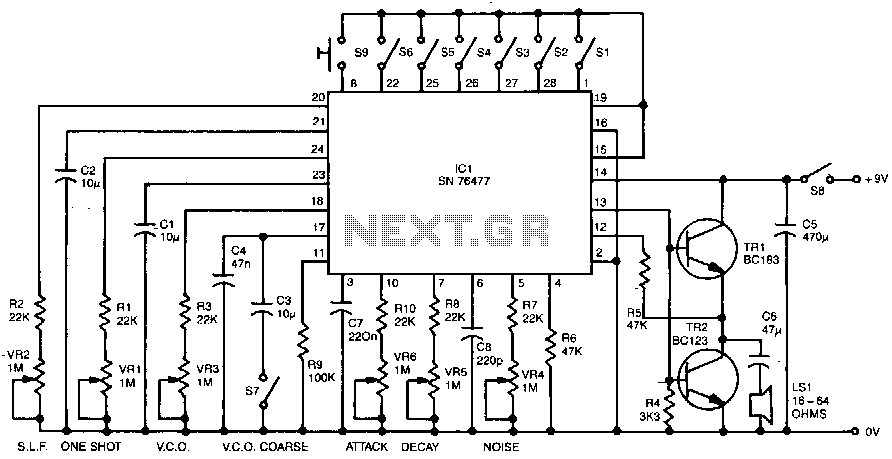
Super-sound-generator
Six preset controls and seven selector switches enable a vast range of different sounds to be produced and altered at will. Such sounds as steam trains chuffing, helicopters flying, bird chirping, and machine guns firing are possible, as well as...
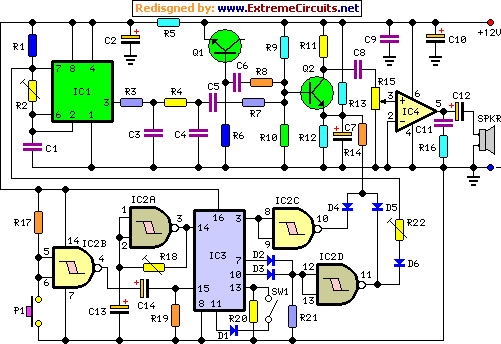
Cuckoo Sound Generator Circuit
This circuit produces a two-tone effect similar to the cuckoo song. It is suitable for use in doorbells or other applications due to its integrated audio amplifier and loudspeaker. When utilized as a sound effect generator, it can be connected...
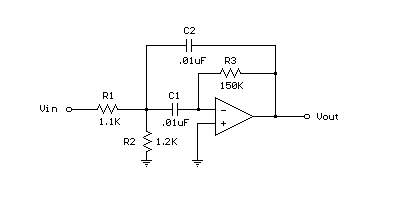
Single Op-Amp Bandpass Filter circuit
A bandpass filter allows a specific range of frequencies to pass while rejecting frequencies that fall outside the upper and lower limits of the passband. The frequencies that are permitted to pass are referred to as the passband, which extends...
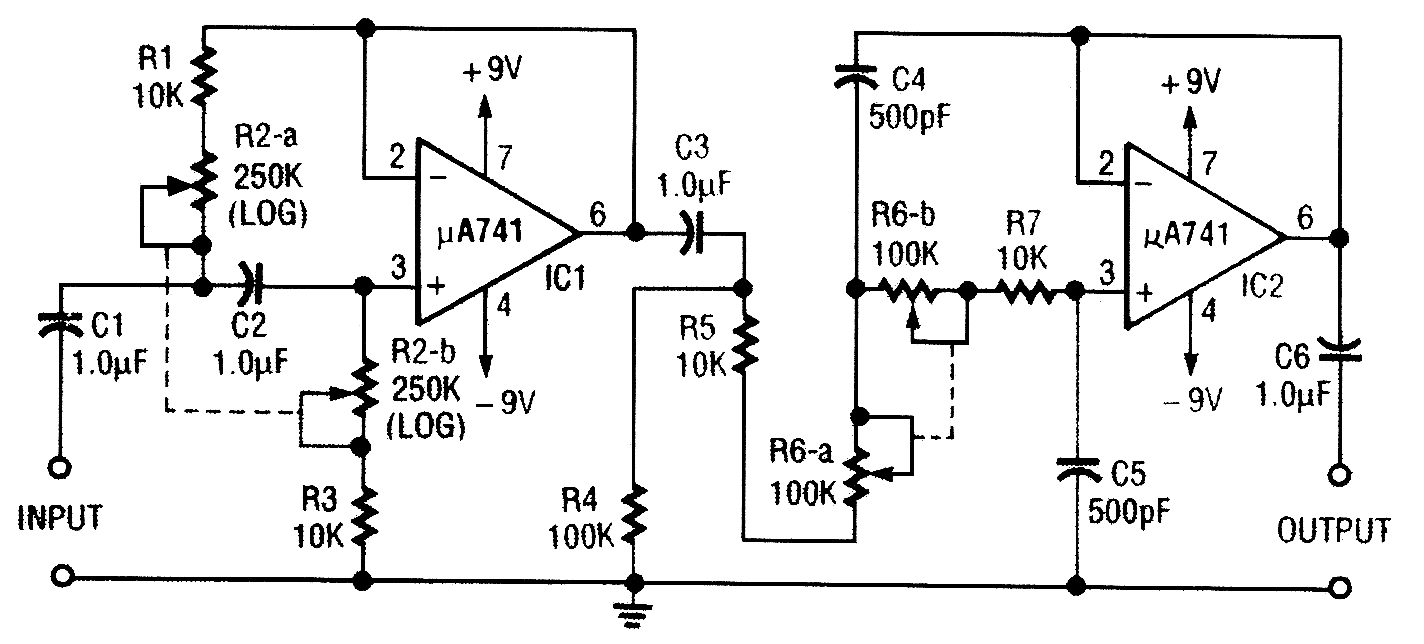
VARIABLE BANDPASS AUDIO FILTER
This circuit is a variable audio bandpass filter that features a low cutoff frequency adjustable from approximately 25 Hz to 700 Hz and a high cutoff frequency adjustable from 2.5 kHz to over 20 kHz. The roll-off rate is 12...
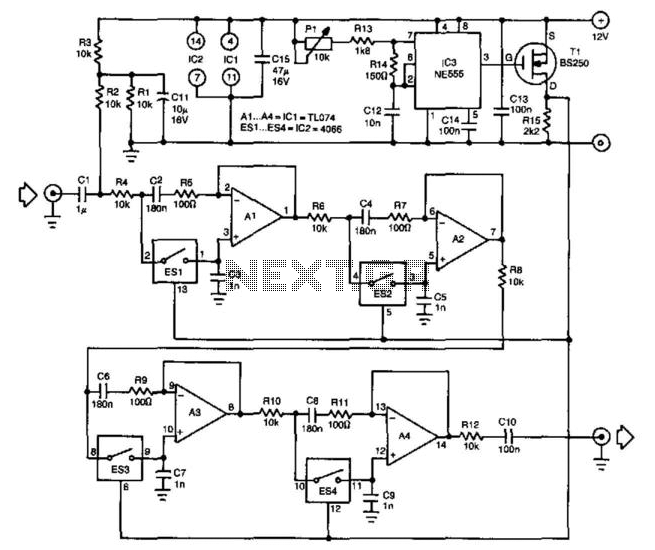
Tunable Bandpass Filter
One of the challenges in designing higher-order tunable bandpass filters is achieving proper tracking of the variable resistors in the RC networks. The implementation of switched capacitor networks can resolve this issue, as demonstrated in this filter. The filter can...
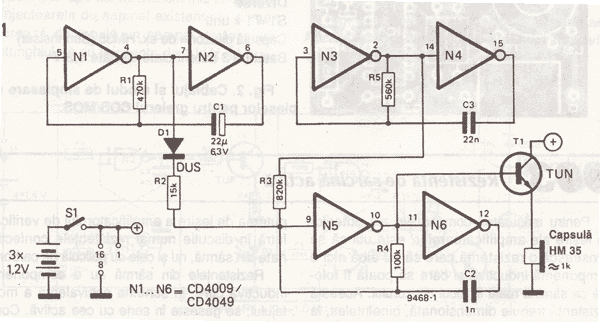
Electronic Cricket Sound Generator
Why an electronic cricket? Many people enjoy the sound of crickets, especially those living in urban areas. This electronic cricket circuit operates in pulses, creating a similar sound.
The electronic cricket circuit is designed to replicate the natural sound of crickets,...
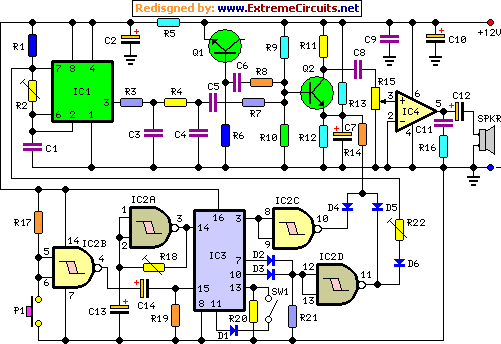
Cuckoo Sound Generator Circuit Schematic
This circuit generates a two-tone effect similar to the cuckoo song. It can be used for doorbells or other applications due to a built-in audio amplifier and loudspeaker. As a sound effect generator, it can be connected to external amplifiers,...
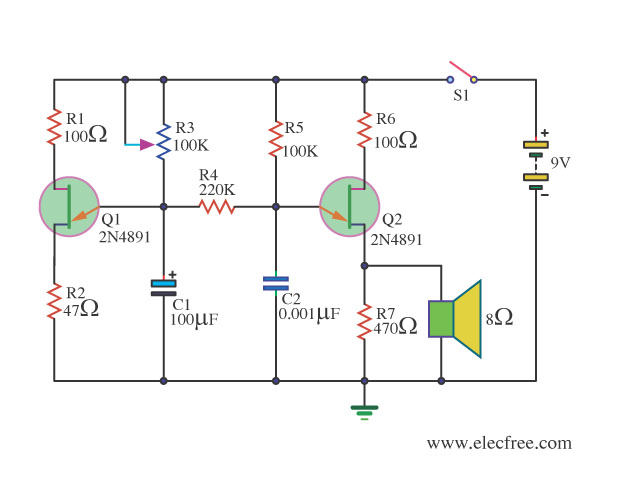
Cricket Generator by 2N4891
This circuit produces sound that interestingly modifies the occurrence rate of a cricket-like sound. The values of components R3, C1, R5, and C2 should be adjusted accordingly.
The circuit design utilizes a combination of resistors and capacitors to create a sound...