


Muti-channel audio mixer circuit based on LM3900 IC. Four channels
#audio mixer
#LM3900
#quad amplifier
#multi-channel
#mic input
#line input
#signal processing
#audio processing
#amplifier circuit
#sound mixing
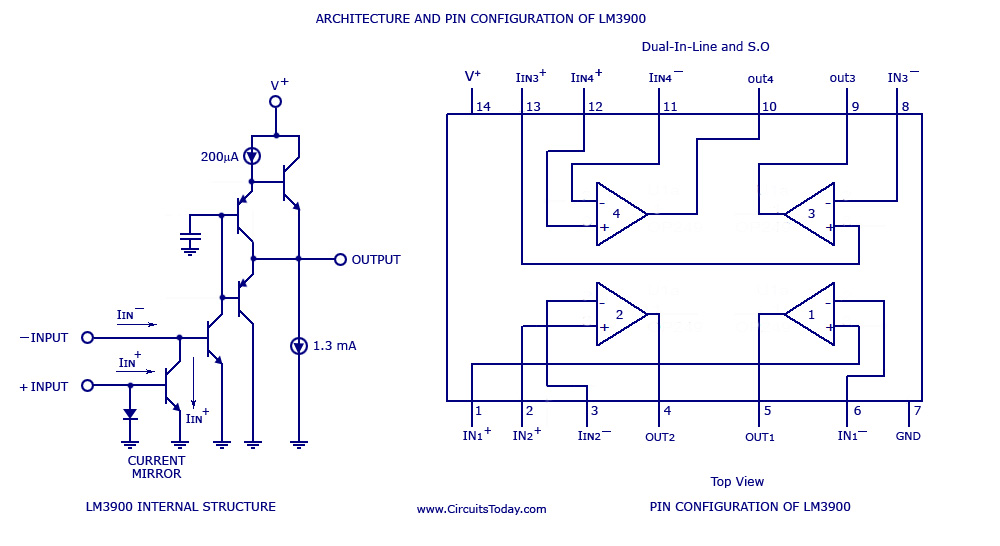
Description: A simple multi-channel audio mixer circuit utilizing the LM3900 quad amplifier is presented below. The circuit features a four-channel quad amplifier (LM3900) with two microphone audio inputs and two direct line inputs. By paralleling additional circuits, the number of inputs can be expanded based on application requirements. Each input is connected to the inverting terminal of the LM3900. The built-in amplifier in each section separately amplifies each audio input and routes it to the output terminals. The output from each channel is combined into a single output line through a resistor not exceeding 680K, resulting in a mixed audio output with minimal noise. This audio mixer circuit does not employ a low impedance input for mixing ideal sources. Capacitors C1 to C4 serve as decoupling capacitors for the respective channels, while C5 functions as the output decoupling capacitor. The LM3900 series amplifiers consist of four independent, internally compensated amplifiers designed for single and wide power supply voltages. These amplifiers accommodate a broad range of voltage inputs and exhibit excellent response across all audio frequencies, providing a substantial output swing.
The described audio mixer circuit is designed to facilitate the mixing of multiple audio sources, making it suitable for various applications, including live sound reinforcement and recording. The LM3900 quad amplifier is a versatile component, characterized by its ability to operate with a wide range of supply voltages, typically between 3V to 32V, which enhances its adaptability in diverse electronic setups.
The configuration of the circuit allows for two microphone inputs, which are typically high-impedance sources, and two line-level inputs, which are lower impedance. By connecting these inputs to the inverting terminals of the LM3900, the circuit effectively utilizes the differential input capabilities of the amplifiers, ensuring that noise and interference are minimized. Each channel's output is combined into a single line, allowing for a coherent audio signal to be produced without significant degradation in quality.
The use of decoupling capacitors (C1 to C4) is crucial in maintaining signal integrity by filtering out noise and stabilizing the power supply for each amplifier section. The output decoupling capacitor (C5) further ensures that the mixed audio signal is clean and devoid of any DC offset that might affect downstream audio equipment.
The design's flexibility is an important feature, as additional LM3900 circuits can be added in parallel to accommodate more audio inputs. This scalability makes the circuit ideal for various scenarios, such as small live events, home studios, or educational purposes where multiple audio sources need to be managed simultaneously.
In summary, the LM3900-based multi-channel audio mixer circuit is a robust solution for audio mixing applications, providing excellent performance, low noise operation, and the ability to expand input channels as needed. Its design principles ensure high fidelity audio output, making it a valuable tool for both amateur and professional audio engineers.A simple multi-channel audio mixer circuit using LM3900 quad amplifier is given below. The circuit consists of 4 channel quad amplifier (LM3900). Two mic audio inputs and two direct line inputs are available in this circuit. By adding the same circuit parallel with this, you can increase the number of inputs according to the applications. Each inp ut is connected to the inverting terminal of LM3900. The built in amplifier of each section amplifies every audio input separately and is fed to the output terminals. The output terminal from each channel is connected to a single output line with a resistance not greater than 680K and produces a mixed audio at the output with very low noise.
This audio mixer circuit doesn`t use a low impedance input to mix idealsources. Capacitors C1 to C4 are the decoupling capacitors for the corresponding channels. C5 is the output decoupling capacitor. LM3900 series amplifiers consist of four independent and internally compensated amplifiers that are designed for single and wide power supply voltage. These amplifiers provide a wide range of voltage inputs and very good response for all audio frequencies.
They also provide a large output swing.
The described audio mixer circuit is designed to facilitate the mixing of multiple audio sources, making it suitable for various applications, including live sound reinforcement and recording. The LM3900 quad amplifier is a versatile component, characterized by its ability to operate with a wide range of supply voltages, typically between 3V to 32V, which enhances its adaptability in diverse electronic setups.
The configuration of the circuit allows for two microphone inputs, which are typically high-impedance sources, and two line-level inputs, which are lower impedance. By connecting these inputs to the inverting terminals of the LM3900, the circuit effectively utilizes the differential input capabilities of the amplifiers, ensuring that noise and interference are minimized. Each channel's output is combined into a single line, allowing for a coherent audio signal to be produced without significant degradation in quality.
The use of decoupling capacitors (C1 to C4) is crucial in maintaining signal integrity by filtering out noise and stabilizing the power supply for each amplifier section. The output decoupling capacitor (C5) further ensures that the mixed audio signal is clean and devoid of any DC offset that might affect downstream audio equipment.
The design's flexibility is an important feature, as additional LM3900 circuits can be added in parallel to accommodate more audio inputs. This scalability makes the circuit ideal for various scenarios, such as small live events, home studios, or educational purposes where multiple audio sources need to be managed simultaneously.
In summary, the LM3900-based multi-channel audio mixer circuit is a robust solution for audio mixing applications, providing excellent performance, low noise operation, and the ability to expand input channels as needed. Its design principles ensure high fidelity audio output, making it a valuable tool for both amateur and professional audio engineers.A simple multi-channel audio mixer circuit using LM3900 quad amplifier is given below. The circuit consists of 4 channel quad amplifier (LM3900). Two mic audio inputs and two direct line inputs are available in this circuit. By adding the same circuit parallel with this, you can increase the number of inputs according to the applications. Each inp ut is connected to the inverting terminal of LM3900. The built in amplifier of each section amplifies every audio input separately and is fed to the output terminals. The output terminal from each channel is connected to a single output line with a resistance not greater than 680K and produces a mixed audio at the output with very low noise.
This audio mixer circuit doesn`t use a low impedance input to mix idealsources. Capacitors C1 to C4 are the decoupling capacitors for the corresponding channels. C5 is the output decoupling capacitor. LM3900 series amplifiers consist of four independent and internally compensated amplifiers that are designed for single and wide power supply voltage. These amplifiers provide a wide range of voltage inputs and very good response for all audio frequencies.
They also provide a large output swing.
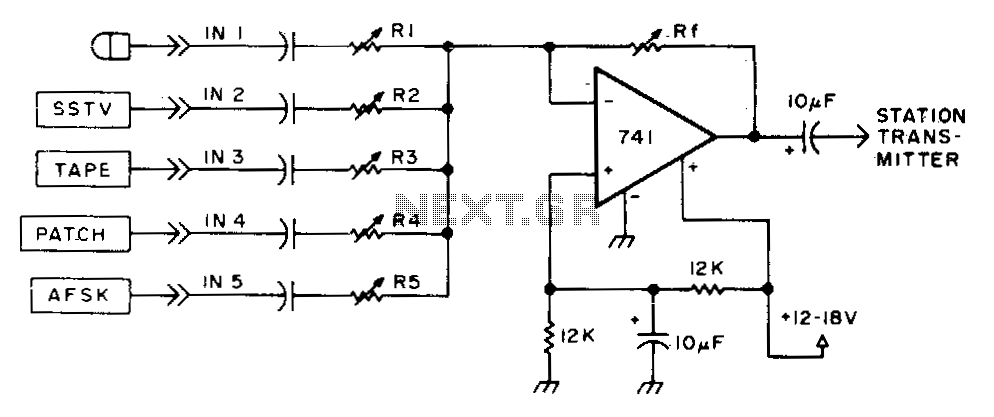
Audio mixer
The 741 operational amplifier (op amp) is utilized as a summing amplifier to merge multiple audio inputs. The overall gain is determined by the feedback resistor (Rf).
The 741 operational amplifier is a versatile component commonly used in various analog applications,...
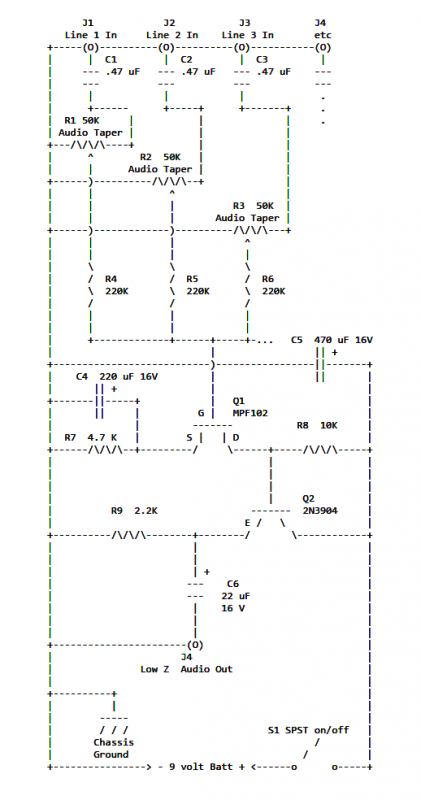
Audio Mixer transistorized circuit
If two of these circuits are made in the same enclosure for stereo, then there can be a single power supply to run both of them. There should be a resistor in series with the incoming 9V+ lead so as...
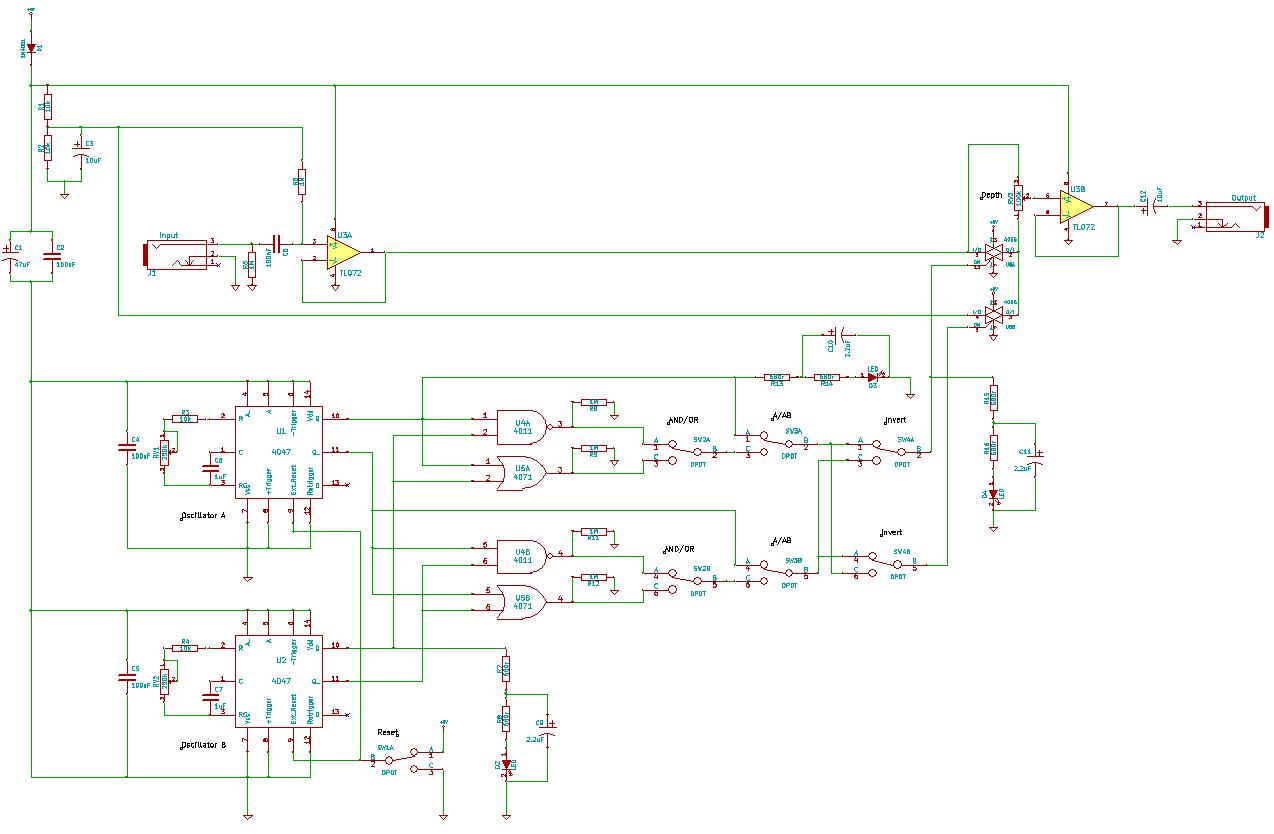
4047/4066 audio slicer
You need to connect pins 1 and 13 of the 4053 to the virtual ground rail (top of C4), not the circuit's 0V rail.
The CD4053 is a triple 2-channel analog multiplexer/demultiplexer integrated circuit, widely used for routing analog signals...
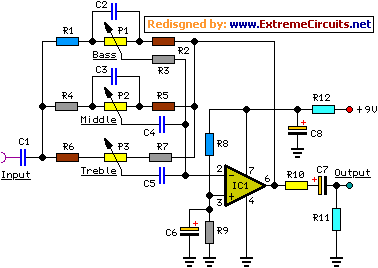
4 Channel Portable Audio Mixer
The objective of this project was to design a compact portable mixer powered by a 9V PP3 battery, while ensuring high-quality performance. The mixer consists of three primary modules, which can be customized in quantity and arrangement to meet individual...
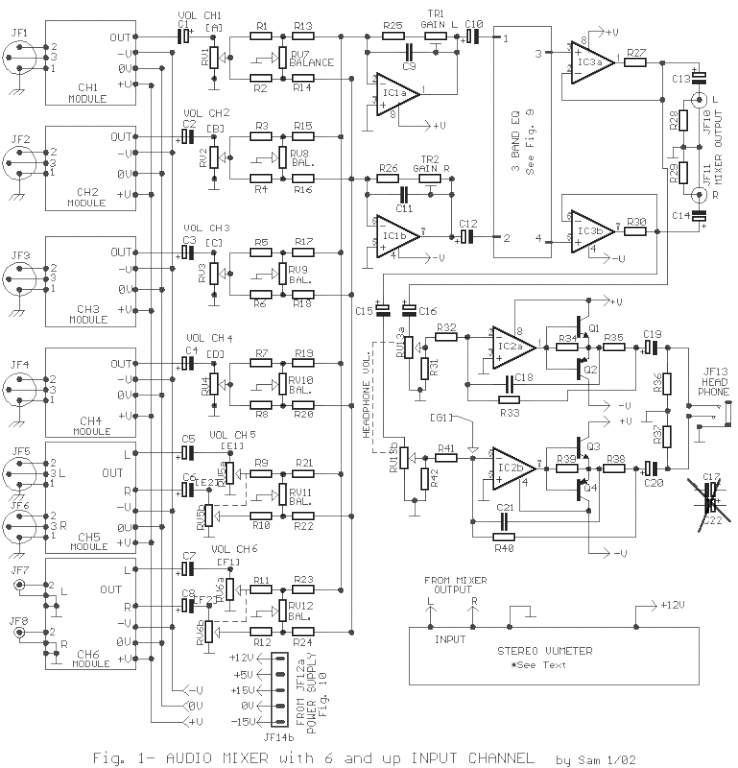
modular audio mixer with multiple input channels
The circuit was designed to create an audio mixer that can be assembled in modules while providing 6 or more input channels. An audio mixer is a device used to combine multiple audio signals into a single output.
The audio mixer...
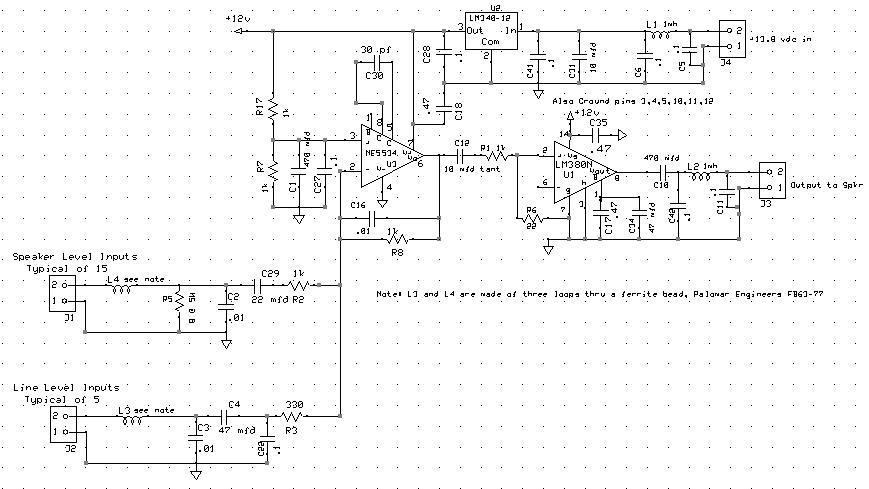
A 20 Input Audio Mixer for Multiple Receiver Setups
The audio mixer allows for easy comparison of various receivers by adjusting the gain controls without the need for switching. This setup simplifies A/B comparisons since all receivers are connected to the same antenna. Previously, different speakers were used for...
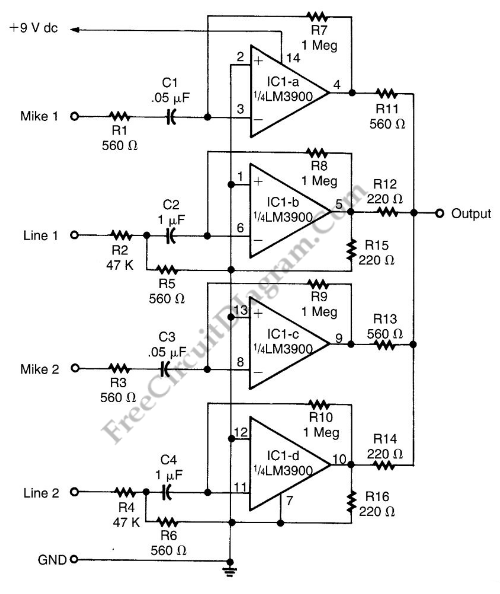
LM3900 Audio Mixer Schematic Diagram
This audio mixer circuit does not utilize a low impedance input to mix non-ideal sources; instead, it employs multiple amplifiers to provide ideal sources prior to mixing through simple resistors. An ideal source is characterized by low impedances, which ensures...
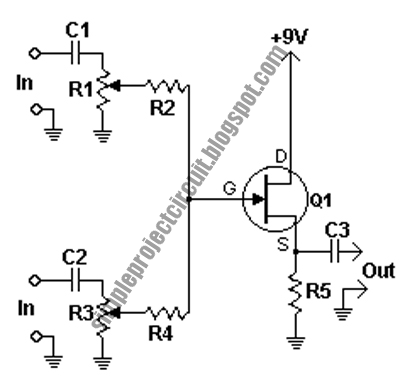
fet audio mixer circuit
This project involves a simple circuit designed to mix two or more audio channels into a single channel, such as converting stereo audio into mono. The circuit is capable of accommodating multiple input channels while maintaining low power consumption. It...
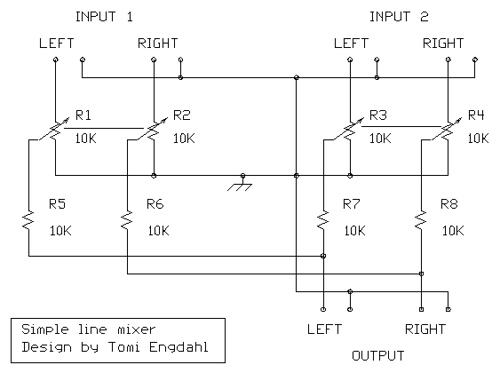
Audio Mixers Circuits
The mixer circuit described features three line inputs and three microphone inputs. The microphone inputs are designed for low impedance dynamic microphones with a range of 200 to 1000 ohms. Alternatively, an electret condenser microphone (ECM) can be used, provided...