


TA8184P Schematic for Dual Channel Voltage/tone Control Ic
#TA8184P
#volume control
#tone control
#car stereo
#audio IC
#balance control
#bass control
#treble control
#music center
#remote control
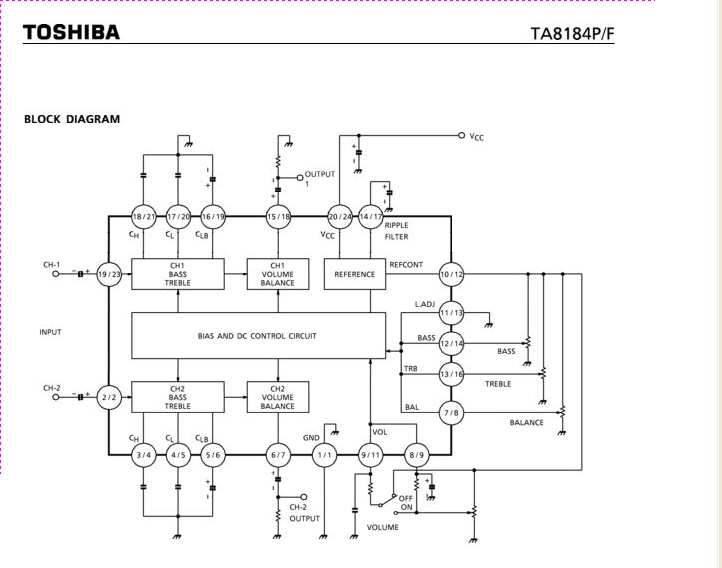
Description: The TA8184P and TA8184F are DC-controlled integrated circuits designed for dual volume, balance, and tone (bass and treble) control. These ICs are suitable for applications in car stereos, radio cassette players, music centers, and TV multiplex sound receivers, providing remote control capabilities.
The TA8184 series offers a versatile solution for audio control in various electronic devices. The dual volume control allows for independent adjustment of sound levels for different audio channels, enhancing the listening experience. The balance control feature enables users to adjust the audio output between the left and right channels, ensuring an even sound distribution.
Additionally, the tone control functions, including bass and treble adjustments, allow for fine-tuning of audio frequencies. This capability is particularly useful in environments where audio preferences may vary, such as in a car or home theater system. The IC operates on a DC voltage, making it compatible with a wide range of power supplies typically found in consumer electronics.
The integration of these features into a single package simplifies the design process for engineers, reducing the number of components required and minimizing the overall footprint of the audio control system. Furthermore, the remote control functionality enhances user convenience, allowing for adjustments without direct interaction with the device.
In summary, the TA8184P and TA8184F provide a comprehensive solution for audio control in various applications, combining dual volume, balance, and tone control into a single, efficient IC. Their design is optimized for ease of integration into existing systems, making them a popular choice for manufacturers in the audio electronics industry.Tho TA8184P TA8184F is DC controlled dual volume, balance, Tone (8ass and treble) IC. it is suitable for car stereo, radio cassette, music center, TV multiplex sound Receiver end remote controlled ap..
The TA8184 series offers a versatile solution for audio control in various electronic devices. The dual volume control allows for independent adjustment of sound levels for different audio channels, enhancing the listening experience. The balance control feature enables users to adjust the audio output between the left and right channels, ensuring an even sound distribution.
Additionally, the tone control functions, including bass and treble adjustments, allow for fine-tuning of audio frequencies. This capability is particularly useful in environments where audio preferences may vary, such as in a car or home theater system. The IC operates on a DC voltage, making it compatible with a wide range of power supplies typically found in consumer electronics.
The integration of these features into a single package simplifies the design process for engineers, reducing the number of components required and minimizing the overall footprint of the audio control system. Furthermore, the remote control functionality enhances user convenience, allowing for adjustments without direct interaction with the device.
In summary, the TA8184P and TA8184F provide a comprehensive solution for audio control in various applications, combining dual volume, balance, and tone control into a single, efficient IC. Their design is optimized for ease of integration into existing systems, making them a popular choice for manufacturers in the audio electronics industry.Tho TA8184P TA8184F is DC controlled dual volume, balance, Tone (8ass and treble) IC. it is suitable for car stereo, radio cassette, music center, TV multiplex sound Receiver end remote controlled ap..
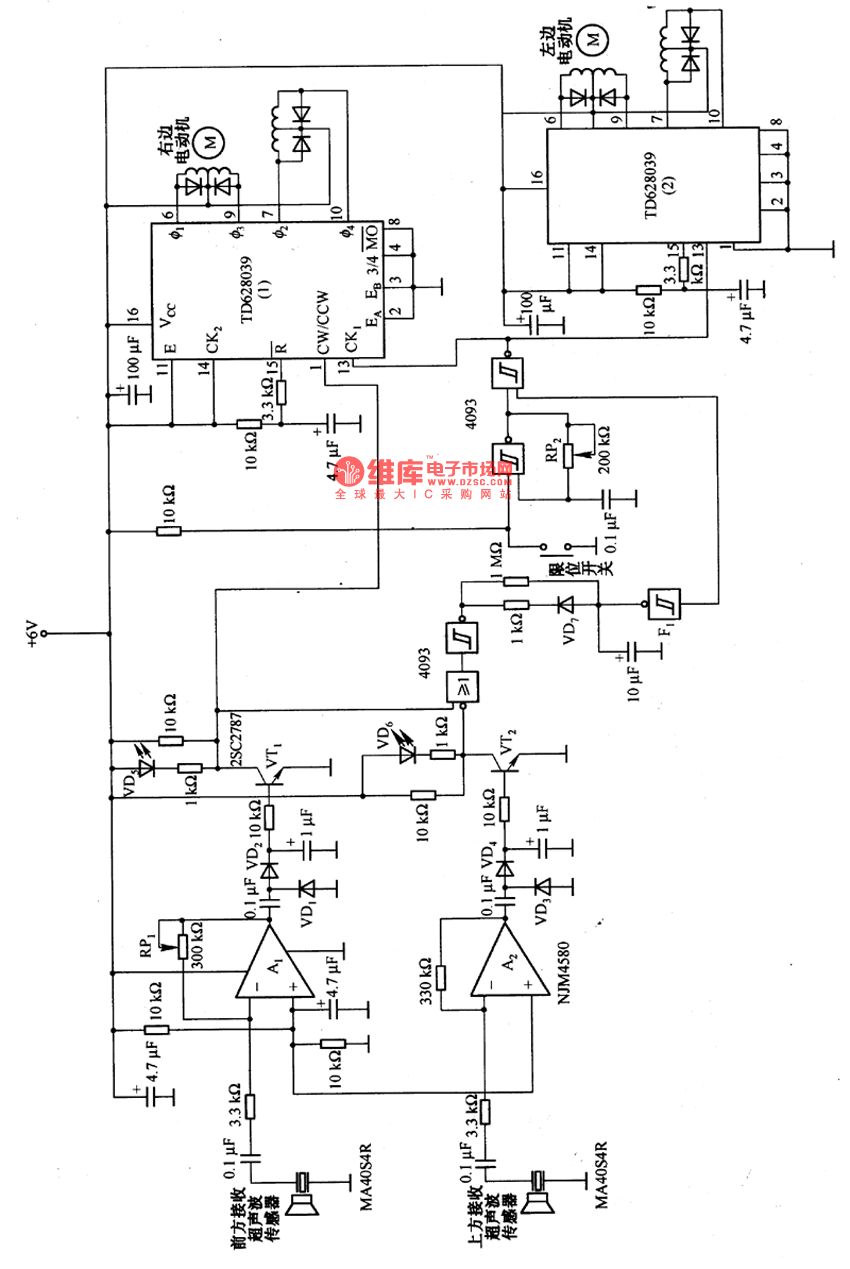
Remote control robot circuit
The remote control robot circuit is illustrated in the accompanying figure. Figure 2-36(a) presents the circuit diagram, while figure 2-36(b) depicts the operating timing diagram. The robot's rotation process involves an ultrasonic launching circuit, which consists of a 40 kHz...
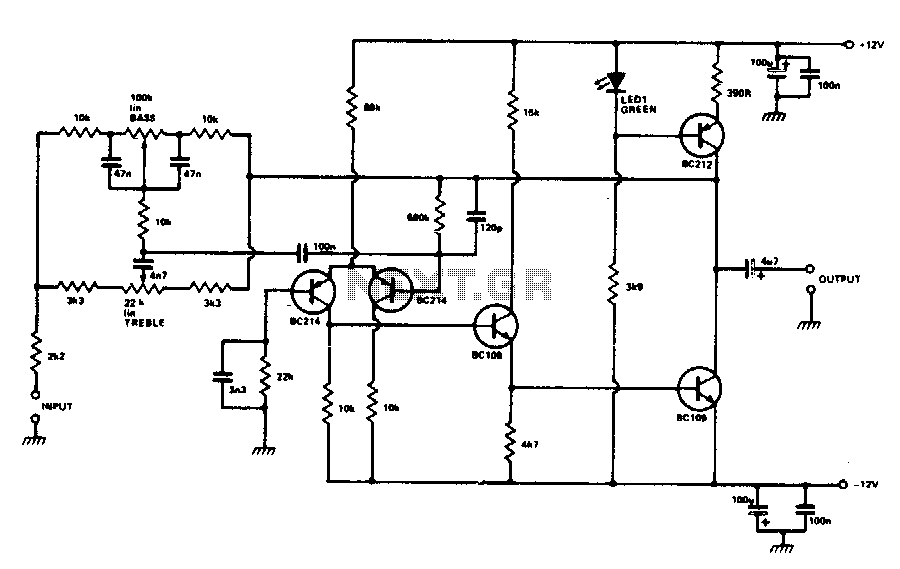
High quality tone control
The circuit utilizes an inverting operational amplifier configuration with discrete transistors to address issues such as inadequate slew rate, significant distortion, and elevated noise levels. The output stage is powered by a constant current source, which is biased using a...
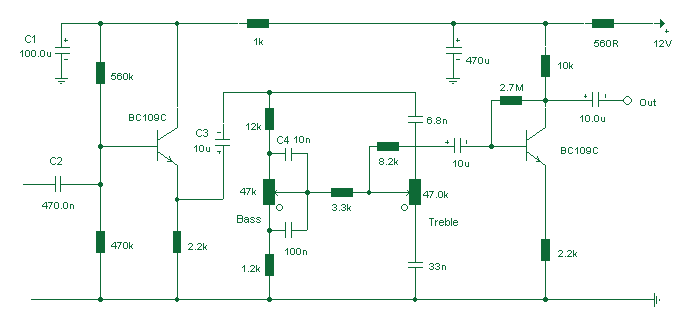
Audio Tone Control
Based on the classic Baxendall tone control circuit, this provides a maximum cut and boost of around 10dB at 10K and 50Hz. The first BC109C transistor (left hand side) is acting as a buffer. It provides the circuit with a...
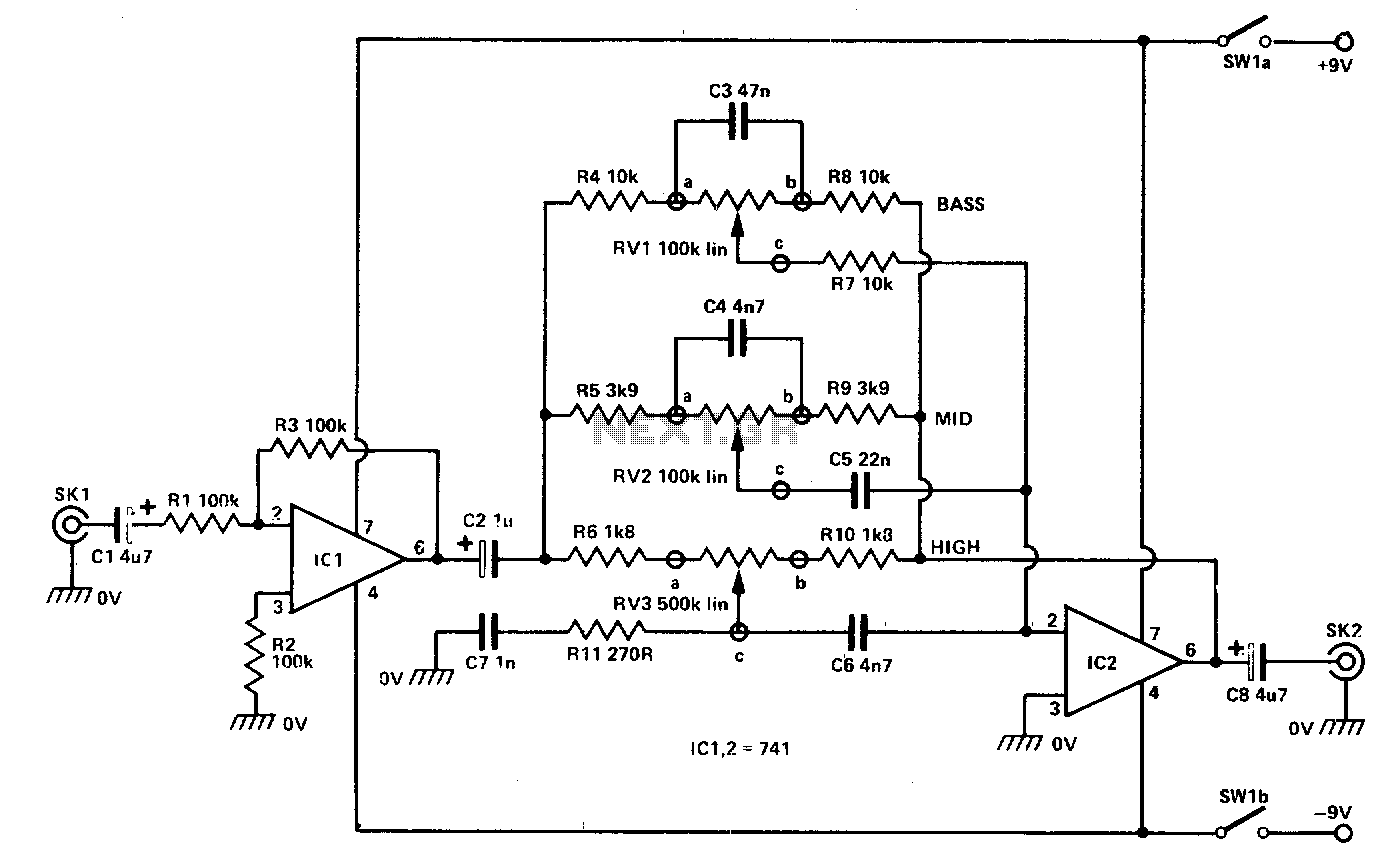
Three-channel tone control
The input signal is fed through SKI to the first active stage, which is constructed around IC1. This stage is configured as a non-inverting amplifier, with its gain determined by the ratio of R3 and R1. In this configuration, the...
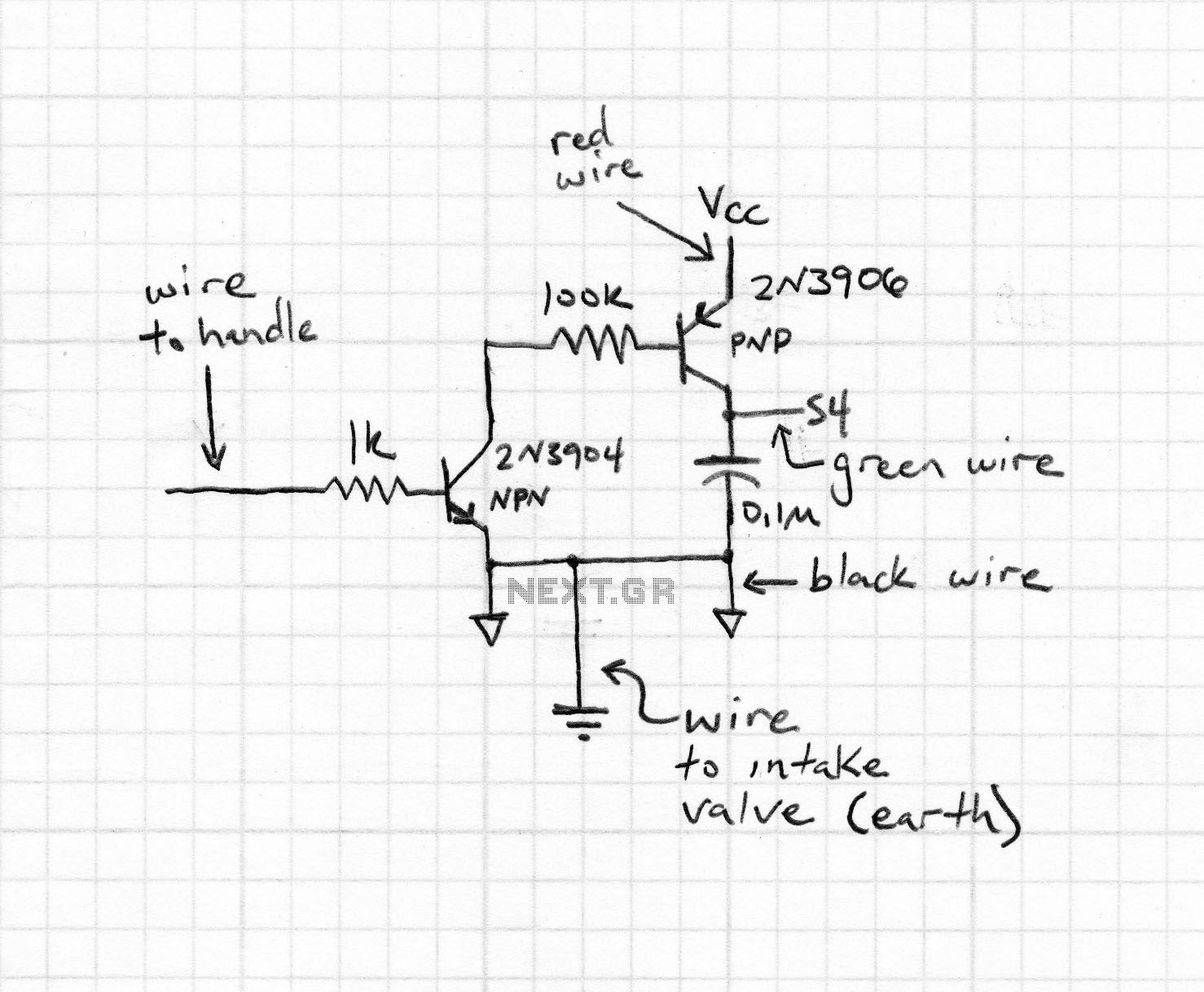
Packard Bell Remote Control
When a key is pressed, the remote control transmits a preamble followed by 32 bits of information encoded using specific pulse timings. The pulse examples can be observed in logic analyzer screen captures, although some glitches are present due to...
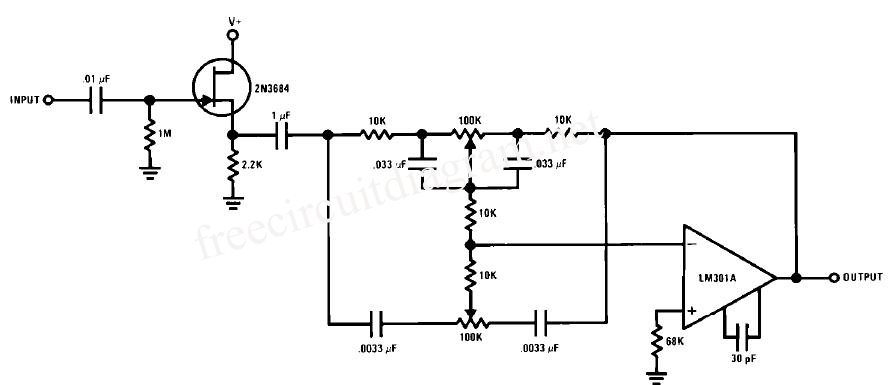
HI-FI simple Tone Control Circuit using the LM301A
This circuit is a simple series tone control circuit utilizing the OP-Amp LM301A. The JFET 2N3684 provides high input impedance and low noise characteristics for the feedback buffer in the op-amp-based tone control.
The tone control circuit described employs an operational...

Tone controls
Tone controls are often discouraged in high-end audio systems. However, one might argue that a high-end audio cable functions similarly to a high-end tone control. It is possible to purchase or...
Tone controls in audio systems serve to adjust the tonal...
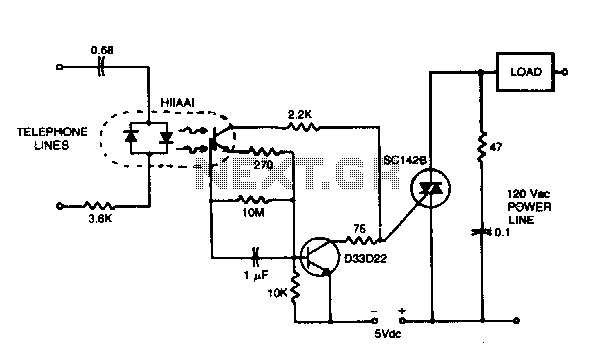
Remote ring extender switch
The circuit can operate lamps and buzzers from the 120 V, 60 Hz power line while maintaining positive isolation between the telephone line and the power line. The use of the isolated tab triac simplifies heat sinking by removing the...
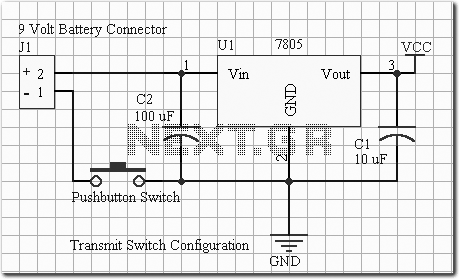
How to build a simple remote control system
Due to the huge interest in this project, I have just recently finished the NEW schematics. The older schematics were scanned and pretty poor quality. These new ones should make it considerably easier to recognize the parts used for the...