


TDA2052 active audio system electronic project circuit design
#TDA2052
#audio filter
#speaker
#low pass filter
#high pass filter
#woofer
#midrange
#tweeter
#active audio system
#audio IC

Description: An audio filter is positioned at the input of each audio integrated circuit (IC) chip to filter the audio signal intended for speakers. A low-pass filter is utilized for the woofer, while a high-pass filter is employed for midrange speakers and tweeters.
The audio filter design is critical in ensuring that each speaker type receives the appropriate frequency range for optimal performance. The low-pass filter allows frequencies below a certain cutoff frequency to pass through, effectively directing bass frequencies to the woofer. This enhances the low-end response and prevents higher frequencies from interfering with the woofer's performance.
Conversely, the high-pass filter is designed to allow frequencies above a specific cutoff frequency to pass, which is ideal for midrange speakers and tweeters. This filter blocks lower frequencies that could distort the sound quality and ensures that these speakers only reproduce the frequencies they are designed for, resulting in clearer and more accurate sound reproduction.
The integration of these filters at the input stage of audio IC chips is essential for achieving a well-balanced audio output across different speaker types. The design parameters, including the cutoff frequencies and filter order, must be carefully selected based on the specifications of the audio system and the characteristics of the speakers used. Properly designed filters contribute significantly to the overall sound quality and performance of the audio system.To the input of the every audio IC chip is placed an audio filter for filtering the audio signal for used speakers ( low pass for woofer, high pass for midranges and tweeters )
The audio filter design is critical in ensuring that each speaker type receives the appropriate frequency range for optimal performance. The low-pass filter allows frequencies below a certain cutoff frequency to pass through, effectively directing bass frequencies to the woofer. This enhances the low-end response and prevents higher frequencies from interfering with the woofer's performance.
Conversely, the high-pass filter is designed to allow frequencies above a specific cutoff frequency to pass, which is ideal for midrange speakers and tweeters. This filter blocks lower frequencies that could distort the sound quality and ensures that these speakers only reproduce the frequencies they are designed for, resulting in clearer and more accurate sound reproduction.
The integration of these filters at the input stage of audio IC chips is essential for achieving a well-balanced audio output across different speaker types. The design parameters, including the cutoff frequencies and filter order, must be carefully selected based on the specifications of the audio system and the characteristics of the speakers used. Properly designed filters contribute significantly to the overall sound quality and performance of the audio system.To the input of the every audio IC chip is placed an audio filter for filtering the audio signal for used speakers ( low pass for woofer, high pass for midranges and tweeters )
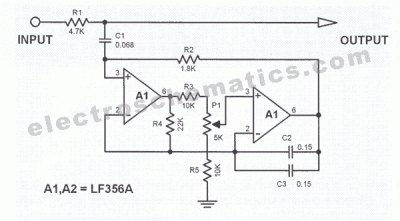
Audio Filters Circuits Projects
This audio noise filter circuit is a bandpass filter designed for the audio frequency range. It effectively filters out unwanted signals that fall outside the audio frequencies. The circuit consists of two filters: a low-pass filter and a high-pass filter...
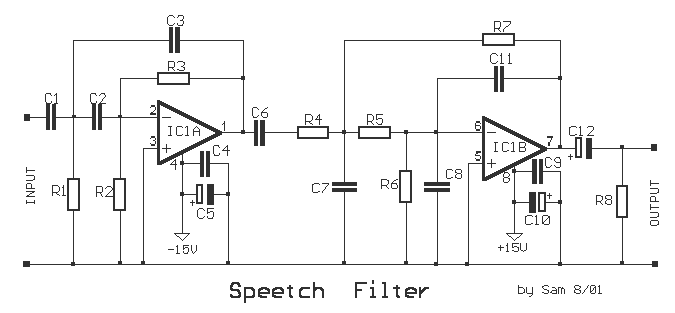
300HZ - 3KHZ Audio Filter
The human speech apprehends a small area of frequencies, that is extended from 300Hz until 3kHz. This spectrum is also internationally recognized for the transmission of speech via telecommunications networks. This is also the main use of this circuit, which...
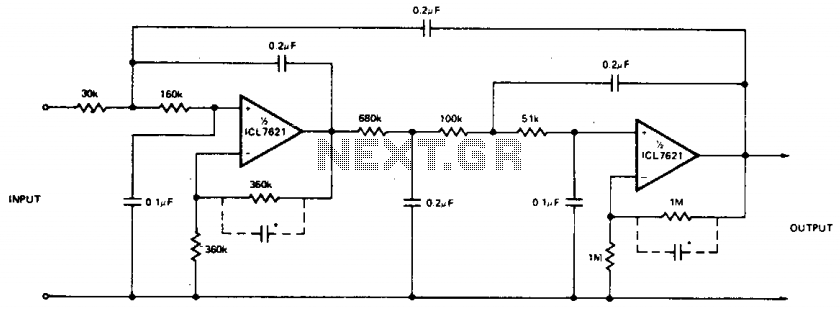
Multiple feedback low pass filter
The low bias currents allow for the utilization of high resistance and low capacitance values, facilitating a low frequency cutoff at fc = 10 Hz, with an AVCL of 4 and a passband ripple of 0.1 dB. Additionally, small capacitors...
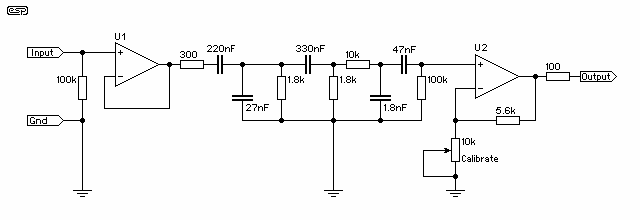
Filter For Audio Measurements
The purpose is supposedly to account for the fact that human hearing is less sensitive at low and high frequencies than in the upper midrange, and that this variation is dependent upon the sound intensity (SPL). The Fletcher-Munson curve (as...
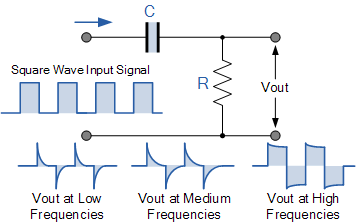
High Pass Filter Tutorial
Electronics tutorial about passive high pass filter circuit, including passive RC high pass filter first order frequency response, Bode plot, and construction.
The passive high pass filter circuit is an essential component in electronics, designed to allow signals with a frequency...
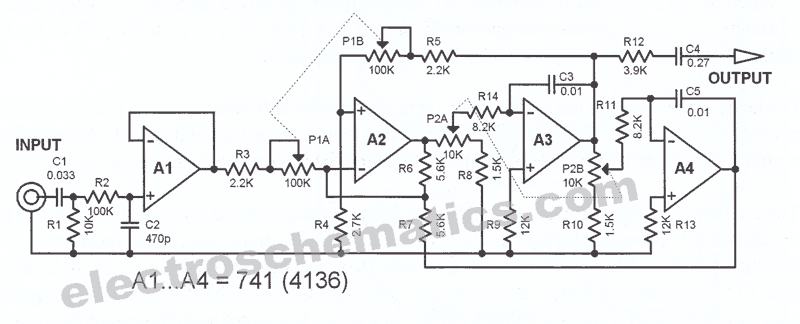
DX Audio Filter Circuit
Most universal radio receivers have a very wide bandwidth that is not particularly suitable for radio amateurs. The better models with narrower bandwidth are almost a...
Universal radio receivers are designed to operate over a broad frequency range, making them versatile...
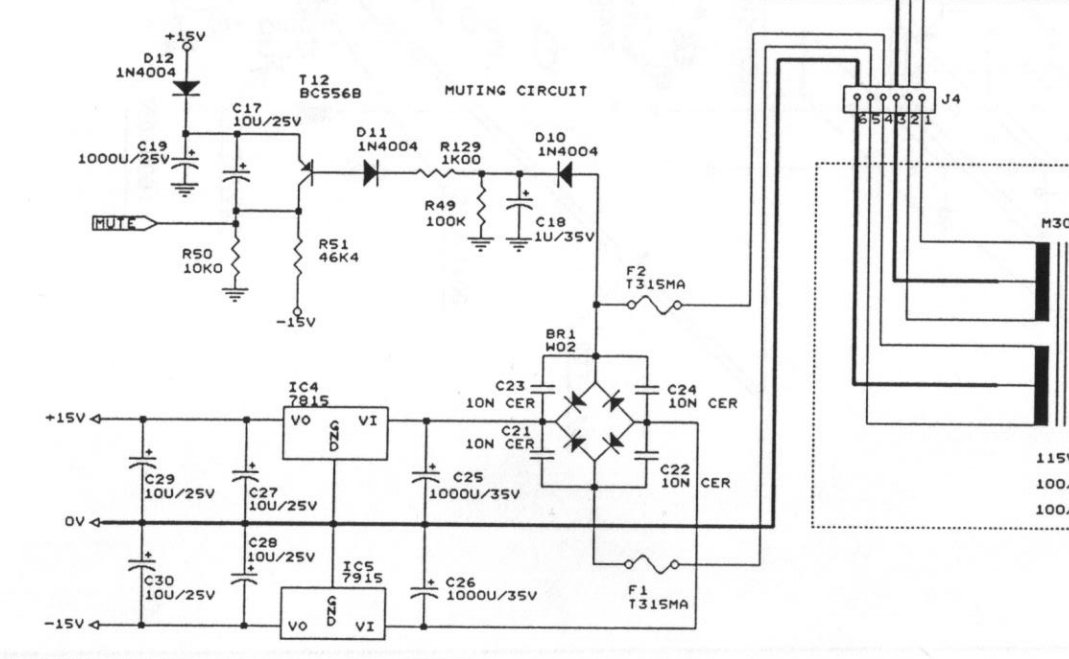
My genelec 1031A pops when I turn it on ?
All of the above would be internal hardware issues. Still, there is a possible fix, though it is not quick or easy and there is no workaround. The unit would need to be opened for visual inspection, voltage measurements, confirmation...
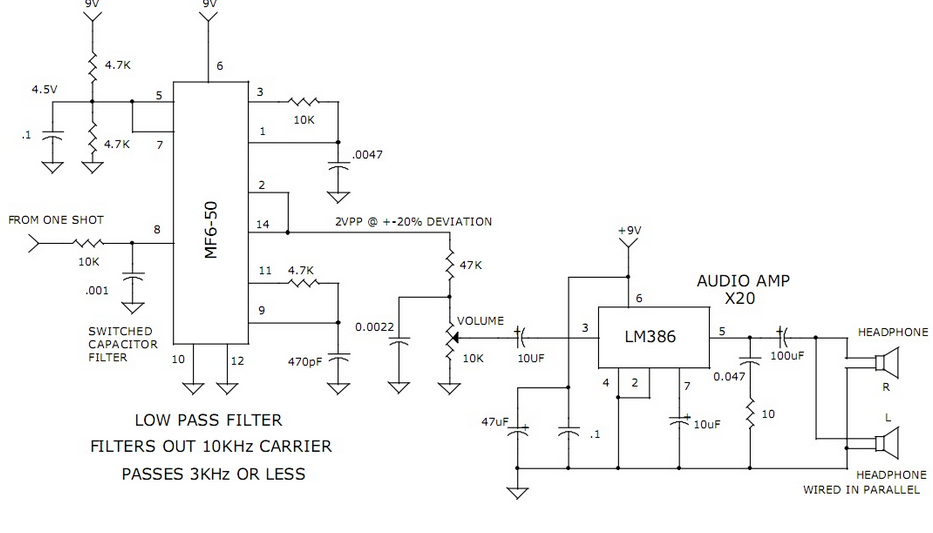
3khz Low Pass Filter and Audio Amplifier
This circuit utilizes a switched capacitor filter integrated circuit (IC) from National Semiconductor to filter signals with frequencies exceeding 3 kHz, which are not required for voice audio.
The circuit design incorporates a switched capacitor filter IC, which is a pivotal...
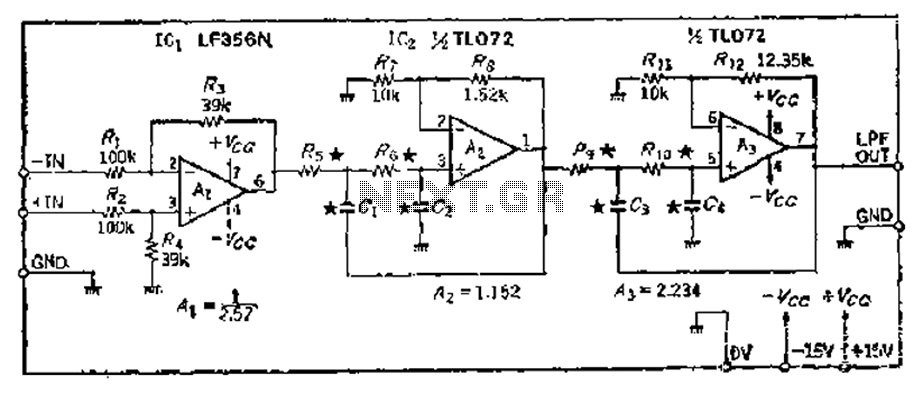
The same capacitance parameters easy to change the cutoff frequency of the low pass filter 24dB-oct
A 24 dB/octave Butterworth filter with a maximally flat characteristic is constructed using two filters, each capable of providing a 12 dB/octave response. This configuration allows for a 3 dB point adjustment. To achieve the desired cutoff frequency, adjustments are...