


TDA3910 Internal Block Diagram
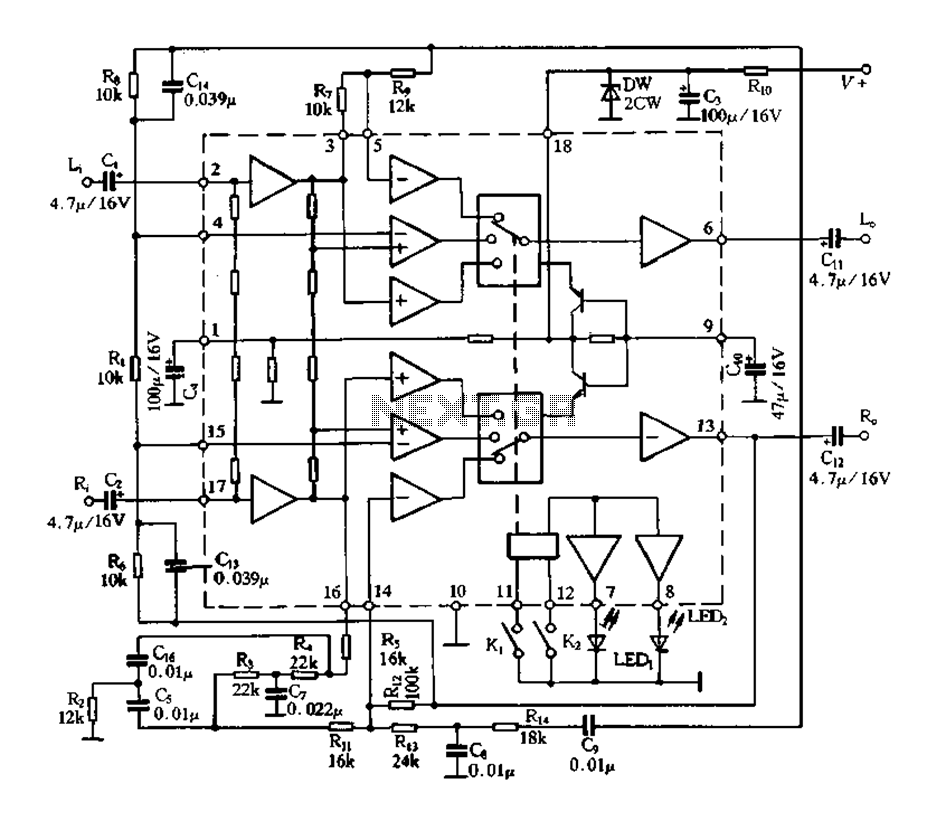
Description: Figure 1-123 illustrates the internal block diagram of the TDA3810. The circuit is capable of functioning in three operational modes: (1) it can convert a mono channel stereo signal into an analog signal; (2) it can operate in stereo mode; and (3) it can function in stereo widening mode, also referred to as surround sound.
The TDA3810 is an integrated circuit designed for audio processing, specifically targeting applications that require versatile audio signal manipulation. The internal block diagram highlights the architecture that enables the device to switch between different modes of operation seamlessly, allowing for enhanced audio experiences.
In mono channel mode, the TDA3810 accepts a single audio input and processes it to produce a high-quality analog output. This mode is particularly useful in applications where stereo signals are not available, ensuring that audio playback remains clear and intelligible.
When operating in stereo mode, the circuit can handle two separate audio channels, allowing for a richer sound experience. This mode is ideal for applications that utilize standard stereo audio sources, enabling the TDA3810 to deliver precise audio reproduction with distinct left and right channel separation.
The stereo widening mode, or surround sound mode, is where the TDA3810 showcases its advanced capabilities. In this mode, the circuit employs various algorithms to enhance the spatial characteristics of the audio signal, creating an immersive listening experience that simulates surround sound environments. This is particularly advantageous in home theater systems and audio playback setups where users seek to replicate the acoustics of live performances or cinematic experiences.
Overall, the TDA3810's design and operational versatility make it a valuable component in modern audio applications, catering to a wide range of user needs while maintaining high fidelity and performance standards.Figure 1-123 is an internal block diagram of the TDA3810 o The circuit can operate in three modes of operation: (1) may be mono channel stereo signal into an analog signal; (2) can work in stereo status; (3) can work in stereo widening state or state called surround sound.
The TDA3810 is an integrated circuit designed for audio processing, specifically targeting applications that require versatile audio signal manipulation. The internal block diagram highlights the architecture that enables the device to switch between different modes of operation seamlessly, allowing for enhanced audio experiences.
In mono channel mode, the TDA3810 accepts a single audio input and processes it to produce a high-quality analog output. This mode is particularly useful in applications where stereo signals are not available, ensuring that audio playback remains clear and intelligible.
When operating in stereo mode, the circuit can handle two separate audio channels, allowing for a richer sound experience. This mode is ideal for applications that utilize standard stereo audio sources, enabling the TDA3810 to deliver precise audio reproduction with distinct left and right channel separation.
The stereo widening mode, or surround sound mode, is where the TDA3810 showcases its advanced capabilities. In this mode, the circuit employs various algorithms to enhance the spatial characteristics of the audio signal, creating an immersive listening experience that simulates surround sound environments. This is particularly advantageous in home theater systems and audio playback setups where users seek to replicate the acoustics of live performances or cinematic experiences.
Overall, the TDA3810's design and operational versatility make it a valuable component in modern audio applications, catering to a wide range of user needs while maintaining high fidelity and performance standards.Figure 1-123 is an internal block diagram of the TDA3810 o The circuit can operate in three modes of operation: (1) may be mono channel stereo signal into an analog signal; (2) can work in stereo status; (3) can work in stereo widening state or state called surround sound.
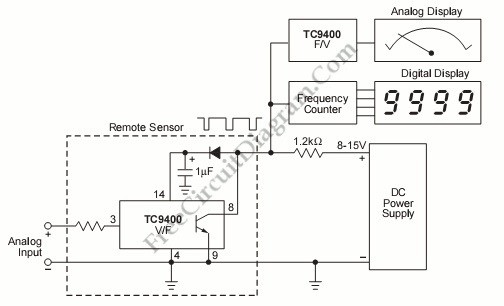
Analog Signal Transmission Through DC Supply Line
If the sensor system requires an active supply, a single pair of cables can be utilized to transmit both the power supply and the output signal. This approach simplifies the overall system.
In sensor systems that necessitate an active power supply,...
Arduino Vocal Effects Box
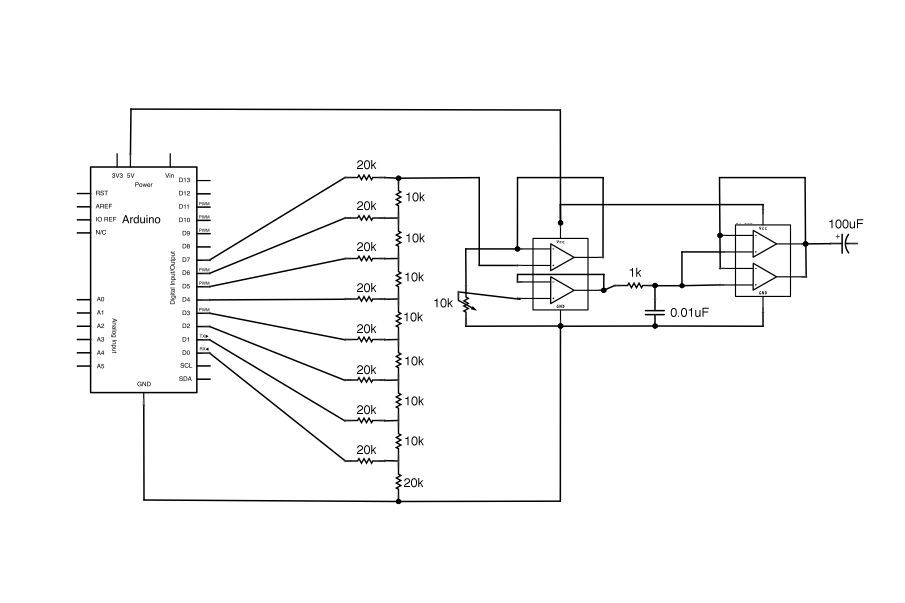
This Arduino-powered vocal effects box pitch shifts and distorts incoming audio signals to produce a wide variety of vocal effects. This project is an experiment with real-time digital signal processing using Arduino. It samples an incoming microphone signal at a...
Audio Beat Detect ?« Electronic Product Design
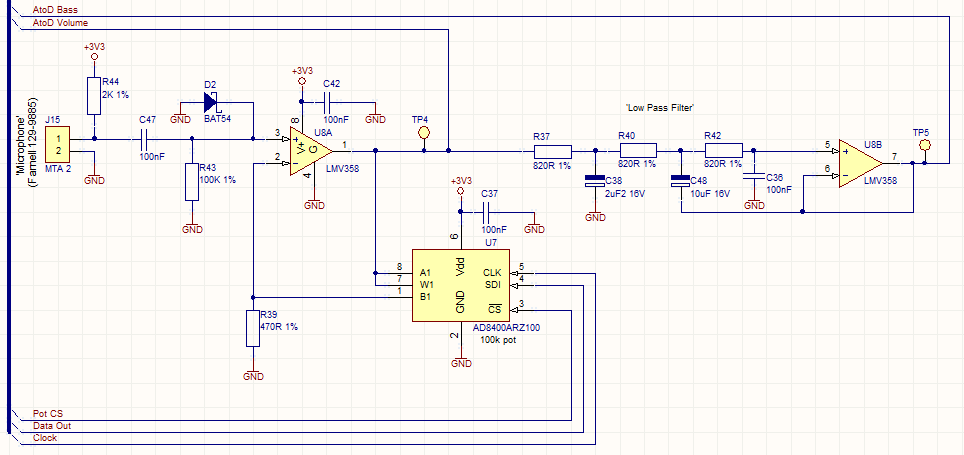
This circuit employs a digital potentiometer to enable the microcontroller to automatically adjust the circuit's gain according to the ambient audio volume. However, a standard potentiometer can be used if automatic adjustment is unnecessary. The low-pass filter design is based...
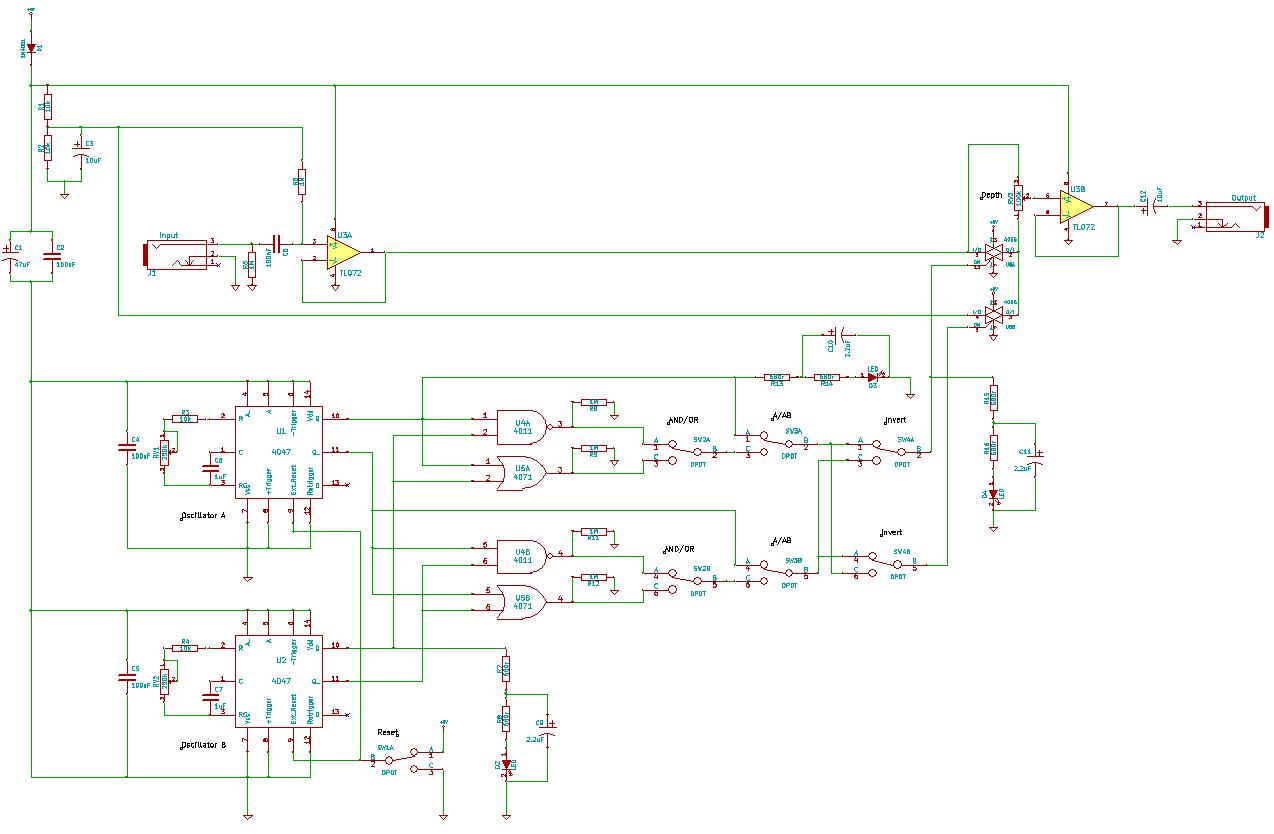
4047/4066 audio slicer
You need to connect pins 1 and 13 of the 4053 to the virtual ground rail (top of C4), not the circuit's 0V rail.
The CD4053 is a triple 2-channel analog multiplexer/demultiplexer integrated circuit, widely used for routing analog signals...
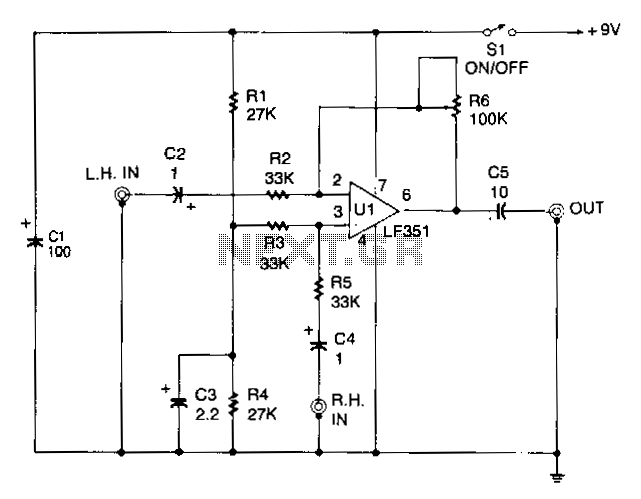
Central-image-canceller
The circuit is designed to eliminate the vocal portion of an audio signal while preserving the instrumental portion. It achieves this by mixing two channels that are 180° out of phase, allowing the signals that create the center-stereo image to...
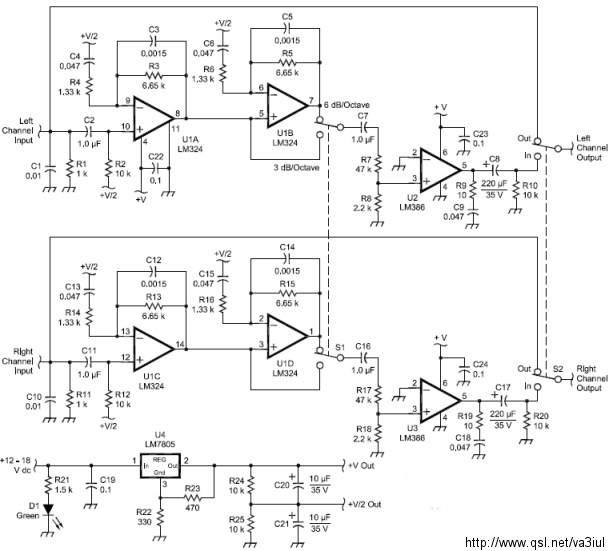
ARRL Handbook Audio Intelligibility Enhancer
Assistance is sought for building the N4GG audio intelligibility enhancer project as detailed in the ARRL Handbook. A circuit board has been ordered from Far Circuits, but there are difficulties in sourcing the necessary components. Attempts have been made to...