


telephone call voice changer
#voice changer
#microphone preamplifier
#Wien-bridge filter
#audio amplifier
#pass-band filter
#variable gain
#loudspeaker
#IC1A
#IC1B
#IC2
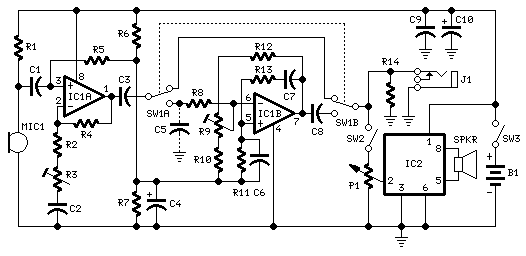
Description: This design meets the requirements through a variable gain microphone preamplifier using IC1A, a variable steep Wien-bridge pass-band filter centered around 1 kHz provided by IC1B, and an audio amplifier chip (IC2) that drives the loudspeaker. The pass-band filter can be bypassed using switches SW1A and SW1B, allowing a non-modified microphone signal to be directly available at the line or loudspeaker outputs after amplification through IC1A. Resistor R3 sets the gain of the microphone preamplifier. In addition to adjusting the microphone gain, this control can introduce a certain amount of distortion to the signal, which can help replicate the sound quality of a telephone call. Resistor R9 controls the steepness of the pass-band filter and should be adjusted carefully to prevent excessive ringing when the filter's steepness approaches its maximum value.
The described circuit operates as a comprehensive audio processing system, integrating several critical components to ensure optimal performance and flexibility. The variable gain microphone preamplifier, implemented with IC1A, provides adjustable amplification to accommodate various microphone types and input signal levels. This feature is essential in applications where different microphones may be used, each with its inherent sensitivity and output characteristics.
The inclusion of a variable steep Wien-bridge pass-band filter, facilitated by IC1B, allows for precise frequency selection centered around 1 kHz. This frequency is typically where vocal clarity is paramount, making it ideal for voice applications. The filter's ability to be bypassed via switches SW1A and SW1B offers users the option to either process the microphone signal through the filter or to route it directly to the outputs, enhancing the circuit's versatility.
Resistor R3 plays a crucial role in determining the gain of the microphone preamplifier. By adjusting R3, users can tailor the amplification level to suit specific needs, while also introducing controlled distortion. This capability can be particularly beneficial for applications requiring a more authentic representation of voice, such as in telecommunications, where the sound quality must mimic that of a traditional phone call.
The steepness control provided by resistor R9 is another significant aspect of the circuit design. Careful adjustment of this resistor is necessary to achieve the desired filter characteristics without introducing undesirable artifacts such as ringing. Ringing can occur when the filter's steepness is set too high, leading to overshoot and oscillations in the output signal. Therefore, a balanced approach to tuning R9 is essential to maintain audio fidelity while achieving the intended filtering effects.
Overall, this circuit design effectively combines a variable gain microphone preamplifier, a flexible pass-band filter, and an audio amplifier to create a robust audio processing solution suitable for various applications, particularly in voice communication systems.This design fulfills these requirements by means of a variable gain microphone preamplifier built around IC1A, a variable steep Wien-bridge pass-band filter centered at about 1KHz provided by IC1B and an audio amplifier chip (IC2) driving the loudspeaker. 1) The pass-band filter can be bypassed by means of SW1A and B: in this case, a non-manipulat ed microphone signal will be directly available at the line or loudspeaker outputs after some amplification through IC1A. 2) R3 sets the gain of the microphone preamp. Besides setting the microphone gain, this control can be of some utility in adding some amount of distortion to the signal, thus allowing a more realistic imitation of a telephone call voice.
3) R9 is the steep control of the pass-band filter. It should be used with care, in order to avoid excessive ringing when filter steepness is approaching maximum value.
The described circuit operates as a comprehensive audio processing system, integrating several critical components to ensure optimal performance and flexibility. The variable gain microphone preamplifier, implemented with IC1A, provides adjustable amplification to accommodate various microphone types and input signal levels. This feature is essential in applications where different microphones may be used, each with its inherent sensitivity and output characteristics.
The inclusion of a variable steep Wien-bridge pass-band filter, facilitated by IC1B, allows for precise frequency selection centered around 1 kHz. This frequency is typically where vocal clarity is paramount, making it ideal for voice applications. The filter's ability to be bypassed via switches SW1A and SW1B offers users the option to either process the microphone signal through the filter or to route it directly to the outputs, enhancing the circuit's versatility.
Resistor R3 plays a crucial role in determining the gain of the microphone preamplifier. By adjusting R3, users can tailor the amplification level to suit specific needs, while also introducing controlled distortion. This capability can be particularly beneficial for applications requiring a more authentic representation of voice, such as in telecommunications, where the sound quality must mimic that of a traditional phone call.
The steepness control provided by resistor R9 is another significant aspect of the circuit design. Careful adjustment of this resistor is necessary to achieve the desired filter characteristics without introducing undesirable artifacts such as ringing. Ringing can occur when the filter's steepness is set too high, leading to overshoot and oscillations in the output signal. Therefore, a balanced approach to tuning R9 is essential to maintain audio fidelity while achieving the intended filtering effects.
Overall, this circuit design effectively combines a variable gain microphone preamplifier, a flexible pass-band filter, and an audio amplifier to create a robust audio processing solution suitable for various applications, particularly in voice communication systems.This design fulfills these requirements by means of a variable gain microphone preamplifier built around IC1A, a variable steep Wien-bridge pass-band filter centered at about 1KHz provided by IC1B and an audio amplifier chip (IC2) driving the loudspeaker. 1) The pass-band filter can be bypassed by means of SW1A and B: in this case, a non-manipulat ed microphone signal will be directly available at the line or loudspeaker outputs after some amplification through IC1A. 2) R3 sets the gain of the microphone preamp. Besides setting the microphone gain, this control can be of some utility in adding some amount of distortion to the signal, thus allowing a more realistic imitation of a telephone call voice.
3) R9 is the steep control of the pass-band filter. It should be used with care, in order to avoid excessive ringing when filter steepness is approaching maximum value.
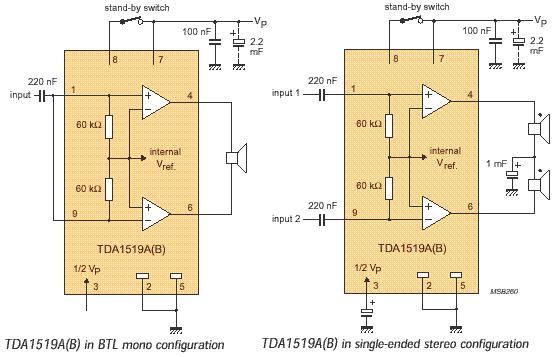
Audio 6 Watt Audio Amplifier Schematic Circuit with TDA1519
The audio amplifier circuit is based on the TDA1519 amplifier IC, which is designed for audio applications. The TDA1519 has a power output range of 2 to 6 watts. This amplifier is a Class B dual-output type and comes in...
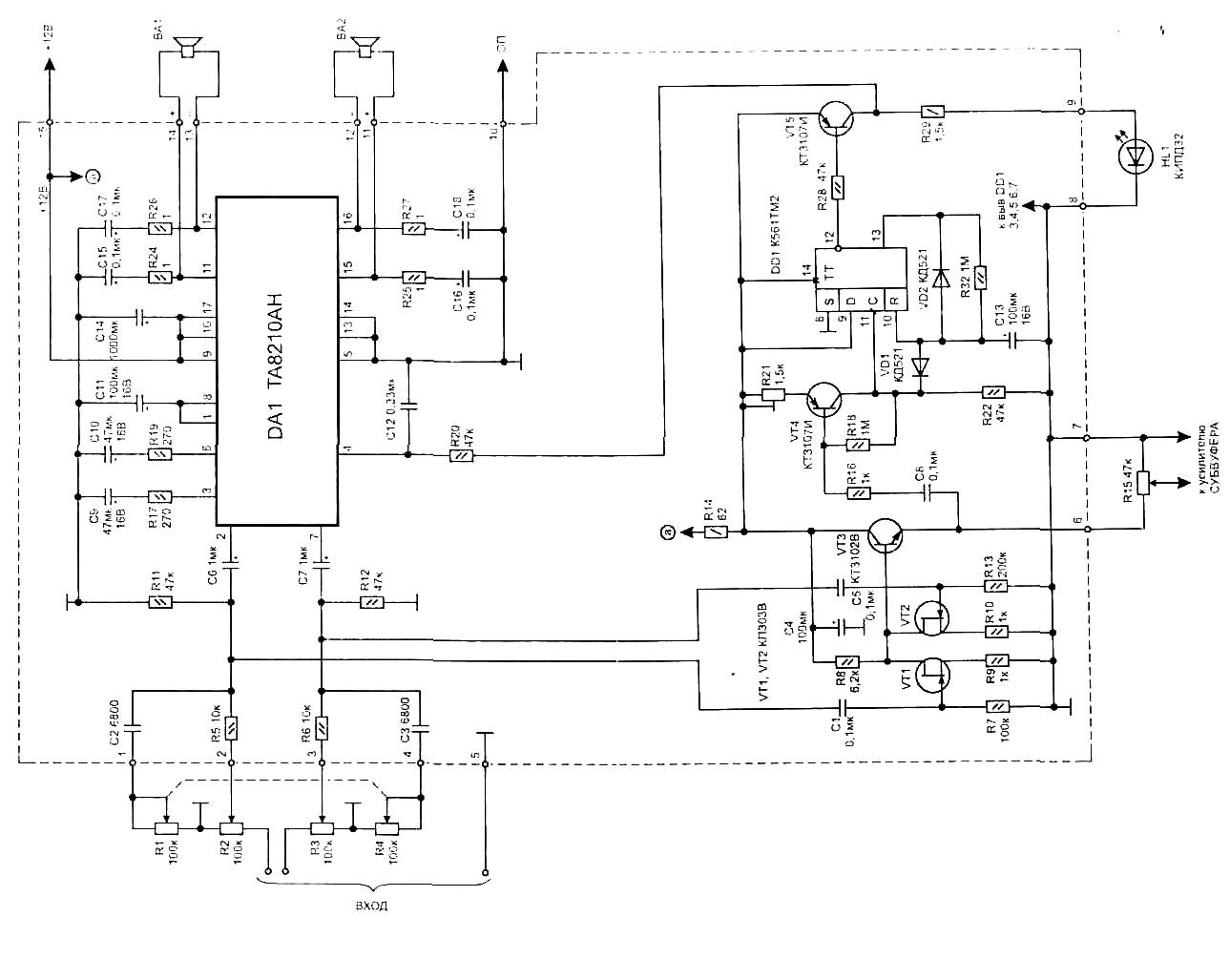
High quality pc audio amplifier
High-quality audio amplifier for computer circuit diagram. The electrical circuit of the amplifier is depicted in Fig. 1. The chosen integrated circuit for its construction is the TA8205AN, which is typically used in Hi-Fi applications due to its low harmonic...
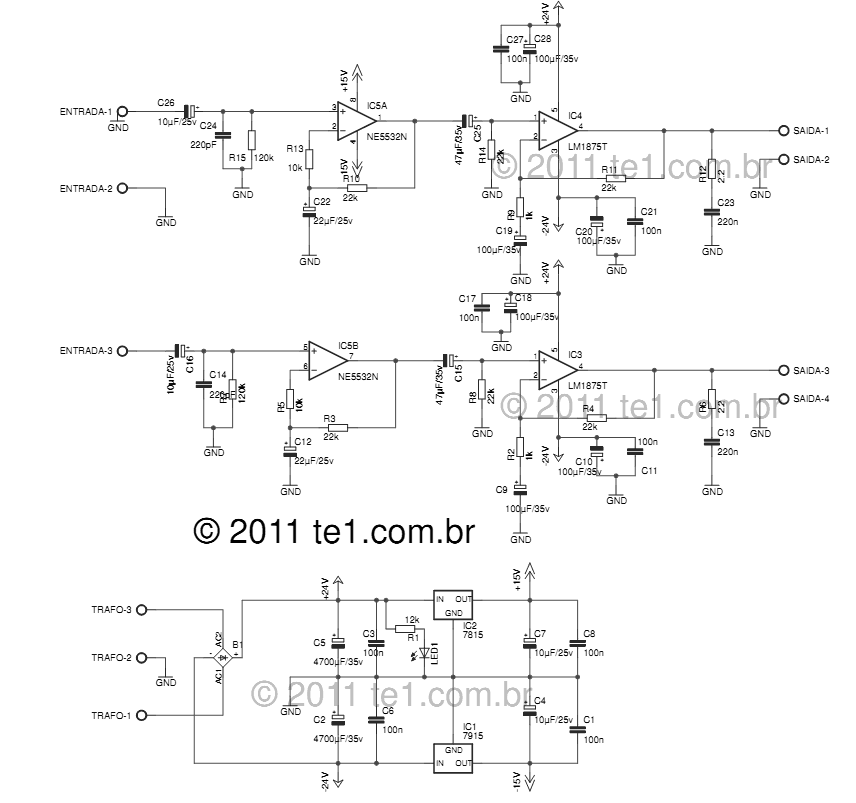
Circuit power audio amplifier stereo with LM1875 and preamp for NE5532 2 x 20 Watts
The LM1875 delivers 20 watts into a 4 or 8-ohm load on ±25V supplies. Using an 8-ohm load and ±30V supplies, over 30 watts of power may be delivered. The amplifier is designed to operate with a minimum of external...

Ultra-high gain audio amplifier
Sometimes referred to as the JFET µ-amp, this circuit offers a very low power, high gain amplification function. As the drain current decreases, the µ of a JFET increases, meaning that the lower the drain current, the greater the gain...
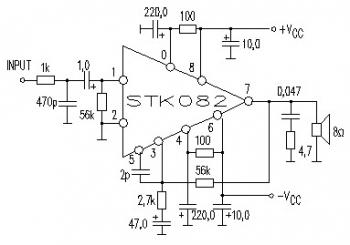
Audio
This device is a 2 x 2, 500W RMS stereo amplifier that is super-light and features a switching-mode power supply. The design only displays one channel, but the power supply supports both channels. The amplifier should be duplicated, but the...
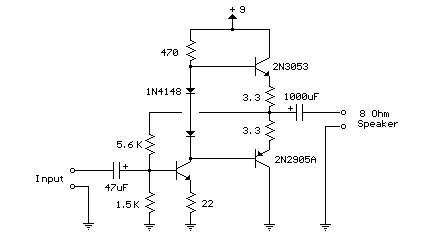
50MW Audio Amplifier circuit
This weblog focuses on electronic circuit schematics, PCB design, DIY kits, and electronic project diagrams. The following describes a small audio amplifier, similar to those found in medium-sized transistor radios. The input stage is biased to ensure equal power distribution...
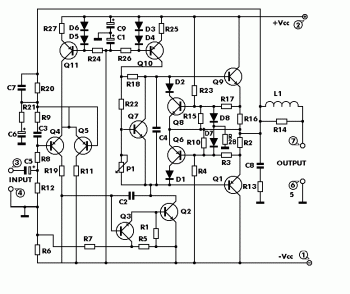
100w audio amplifier
This amplifier features high fidelity (Hi-Fi), high sensitivity, low power consumption, and low distortion, making it an excellent choice for high fidelity sound systems. The process of creating a printed circuit board (PCB) can be accomplished in a few straightforward...
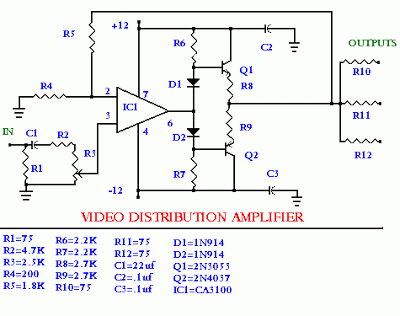
Audio and Video signal Distribution Amplifier circuit
Given the variety of equipment in modern home entertainment systems, the ability to adjust the gain of both audio and video signals has become essential. This particular circuit has proven to be very useful when used alongside the General Descrambler...
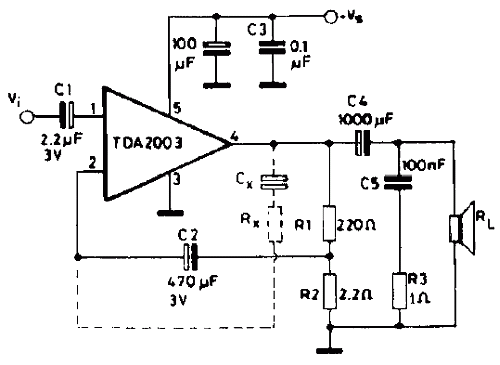
10W audio amplifier with TDA2003
The TDA2003 offers enhanced performance while retaining the same pin configuration as the TDA2002. It maintains the advantageous features of the TDA2002, including a minimal number of external components, ease of assembly, and savings in both space and cost. This...