


Twang-twang circuit
#guitar
#sound effect
#distortion
#amplifier
#audio processing
#instrument
#music
#midband
#bass cut
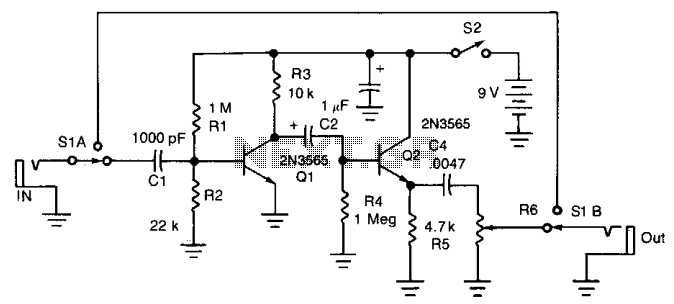
Description: Twang is a guitar sound that closely resembles that of a banjo or mandolin. The circuit generates distinctive sounds from a standard electric guitar by eliminating the bass frequencies, heavily distorting the midrange and treble frequencies, and subsequently amplifying the distortion. SI toggles the effect on and off, while S2 powers the unit on and off.
The circuit described utilizes a combination of filters and amplifiers to achieve its unique tonal characteristics. The initial stage involves a high-pass filter that effectively removes low-frequency signals, allowing only midrange and high frequencies to pass through. This is crucial for creating the "twangy" sound, as it mimics the tonal qualities of stringed instruments like the banjo and mandolin.
Following the filtering stage, the signal is routed to a distortion module. This module is designed to intentionally clip the audio signal, introducing harmonic and inharmonic overtones that contribute to the overall character of the sound. The distortion can be adjusted to taste, allowing for a range of tones from subtle grit to aggressive fuzz.
The amplified output from the distortion stage is then sent to a final gain stage, where the overall volume of the signal can be adjusted before it is output to an amplifier or effects chain. The circuit includes two switches: SI, which serves as a momentary switch to engage or disengage the effect, allowing for dynamic performance changes, and S2, a toggle switch that controls the power to the entire circuit, ensuring that it can be completely turned off when not in use.
In summary, this circuit cleverly manipulates the frequency response and introduces distortion to create a distinctive sound palette that broadens the expressive capabilities of an electric guitar, making it suitable for various musical styles.Twang is a guitar sound that more or less approximates a banjo or mandolin. The circuit produces unusual sounds from an ordinary electric guitar by cutting the bass, severely distorting the midband and highs, and then amplifying the distortion. SI cuts the effect in and out, S2 turns the unit on and off.
The circuit described utilizes a combination of filters and amplifiers to achieve its unique tonal characteristics. The initial stage involves a high-pass filter that effectively removes low-frequency signals, allowing only midrange and high frequencies to pass through. This is crucial for creating the "twangy" sound, as it mimics the tonal qualities of stringed instruments like the banjo and mandolin.
Following the filtering stage, the signal is routed to a distortion module. This module is designed to intentionally clip the audio signal, introducing harmonic and inharmonic overtones that contribute to the overall character of the sound. The distortion can be adjusted to taste, allowing for a range of tones from subtle grit to aggressive fuzz.
The amplified output from the distortion stage is then sent to a final gain stage, where the overall volume of the signal can be adjusted before it is output to an amplifier or effects chain. The circuit includes two switches: SI, which serves as a momentary switch to engage or disengage the effect, allowing for dynamic performance changes, and S2, a toggle switch that controls the power to the entire circuit, ensuring that it can be completely turned off when not in use.
In summary, this circuit cleverly manipulates the frequency response and introduces distortion to create a distinctive sound palette that broadens the expressive capabilities of an electric guitar, making it suitable for various musical styles.Twang is a guitar sound that more or less approximates a banjo or mandolin. The circuit produces unusual sounds from an ordinary electric guitar by cutting the bass, severely distorting the midband and highs, and then amplifying the distortion. SI cuts the effect in and out, S2 turns the unit on and off.
Amplifier Bridging
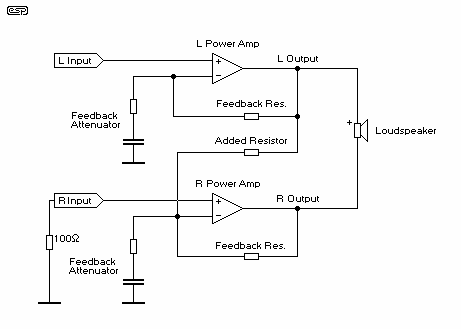
The primary advantage of this method of bridging is that no additional components are needed, which means that it is cheap, and there is no signal degradation from additional opamps in the circuit path. The results are at least as...
Hands-off-intercom
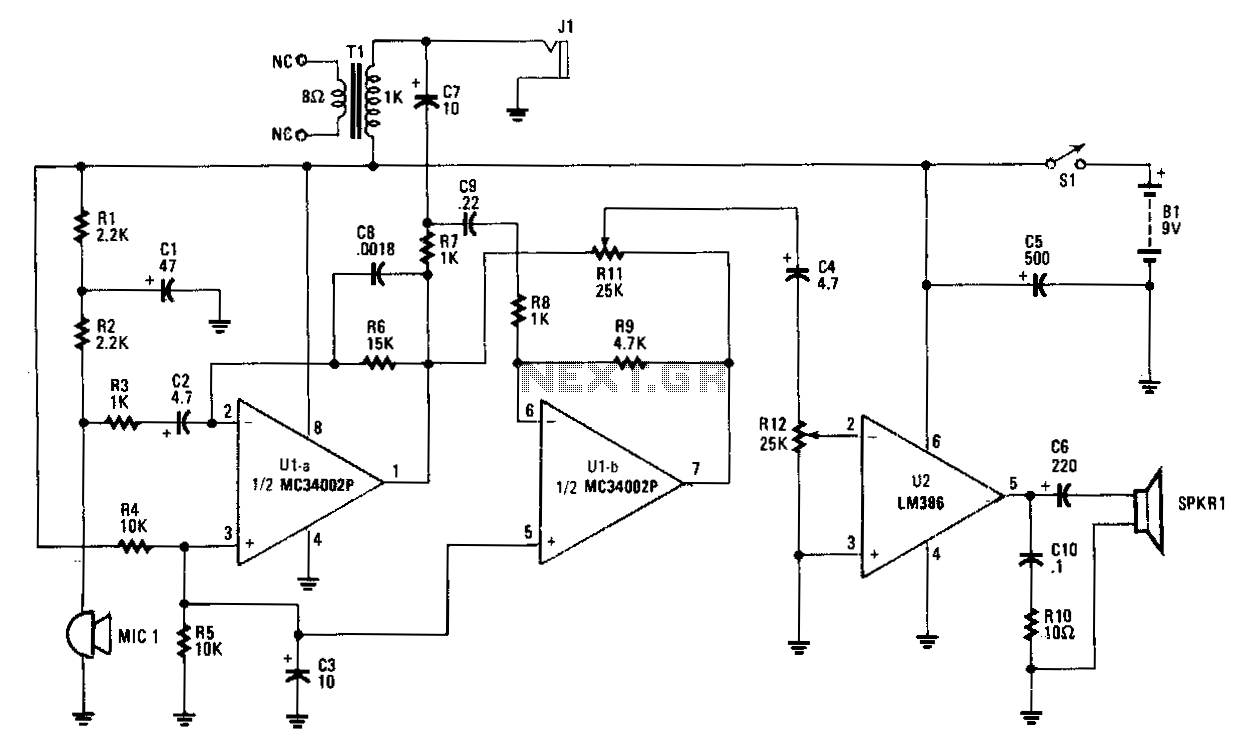
Amplifier A increases the microphone's output to a usable level. The output signal is fed to op amp B, which inverts the signal by 180 degrees. A balance-control potentiometer connects across the outputs of amplifiers A and B. If an...
Guitars Modulator
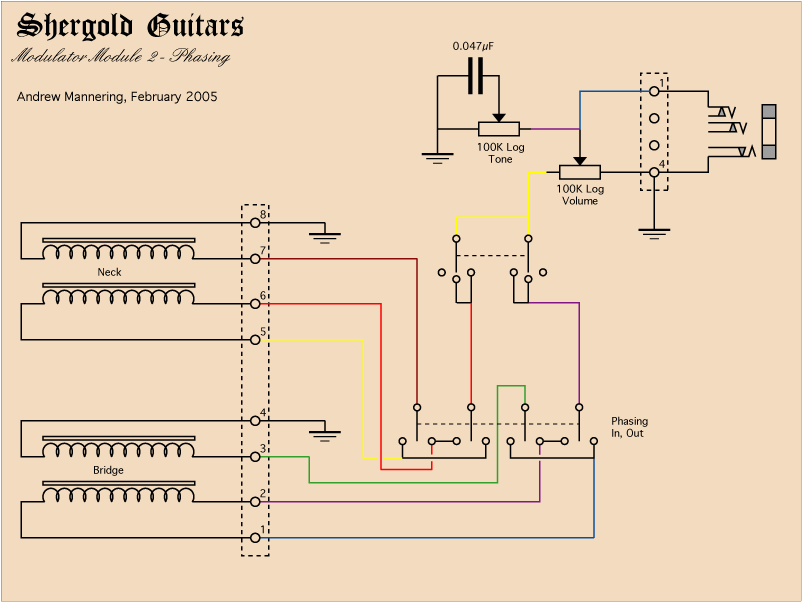
Even with the controls set to their maximum position, there will always be some signal leakage, resulting in a loss of tone. With Module 3, engaging the bypass switch to 'Solo' disconnects the tone and volume controls from the circuit,...
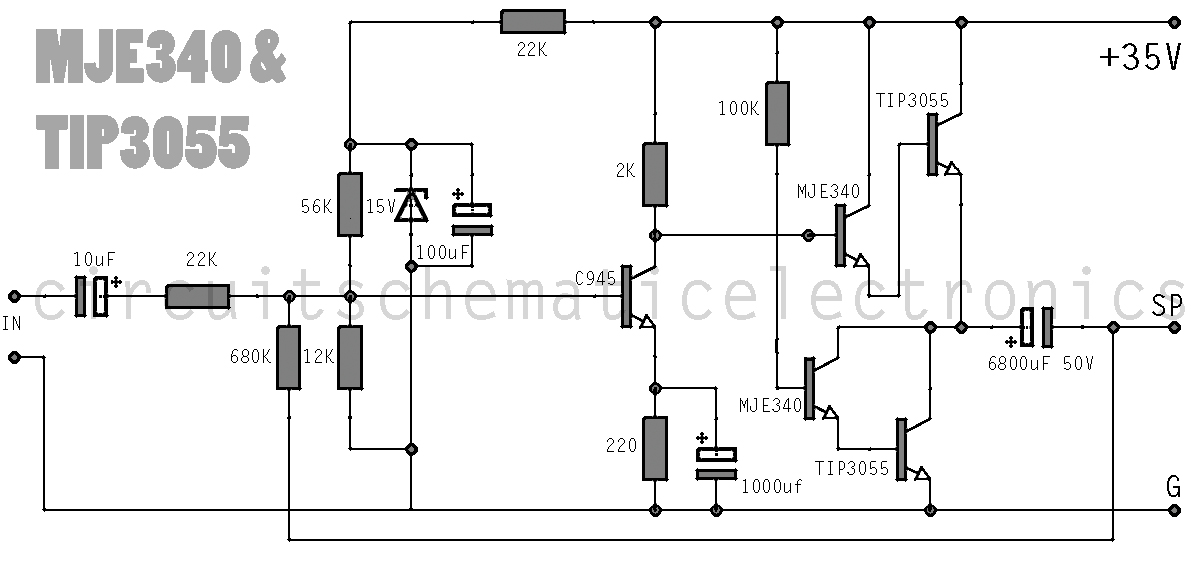
simple-amplifier-with-c945mje340-and.html
This simple amplifier delivers good sound quality with a power output of approximately 10 to 14 Watts and operates on a supply voltage of about 34 to 36 Volts DC. It requires a preamplifier due to its limited advanced features....
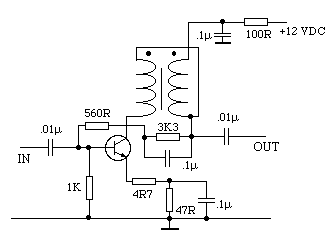
RECEIVER BUILDING BLOCKS
This amplifier has about 20dB of gain, bandwidth of 100MHz and noise figure of about 7dB. The output transformer is 8 turns bifilar wound on a ferrite core. Use a medium power UHF transistor 2N5109, 2N3866, 2N4427 or similar. The...
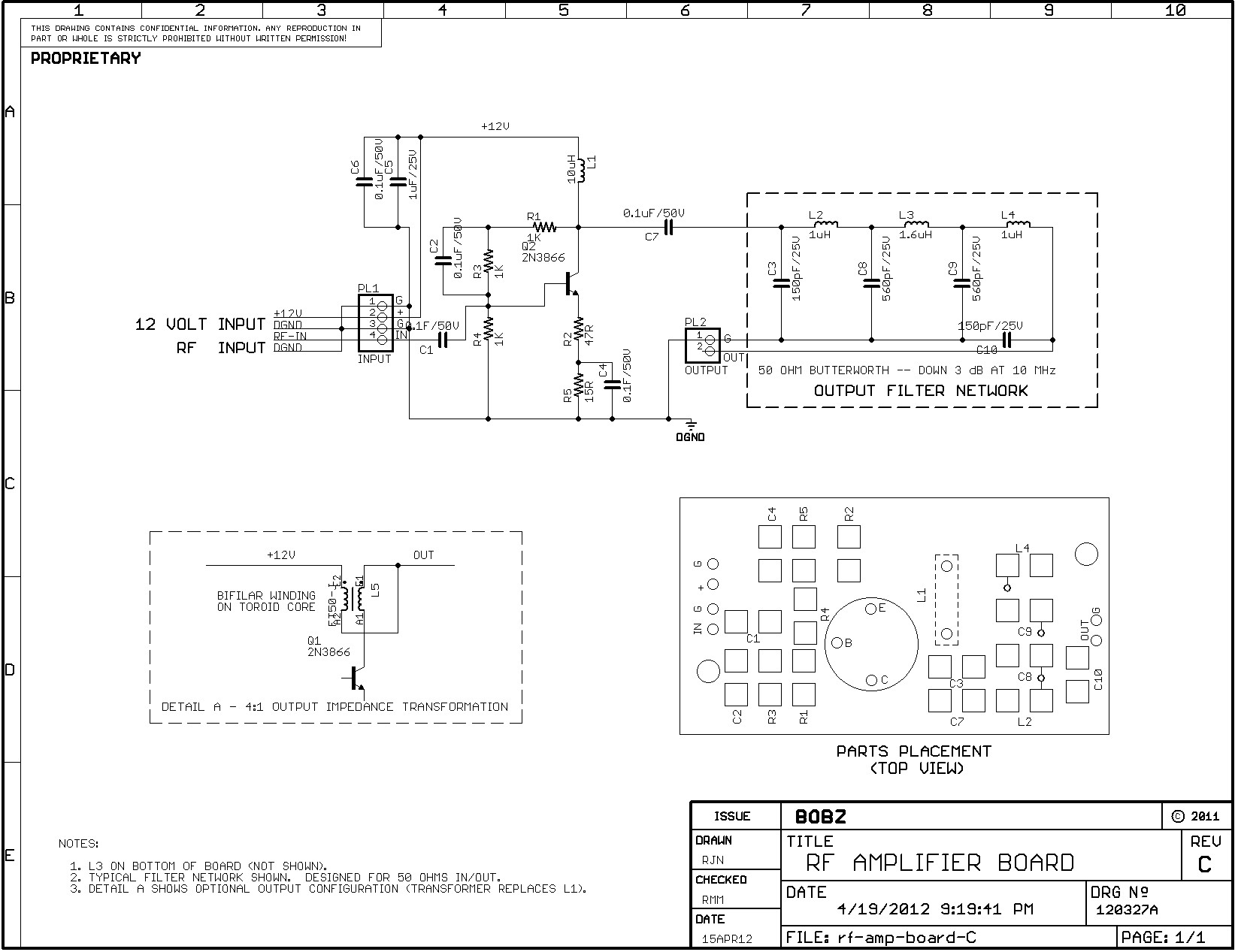
RF-AMP Documentation
The amplifier is suitable for various projects to buffer and amplify outputs from devices such as Direct Digital Synthesizer (DDS) chips. It was initially designed to amplify the output of the 9833 DDS chip and is also intended for Amateur...
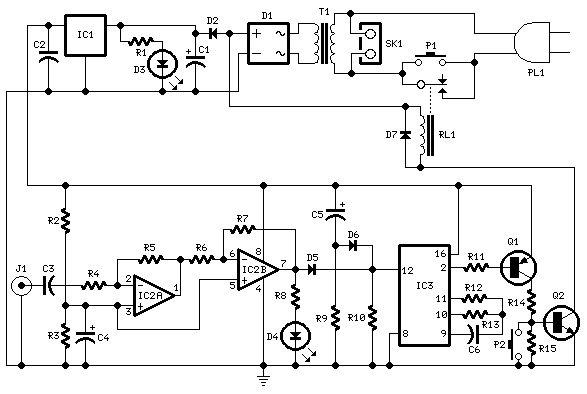
Amplifier Timer
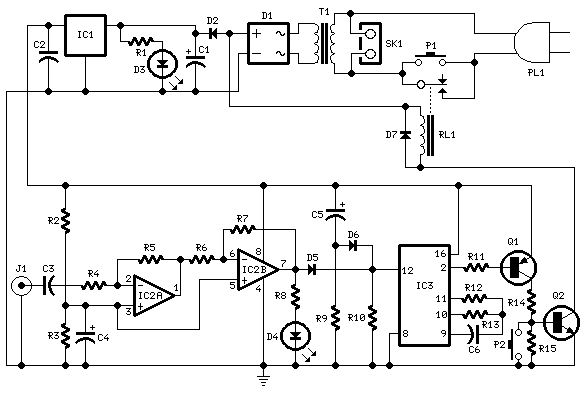
This circuit deactivates an amplifier or other devices when a low-level audio signal at its input is absent for at least 15 minutes. By pressing P1, the device is activated, supplying power to any appliance connected to SK1. The input...
amplifier timer
This circuit deactivates an amplifier or any other device when a low-level audio signal at its input is absent for at least 15 minutes. By pressing P1, the device is powered on, allowing any appliance connected to SK1 to operate....

Music synthesizer
The music synthesizer mode offers three operational modes: playing a note, playing one of four pre-stored tunes, or recording a tune for later playback.
In the music synthesizer mode, the circuit is designed to facilitate three distinct functionalities, enhancing user interaction...