


2-Pin Automobile Indicator Lamp Flasher Circuit with Buzzer
#flasher circuit
#turn signal
#buzzer
#two-wheelers
#motorbike
#indicator lamp
#2-pin
#automotive
#simple circuit
#installation
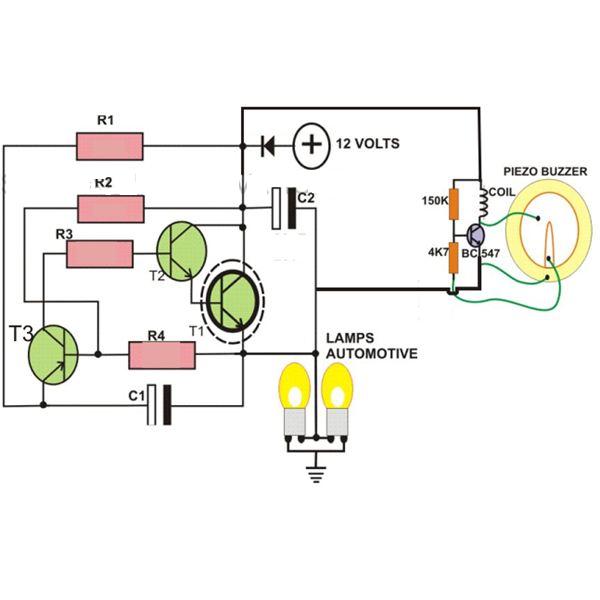
Description: This circuit is designed to create a flasher unit for a motorbike. It is a simple turn signal flasher circuit that can be easily built and installed in any two-wheeler for the desired functionality. The circuit uses only two pins instead of three, which are commonly found in other flasher circuits. Once installed, the circuit will reliably flash the side indicator lights whenever the intended function is activated. Additionally, the circuit includes an optional buzzer that can be incorporated to provide a beeping sound in response to the flashing of the lamps.
The motorbike flasher circuit operates primarily on the principle of an astable multivibrator configuration, typically utilizing a 555 timer IC or a similar timing component. The circuit consists of a power supply, which may be derived from the motorbike's battery, ensuring compatibility with the vehicle's electrical system. The two pins mentioned correspond to the input and output terminals that connect to the turn signal lights.
The flashing rate can be adjusted by varying the resistance and capacitance values in the timing circuit, allowing customization of the blink frequency to meet user preferences or legal requirements. This flexibility is particularly advantageous for different motorcycle models and user needs.
Incorporating the optional buzzer requires an additional transistor or relay to handle the current required by the buzzer, ensuring that it does not interfere with the operation of the indicator lights. When the turn signal is activated, the circuit not only flashes the indicator lights but also triggers the buzzer, providing an audible alert that complements the visual signal.
The design should include protective components such as diodes to prevent back EMF from damaging the circuit when inductive loads are switched. Additionally, proper heat dissipation measures may be necessary if the circuit components operate near their maximum ratings. Overall, this flasher unit offers a compact, efficient solution for enhancing the visibility and safety of motorbike turn signals.If you want to make a flasher unit for you motorbike then this circuit is just for you. This simple turn signal flasher circuit can be easily built and installed in any two wheelers for the desired actions. The circuit employs just two 2-pins instead of 3 as found in other flasher circuits. Once installed, the circuit will faithfully flash the sid e indicator lights whenever the intended function is switched ON. The circuit also incorporates an optional buzzer circuit which can be also included for getting a beeping sound in response to the flashing of the lamps.
The motorbike flasher circuit operates primarily on the principle of an astable multivibrator configuration, typically utilizing a 555 timer IC or a similar timing component. The circuit consists of a power supply, which may be derived from the motorbike's battery, ensuring compatibility with the vehicle's electrical system. The two pins mentioned correspond to the input and output terminals that connect to the turn signal lights.
The flashing rate can be adjusted by varying the resistance and capacitance values in the timing circuit, allowing customization of the blink frequency to meet user preferences or legal requirements. This flexibility is particularly advantageous for different motorcycle models and user needs.
Incorporating the optional buzzer requires an additional transistor or relay to handle the current required by the buzzer, ensuring that it does not interfere with the operation of the indicator lights. When the turn signal is activated, the circuit not only flashes the indicator lights but also triggers the buzzer, providing an audible alert that complements the visual signal.
The design should include protective components such as diodes to prevent back EMF from damaging the circuit when inductive loads are switched. Additionally, proper heat dissipation measures may be necessary if the circuit components operate near their maximum ratings. Overall, this flasher unit offers a compact, efficient solution for enhancing the visibility and safety of motorbike turn signals.If you want to make a flasher unit for you motorbike then this circuit is just for you. This simple turn signal flasher circuit can be easily built and installed in any two wheelers for the desired actions. The circuit employs just two 2-pins instead of 3 as found in other flasher circuits. Once installed, the circuit will faithfully flash the sid e indicator lights whenever the intended function is switched ON. The circuit also incorporates an optional buzzer circuit which can be also included for getting a beeping sound in response to the flashing of the lamps.
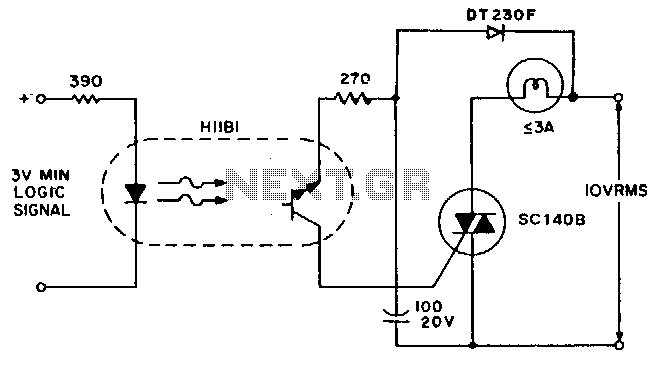
Indicator-lamp-driver
A simple solid-state relay circuit drives the 10-Vac telephone indicator lamps from logic circuitry while maintaining complete isolation between the 10-V line and the logic circuit.
The described circuit utilizes a solid-state relay (SSR) to control 10-Vac telephone indicator lamps using...
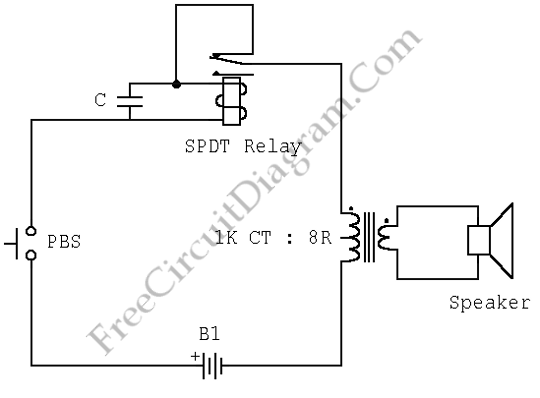
Simple Buzzer Using Only Passive Components
This circuit is a simple buzzer circuit known as a novel buzzer. It utilizes a relay in series with a small audio transformer and a speaker. The relay will activate the circuit.
The novel buzzer circuit operates by employing a relay...
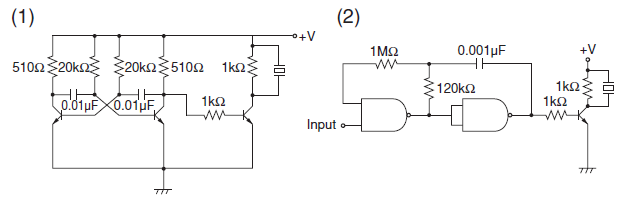
Can I supply a 12V buzzer with 18V
Create a small buzzer for a bicycle that emits sound intermittently to deter bears. A 12V buzzer from Radio Shack (Cat. No. 273-065) is available, and there is a question regarding the feasibility of operating it directly from an 18V...
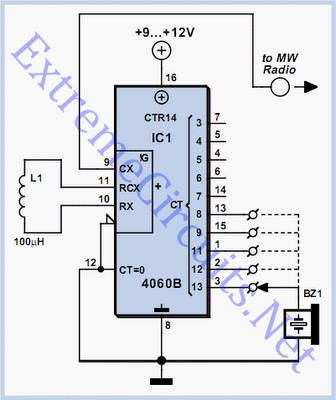
Simple Oscillator / Pipe Locator
Occasionally, there is a requirement to create a very basic oscillator. The circuit illustrated here is remarkably straightforward, utilizing only three components.
The described oscillator circuit typically consists of a resistor, a capacitor, and a single transistor. The operation of this...
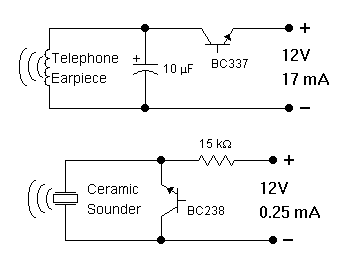
Oscillators for Buzzers and telephone Earpieces
In order to generate a single note you may try these simple circuits. With only three components you may implement some basic buzzers. You need a telephone earpiece for the first circuit. Any old telephone set has got one of...
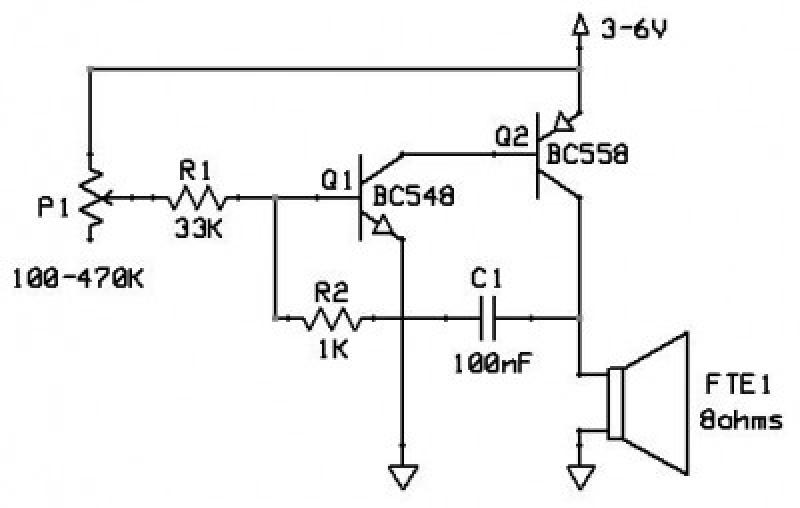
Fun and easy to build buzzer circuit
This circuit functions as an oscillator, capable of generating a sound wave or tone. The frequency of the tone, whether high or low, is adjustable via a variable resistor. The volume produced by this circuit is substantial; therefore, it is...
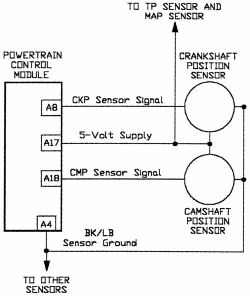
Camshaft Position Sensor
AutoZone Repair Guide for Engine Performance and Emission Control Components and Systems, specifically focusing on the Camshaft Position Sensor.
The Camshaft Position Sensor (CMP) is a critical component in modern internal combustion engines, playing a vital role in the management of...
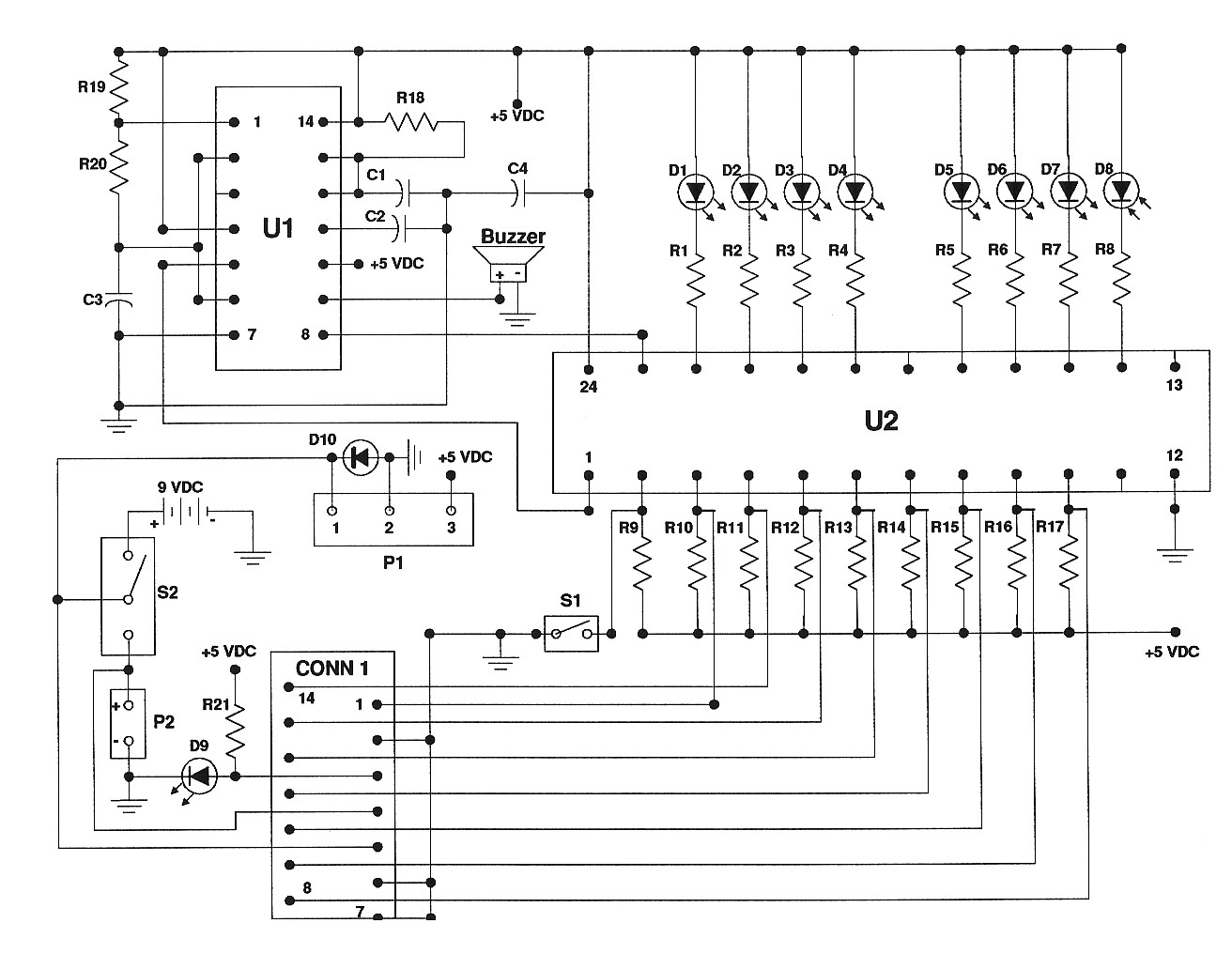
buzzer set
Building a competition buzzer set involves the construction of a contest buzzer system. The kit includes an etched, undrilled printed circuit board, a programmed PLD, a 556 timer, various mounting hardware, and a detailed assembly manual. The kit is priced...
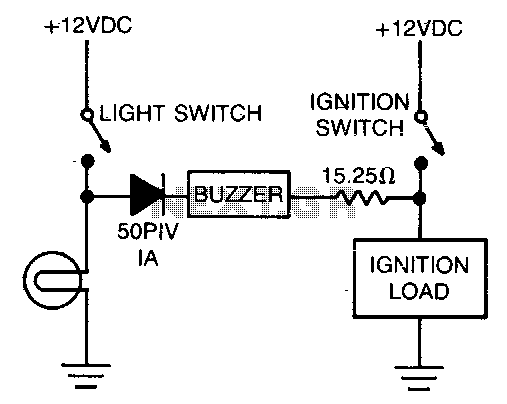
Auto lights-on reminder
The alarm consists of a diode, buzzer, and a limiting resistor. The diode functions as a switch that enables the buzzer to activate only when the light switch is closed and the ignition is turned off.
The circuit described utilizes a...