


Automobile wiper speed control circuit diagram
#wiper control
#speed controller
#automotive electronics
#energy saving
#car accessories
#motor control
#flexible adjustment
#vehicle maintenance
#circuit design
#DIY automotive
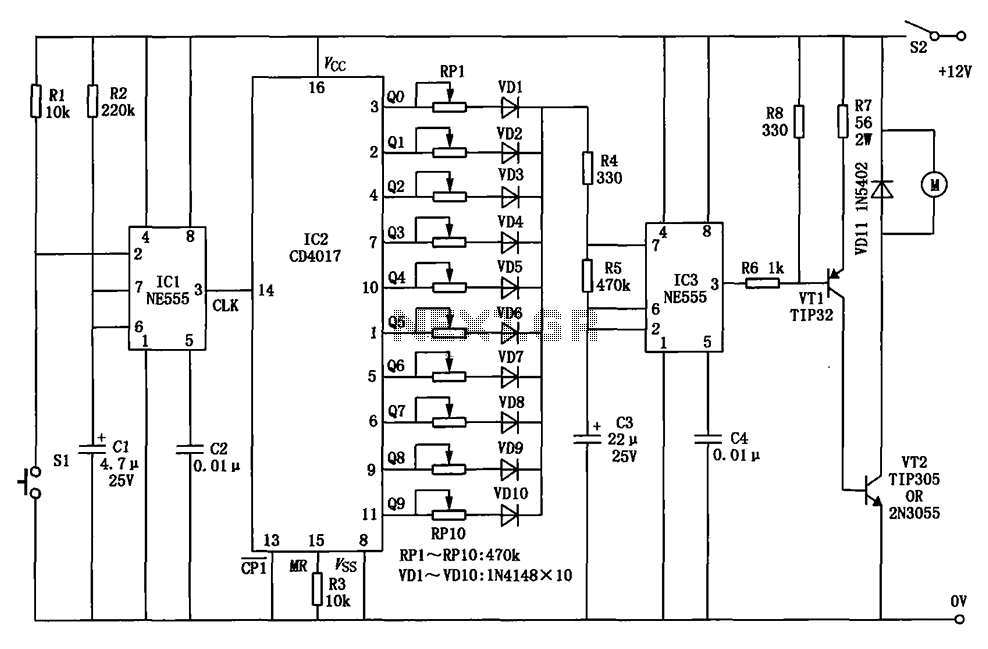
Description: The circuit for a car wiper speed controller allows for adjustable wiper speed, ranging from one to ten cycles per second. This feature enables flexibility in operation and contributes to energy efficiency.
The car wiper speed controller circuit typically employs a combination of resistors, capacitors, and a microcontroller or timer IC to manipulate the wiper motor's speed effectively. The core of the circuit often includes a pulse-width modulation (PWM) signal generator, which adjusts the duty cycle of the voltage supplied to the wiper motor. By varying the duty cycle, the average voltage and current supplied to the motor can be controlled, resulting in different speeds of operation.
In practical terms, the circuit may include a potentiometer that allows the user to manually adjust the wiper speed. This potentiometer is connected to the input of the microcontroller or timer, which interprets the resistance value and adjusts the PWM output accordingly. The wiper motor is then driven using an H-bridge configuration to allow for direction control, enabling the wipers to operate in both the forward and reverse directions if necessary.
The energy-saving aspect of this circuit is realized through the PWM technique, which reduces the average power consumption compared to a simple on/off control method. As the duty cycle is decreased, the wiper motor receives less power, thus conserving energy while still maintaining adequate performance.
Additionally, the inclusion of a feedback loop may enhance the system's response to varying conditions, such as rain intensity. By incorporating a rain sensor, the circuit can automatically adjust the wiper speed based on the amount of moisture detected on the windshield, providing optimal visibility and safety for the driver.
Overall, the design of the car wiper speed controller circuit emphasizes flexibility in operation, energy efficiency, and adaptability to environmental conditions, making it a valuable component in modern automotive systems. Circuit car wipers speed controller is shown in Fig. It can easily shake wiper speed between every second to ten times per second for any change, flexible and energy saving.
The car wiper speed controller circuit typically employs a combination of resistors, capacitors, and a microcontroller or timer IC to manipulate the wiper motor's speed effectively. The core of the circuit often includes a pulse-width modulation (PWM) signal generator, which adjusts the duty cycle of the voltage supplied to the wiper motor. By varying the duty cycle, the average voltage and current supplied to the motor can be controlled, resulting in different speeds of operation.
In practical terms, the circuit may include a potentiometer that allows the user to manually adjust the wiper speed. This potentiometer is connected to the input of the microcontroller or timer, which interprets the resistance value and adjusts the PWM output accordingly. The wiper motor is then driven using an H-bridge configuration to allow for direction control, enabling the wipers to operate in both the forward and reverse directions if necessary.
The energy-saving aspect of this circuit is realized through the PWM technique, which reduces the average power consumption compared to a simple on/off control method. As the duty cycle is decreased, the wiper motor receives less power, thus conserving energy while still maintaining adequate performance.
Additionally, the inclusion of a feedback loop may enhance the system's response to varying conditions, such as rain intensity. By incorporating a rain sensor, the circuit can automatically adjust the wiper speed based on the amount of moisture detected on the windshield, providing optimal visibility and safety for the driver.
Overall, the design of the car wiper speed controller circuit emphasizes flexibility in operation, energy efficiency, and adaptability to environmental conditions, making it a valuable component in modern automotive systems. Circuit car wipers speed controller is shown in Fig. It can easily shake wiper speed between every second to ten times per second for any change, flexible and energy saving.
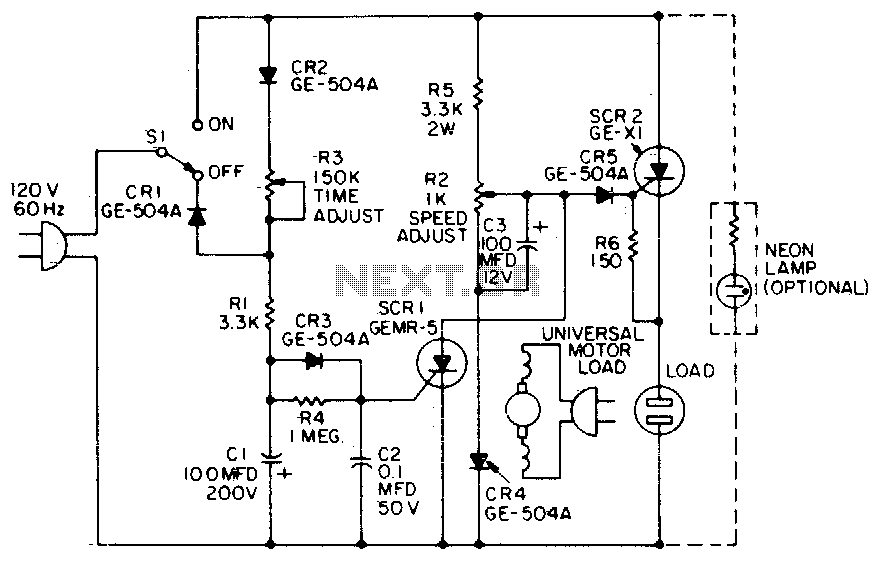
Universal motor control
When the time delay expires, SCR1 conducts and removes the gate signal from SCR2, which stops the motor. Both the time delay and motor speed are adjustable by potentiometers R2 and R3. If heavier motor loads are anticipated, use the...
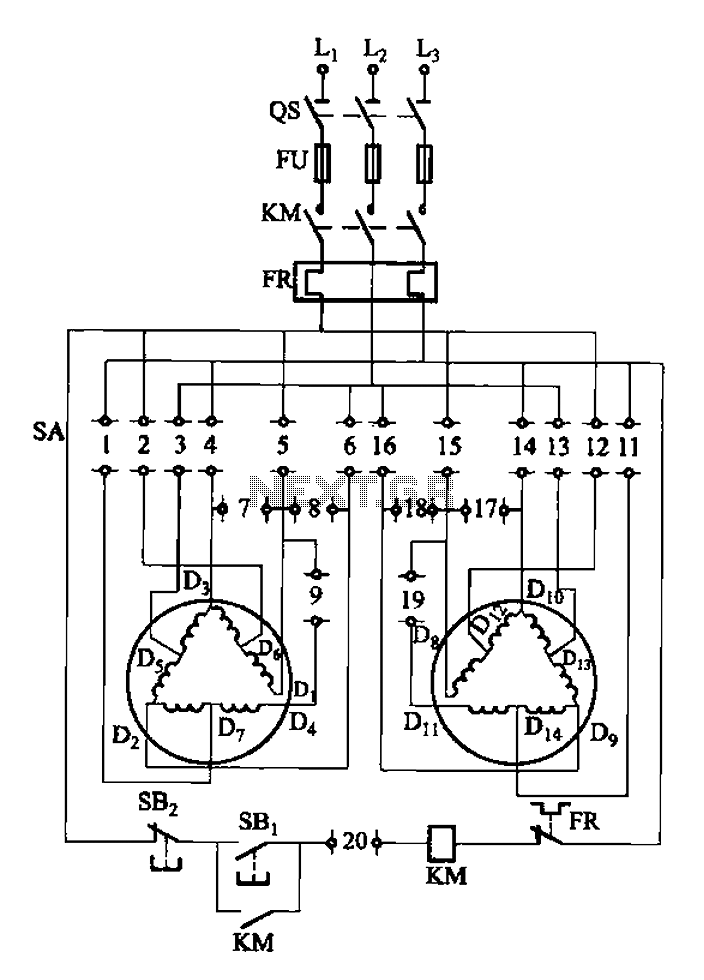
2Y-Y-2 - connection four-speed motor switch control circuit
The 3-119 circuit shown in the figure combines switch SA to realize the stator windings, specifically the 2, Y, and 2Y connections, which correspond to the motor speed n1.
The 3-119 circuit is designed to facilitate the control of motor speed...
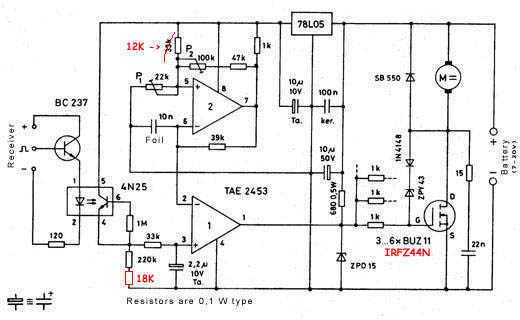
Speed Controller for brushed electric motors
Like most other ESCs, this one is built up using N-channel Power MOSFETs because of their good characteristics (low DS resistance). Since this ESC has no reverse, it is not meant to be used in R/C cars or boats if...
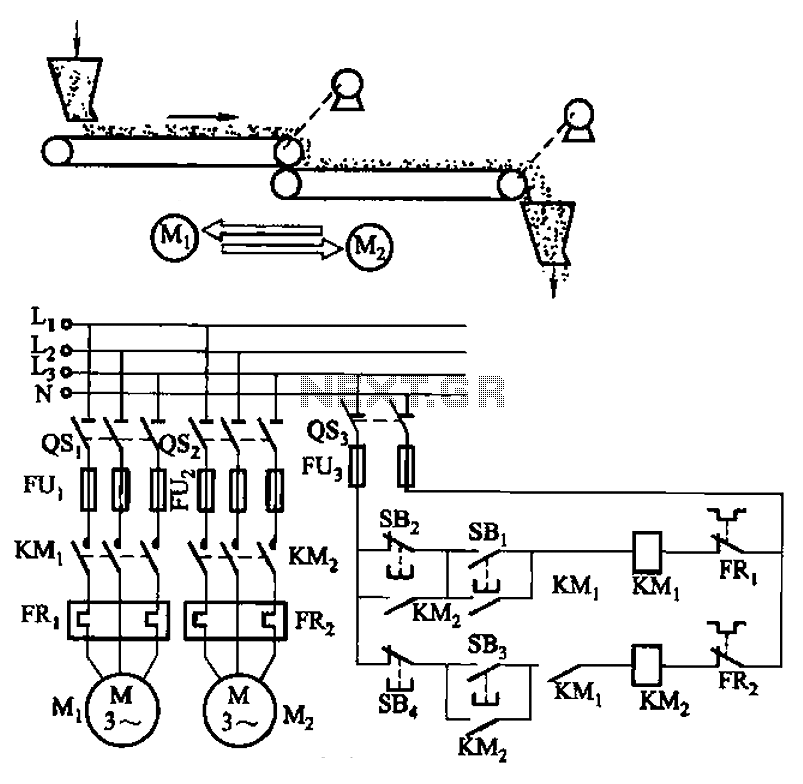
Belt conveyor interlock motor operation sequence control circuit
The circuit depicted in Figure 3-86 utilizes a line utilization time relay to control two motors, starting one before the other after an initial stall. The time relay KTi can be adjusted to modify the starting interval of the two...
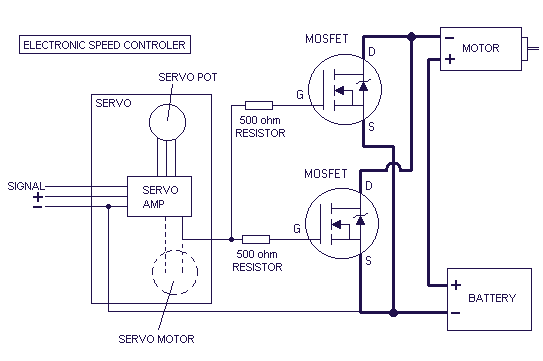
Speed Controler for R/C Models
Here's how you can make an electronic speed controller (ESC) for your remote control car, boat, or even an airplane using an old servo and some MOSFETs. Please note that this ESC has a very limited control range. Meaning that...
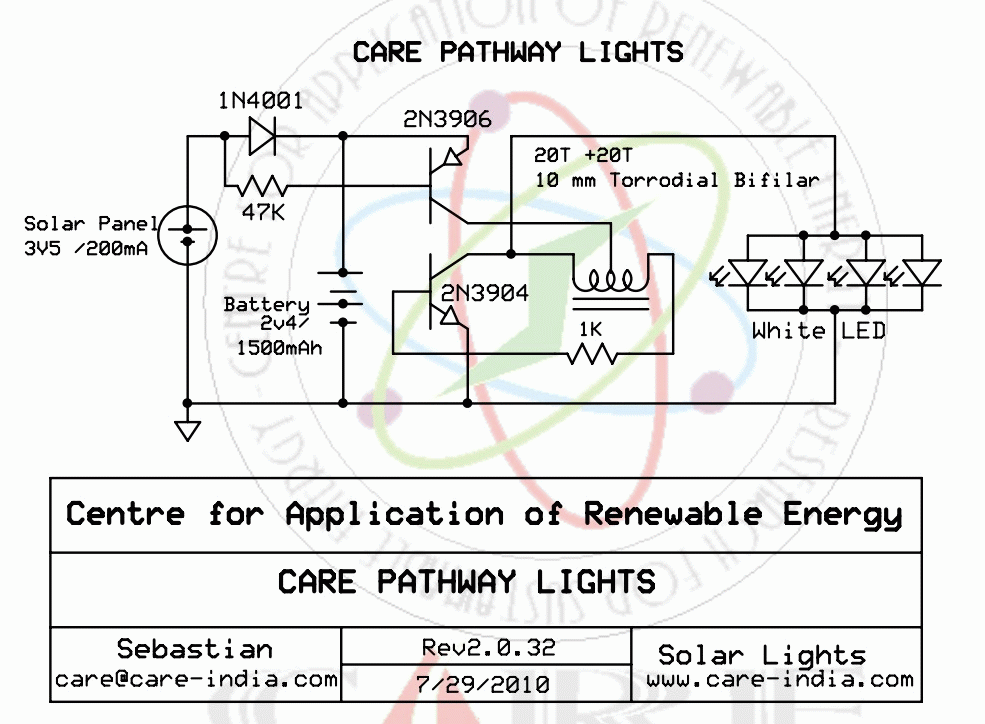
Energy Saving Lighting with One-Shot Timer Circuit
Engineer Radu Preda from Romania has developed two energy-saving lighting circuits designed to control the duration that lights are activated, ultimately aiming to reduce electricity expenses. The first circuit utilizes a relay, while the second employs an optoisolator triac (MOC3041)...
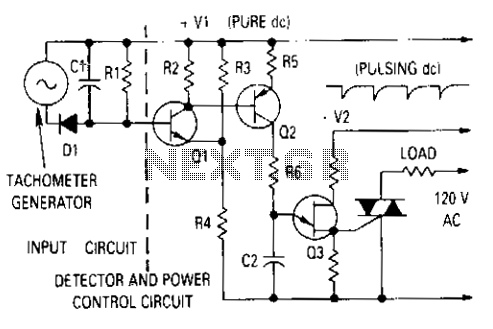
Motor control with tachometer
The generator output is rectified, filtered, and applied between the positive supply voltage and the base of the detector transistor. This configuration provides a negative voltage that reduces the base voltage as the speed increases. During normal operation, if the...
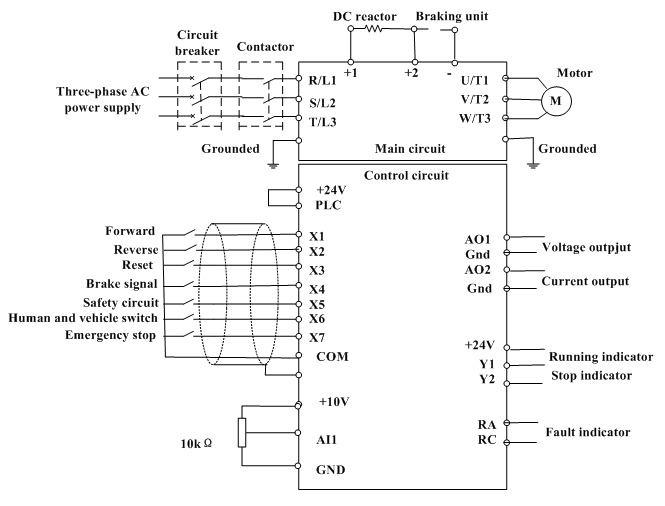
motor control inverter (AC drive) in mine industry
Motor control, energy efficiency of inverter (AC drive) selection, and parameters setting guidance in the mining industry: vector control, open loop or closed loop control, with energy braking unit or energy feedback unit.
In the context of motor control for the...
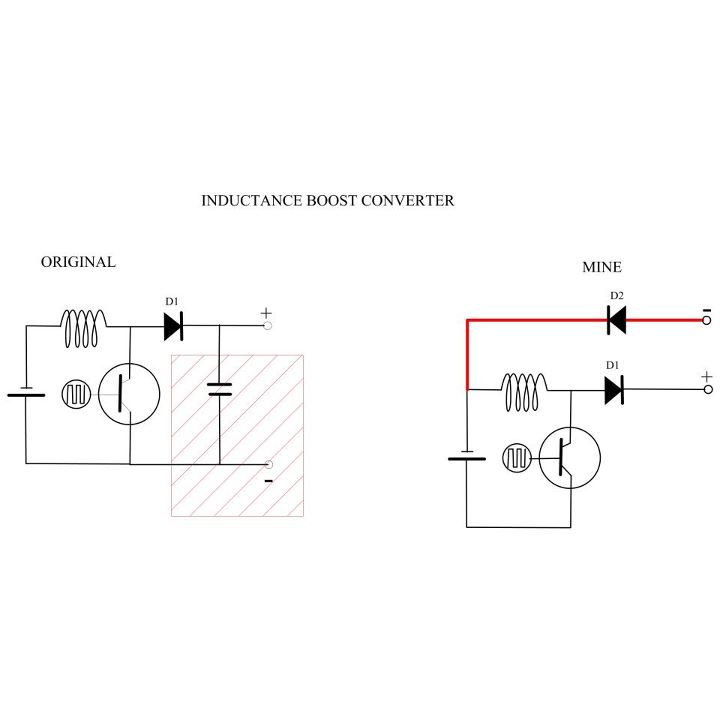
My Motors got me to Tap into Radiant Energy
A new user is seeking to share information about their experiences on this platform.
The user expresses a desire to communicate and engage with the community regarding their experiences. This indicates an interest in exchanging knowledge and possibly seeking assistance or...