


Car Headlight Alarm circuit diagram
#headlight alarm
#battery protection
#ignition switch
#car electronics
#safety circuit
#automotive safety
#warning system
#vehicle circuit
#power management
#dead battery prevention
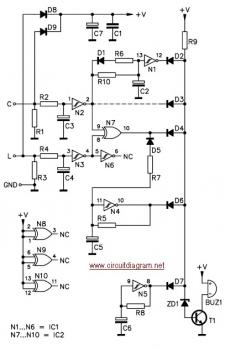
Description: The circuit is designed to ensure that the headlights or side lights are automatically switched off after the ignition contact is turned off. This prevents the occurrence of a dead battery due to headlights being inadvertently left on.
The circuit utilizes a relay or a transistor switch to control the power supply to the headlights based on the ignition status. When the ignition is turned on, the circuit allows current to flow to the headlights, enabling them to operate normally. Once the ignition is turned off, the relay or transistor is triggered to interrupt the power supply to the headlights, effectively turning them off.
The schematic typically includes an ignition switch, a relay or transistor, and the headlight circuit. The ignition switch is connected to the control terminal of the relay or the base of the transistor. When the ignition is active, the relay is energized, closing the circuit and allowing current to flow to the headlights. Upon turning off the ignition, the relay de-energizes or the transistor turns off, cutting off the power to the headlights.
To ensure reliability, additional components such as diodes may be included to prevent back EMF from damaging the control circuitry. A capacitor can also be integrated to provide a delay if desired, allowing for a brief period during which the headlights remain on after ignition off, enhancing visibility when exiting the vehicle.
This circuit is essential in automotive applications to enhance user convenience and prevent battery drain, thereby improving the overall efficiency and reliability of the vehicle’s electrical system.First, to indicate that the head lights (or the side lights) should be switched off after switching off the ignition contact. With this circuit, there should be no dead battery due to headlights that were left on.
The circuit utilizes a relay or a transistor switch to control the power supply to the headlights based on the ignition status. When the ignition is turned on, the circuit allows current to flow to the headlights, enabling them to operate normally. Once the ignition is turned off, the relay or transistor is triggered to interrupt the power supply to the headlights, effectively turning them off.
The schematic typically includes an ignition switch, a relay or transistor, and the headlight circuit. The ignition switch is connected to the control terminal of the relay or the base of the transistor. When the ignition is active, the relay is energized, closing the circuit and allowing current to flow to the headlights. Upon turning off the ignition, the relay de-energizes or the transistor turns off, cutting off the power to the headlights.
To ensure reliability, additional components such as diodes may be included to prevent back EMF from damaging the control circuitry. A capacitor can also be integrated to provide a delay if desired, allowing for a brief period during which the headlights remain on after ignition off, enhancing visibility when exiting the vehicle.
This circuit is essential in automotive applications to enhance user convenience and prevent battery drain, thereby improving the overall efficiency and reliability of the vehicle’s electrical system.First, to indicate that the head lights (or the side lights) should be switched off after switching off the ignition contact. With this circuit, there should be no dead battery due to headlights that were left on.
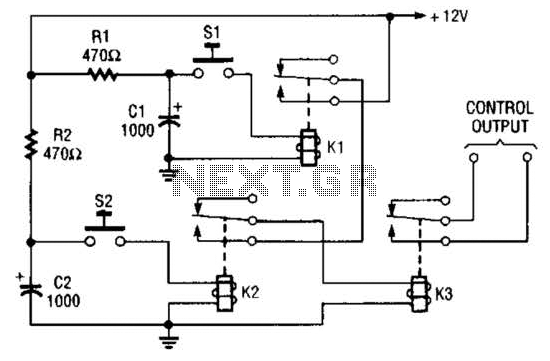
Safety Circuit Circuit
Due to the limited hold-on time of the delay circuits R1/C1 and R2/C2, both switches S1 and S2 must be activated simultaneously to energize the load.
The circuit in question involves a delay mechanism governed by the time constants associated with...
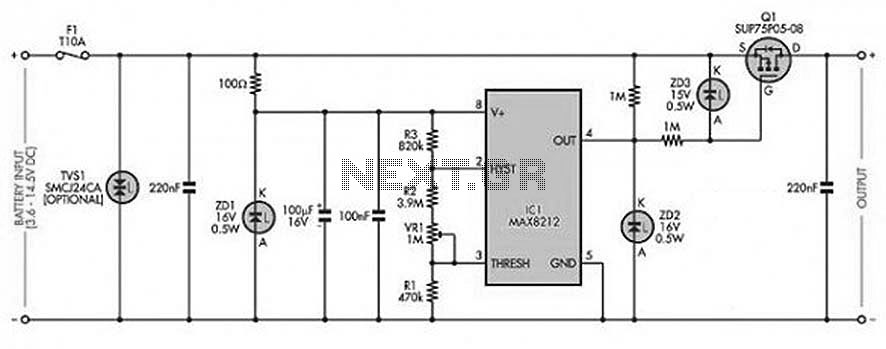
Multifunctional Battery Protector
The circuit is designed to prevent over-voltage conditions in a battery during charging. It operates automatically to charge and recharge with a very low power consumption of less than 20mA, making it suitable for use with batteries rated between 4.8V...
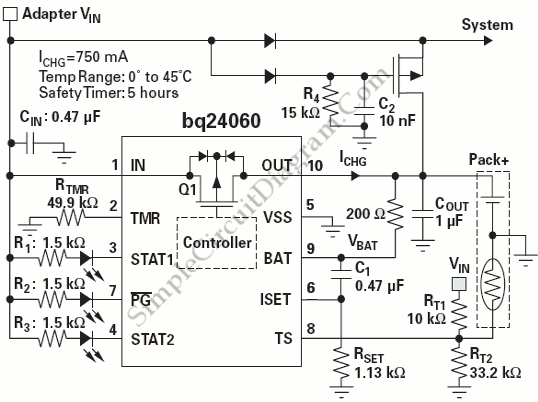
Power Path Management Battery Charger
Powering the system is required by many applications while charging the battery simultaneously. Interaction between the system and charger may result in a...
Power management in electronic systems is critical, particularly in applications that necessitate simultaneous operation and battery charging. This...
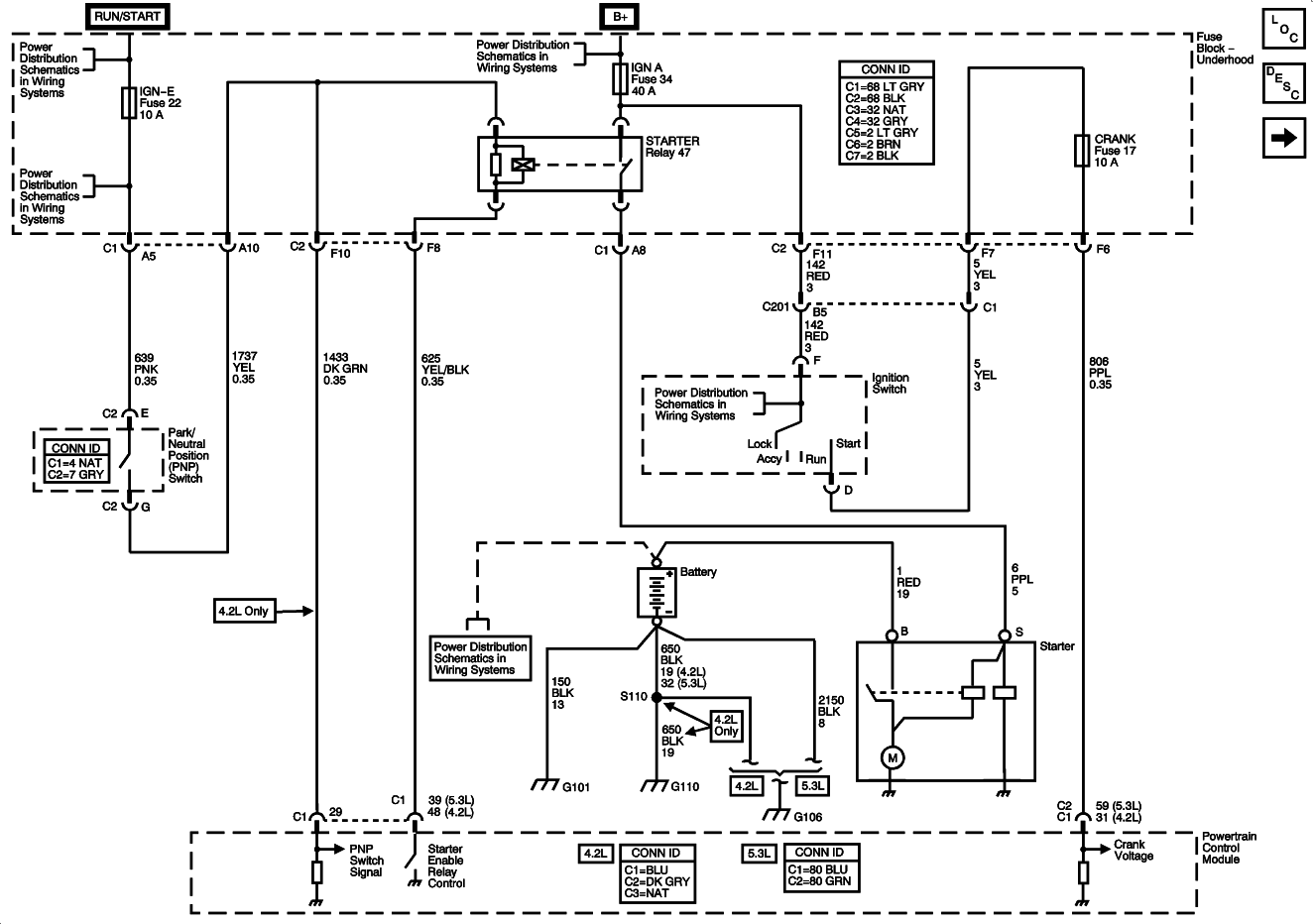
weather car wont start and radio keyless entry power windows
When the weather is hot and the sun is shining, the car fails to start, and the radio, keyless entry, power windows, power locks, and power seats do not function. However, after sunset, everything operates normally. It is important to...
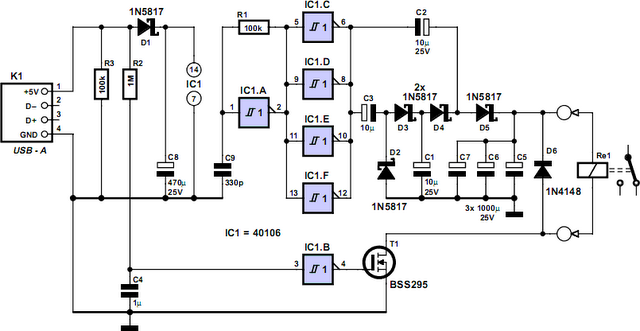
Computer Off Switch
How often does it happen that a user shuts down Windows and then forgets to turn off the computer? This circuit automates that process. After Windows is shut down, a click occurs a second later, disconnecting the PC from the...
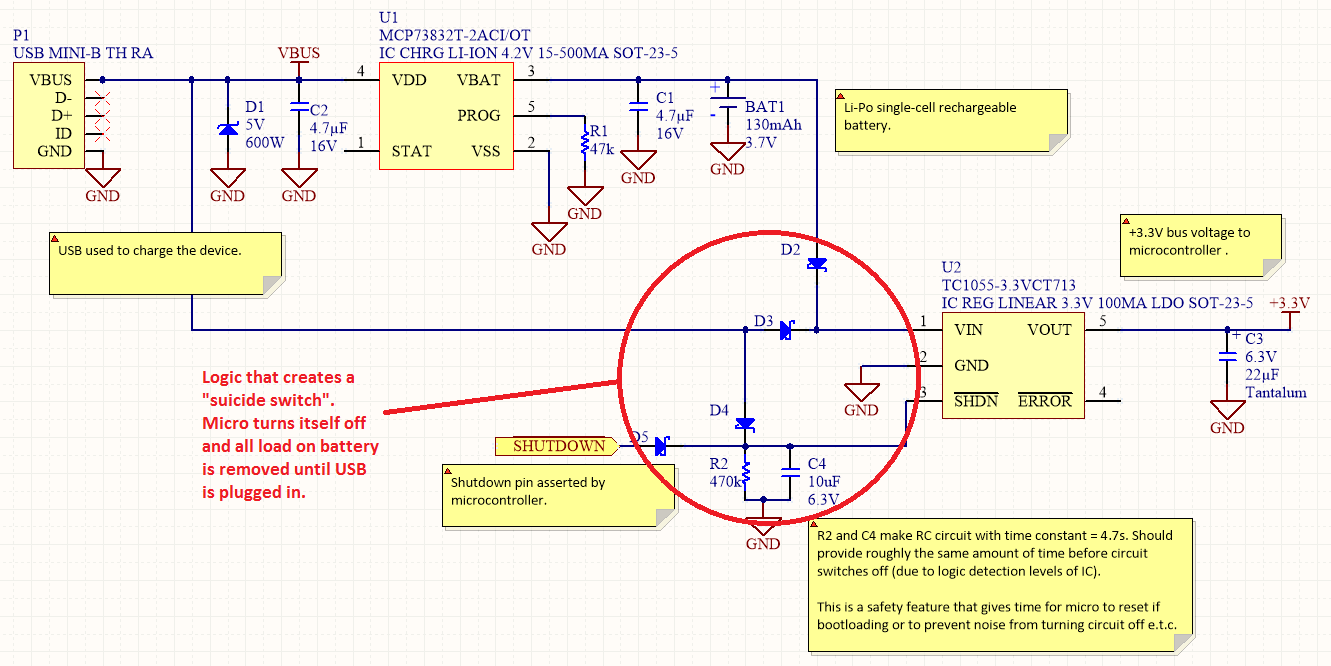
Power Management
Overview Disabling Sections of a Circuit The "Suicide Switch" Overview Power management is a significant design consideration for battery-powered devices.
Power management is a crucial aspect of circuit design, particularly in battery-powered applications where energy efficiency directly impacts the operational lifespan...
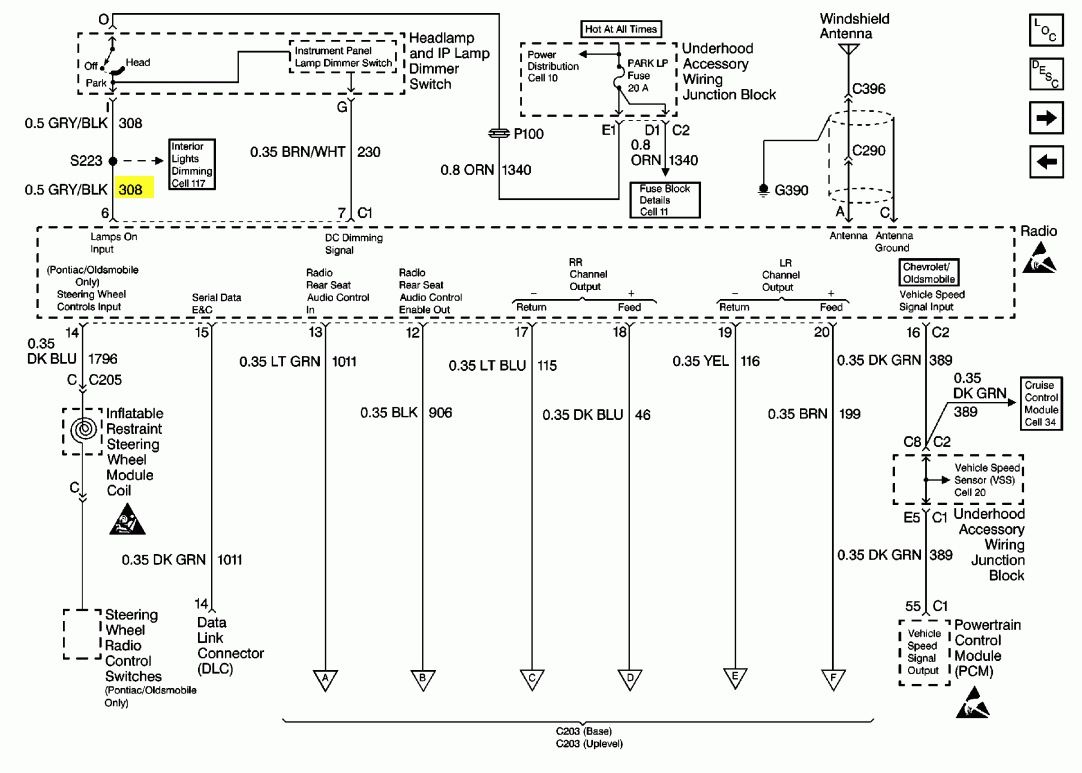
1999 Pontiac Montana: console temperature MPG compass etc. failed
A 1999 Pontiac Montana has an information console that displays temperature, MPG, compass, and other data. This console experienced intermittent failures before completely ceasing to function. Concurrently, the radio display also malfunctioned, though the radio itself remained operational. The display...
Power Path Management Battery Charger
Powering the system is required by many applications while charging the battery simultaneously. Interaction between the system and charger may result in a...
Power management in electronic systems is critical, particularly in applications that necessitate simultaneous operation and battery charging. This...
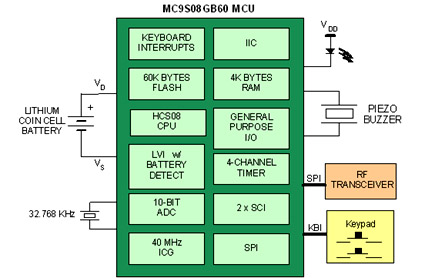
How to extend the battery life of your microcontroller based design
Battery-powered devices, such as electric toothbrushes, shavers, cell phones, PDAs, MP3 players, and remote controls, are integral to daily life. Consequently, power management has become a critical consideration for embedded designers. Microcontrollers (MCUs) provide various methods for managing power requirements...