


Designing The Low-Cost Mobile PC
#12-volt system
#DC current
#mobile PC
#high-current loads
#inductive loads
#starter motor
#electrical standards
#automotive accessories
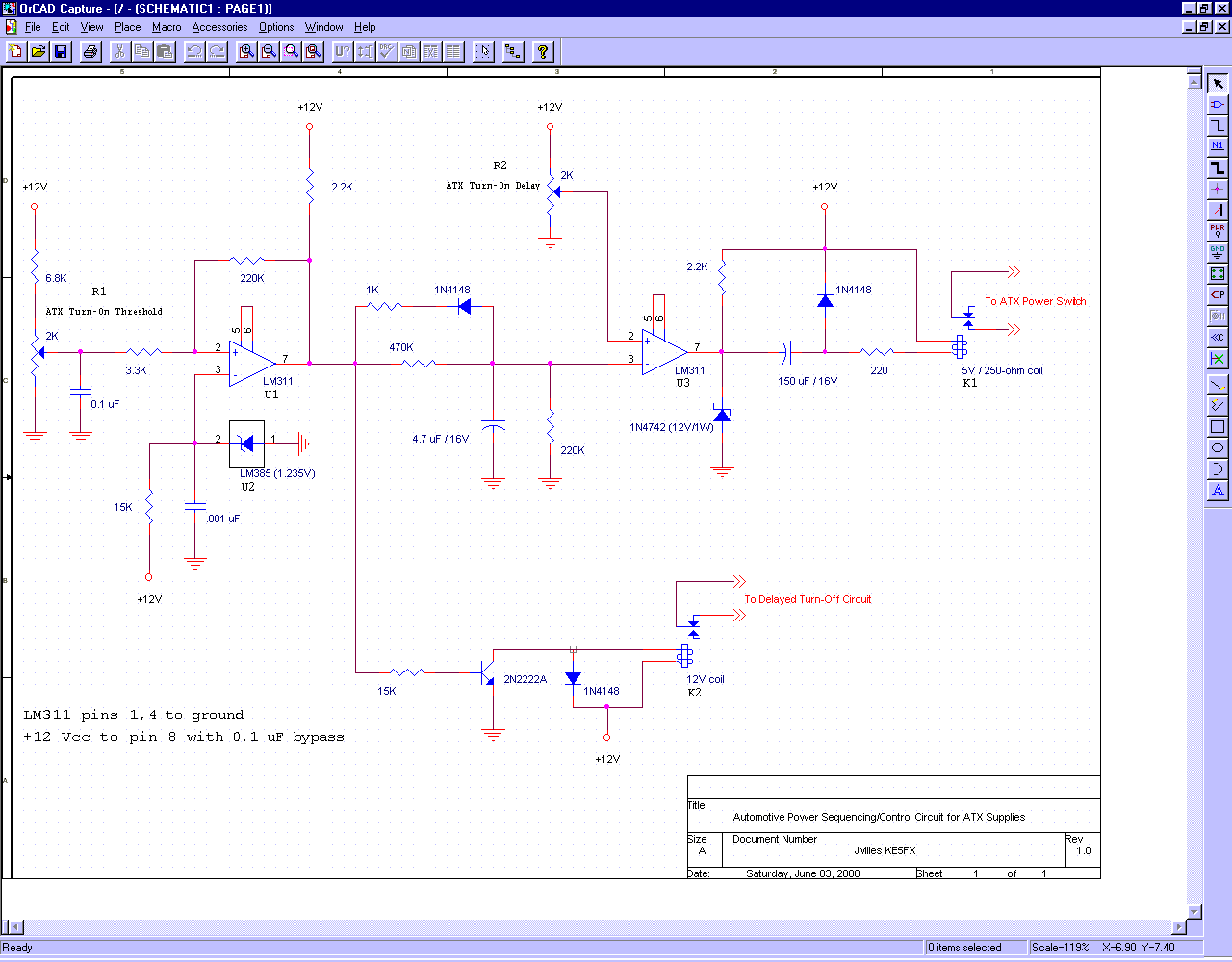
Description: A standard 12-volt automotive electrical system can be viewed as a robust yet unreliable source of low-voltage DC current. Any mobile PC installation should encompass several features, as automotive systems must adhere to strict electrical standards. The starter motor and various accessories in a vehicle represent high-current inductive loads. The process of cranking and operating accessories can generate significant voltage spikes that may disrupt or damage sensitive equipment if not adequately protected. While newer vehicles equipped with advanced engine control and diagnostic systems exhibit improved electromagnetic interference (EMI) and radio frequency interference (RFI) characteristics compared to older models, it is prudent to prepare for the worst in power supply design. For most applications, utilizing an off-the-shelf power supply solution is advisable, such as a cost-effective 300-watt inverter or a commercial 12-volt ATX supply, to mitigate these concerns.
Manually turning the mobile PC on and off with a conventional power switch is not ideal. Similar to a car stereo that powers on with the ignition and off when it is turned off, the computer should function in the same manner. However, unlike older AT-style PC motherboards, many newer ATX motherboards do not automatically power on when supplied with voltage. It is essential to verify CMOS setup options, as some BIOS versions may support this feature. An ATX power switch cannot merely be hard-wired to remain in the "on" position; the motherboard requires a momentary contact pulse to initiate the system, which may necessitate additional circuitry. Historically, early car CD players had a significant drawback compared to cassette players; they would restart playback from the beginning after the car was started due to a lack of resume functionality. To avoid similar issues, the mobile PC must continue operating long enough after ignition shutoff to save track and position status to disk or non-volatile RAM (NVRAM). If the PC cannot function normally during engine cranking when battery voltage drops to 5 volts or lower, it may be necessary to configure the MP3 player to power on after the car starts instead of when the ignition is in the "accessory" position. Additionally, many power supply options, like the aforementioned 300W inverter, may not reliably restart following a brownout and often need to be completely powered down before they can restart. The project addresses the initial concern by employing a 300-watt inverter to provide 110VAC to a standard 200-watt ATX power supply. This solution can be acquired for approximately $50, making a custom power supply design less appealing. However, it is important to note that while a commercial or home-built 12-volt ATX power supply will deliver power, it does not resolve the power control issue, which is critical to the design. The core of the PC installation's power sequencing and control system is built around two affordable LM311 comparator integrated circuits (ICs) and a precision voltage reference chip.
The automotive electrical system operates at 12 volts, which is a standard voltage for many vehicles. The use of a 300-watt inverter allows for the conversion of this DC voltage to 110VAC, which is suitable for powering an ATX power supply, typically used in desktop computers. The ATX power supply is responsible for regulating the voltage output to the various components of the mobile PC, ensuring stable operation even under varying load conditions.
To address the power control issue, the LM311 comparators can be configured to monitor the voltage levels from the vehicle's battery. These comparators can trigger the power supply to turn on or off based on predetermined voltage thresholds, ensuring that the mobile PC receives power only when the vehicle is running. This setup can prevent potential damage caused by voltage spikes during cranking and ensure that the PC can save its state before the vehicle is turned off.
The precision voltage reference chip plays a crucial role in providing a stable reference voltage for the comparators, enhancing the reliability of the power control system. By implementing this design, the mobile PC can maintain its operational integrity during engine cranking and provide a seamless user experience, similar to that of traditional automotive audio systems. Overall, this approach offers a robust solution for integrating mobile computing within an automotive environment while addressing the unique challenges posed by automotive electrical systems.A standard 12-volt auto electrical system can be considered to be a powerful but unreliable source of low-voltage DC current. Some of the features any mobile PC installation should provide include: Automotive systems must be designed to strict electrical standards.
Your car`s starter motor, along with many of its accessories, are high-current loads that are inductive in nature. Cranking and accessory operation can induce large spikes that can upset or destroy any sensitive equipment left unprotected. Newer cars with lots of engine control and diagnostic hardware are much better-behaved than older cars in EMI/RFI terms, but it still makes sense to anticipate the worst in your power-supply design.
For most of us, that means using an off-the-shelf power supply solution, rather than rolling our own from scratch. Either an inexpensive 300-watt inverter or commercial 12-volt ATX supply should address these concerns.
It`s possible to turn your mobile PC on and off manually with a conventional power switch, but that`s not what you want. Your stereo doesn`t work this way - it comes on when you turn the key, and shuts off when you kill the ignition.
You want your computer to do the same. Unfortunately, unlike the older AT-style PC motherboards, many newer ATX-style boards don`t turn on automatically upon application of power. (Check your CMOS setup options - some BIOS versions do support this. ) An ATX power switch can`t be simply hard-wired to the "on" position; the motherboard requires a momentary-contact pulse to turn the system on, so some additional circuitry is likely to be necessary.
Almost without exception, the first car CD players on the market had a very annoying drawback compared to the cassette-tape players they were hoping to replace. Every time you started your car, your CD would restart play from the beginning of the disc, because the manufacturers were either too cheap or too lazy to make their CD players resume playback from the point where it was interrupted.
Unless you`re happy with an MP3 player that lacks the functionality of a disco-era 8-track deck, you`ll have to provide a way for your PC to continue operating long enough after ignition shutoff to save its track and position status to disk or NVRAM. Unless your PC can continue operating normally during engine cranking when the available battery voltage falls to 5 volts or less, you may have to arrange for your MP3 player to power up after starting the car, rather than when the key is turned to the "accessory" position.
Many power-supply options, like the 300W inverter I used, won`t restart themselves reliably (or at all) following a brownout. These devices must be powered all the way down before they`ll restart. My project addresses the first point by using an off-the-shelf 300-watt inverter to supply 110VAC to an ordinary 200-watt ATX power supply.
This model, and others like it, can be purchased new for as little as $50, rendering a custom power-supply solution pointless, at least in my opinion. (Keep in mind that a commercial or homebrew 12-volt ATX power supply will do just that - supply the power.
It won`t deal with the power control problem at all, which is where the real work has to be done. ) Two inexpensive LM311 comparator ICs and a precision voltage reference chip form the heart of the PC installation`s power sequencing and control system. The job of this
Manually turning the mobile PC on and off with a conventional power switch is not ideal. Similar to a car stereo that powers on with the ignition and off when it is turned off, the computer should function in the same manner. However, unlike older AT-style PC motherboards, many newer ATX motherboards do not automatically power on when supplied with voltage. It is essential to verify CMOS setup options, as some BIOS versions may support this feature. An ATX power switch cannot merely be hard-wired to remain in the "on" position; the motherboard requires a momentary contact pulse to initiate the system, which may necessitate additional circuitry. Historically, early car CD players had a significant drawback compared to cassette players; they would restart playback from the beginning after the car was started due to a lack of resume functionality. To avoid similar issues, the mobile PC must continue operating long enough after ignition shutoff to save track and position status to disk or non-volatile RAM (NVRAM). If the PC cannot function normally during engine cranking when battery voltage drops to 5 volts or lower, it may be necessary to configure the MP3 player to power on after the car starts instead of when the ignition is in the "accessory" position. Additionally, many power supply options, like the aforementioned 300W inverter, may not reliably restart following a brownout and often need to be completely powered down before they can restart. The project addresses the initial concern by employing a 300-watt inverter to provide 110VAC to a standard 200-watt ATX power supply. This solution can be acquired for approximately $50, making a custom power supply design less appealing. However, it is important to note that while a commercial or home-built 12-volt ATX power supply will deliver power, it does not resolve the power control issue, which is critical to the design. The core of the PC installation's power sequencing and control system is built around two affordable LM311 comparator integrated circuits (ICs) and a precision voltage reference chip.
The automotive electrical system operates at 12 volts, which is a standard voltage for many vehicles. The use of a 300-watt inverter allows for the conversion of this DC voltage to 110VAC, which is suitable for powering an ATX power supply, typically used in desktop computers. The ATX power supply is responsible for regulating the voltage output to the various components of the mobile PC, ensuring stable operation even under varying load conditions.
To address the power control issue, the LM311 comparators can be configured to monitor the voltage levels from the vehicle's battery. These comparators can trigger the power supply to turn on or off based on predetermined voltage thresholds, ensuring that the mobile PC receives power only when the vehicle is running. This setup can prevent potential damage caused by voltage spikes during cranking and ensure that the PC can save its state before the vehicle is turned off.
The precision voltage reference chip plays a crucial role in providing a stable reference voltage for the comparators, enhancing the reliability of the power control system. By implementing this design, the mobile PC can maintain its operational integrity during engine cranking and provide a seamless user experience, similar to that of traditional automotive audio systems. Overall, this approach offers a robust solution for integrating mobile computing within an automotive environment while addressing the unique challenges posed by automotive electrical systems.A standard 12-volt auto electrical system can be considered to be a powerful but unreliable source of low-voltage DC current. Some of the features any mobile PC installation should provide include: Automotive systems must be designed to strict electrical standards.
Your car`s starter motor, along with many of its accessories, are high-current loads that are inductive in nature. Cranking and accessory operation can induce large spikes that can upset or destroy any sensitive equipment left unprotected. Newer cars with lots of engine control and diagnostic hardware are much better-behaved than older cars in EMI/RFI terms, but it still makes sense to anticipate the worst in your power-supply design.
For most of us, that means using an off-the-shelf power supply solution, rather than rolling our own from scratch. Either an inexpensive 300-watt inverter or commercial 12-volt ATX supply should address these concerns.
It`s possible to turn your mobile PC on and off manually with a conventional power switch, but that`s not what you want. Your stereo doesn`t work this way - it comes on when you turn the key, and shuts off when you kill the ignition.
You want your computer to do the same. Unfortunately, unlike the older AT-style PC motherboards, many newer ATX-style boards don`t turn on automatically upon application of power. (Check your CMOS setup options - some BIOS versions do support this. ) An ATX power switch can`t be simply hard-wired to the "on" position; the motherboard requires a momentary-contact pulse to turn the system on, so some additional circuitry is likely to be necessary.
Almost without exception, the first car CD players on the market had a very annoying drawback compared to the cassette-tape players they were hoping to replace. Every time you started your car, your CD would restart play from the beginning of the disc, because the manufacturers were either too cheap or too lazy to make their CD players resume playback from the point where it was interrupted.
Unless you`re happy with an MP3 player that lacks the functionality of a disco-era 8-track deck, you`ll have to provide a way for your PC to continue operating long enough after ignition shutoff to save its track and position status to disk or NVRAM. Unless your PC can continue operating normally during engine cranking when the available battery voltage falls to 5 volts or less, you may have to arrange for your MP3 player to power up after starting the car, rather than when the key is turned to the "accessory" position.
Many power-supply options, like the 300W inverter I used, won`t restart themselves reliably (or at all) following a brownout. These devices must be powered all the way down before they`ll restart. My project addresses the first point by using an off-the-shelf 300-watt inverter to supply 110VAC to an ordinary 200-watt ATX power supply.
This model, and others like it, can be purchased new for as little as $50, rendering a custom power-supply solution pointless, at least in my opinion. (Keep in mind that a commercial or homebrew 12-volt ATX power supply will do just that - supply the power.
It won`t deal with the power control problem at all, which is where the real work has to be done. ) Two inexpensive LM311 comparator ICs and a precision voltage reference chip form the heart of the PC installation`s power sequencing and control system. The job of this