


GM Silverado: 2003 Chevy Silverado K1500 Ext Cab 5.3l V8 DTC
#Chevy Silverado
#DTC codes
#ignition system
#transmission
#voltage check
#wiring harness
#P0740
#P0753
#P0758
#P1860
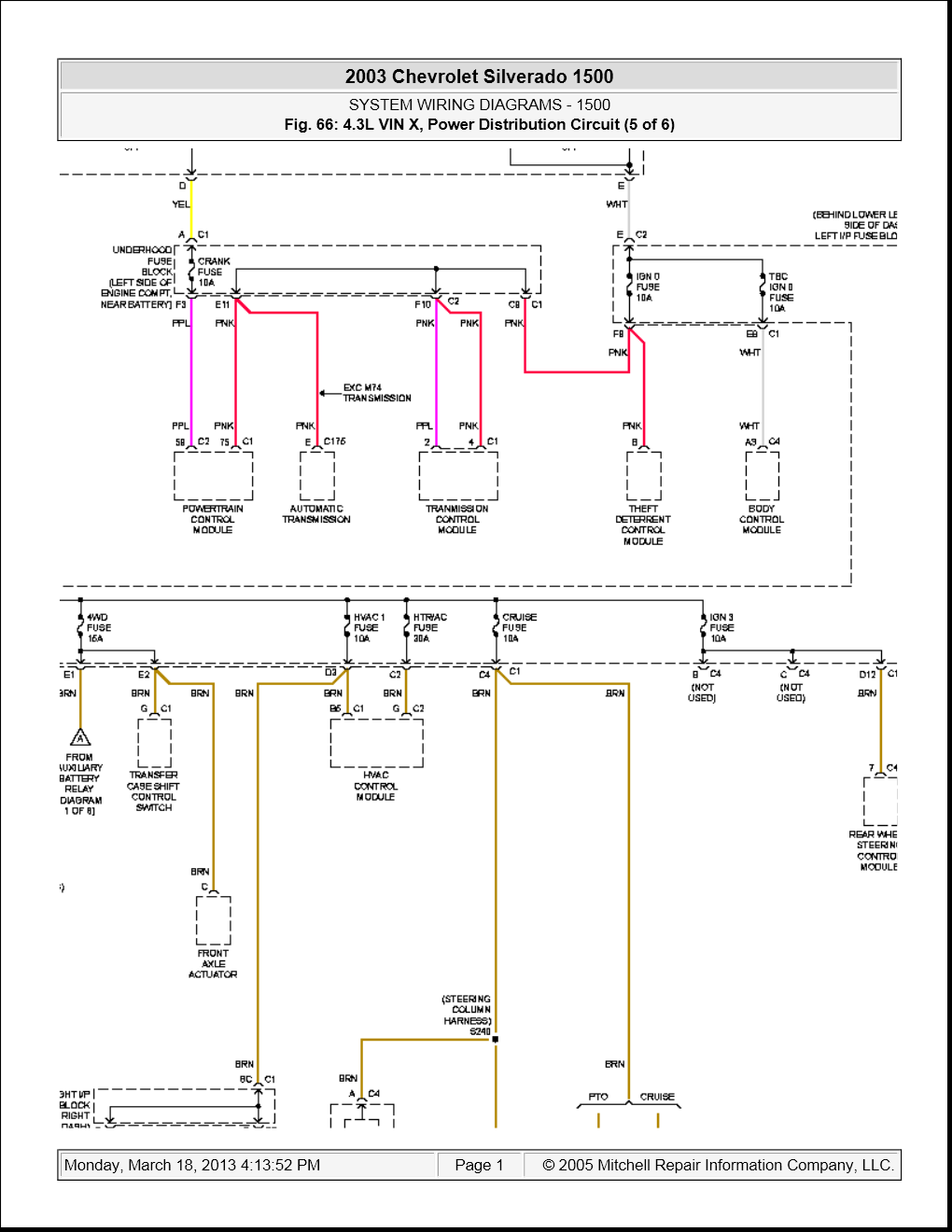
Description: 2003 Chevy Silverado K1500 Extended Cab 5.3L V8 DTC codes P0740, P0753, P0758, P0785, P1860. The ignition voltage at IGN 0 is 11.73V. The ignition has been replaced, and an aftermarket Prolock security system has been removed. The wiring harness from the passenger side of the transmission has been disconnected, and voltage checks at pins T, A, B, and C revealed no power. It is assumed there is an open circuit between the fuse panel and the transmission. The harness has been visually inspected from the transmission up the back of the block to the fuse box in the engine compartment with no obvious issues found.
On the passenger side main transmission connector (the large round one), it is advised to unplug and check the pink wire (terminal E) for 12 volts, which should have constant power from the IGN0 fuse, as this is the power source for the internal transmission circuits. If terminal E does not have power, the potential issues could be a blown IGN0 fuse or an open circuit on that wire. In the latter case, a new wire could be added. It is necessary to determine if the open is between the underhood fuse panel and the transmission or between the underdash fuse panel and the underhood fuse panel. A schematic will be provided for that area, indicating where to "piggyback" the additional wire to restore power to the pink wire.
For installation, it is preferable to solder wires and use shrink tubing. The pink wire should be cut back about 1 inch from the transmission connector for splicing. The customer is advised to unbolt and flip the fuse box to inspect for issues. Upon doing so, the customer found two cut wires that no longer connect to the fuse block but are connected to another pink wire going into the loom headed toward the firewall. The customer plans to reconnect the wires to their original positions and test the system.
However, after reconnecting the wires, the system still triggers the same DTC codes after a short drive. The suggestion is made to run a direct 12V power line from the battery to the pink wire to check for voltage at terminal E. The customer is unsure about the location of C2, noting that there are 15 pink wires entering the fuse box from the loom. They mention that all pink wires in the fuse box power up with the ignition except for the one that was previously disconnected and jumped to another pink wire.
In this scenario, the wiring system of the 2003 Chevy Silverado K1500 is under scrutiny due to several DTC codes indicating transmission issues. The DTC codes P0740, P0753, P0758, P0785, and P1860 are associated with transmission performance, solenoid issues, and pressure control problems. The troubleshooting process begins by verifying the voltage at key points in the wiring harness, particularly focusing on the pink wire at terminal E of the transmission connector, which is critical for the operation of the transmission's internal circuits.
The troubleshooting steps include checking the integrity of the IGN0 fuse, inspecting for any breaks or shorts in the wiring between the fuse panel and the transmission, and ensuring that all connections are secure and correctly routed. The use of a schematic is essential for visualizing the wiring layout and identifying the correct points for testing and potential repairs.
In cases where previous modifications, such as the installation of an aftermarket security system, have been made, it is crucial to revert to the original wiring configuration to eliminate any variables that could complicate the diagnosis. The discovery of cut wires and improper connections further complicates the situation, necessitating a careful reconnection of wires to restore the original circuit integrity.
If issues persist after reconnection, direct power testing from the battery to the pink wire can help isolate the problem, confirming whether the issue lies within the transmission circuitry or upstream in the power delivery system. The approach of using soldered connections and heat shrink tubing is recommended for ensuring reliable and durable repairs. This method not only provides a solid electrical connection but also protects the joint from environmental factors that could lead to future failures.
Overall, systematic troubleshooting is required to resolve the DTC codes and restore proper functionality to the transmission system of the vehicle.2003 Chevy Silverado K1500 Ext Cab 5. 3l V8 DTC codes P0740, P0753, P0758, P0785, P1860. I have 11. 73v at IGN 0. I have replaced the Ignition. I have removed an aftermarket Prolock security system. I have disconnected the wireing harness from the pass side of the Trans and checked for voltage at the T, A, B and C pins and found no power. I am assum ing I have an open circuit between the fuse panel and the Trans. I have visually checked harness from Trans up the back of the block and over to the fuse box in the eng comp. Nothing obvious. Any, hopefully easy, ideas on how to correct this ok, on the passenger side main trans connector (the big round one), unplug, check the pink wire (terminal E) for 12 volts (it has constant power from fuse IGN0), this is the power source for the internal trans circuits.
Let me know and we will go from there. Pete If terminal E does not have power then: 1. The IGN0 fuse is blown or 2. You have an open on that wire, in which case you can just add your own wire. But we need to determine if the open is between the underhood fuse panel to the trans, or between the underdash fuse panel to the underhood fuse panel. So i will give you a blown up schematic for that area and show you what added wire needs to be "piggybacked" on the harness, to get full power back to the pink wire.
It will take a few minutes to do that. hang on. Use what is currently there for size reference and its preferrable to solder wires and use shrink tubing. Just cut the pink wire back about 1" from trans connector (its going to be hard to do) and splice there.
The other end is easier to explain by the schematic i`ll give you. And i am going to get that right now. Customer : I have to run to parts store before they close. Not sure where you are but if its to late I can get back in the morn. And let you know what I got done. You will probably have to unbolt the fuse box and turn it over or strip back the harness casing close as you can to the fuse box, I would like you to unbolt and flip it over, you might find the problem right there. Customer : Ok flipped fuse box and found two wires that have been cut and no longer connect to the fuse block but are jumped to another pink (with a butt crimp connector) wire going into the loom headed to the firewall.
Looks like the two cut wires used to be the two that are now connected to the other pink wire. Found the other cut wire coming from the fuse block also. I`m going to reconnect all of the wires where they used to be and test. Any idea why someone would have done this work around Customer : Didn`t work. We put all the wires back where they used to go and it didn`t trip immediately like it did before. Went on test drive and about a hundred yards it triped again. Should I try hooking it back up the way they had it but with soldered connections Customer : Ok we put everything back the way it was and still does the same thing. About 100 yards and engine light comes on throwing DTC`s P0758, P0740, P0753, P0758, P0785, P1860. Pete B : Then let`s just try running straight power 12 volts from the battery directly to that pink wire.
And see if we can get 12 volt or battery power down to that terminal E. This is hard to do on a cell phone. Customer : I`m not sure on the location of C2. There are 15 pink wires coming into the fuse box from the loom. There are numbers marking the rows but there are no wires in row 2 and I can`t find any letter designators. I believe the wire that has the splice used to connected to the 40A fuse marked IGN B. It`s location from the bottom right grid would be column 2 row 2. This row is marked # XXXXX The grid box above (row 10 column 2) this also has a double pink wire attached and when the IGN is turned on it powers up but there is still no power at pin E.
Customer : Ok every pink wire in the fuse box powers up with the ignition other than the one that someone else had disconnected and jump to the pink
On the passenger side main transmission connector (the large round one), it is advised to unplug and check the pink wire (terminal E) for 12 volts, which should have constant power from the IGN0 fuse, as this is the power source for the internal transmission circuits. If terminal E does not have power, the potential issues could be a blown IGN0 fuse or an open circuit on that wire. In the latter case, a new wire could be added. It is necessary to determine if the open is between the underhood fuse panel and the transmission or between the underdash fuse panel and the underhood fuse panel. A schematic will be provided for that area, indicating where to "piggyback" the additional wire to restore power to the pink wire.
For installation, it is preferable to solder wires and use shrink tubing. The pink wire should be cut back about 1 inch from the transmission connector for splicing. The customer is advised to unbolt and flip the fuse box to inspect for issues. Upon doing so, the customer found two cut wires that no longer connect to the fuse block but are connected to another pink wire going into the loom headed toward the firewall. The customer plans to reconnect the wires to their original positions and test the system.
However, after reconnecting the wires, the system still triggers the same DTC codes after a short drive. The suggestion is made to run a direct 12V power line from the battery to the pink wire to check for voltage at terminal E. The customer is unsure about the location of C2, noting that there are 15 pink wires entering the fuse box from the loom. They mention that all pink wires in the fuse box power up with the ignition except for the one that was previously disconnected and jumped to another pink wire.
In this scenario, the wiring system of the 2003 Chevy Silverado K1500 is under scrutiny due to several DTC codes indicating transmission issues. The DTC codes P0740, P0753, P0758, P0785, and P1860 are associated with transmission performance, solenoid issues, and pressure control problems. The troubleshooting process begins by verifying the voltage at key points in the wiring harness, particularly focusing on the pink wire at terminal E of the transmission connector, which is critical for the operation of the transmission's internal circuits.
The troubleshooting steps include checking the integrity of the IGN0 fuse, inspecting for any breaks or shorts in the wiring between the fuse panel and the transmission, and ensuring that all connections are secure and correctly routed. The use of a schematic is essential for visualizing the wiring layout and identifying the correct points for testing and potential repairs.
In cases where previous modifications, such as the installation of an aftermarket security system, have been made, it is crucial to revert to the original wiring configuration to eliminate any variables that could complicate the diagnosis. The discovery of cut wires and improper connections further complicates the situation, necessitating a careful reconnection of wires to restore the original circuit integrity.
If issues persist after reconnection, direct power testing from the battery to the pink wire can help isolate the problem, confirming whether the issue lies within the transmission circuitry or upstream in the power delivery system. The approach of using soldered connections and heat shrink tubing is recommended for ensuring reliable and durable repairs. This method not only provides a solid electrical connection but also protects the joint from environmental factors that could lead to future failures.
Overall, systematic troubleshooting is required to resolve the DTC codes and restore proper functionality to the transmission system of the vehicle.2003 Chevy Silverado K1500 Ext Cab 5. 3l V8 DTC codes P0740, P0753, P0758, P0785, P1860. I have 11. 73v at IGN 0. I have replaced the Ignition. I have removed an aftermarket Prolock security system. I have disconnected the wireing harness from the pass side of the Trans and checked for voltage at the T, A, B and C pins and found no power. I am assum ing I have an open circuit between the fuse panel and the Trans. I have visually checked harness from Trans up the back of the block and over to the fuse box in the eng comp. Nothing obvious. Any, hopefully easy, ideas on how to correct this ok, on the passenger side main trans connector (the big round one), unplug, check the pink wire (terminal E) for 12 volts (it has constant power from fuse IGN0), this is the power source for the internal trans circuits.
Let me know and we will go from there. Pete If terminal E does not have power then: 1. The IGN0 fuse is blown or 2. You have an open on that wire, in which case you can just add your own wire. But we need to determine if the open is between the underhood fuse panel to the trans, or between the underdash fuse panel to the underhood fuse panel. So i will give you a blown up schematic for that area and show you what added wire needs to be "piggybacked" on the harness, to get full power back to the pink wire.
It will take a few minutes to do that. hang on. Use what is currently there for size reference and its preferrable to solder wires and use shrink tubing. Just cut the pink wire back about 1" from trans connector (its going to be hard to do) and splice there.
The other end is easier to explain by the schematic i`ll give you. And i am going to get that right now. Customer : I have to run to parts store before they close. Not sure where you are but if its to late I can get back in the morn. And let you know what I got done. You will probably have to unbolt the fuse box and turn it over or strip back the harness casing close as you can to the fuse box, I would like you to unbolt and flip it over, you might find the problem right there. Customer : Ok flipped fuse box and found two wires that have been cut and no longer connect to the fuse block but are jumped to another pink (with a butt crimp connector) wire going into the loom headed to the firewall.
Looks like the two cut wires used to be the two that are now connected to the other pink wire. Found the other cut wire coming from the fuse block also. I`m going to reconnect all of the wires where they used to be and test. Any idea why someone would have done this work around Customer : Didn`t work. We put all the wires back where they used to go and it didn`t trip immediately like it did before. Went on test drive and about a hundred yards it triped again. Should I try hooking it back up the way they had it but with soldered connections Customer : Ok we put everything back the way it was and still does the same thing. About 100 yards and engine light comes on throwing DTC`s P0758, P0740, P0753, P0758, P0785, P1860. Pete B : Then let`s just try running straight power 12 volts from the battery directly to that pink wire.
And see if we can get 12 volt or battery power down to that terminal E. This is hard to do on a cell phone. Customer : I`m not sure on the location of C2. There are 15 pink wires coming into the fuse box from the loom. There are numbers marking the rows but there are no wires in row 2 and I can`t find any letter designators. I believe the wire that has the splice used to connected to the 40A fuse marked IGN B. It`s location from the bottom right grid would be column 2 row 2. This row is marked # XXXXX The grid box above (row 10 column 2) this also has a double pink wire attached and when the IGN is turned on it powers up but there is still no power at pin E.
Customer : Ok every pink wire in the fuse box powers up with the ignition other than the one that someone else had disconnected and jump to the pink

V3.0 MS Build With Pics
This version is V3.0, designed for TII use, featuring a stock FC ignition, a modified 24-2 style CAS, and a 3-bar MAP sensor. It has passed testing on the stimulator, indicating proper functionality. Future tests will be conducted on a...
V3.0 MS Build With Pics
This version is V3.0, designed for TII use, featuring a stock FC ignition, a modified 24-2 style CAS, and a 3-bar MAP sensor. It has passed testing on the stimulator, indicating proper functionality. Future tests will be conducted on a...
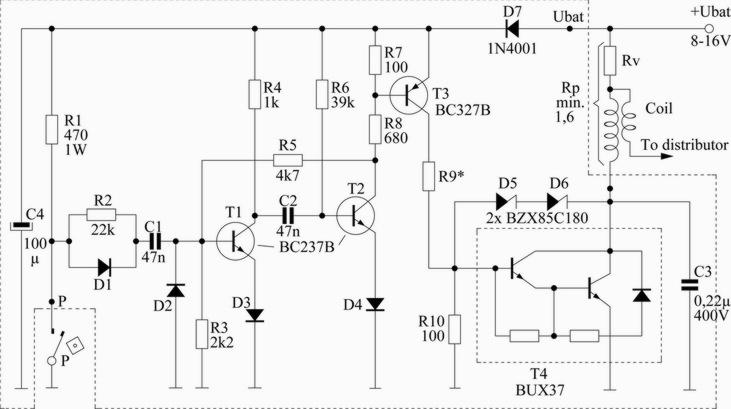
electronic car ignition circuit
This scheme is designed for a four-cylinder engine. It aims to reduce fuel consumption, increase speed slightly, and minimize the need for frequent access to the distributor cap for contact button replacement, thereby saving costs. Transistors T1 and T2 form...
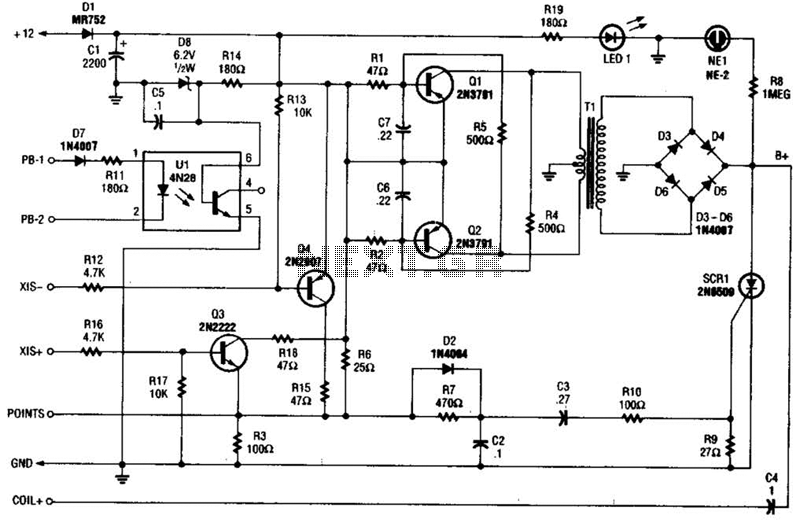
Cd Ignition System For Autos Circuit
At the core of the CD4-MX is an astable multivibrator, constructed using transistors Q1 and Q2, which drives step-up transformer T1. The output from T1 is rectified by diodes D3 to D6 and utilized to charge capacitor C4. Upon the...
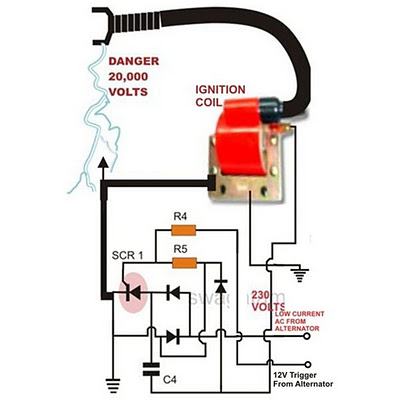
how to make capacitive discharge
The ignition process in any vehicle is crucial as it is the stage that allows the vehicle to start. Historically, a circuit breaker unit was used to initiate this process. However, modern vehicles utilize a more efficient and durable mechanism...
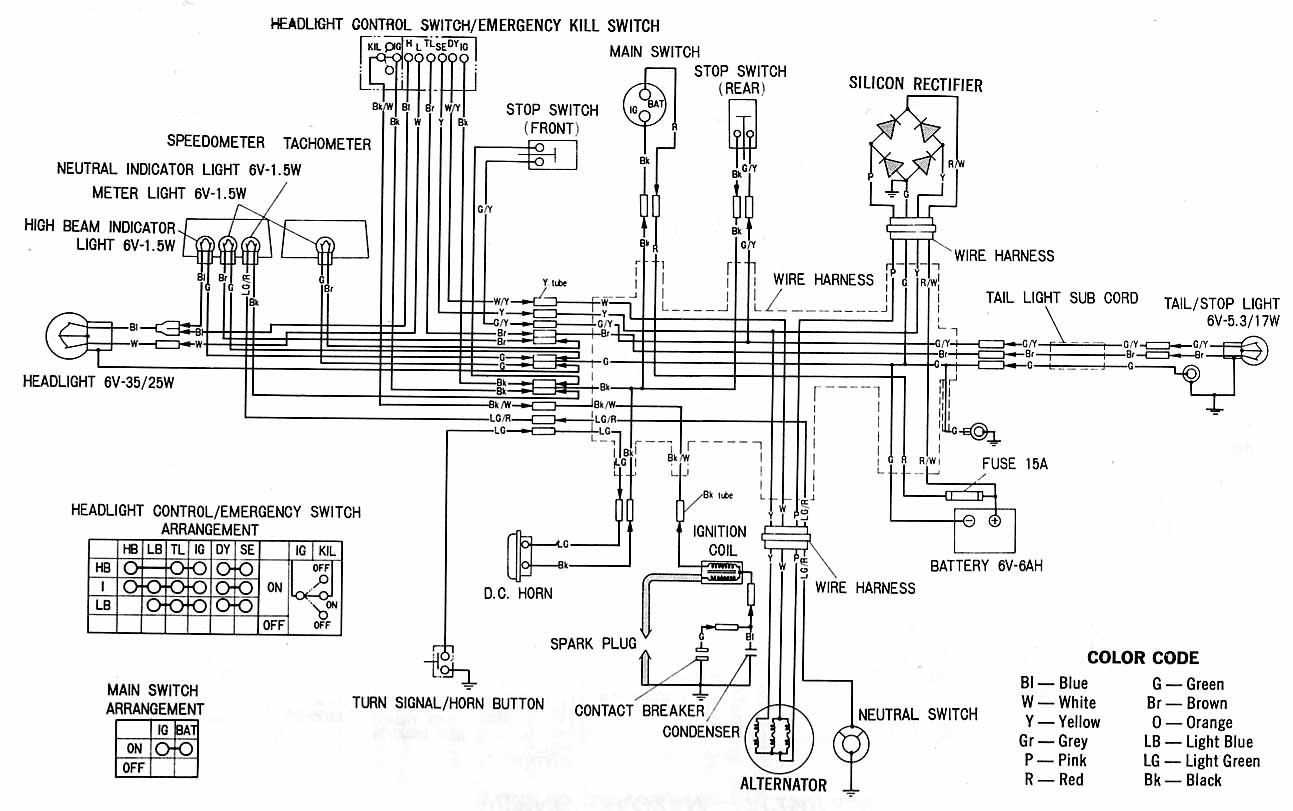
honda xl100 electrical schematic
Honda XL100 electrical schematic. Features: shows the connection between Honda parts. Component: Silicon rectifier unit, wiring harness, tail light sub cable, tail/stop light, high beam indicator, m light, speedometer, tachometer, fuse headlight control switch, emergency kill switch, switch, stop switch,...
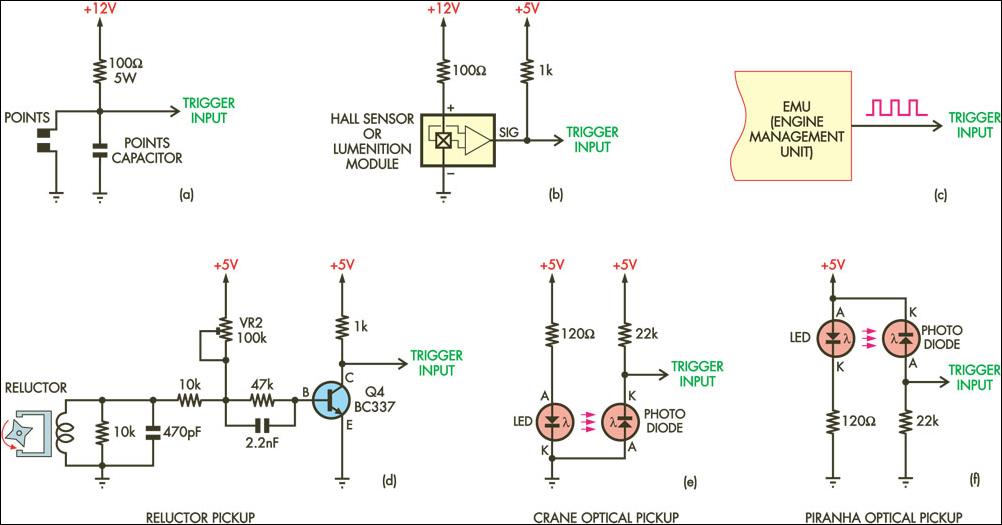
DIY TCI + CDI Trigger
The document provides an extract from another SC article discussing a simple programmable TCI (Transistor Controlled Ignition) that features nearly identical trigger input circuits to the DIY-CDI (Capacitor Discharge Ignition) system. It highlights that the trigger circuits are described in...
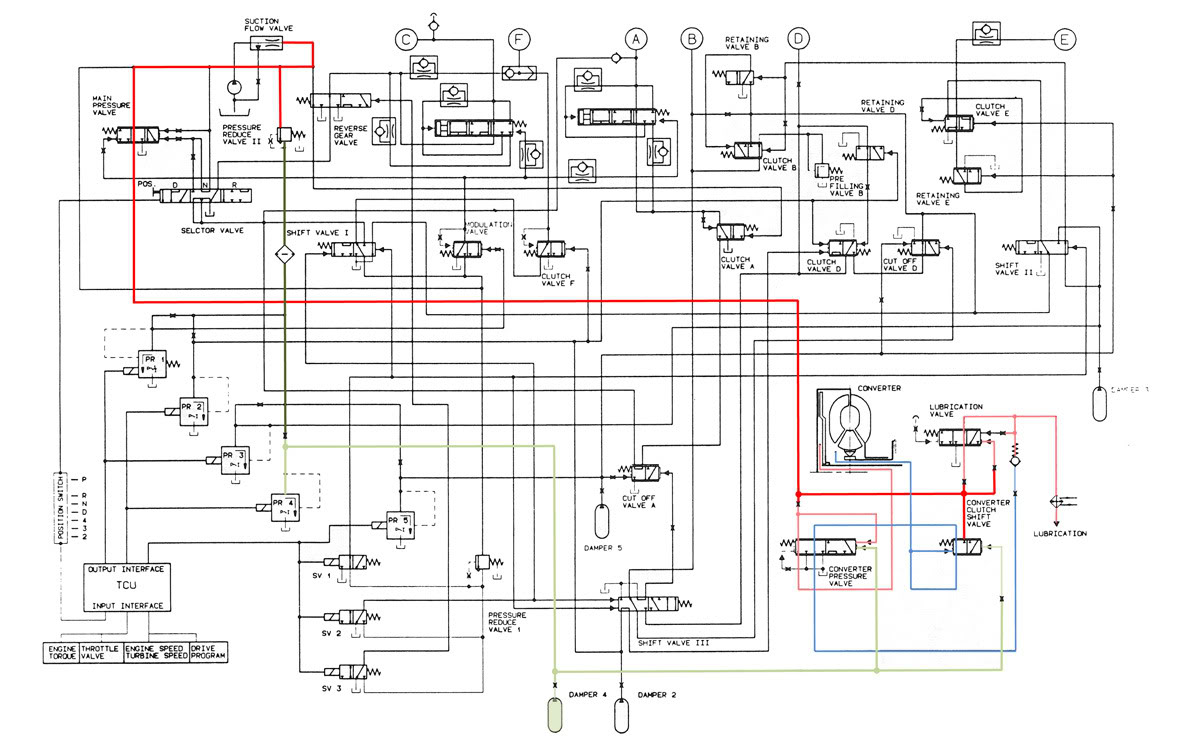
Transmission
The automatic transmission experiences a judder in fifth gear only, which is more pronounced when climbing an incline. Engaging sport mode and shifting down to fourth gear eliminates this judder. After consulting a local ZF specialist, a service was performed,...
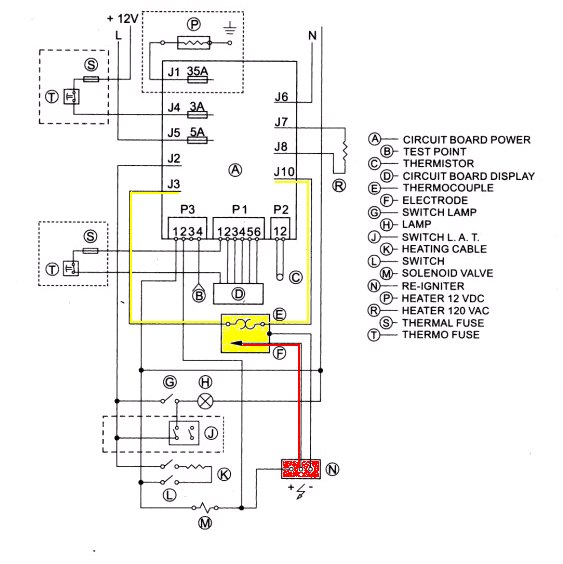
Electronic Ignition Systems
With the exception of pilot-type water heaters and some smaller LP/Electric refrigerators, modern LP appliances in RVs are controlled by electronics.
Modern LP (liquefied petroleum) appliances utilized in recreational vehicles (RVs) have largely transitioned to electronic control systems, enhancing their efficiency...