


Honda Motorcycle CB400 (Hawk II) Wiring Diagram
#Honda
#motorcycle
#wiring diagram
#electrical connection
#turn signal
#ignition unit
#warning light
#starter button
#CB400
#Hawk II
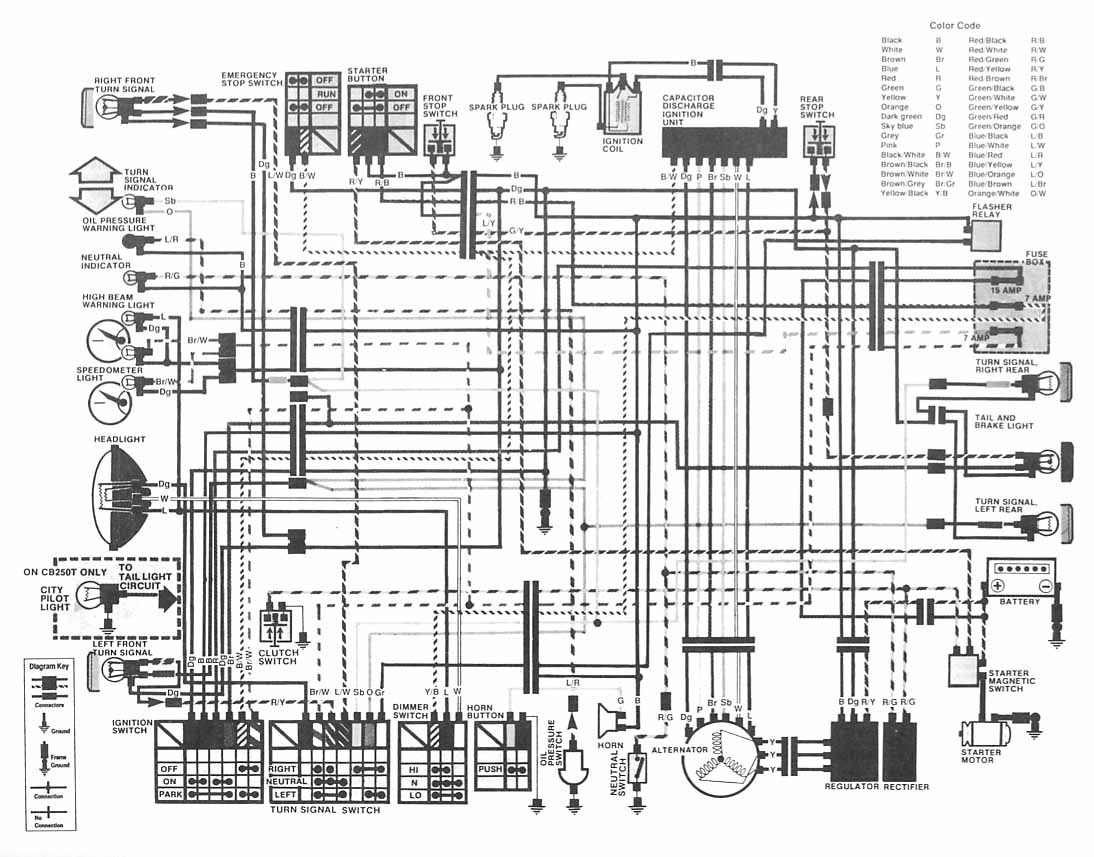
Description: The following image depicts the electrical wiring connection diagram for the Honda Motorcycle CB400 (Hawk II). It illustrates the interconnections between various Honda components, including the turn signal, emergency stop switch, starter button, spark plug, capacitor discharge ignition unit, turn signal indicator, oil pressure warning light, neutral indicator, high beam warning light, speedometer light, headlight, tail light circuit, ignition switch, clutch switch, dimmer switch, horn button, oil pressure switch, horn, neutral switch, alternator, regulator rectifier, starter motor, starter magnetic switch, battery, tail and brake light, flasher relay, capacitor discharge ignition unit, and additional elements. A color code and diagram key are also provided.
The electrical wiring connection diagram for the Honda Motorcycle CB400 (Hawk II) serves as a crucial reference for understanding the interrelated components within the motorcycle's electrical system. This schematic provides a visual representation of the wiring layout, allowing for easier troubleshooting, maintenance, and modifications.
The diagram includes essential elements such as the turn signal and emergency stop switch, which are vital for rider safety and vehicle signaling. The starter button and starter magnetic switch are integral to the engine ignition process, ensuring reliable starting of the motorcycle. The capacitor discharge ignition unit plays a significant role in delivering high-voltage sparks to the spark plug, facilitating efficient combustion in the engine.
Indicators such as the oil pressure warning light, neutral indicator, and high beam warning light enhance rider awareness of the motorcycle's operational status. The inclusion of the speedometer light ensures visibility of the speedometer readings during low-light conditions. The headlight and tail light circuits are critical for visibility and safety on the road, while the flasher relay manages the operation of the turn signals.
Additional components, such as the alternator and regulator rectifier, are responsible for generating and regulating electrical power, ensuring that the battery remains charged and that the motorcycle's electrical system operates smoothly. The wiring diagram also highlights the connections for the horn and oil pressure switch, which contribute to both safety and performance.
The presence of a color code and diagram key further enhances the utility of the schematic, providing clarity on wiring connections and facilitating easier identification of components. This comprehensive wiring diagram not only aids in the assembly and repair of the motorcycle but also serves as an educational tool for those interested in understanding the electrical workings of the Honda CB400 (Hawk II).The following picture shows the electrical wiring connection diagram for Honda Motorcycle CB400 (Hawk II). It shows the connection between Honda parts such as the turn signal, emergency stop switch, starter button, spark plug, capacitor discharge ignition unit, turn signal indicator, oil pressure warning light, neutral indicator, high beam warning
light, speedometer light, headlight, tail light circuit, ignition switch, clutch switch, dimmer switch, horn button, oil pressure switch, horn, neutral switch, alternator, regulator rectifier, starter motor, starter magnetic switch, battery, tail and brake light, flasher relay, capacitor discharge ignition unit, and many more. Color code and diagram key also available.
The electrical wiring connection diagram for the Honda Motorcycle CB400 (Hawk II) serves as a crucial reference for understanding the interrelated components within the motorcycle's electrical system. This schematic provides a visual representation of the wiring layout, allowing for easier troubleshooting, maintenance, and modifications.
The diagram includes essential elements such as the turn signal and emergency stop switch, which are vital for rider safety and vehicle signaling. The starter button and starter magnetic switch are integral to the engine ignition process, ensuring reliable starting of the motorcycle. The capacitor discharge ignition unit plays a significant role in delivering high-voltage sparks to the spark plug, facilitating efficient combustion in the engine.
Indicators such as the oil pressure warning light, neutral indicator, and high beam warning light enhance rider awareness of the motorcycle's operational status. The inclusion of the speedometer light ensures visibility of the speedometer readings during low-light conditions. The headlight and tail light circuits are critical for visibility and safety on the road, while the flasher relay manages the operation of the turn signals.
Additional components, such as the alternator and regulator rectifier, are responsible for generating and regulating electrical power, ensuring that the battery remains charged and that the motorcycle's electrical system operates smoothly. The wiring diagram also highlights the connections for the horn and oil pressure switch, which contribute to both safety and performance.
The presence of a color code and diagram key further enhances the utility of the schematic, providing clarity on wiring connections and facilitating easier identification of components. This comprehensive wiring diagram not only aids in the assembly and repair of the motorcycle but also serves as an educational tool for those interested in understanding the electrical workings of the Honda CB400 (Hawk II).The following picture shows the electrical wiring connection diagram for Honda Motorcycle CB400 (Hawk II). It shows the connection between Honda parts such as the turn signal, emergency stop switch, starter button, spark plug, capacitor discharge ignition unit, turn signal indicator, oil pressure warning light, neutral indicator, high beam warning
light, speedometer light, headlight, tail light circuit, ignition switch, clutch switch, dimmer switch, horn button, oil pressure switch, horn, neutral switch, alternator, regulator rectifier, starter motor, starter magnetic switch, battery, tail and brake light, flasher relay, capacitor discharge ignition unit, and many more. Color code and diagram key also available.
Automotive Wiring Diagrams
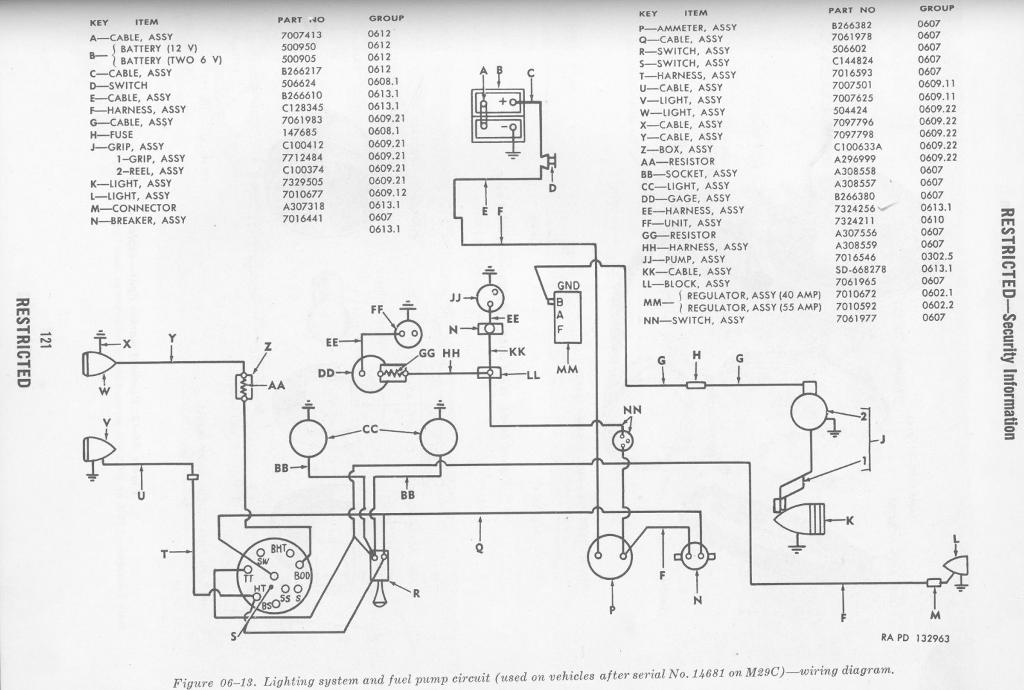
The circuit diagram presented here pertains to the electrical wiring of the 1986 Ford Bronco and F-Series Pickup. It is essential to thoroughly read and understand the electrical wiring diagram before making any modifications to the wiring of these vehicles....
motorcycle alarm
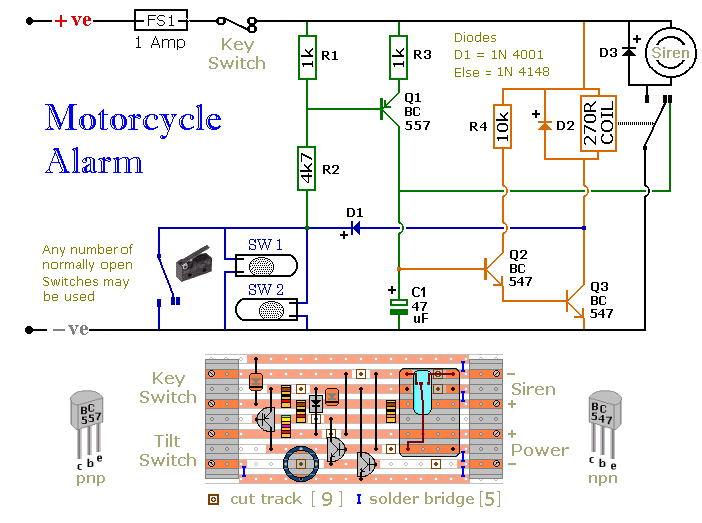
The circuit board and switches require protection from environmental factors, as moisture or condensation can lead to malfunctions. The board is compact without its terminal blocks. It is advisable to select a siren that has sufficient internal space for installation....
Yamaha Wiring System
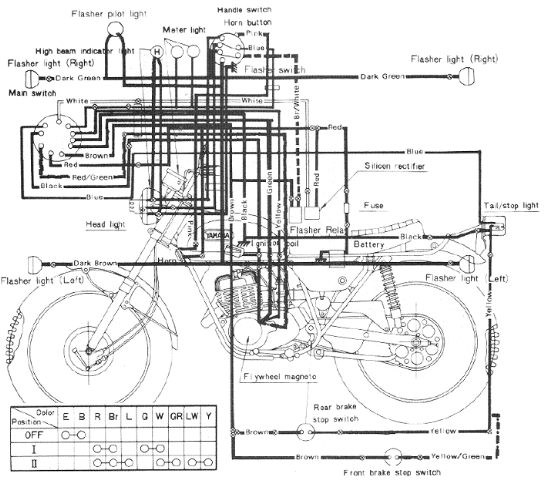
The following image illustrates the Yamaha 175 Wiring Diagram (CT2 and CT3 model) and Electrical System Schematic. It provides detailed information regarding the interconnection and wiring between electrical components of the motorcycle, including the battery, ground, headlight, taillight, horn, rectifier,...
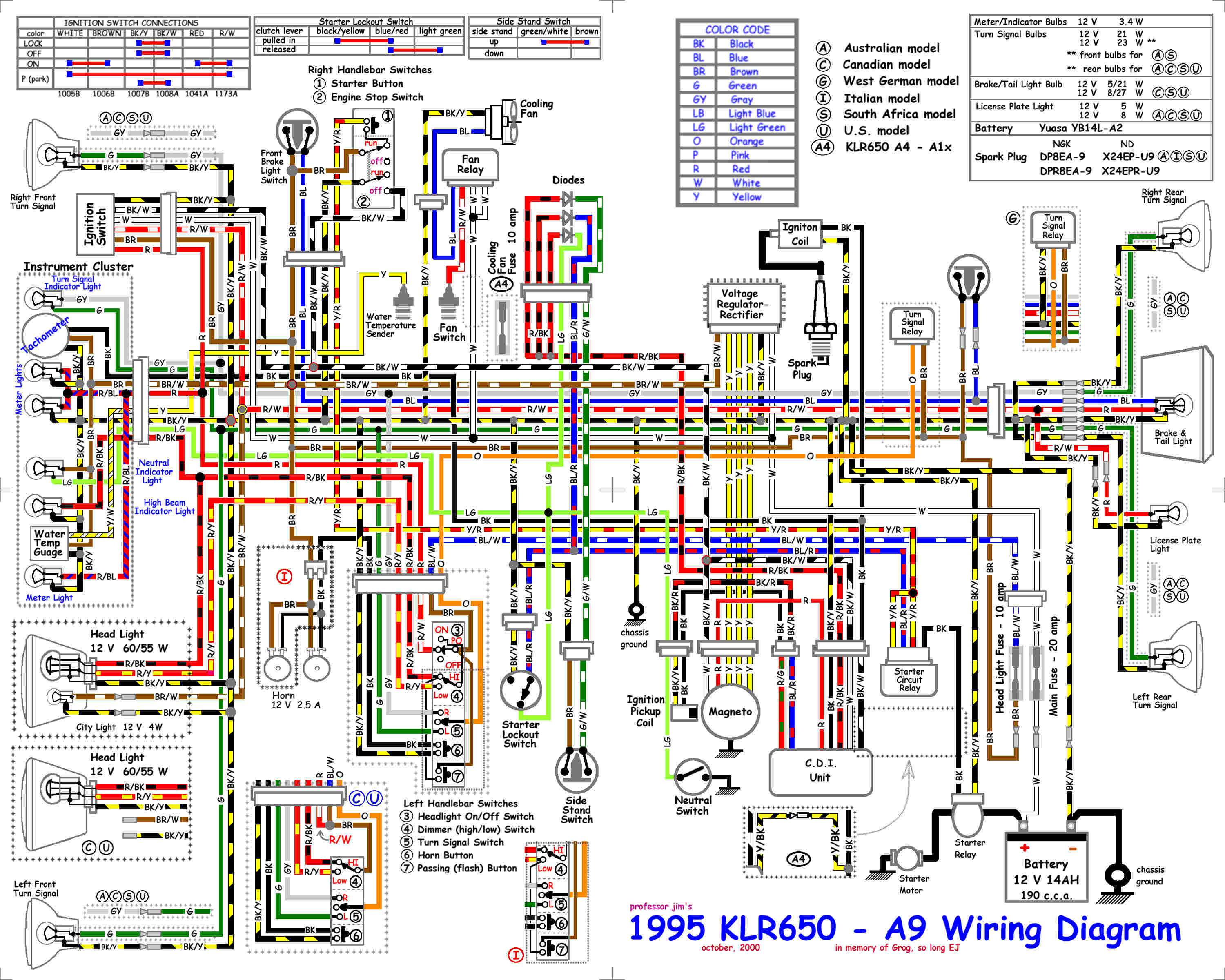
Kawasaki KLR650 1995 Electrical
The following circuit illustrates the electrical wiring diagram for the KLR650 motorcycle. It is characterized by reliability, good overall performance, ease of maintenance, and features a four-stroke DOHC dual-counter balanced, single-cylinder, water-cooled engine that produces a claimed 44 hp (33...
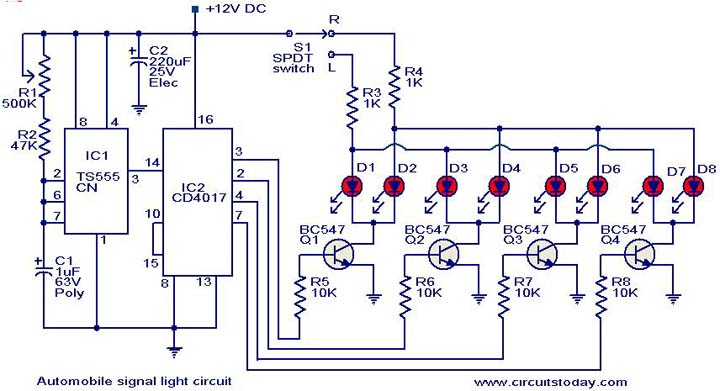
Automobile turn signal circuit
This is a simple circuit that can be used as a sequential signal light in automobiles. The circuit is based on two integrated circuits (ICs): a TS 555 CN CMOS timer IC and a CD4017 decade counter IC. The TS...
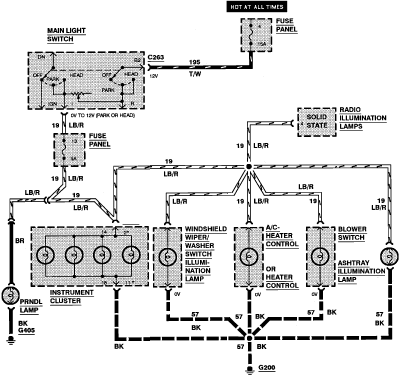
1994 Mercury Topaz Instrument Cluster Illumination Wiring Diagram
1994 Mercury Topaz Instrument Cluster Illumination Wiring Diagram.
The 1994 Mercury Topaz instrument cluster illumination wiring diagram provides a detailed representation of the electrical connections and components responsible for the lighting system within the instrument panel. This diagram is essential for...
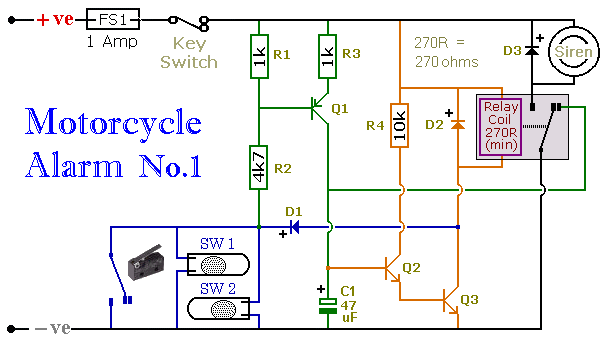
Motorcycle Alarm No.1 - Construction Guide
When one of the normally-open switches is closed, two actions occur. First, the negative side of the relay coil connects to ground through D1, energizing the relay, which in turn activates the siren. Second, the emitter-base junction of Q1 becomes...
Smart Turn Signal Circuit
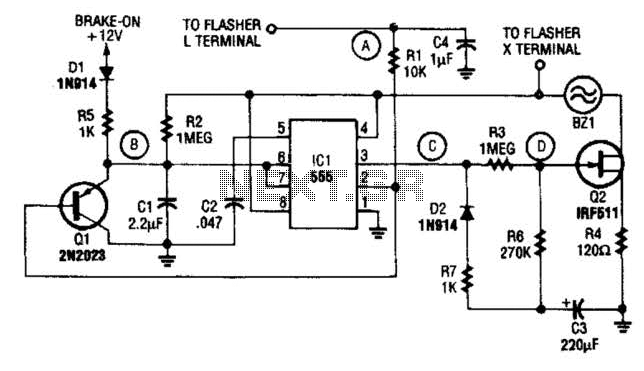
The STS schematic illustrates a circuit designed to alert a driver when the turn signal has been active for more than 15 seconds. The voltage at the gate of transistor Q2 increases in response to the charge accumulated on capacitor...
Barricade warning light flashing circuit
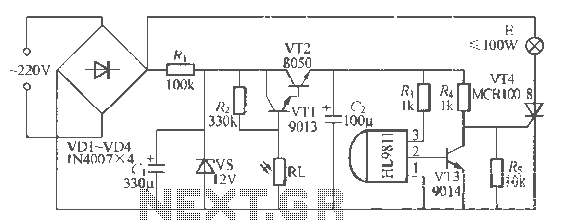
The H1.9811 single-channel flash control integrated circuit from Wuxi Love Core Microelectronics Co., Ltd. is designed for controlling flashing warning lights in road barricades. It features an integrated internal RC oscillator, frequency divider, output buffer amplifier, shaping circuit, and power...