


Interfacing Sony control stick to Empeg
#Sony control stick
#Empeg
#voltage regulator
#capacitor
#car environment
#noisy power
#bench testing
#automotive electronics
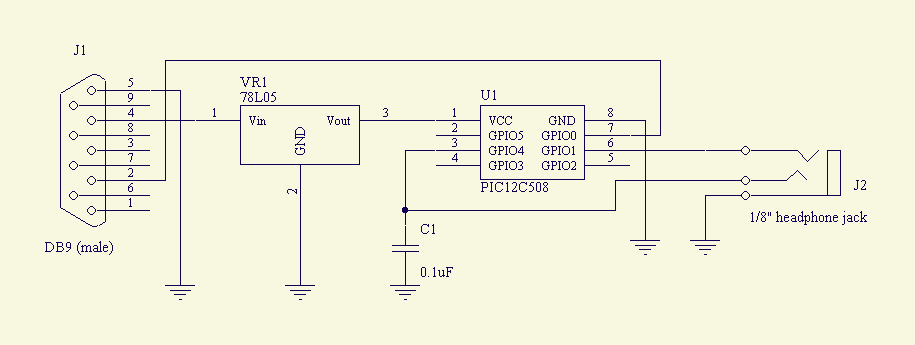
Description: You may find that there are too few, if your power is very noisy (as can happen in a car environment) it may help to place a 0.1uF and/or 10uF capacitor before and/or after the voltage regulator. At the moment I`m not using these but at this point I`ve only tested it on the bench, not in the car. I`ll update this web page after it`s all installed.
In automotive applications, power supply noise can significantly affect the performance of electronic circuits. To mitigate this issue, the inclusion of decoupling capacitors is recommended. It is advisable to place a 0.1 µF ceramic capacitor in parallel with a larger electrolytic capacitor, such as a 10 µF, both before and after the voltage regulator.
The 0.1 µF capacitor serves to filter high-frequency noise, providing a low-impedance path to ground for these rapid transients. This is particularly crucial in environments like automobiles, where electromagnetic interference (EMI) is prevalent due to various electrical components operating simultaneously. The ceramic capacitor is preferred for its low equivalent series resistance (ESR) and high-frequency performance.
The 10 µF capacitor, typically an electrolytic type, aids in stabilizing the voltage output from the regulator by providing bulk capacitance to handle lower frequency fluctuations and transients. This larger capacitor helps maintain a steady voltage level during sudden changes in load, which can occur in automotive systems as devices are turned on and off.
When designing the circuit, it is essential to ensure that the capacitors are rated for the expected voltage levels in the application. Additionally, proper placement of these capacitors is crucial; they should be located as close as possible to the voltage regulator pins to minimize the inductance of the traces or leads connecting them.
Testing the circuit on a bench is a good initial step; however, it is critical to evaluate the performance in the intended operational environment, such as a vehicle, to confirm that the implemented noise reduction measures are effective. Future updates to the circuit design may be necessary based on real-world performance data gathered during these tests.You may find that there are too few, if your power is very noisy (as can happen in a car environment) it may help to place a 0.1uF and/or 10uF capacitor before and/or after the voltage regulator. At the moment I`m not using these but at this point I`ve only tested it on the bench, not in the car.
I`ll update this web page after it`s all installed.
In automotive applications, power supply noise can significantly affect the performance of electronic circuits. To mitigate this issue, the inclusion of decoupling capacitors is recommended. It is advisable to place a 0.1 µF ceramic capacitor in parallel with a larger electrolytic capacitor, such as a 10 µF, both before and after the voltage regulator.
The 0.1 µF capacitor serves to filter high-frequency noise, providing a low-impedance path to ground for these rapid transients. This is particularly crucial in environments like automobiles, where electromagnetic interference (EMI) is prevalent due to various electrical components operating simultaneously. The ceramic capacitor is preferred for its low equivalent series resistance (ESR) and high-frequency performance.
The 10 µF capacitor, typically an electrolytic type, aids in stabilizing the voltage output from the regulator by providing bulk capacitance to handle lower frequency fluctuations and transients. This larger capacitor helps maintain a steady voltage level during sudden changes in load, which can occur in automotive systems as devices are turned on and off.
When designing the circuit, it is essential to ensure that the capacitors are rated for the expected voltage levels in the application. Additionally, proper placement of these capacitors is crucial; they should be located as close as possible to the voltage regulator pins to minimize the inductance of the traces or leads connecting them.
Testing the circuit on a bench is a good initial step; however, it is critical to evaluate the performance in the intended operational environment, such as a vehicle, to confirm that the implemented noise reduction measures are effective. Future updates to the circuit design may be necessary based on real-world performance data gathered during these tests.You may find that there are too few, if your power is very noisy (as can happen in a car environment) it may help to place a 0.1uF and/or 10uF capacitor before and/or after the voltage regulator. At the moment I`m not using these but at this point I`ve only tested it on the bench, not in the car.
I`ll update this web page after it`s all installed.
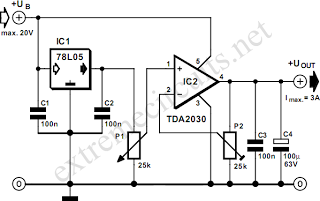
Adjustable 3 Ampere Regulator
By combining a standard 78L05 voltage regulator with an integrated audio amplifier, specifically the TDA2030, it is possible to construct a simple yet effective adjustable voltage regulator. This regulator can output a voltage adjustable up to 20 V and handle...
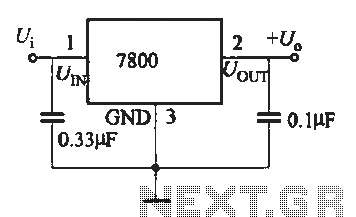
Three-terminal voltage regulator integrated fixed a typical wiring circuit
A fixed three-terminal integrated voltage regulator can be directly employed in various electronic devices as a voltage regulator. It features internal protections such as overcurrent protection, thermal protection, and safe operating area protection, making the circuit easy to use, safe,...
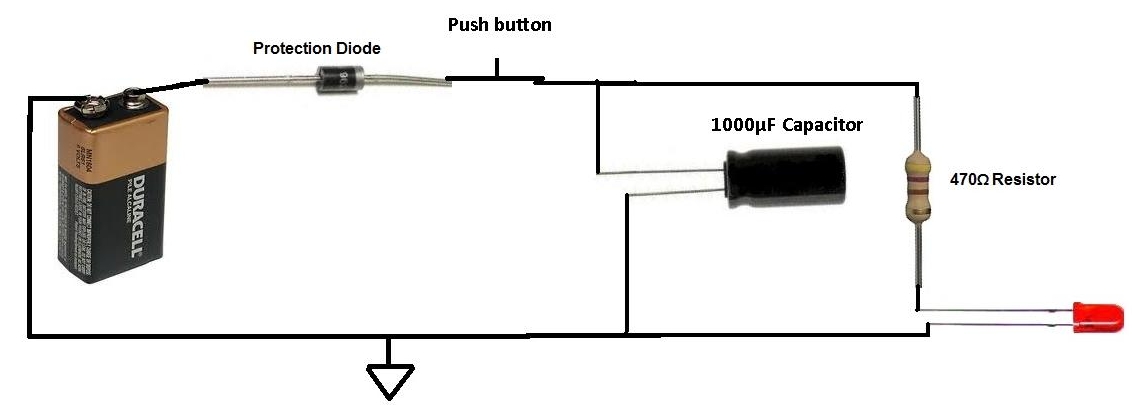
Charged Capacitor to Light an LED
This project involves charging a capacitor with voltage, which will subsequently serve as a temporary power source for the circuit. After charging the capacitor with a battery, the battery is disconnected from the circuit. The capacitor then provides current to...

12V DC Dual Power Supply Circuit with IC 7812&7912
The 78W series voltage regulators are designed to handle an input voltage of approximately 35V, while the 24V type can withstand up to 40V. It should be noted that these regulators will not operate effectively with a significant input-output voltage...
ELF MONITOR
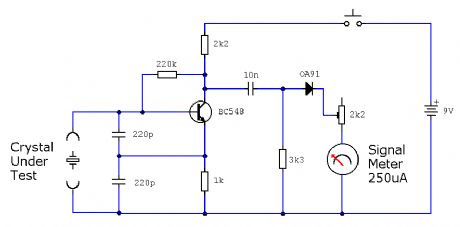
The capacitor instrument is not intended for measuring the capacitance of capacitors; rather, it is designed to identify whether a capacitor is functional or defective, as well as to detect short circuits or open circuits. This functionality provides reliable quality...
positive voltage regulator circuit with
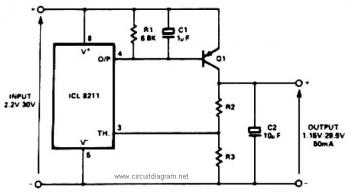
The IC8211 serves as a voltage reference and regulator amplifier, with Q1 likely functioning as the series pass transistor. R1 determines the output current of the IC8211, while C1 and C2 contribute to loop stability and help suppress the feedthrough...
9 Volt 2 Ampere DC Power Supply Circuit
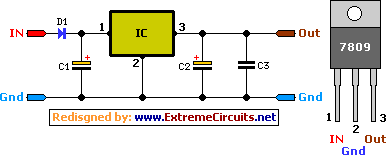
This circuit primarily relies on a voltage regulator. The 7809 voltage regulator can provide a continuous output of up to 2 amps while ensuring a low noise and highly regulated supply. Although the circuit can function without additional components, a...
5v 1a power supply using lm2575
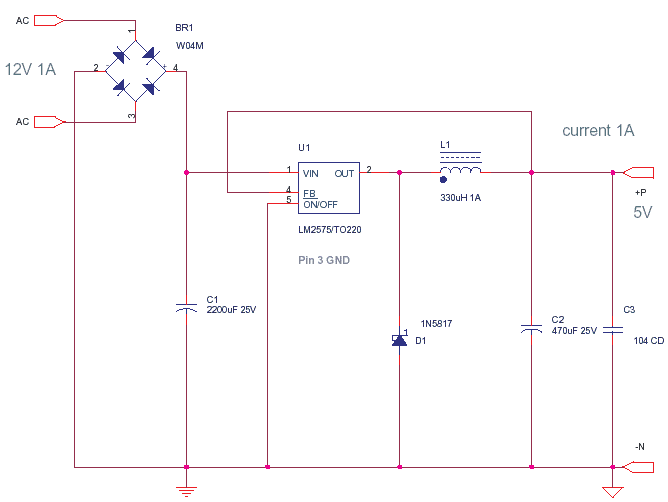
A power transistor with a voltage drop of 4 volts and a current of 3 amps may dissipate approximately 12 watts of heat, presenting a challenge in series regulators. In contrast, a saturated transistor or MOSFET with a voltage drop...
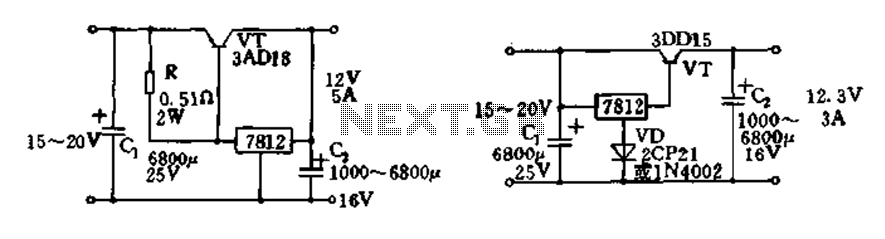
Expand integrated three-terminal regulator block circuit output current method
Expand integrated three-terminal regulator block circuit output current method
The integrated three-terminal regulator is a versatile component commonly used in power supply circuits to provide a stable output voltage. This regulator typically consists of three terminals: input, output, and ground. The...