


Motor Bike Brake Horn Diagram
#horn circuit
#driver transistor
#12V DC
#brake point
#speaker
#resistor
#automotive
#motor-bike
#sound alert
#brake system
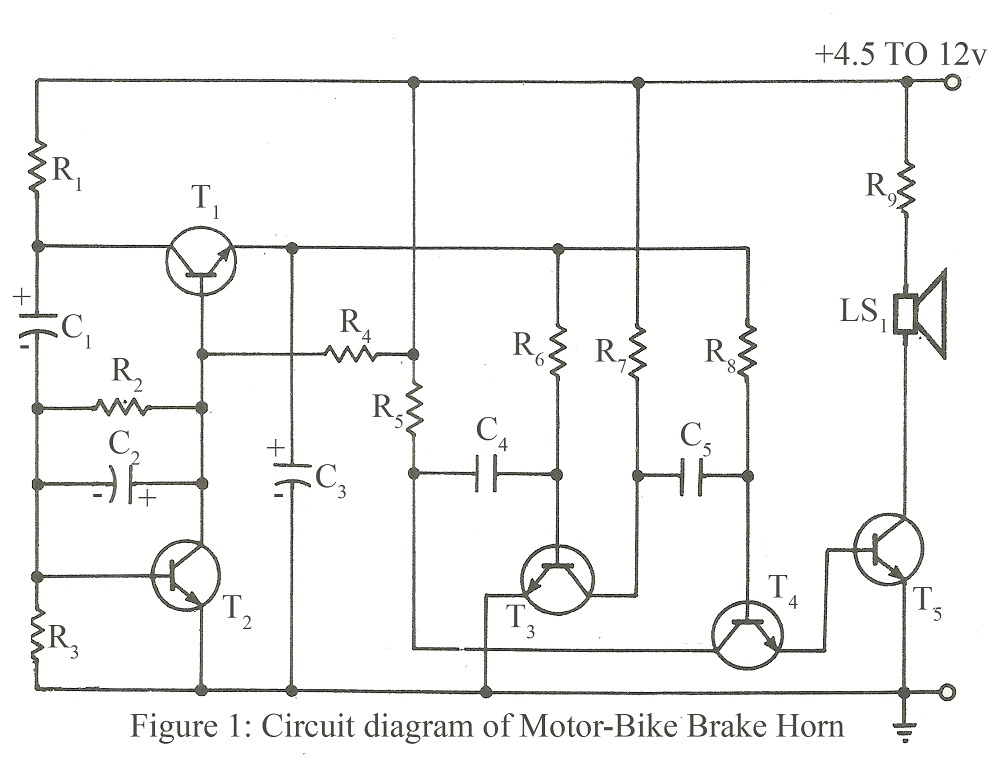
Description: The circuit is designed to operate within a voltage range of 4.5V to 12V DC, or it can be directly connected to the brake point of a motorcycle. Resistor R7 should be replaced with a 1-ohm, 1/2W resistor when using an 8-ohm speaker. T5 functions as a driver transistor. The polarity of capacitor C3 can be reversed to achieve an abrupt shutdown of the circuit.
The described circuit operates effectively within a specified voltage range, allowing for flexibility in power supply options. When integrating this circuit into a motorcycle system, it is essential to ensure that the connection to the brake point is secure and reliable, as this will influence the circuit's performance during operation.
Resistor R7 plays a crucial role in the circuit's functionality, particularly when interfacing with an 8-ohm speaker. Replacing R7 with a 1-ohm, 1/2W resistor is necessary to match the impedance and ensure optimal power transfer, thereby preventing distortion and potential damage to the speaker.
The transistor T5 serves as a driver, amplifying the control signal to drive the load effectively. It is important to select a transistor with appropriate specifications to handle the current and voltage levels present in the circuit to avoid thermal issues or failure.
Capacitor C3's ability to have its polarity reversed introduces a unique feature to the circuit, allowing for a quick disconnection of the power supply. This functionality can be particularly useful in situations where immediate circuit shutdown is required, such as in emergency braking scenarios. However, care must be taken to ensure that the capacitor is rated for the voltages in use and that the reversed polarity does not exceed its specifications, which could lead to capacitor failure.
Overall, the circuit design emphasizes adaptability and safety, making it suitable for integration into automotive applications, particularly in motorcycle systems. Proper component selection and adherence to the specified configurations are critical for achieving the desired performance and reliability.The circuit can be operated from 4. 5V to 12V DC or direct from the brake point of the motor-bike, Resistor R7 should be replaced with 1-ohm. 1/2W in case of an 8-ohm speaker. T5 is a driver transistor. C3 polarity can be reversed for a sudden off of the circuit.
The described circuit operates effectively within a specified voltage range, allowing for flexibility in power supply options. When integrating this circuit into a motorcycle system, it is essential to ensure that the connection to the brake point is secure and reliable, as this will influence the circuit's performance during operation.
Resistor R7 plays a crucial role in the circuit's functionality, particularly when interfacing with an 8-ohm speaker. Replacing R7 with a 1-ohm, 1/2W resistor is necessary to match the impedance and ensure optimal power transfer, thereby preventing distortion and potential damage to the speaker.
The transistor T5 serves as a driver, amplifying the control signal to drive the load effectively. It is important to select a transistor with appropriate specifications to handle the current and voltage levels present in the circuit to avoid thermal issues or failure.
Capacitor C3's ability to have its polarity reversed introduces a unique feature to the circuit, allowing for a quick disconnection of the power supply. This functionality can be particularly useful in situations where immediate circuit shutdown is required, such as in emergency braking scenarios. However, care must be taken to ensure that the capacitor is rated for the voltages in use and that the reversed polarity does not exceed its specifications, which could lead to capacitor failure.
Overall, the circuit design emphasizes adaptability and safety, making it suitable for integration into automotive applications, particularly in motorcycle systems. Proper component selection and adherence to the specified configurations are critical for achieving the desired performance and reliability.The circuit can be operated from 4. 5V to 12V DC or direct from the brake point of the motor-bike, Resistor R7 should be replaced with 1-ohm. 1/2W in case of an 8-ohm speaker. T5 is a driver transistor. C3 polarity can be reversed for a sudden off of the circuit.
9V Speaker polarity Checker
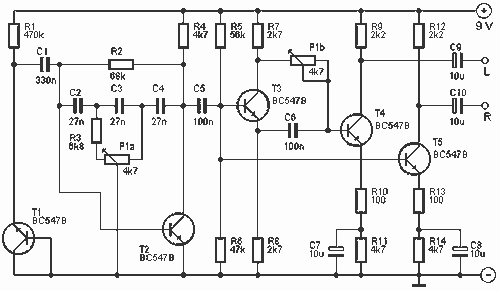
In a stereo system, it is often important to determine whether the speakers are polarized. This can be especially problematic if the speaker cables lack polarity markings. The circuit described will assist in identifying the correct terminals for the speakers....
speaker to microphone circuit converter
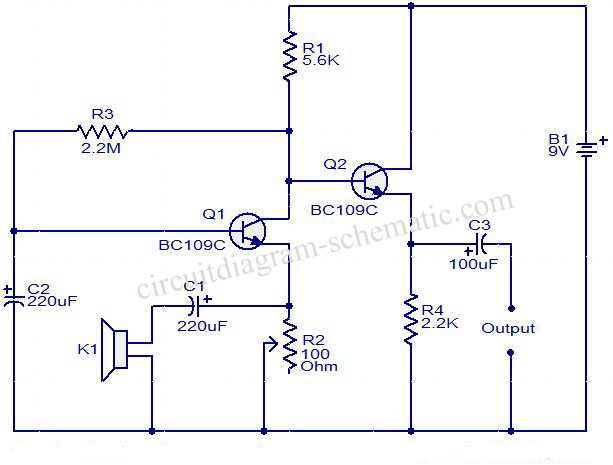
This circuit diagram illustrates the conversion of a speaker into a microphone. When sound waves impact the diaphragm of a speaker, fluctuations occur in the coil, generating an induced voltage. This induced voltage is typically substantial but low in output....
Car battery charger Automative car and motorcycle schematics
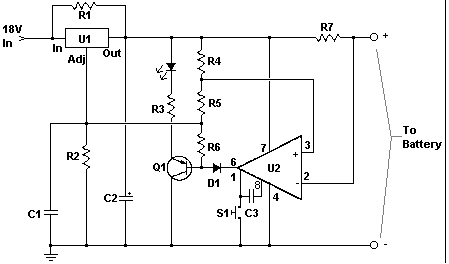
The circuit is designed to operate with an external power supply, which is why it does not include a transformer, rectifier, or filter capacitors in the schematic. However, these components can be added if desired. To utilize the circuit, connect...
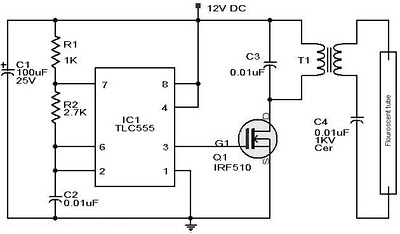
12vdc fluorescent lamp driver schematic
Whenever there is a need for battery-powered lighting, such as for camping, solar-powered cottages, cars, boats, planes, or emergency situations, fluorescent lamps are highly appealing. They are significantly more efficient than incandescent lamps, producing much more light for less power...
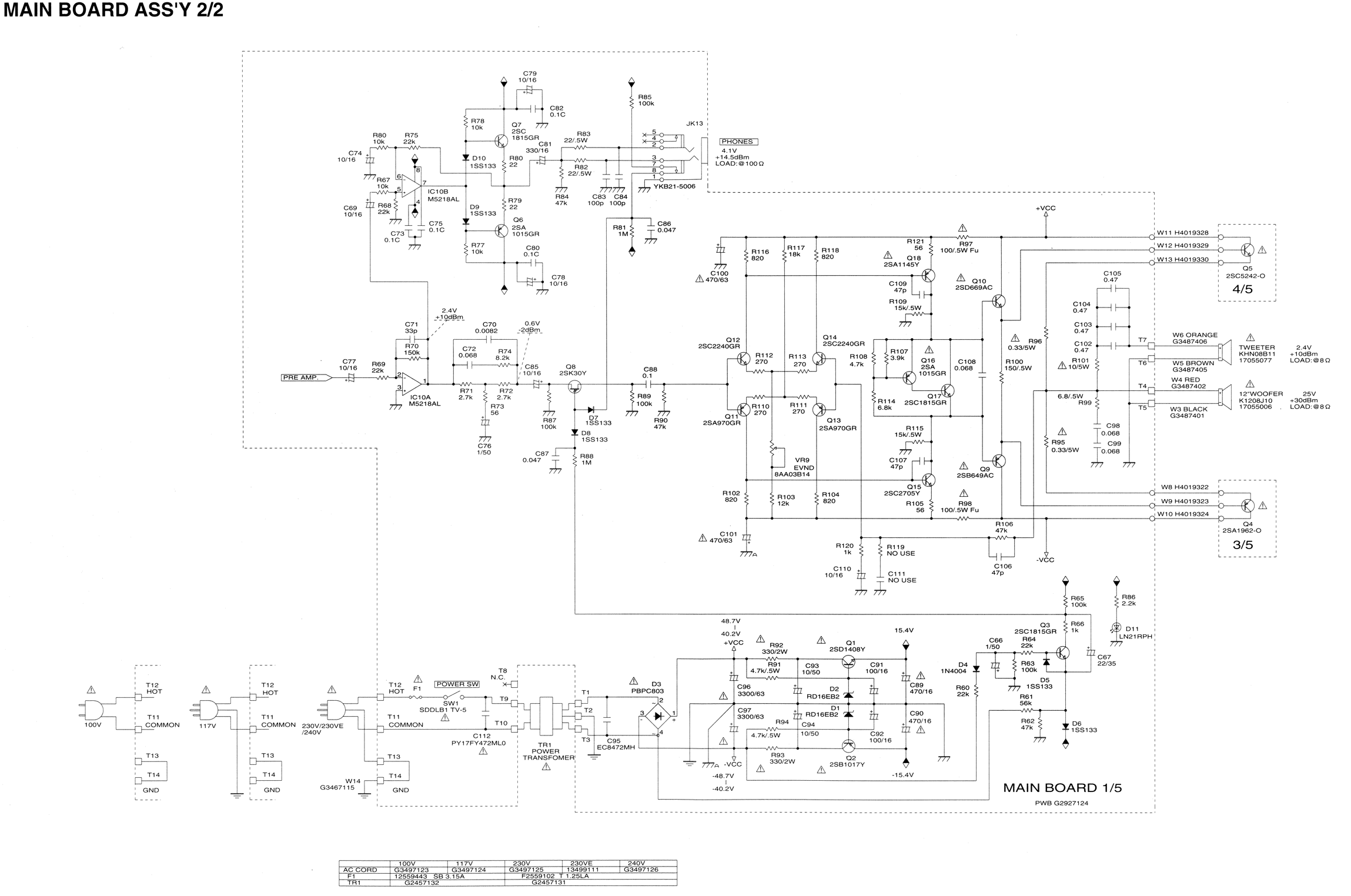
I burned out some resistors on the circuit board of my Roland
Some resistors on the circuit board of a Roland KC-300 amplifier have burned out and are so charred that their specifications cannot be determined. The resistors in question are R82, R83, R85, R92, and R93. Resistors R92 and R93 are...
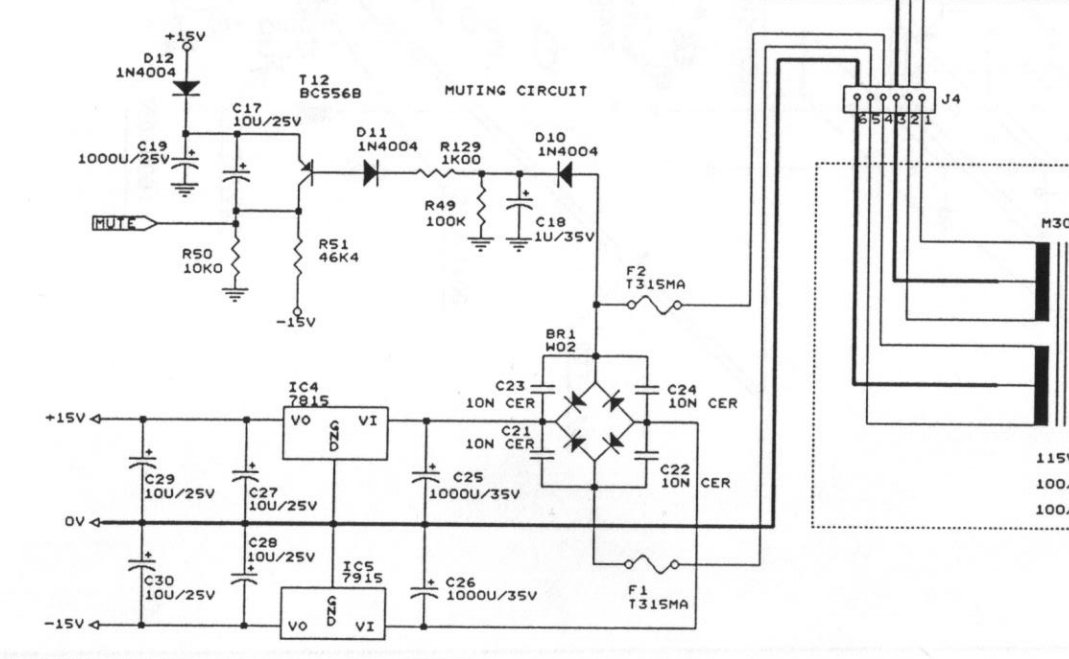
My genelec 1031A pops when I turn it on ?
All of the above would be internal hardware issues. Still, there is a possible fix, though it is not quick or easy and there is no workaround. The unit would need to be opened for visual inspection, voltage measurements, confirmation...
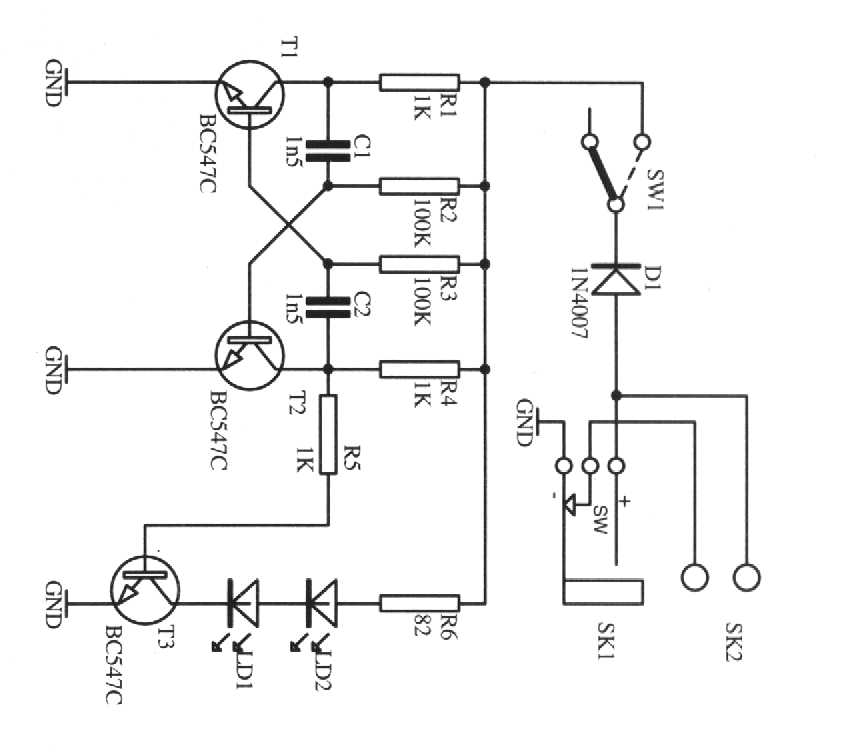
mk120 light barrier 12v dc power supply
The listed currents represent maximum values, and the actual current consumption will vary based on the circuit's operation. This precludes the simple use of a resistor in series to reduce voltage from 12 volts to 9 volts for powering the...
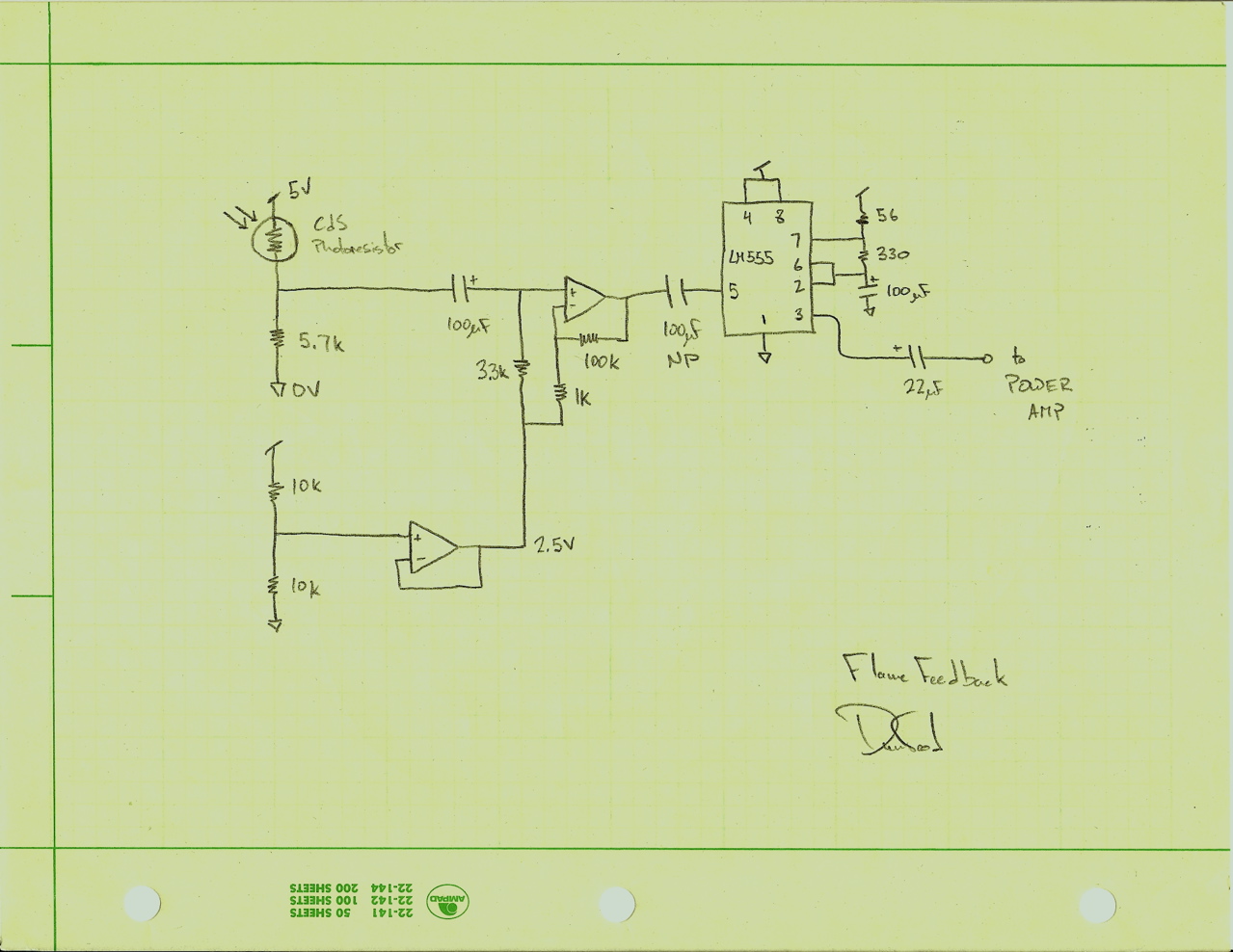
Flame Feedback
Flame Feedback is a sound sculpture constructed from a speaker driver, a candle, and electronic components. The speaker is activated with a low-frequency tone, which moves air and causes the candle to flicker. An optical sensor detects the flicker of...
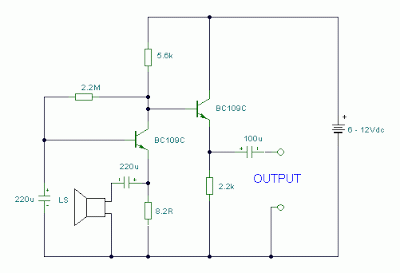
Speaker Microphone Schematic
This circuit allows the use of a low-cost loudspeaker as a microphone. Sound waves that reach the speaker cone cause fluctuations in the voice coil. The movement of the voice coil within the speaker's magnetic field generates a small electrical...