


Musical car reverse horn circuit
#car horn
#musical tone generator
#voltage regulator
#UM66
#reverse gear
#diodes
#7805
#automotive electronics
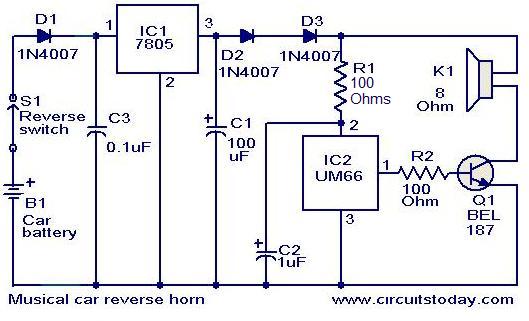
Description: This circuit is designed to produce a musical horn whenever a car is in reverse gear. It utilizes two integrated circuits (ICs) for its operation: a voltage regulator (7805, referred to as IC1) and a musical tone generator (UM66, referred to as IC2). IC1 steps down the car battery voltage to 5V. Diodes D1 and D2 work together to create an additional voltage drop of 1.4V, providing a supply voltage of 3.6V for the UM66, which should not exceed 4V. When the car is in reverse gear, the reverse gear switch is activated, connecting the circuit to the car battery and allowing the UM66 to play the musical tone. A transistor (T1) amplifies the output from the UM66 to drive a loudspeaker.
The circuit operates as follows: When the vehicle is shifted into reverse, the reverse gear switch closes, completing the circuit. This action supplies power to the voltage regulator (IC1), which converts the car's battery voltage (typically 12V) down to a stable 5V output. The output from IC1 is then fed to the UM66 (IC2), which is configured to generate a specific musical tone. The diodes D1 and D2 are critical in ensuring that the voltage supplied to the UM66 does not exceed its maximum rating of 4V, thereby protecting the IC from potential damage due to overvoltage.
The transistor T1 serves as an amplifier, enhancing the audio output of the UM66. It is connected to a loudspeaker, which converts the amplified electrical signal back into sound. The choice of components, including the specific voltage regulator and tone generator, is essential for ensuring reliable operation and sound quality. The circuit can be housed in a weatherproof enclosure to protect it from the automotive environment, ensuring durability and longevity.
Overall, this musical horn circuit offers a novel and entertaining alert system for drivers, enhancing safety by providing an audio cue when the vehicle is in reverse.Here is a simple circuit that will produce a musical horn when ever your car is in reverse gear. The circuit uses two ICs for the operation, voltage regulator 7805(IC1) and musical tone generator UM66(IC2). The IC1 reduces the car battery voltage to 5V. The diodes D1 & D2 in combination produces an additional drop of 1. 4 V to give a 3. 6 V supply fo r the UM66. The supply voltage of UM 66 should not be more than 4V. When ever the car is in reverse gear, the reverse gear switch of the car gets activated and the circuit gets connected to the car battery. The UM66 starts playing the music tone. The transistor T1 amplifies the output of UM66 to drive the loudspeaker.
The circuit operates as follows: When the vehicle is shifted into reverse, the reverse gear switch closes, completing the circuit. This action supplies power to the voltage regulator (IC1), which converts the car's battery voltage (typically 12V) down to a stable 5V output. The output from IC1 is then fed to the UM66 (IC2), which is configured to generate a specific musical tone. The diodes D1 and D2 are critical in ensuring that the voltage supplied to the UM66 does not exceed its maximum rating of 4V, thereby protecting the IC from potential damage due to overvoltage.
The transistor T1 serves as an amplifier, enhancing the audio output of the UM66. It is connected to a loudspeaker, which converts the amplified electrical signal back into sound. The choice of components, including the specific voltage regulator and tone generator, is essential for ensuring reliable operation and sound quality. The circuit can be housed in a weatherproof enclosure to protect it from the automotive environment, ensuring durability and longevity.
Overall, this musical horn circuit offers a novel and entertaining alert system for drivers, enhancing safety by providing an audio cue when the vehicle is in reverse.Here is a simple circuit that will produce a musical horn when ever your car is in reverse gear. The circuit uses two ICs for the operation, voltage regulator 7805(IC1) and musical tone generator UM66(IC2). The IC1 reduces the car battery voltage to 5V. The diodes D1 & D2 in combination produces an additional drop of 1. 4 V to give a 3. 6 V supply fo r the UM66. The supply voltage of UM 66 should not be more than 4V. When ever the car is in reverse gear, the reverse gear switch of the car gets activated and the circuit gets connected to the car battery. The UM66 starts playing the music tone. The transistor T1 amplifies the output of UM66 to drive the loudspeaker.
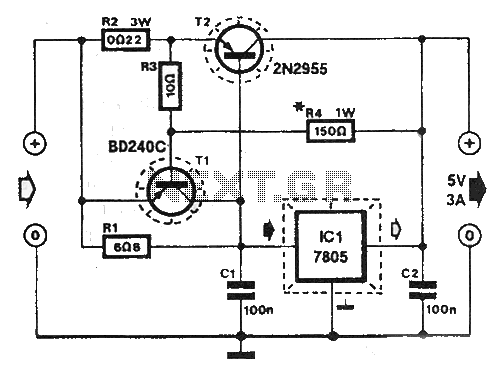
Shortcircuit protected voltage regulator
At this voltage regulator prototype the maximum current, with output shortcircuited it was only 0.5 A, so no overheating occurred. In this DC voltage regulator circuit, T1 is for current limitation. As soon as the voltage on the R2 +...
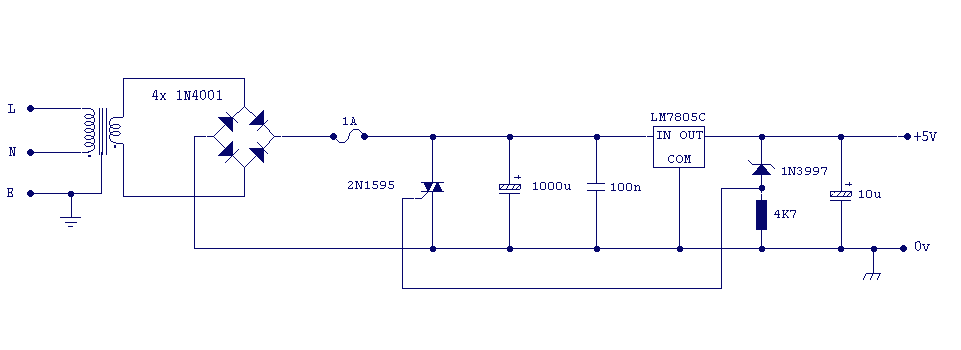
Logic PSU with Overvoltage Protection
The 5 volt regulated power supply for TTL and 74LS series integrated circuits has to be very precise and tolerant of voltage transients. These ICs are easily damaged by short voltage spikes. A fuse will blow when its current rating...
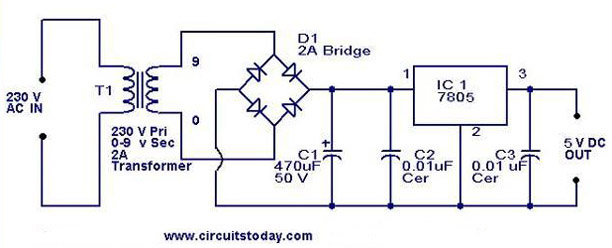
5V power supply using 7805 IC with circuit diagram
A 5V power supply using IC 7805 is designed and explained with a neat circuit diagram.
The circuit for a 5V power supply utilizing the IC 7805 voltage regulator is a straightforward and efficient design that provides a stable output voltage...
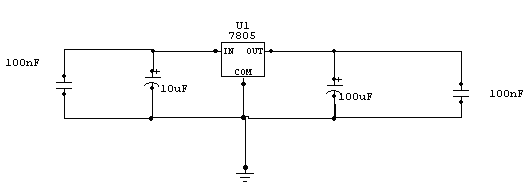
Car-Battery charger for Nokia 8210
It's just a simple power supply with a 7805 regulator. The chip must be mounted on a large metal radiator because the current requested by the regulator is near 0.4 A. However, to lower the power, you can put a...
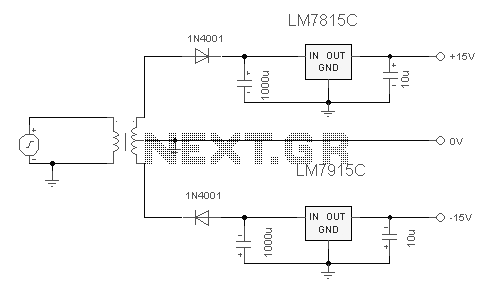
Dual Regulated Power Supply
The 7815 regulates the positive supply, while the 7915 regulates the negative supply. The transformer should have a primary rating of 240/220 volts for Europe or 120 volts for North America. The center-tapped secondary coil should be rated approximately 18...
Logic PSU with Overvoltage Protection
The 5 volt regulated power supply for TTL and 74LS series integrated circuits has to be very precise and tolerant of voltage transients. These ICs are easily damaged by short voltage spikes. A fuse will blow when its current rating...
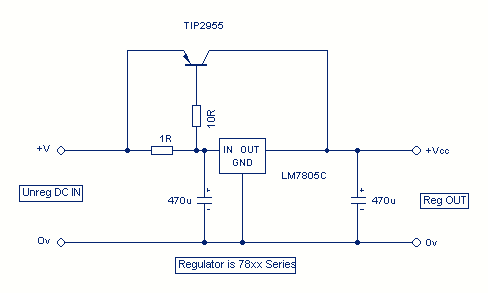
Increasing Regulator Current
Although the 78xx series of voltage regulators are available with different current outputs, you can boost the available current output with this circuit. A power transistor is used to supply extra current to the load, maintaining a constant voltage. Currents...
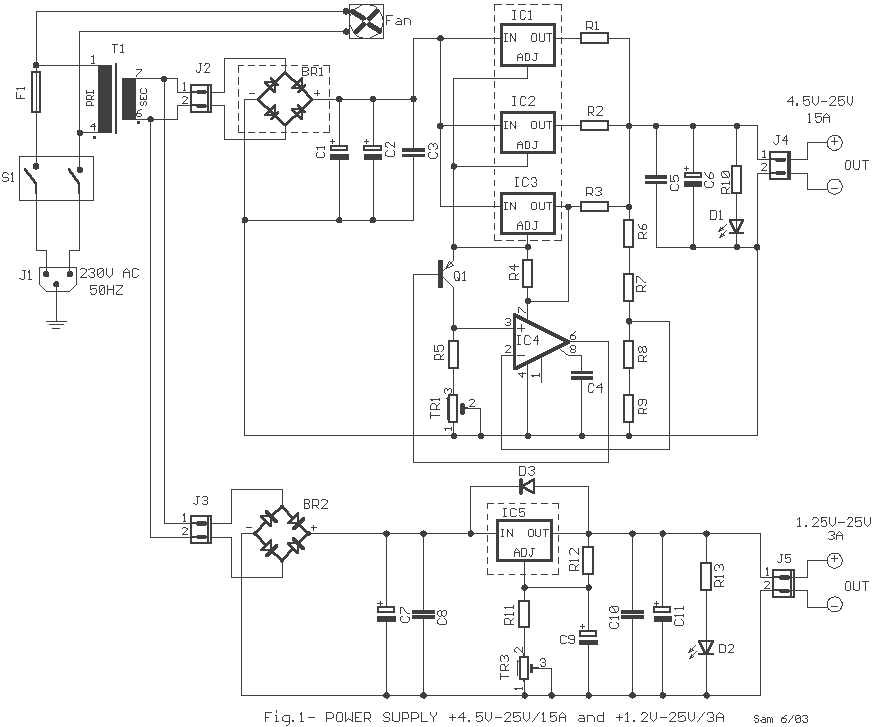
Power supply +20V/15A and +12V/3A
The circuit is based on application of National Semiconductor. First is constituted by three voltage regulators LM338 [IC1-2-3] connected in parallel. The each one regulator has the possibility of giving 5 A in his output. Also exists the possibility to...
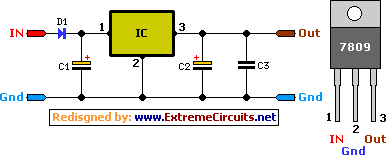
9 Volt 2 Ampere DC Power SupplyCircuit
A simple 9 Volt, 2 amp power supply utilizing a single integrated circuit (IC) regulator. This circuit is straightforward, as the regulator handles the majority of the work. The component used is the 7809 voltage regulator.
The circuit consists primarily of...