


Trailer Stop & Turn Signal Converter
#trailer
#stop signal
#turn signal
#signal converter
#vehicle lighting
#automotive electronics
#LED
#wiring
#electrical conversion
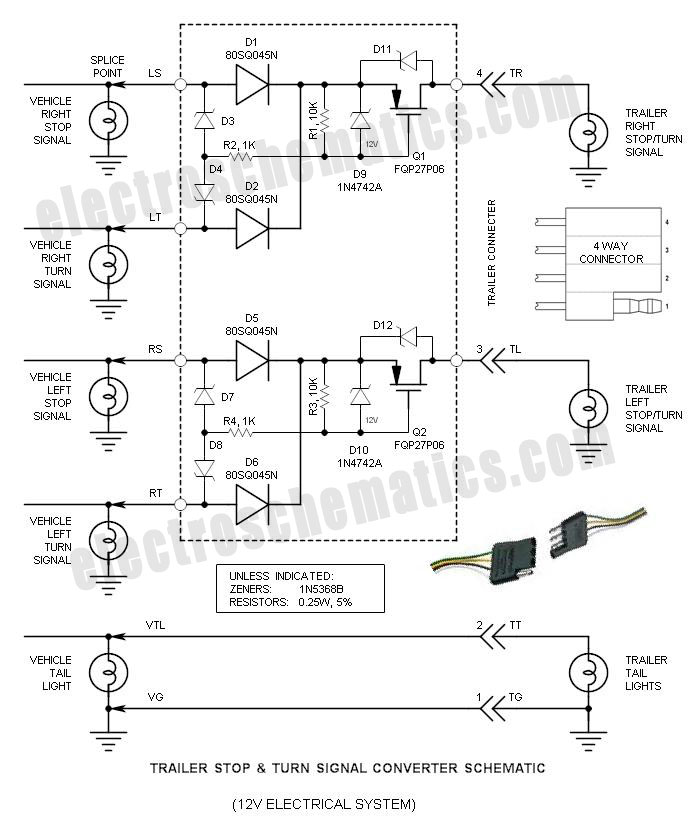
Description: If you have ever wondered why the Stop/Turn signal lamps on your trailer appear dim, you are not alone. The reason for this is that the typical Stop & Turn Signal Converter...
The dimming of trailer Stop/Turn signal lamps is a common concern among users. This phenomenon often arises due to the inherent design of the Stop & Turn Signal Converter, which is responsible for managing the electrical signals sent to the lamps. The converter typically operates by modulating the voltage and current supplied to the lamps, which can lead to reduced brightness when standard incandescent bulbs are used.
In many cases, the issue can be exacerbated by poor connections, inadequate wiring, or the use of lower-quality components. For example, if the wiring gauge is too small for the current being drawn, it can result in voltage drops that diminish the brightness of the lamps. Furthermore, if the converter is not compatible with the specific type of lamps installed, this can also lead to insufficient power being delivered.
To address these issues, it is advisable to inspect the entire circuit, including the connections at the converter, the integrity of the wiring harness, and the specifications of the lamps being utilized. Upgrading to LED lamps can also provide a solution, as they require less power and generally produce brighter light output compared to traditional incandescent bulbs. Additionally, ensuring that the converter is rated appropriately for the load it will control can further enhance performance and brightness.
In summary, understanding the factors that contribute to dim Stop/Turn signal lamps is essential for effective troubleshooting and ensuring optimal visibility and safety while towing.If you ever wondered why your trailer Stop/Turn signal lamps are so dim you are not alone. The answer is simply that the typical Stop & Turn Signal Convert..
The dimming of trailer Stop/Turn signal lamps is a common concern among users. This phenomenon often arises due to the inherent design of the Stop & Turn Signal Converter, which is responsible for managing the electrical signals sent to the lamps. The converter typically operates by modulating the voltage and current supplied to the lamps, which can lead to reduced brightness when standard incandescent bulbs are used.
In many cases, the issue can be exacerbated by poor connections, inadequate wiring, or the use of lower-quality components. For example, if the wiring gauge is too small for the current being drawn, it can result in voltage drops that diminish the brightness of the lamps. Furthermore, if the converter is not compatible with the specific type of lamps installed, this can also lead to insufficient power being delivered.
To address these issues, it is advisable to inspect the entire circuit, including the connections at the converter, the integrity of the wiring harness, and the specifications of the lamps being utilized. Upgrading to LED lamps can also provide a solution, as they require less power and generally produce brighter light output compared to traditional incandescent bulbs. Additionally, ensuring that the converter is rated appropriately for the load it will control can further enhance performance and brightness.
In summary, understanding the factors that contribute to dim Stop/Turn signal lamps is essential for effective troubleshooting and ensuring optimal visibility and safety while towing.If you ever wondered why your trailer Stop/Turn signal lamps are so dim you are not alone. The answer is simply that the typical Stop & Turn Signal Convert..
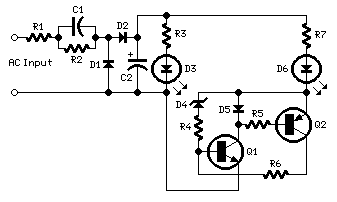
120 and 240Vac LED Indicator
This circuit, designed on request, has proven to be useful to indicate when the voltage in a power supply line is changing from 120V to 240Vac. It can be used in different circumstances and circuits, mainly when an increase in...
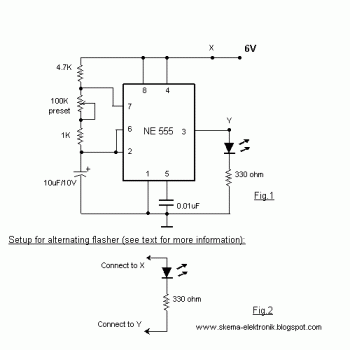
led light flasher
When the preset is set to its maximum, the LED flashes approximately every half second. This flashing rate can be increased by using a larger capacitor value, for instance, changing from 10µF to 22µF will result in a flashing rate...
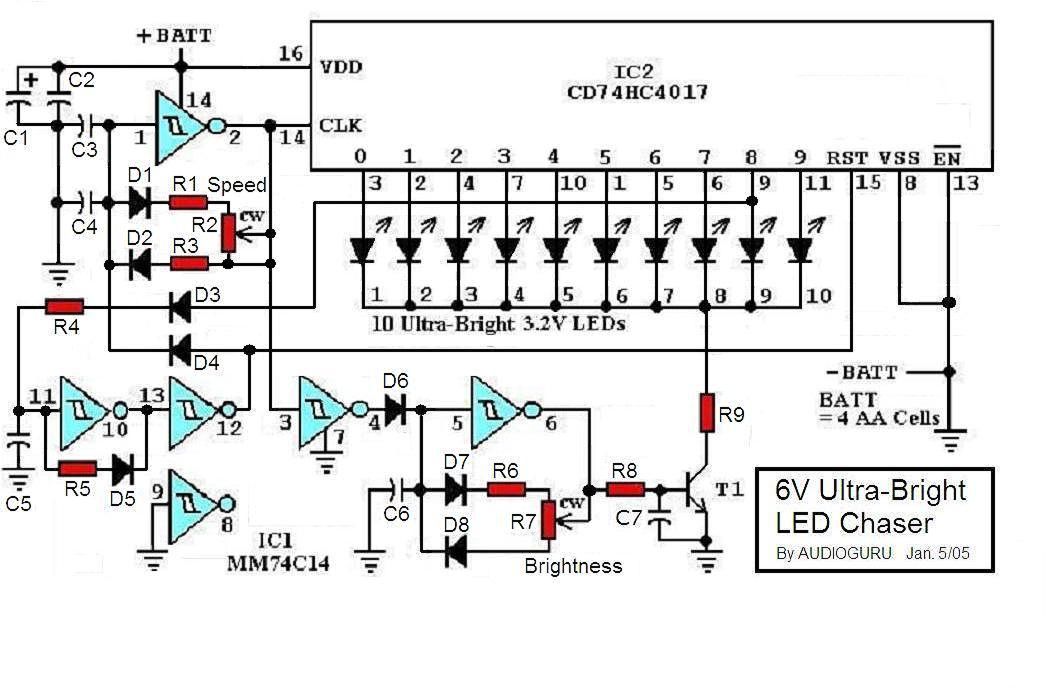
6V Ultra-Bright LED Chasers
This project involves a sequence of Ultra-Bright LEDs that light up briefly in a circular pattern, mounted on a CD. The LEDs flash for 15 milliseconds, followed by a one-second pause, creating a visually appealing effect. The brief flashes and...
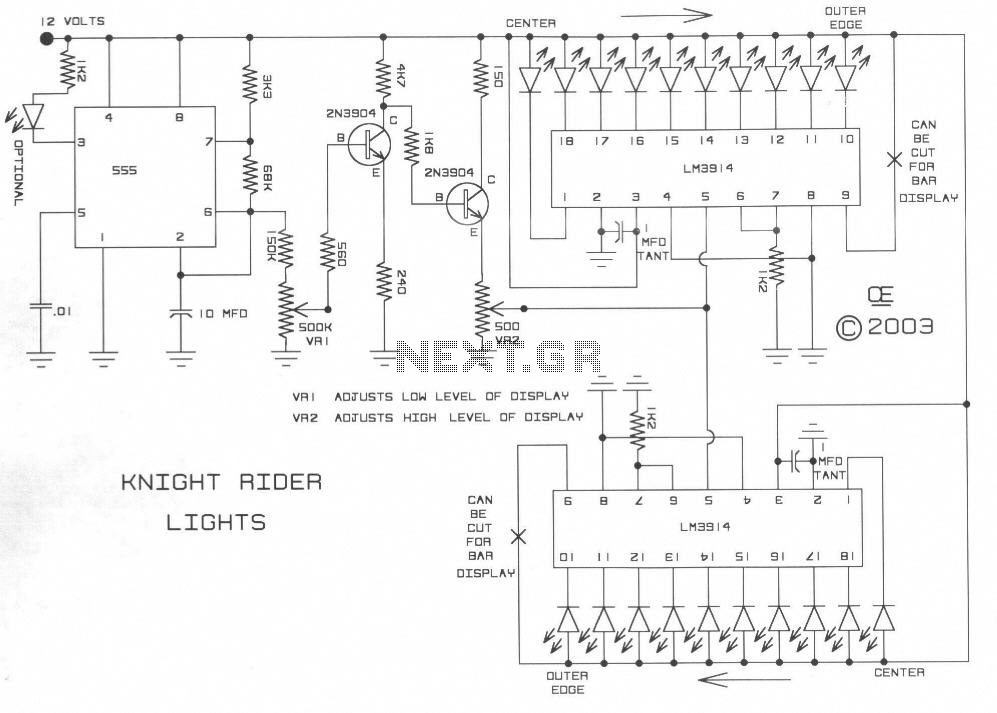
New Knight Rider LED Board
The TL082 (Or a TL072 also is OK) Creates an Adjustable Sawtooth Generator. (It also has a Square wave Output, but it isn`t used here.)
The Left and Right LEDs are connected in series, and if this circuit is used on...
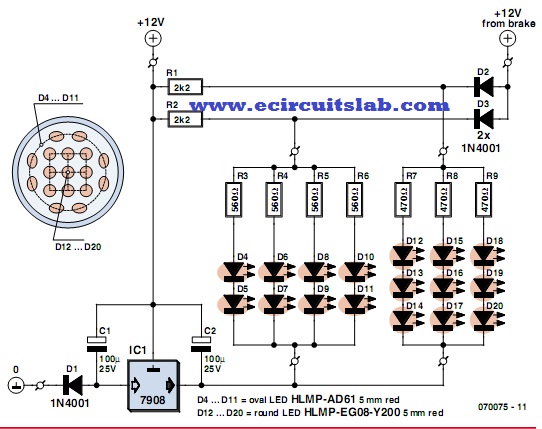
LED Brake/Rear Light Specifically for motorcycles Circuit diagram
LEDs are increasingly utilized in motor vehicles, replacing traditional incandescent lamps due to their superior energy efficiency and extended lifespan. This article outlines a straightforward LED tail light specifically designed for motorcycles, scooters, and mopeds. There is a notable demand...
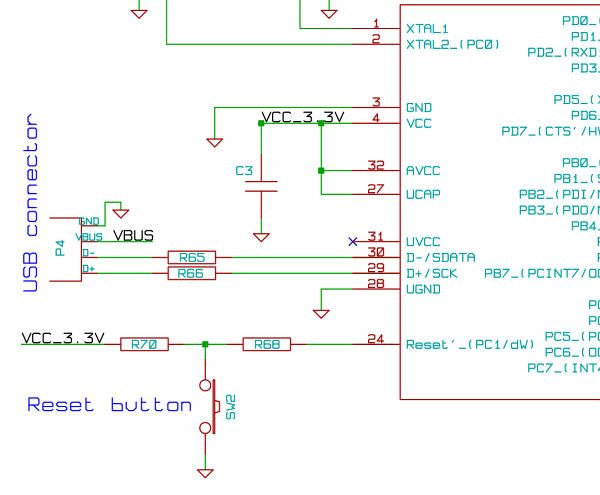
Bicycle LED POV hardware
The microcontroller unit (MCU) will read images from the DataFlash memory via the SPI bus based on the known velocity. It will then send these images to the LED drivers using the SPI bus, controlling the on and off states...
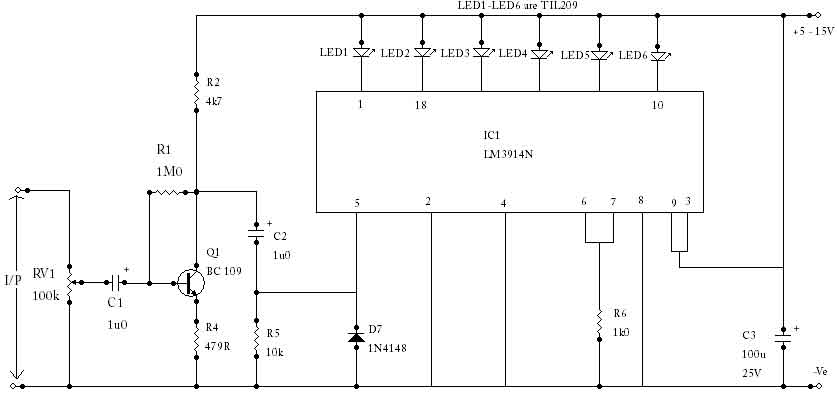
LED VU Meter with LM3914N
The circuit utilizes an LM3914N bar graph display driver (IC1) to control up to ten LEDs. It is configured such that when 0V is applied to the input, only the first LED indicator lights up. This straightforward peak reading VU...
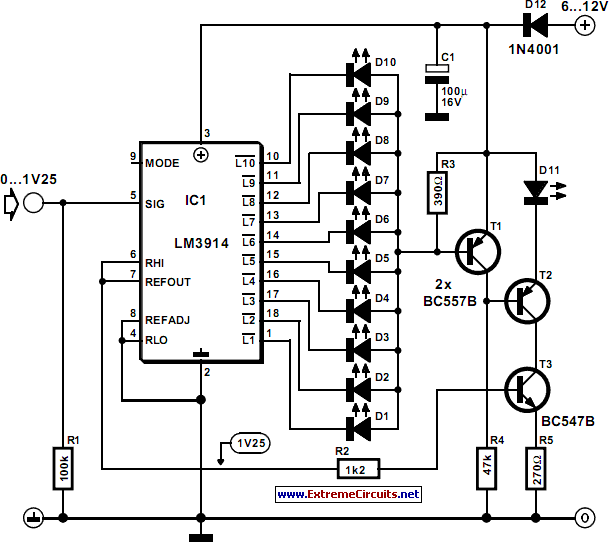
LED Bar Off Indicator
The simple indicator described in this article can be integrated with any circuit that features an LED bar display powered by a Type LM3914 IC. It ensures that an LED will illuminate when all LEDs driven by the LM3914 are...
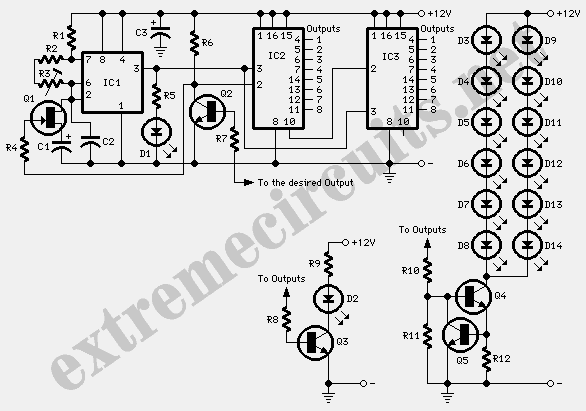
Bar-Mode Lights Sequencer
The terminal of R7, indicated by an arrow, must be connected to the desired output pin of IC2 or IC3 to select the number of LEDs or clusters that will form the bar. For instance, to drive seven LEDs or...