


Yet Another ICOM CI-V Interface
#ICOM
#CI-V
#RS-232
#level converter
#serial port
#open collector
#radio interface
#computer interface
#home-built
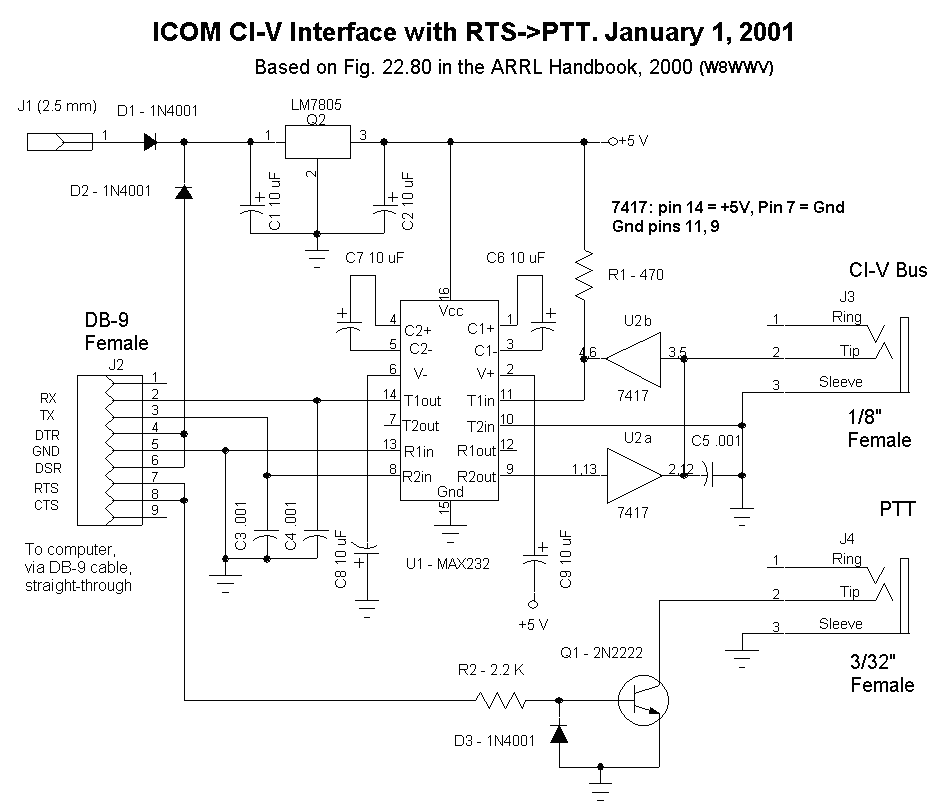
Description: This page describes my home-built ICOM CI-V interface. In order to connect most all ICOM radios to a computer, an additional interface is required. The interface bridges the gap between the RS-232 electrical levels used by the computer serial port, and the open collector shared bus used by the ICOM radios. The interface, therefore, is not much more than a level converter.
The ICOM CI-V interface serves as a crucial component in establishing communication between ICOM radios and a computer system. The primary function of this interface is to convert the RS-232 signal levels from the computer's serial port to the open collector bus utilized by ICOM radios. This ensures compatibility and reliable data transmission.
The schematic typically includes a few essential components: a level-shifting circuit, which can be implemented using transistors or dedicated level converter ICs, and passive components such as resistors and capacitors. The level-shifting circuit will convert the RS-232 voltage levels (ranging from +12V to -12V) to the logic levels compatible with the ICOM CI-V bus, which operates at 0V to 5V.
In practical design, a standard NPN transistor can be used to create an open collector output. The base of the transistor is connected to the RS-232 signal through a resistor, while the collector is connected to the ICOM CI-V line, and the emitter is grounded. A pull-up resistor is also connected from the collector to the positive supply voltage to ensure the line is pulled high when the transistor is off.
The interface may also require additional components such as capacitors for decoupling and protection against voltage spikes. A diode may be included to prevent reverse polarity damage, and a voltage regulator can be used if the design requires a stable voltage supply for the interface circuitry.
In summary, the ICOM CI-V interface is a simple yet effective solution for connecting ICOM radios to computers, facilitating various applications such as remote control and data logging. The design should consider electrical specifications, component ratings, and layout to ensure optimal performance and reliability.This page describes my home-built ICOM CI-V interface. In order to connect most all ICOM radios to a computer, an additional interface is required. The interface bridges the gap between the RS-232 electrical levels used by the computer serial port, and the open collector shared bus used by the ICOM radios. The interface, therefore, is not much more than a level converter.
The ICOM CI-V interface serves as a crucial component in establishing communication between ICOM radios and a computer system. The primary function of this interface is to convert the RS-232 signal levels from the computer's serial port to the open collector bus utilized by ICOM radios. This ensures compatibility and reliable data transmission.
The schematic typically includes a few essential components: a level-shifting circuit, which can be implemented using transistors or dedicated level converter ICs, and passive components such as resistors and capacitors. The level-shifting circuit will convert the RS-232 voltage levels (ranging from +12V to -12V) to the logic levels compatible with the ICOM CI-V bus, which operates at 0V to 5V.
In practical design, a standard NPN transistor can be used to create an open collector output. The base of the transistor is connected to the RS-232 signal through a resistor, while the collector is connected to the ICOM CI-V line, and the emitter is grounded. A pull-up resistor is also connected from the collector to the positive supply voltage to ensure the line is pulled high when the transistor is off.
The interface may also require additional components such as capacitors for decoupling and protection against voltage spikes. A diode may be included to prevent reverse polarity damage, and a voltage regulator can be used if the design requires a stable voltage supply for the interface circuitry.
In summary, the ICOM CI-V interface is a simple yet effective solution for connecting ICOM radios to computers, facilitating various applications such as remote control and data logging. The design should consider electrical specifications, component ratings, and layout to ensure optimal performance and reliability.This page describes my home-built ICOM CI-V interface. In order to connect most all ICOM radios to a computer, an additional interface is required. The interface bridges the gap between the RS-232 electrical levels used by the computer serial port, and the open collector shared bus used by the ICOM radios. The interface, therefore, is not much more than a level converter.
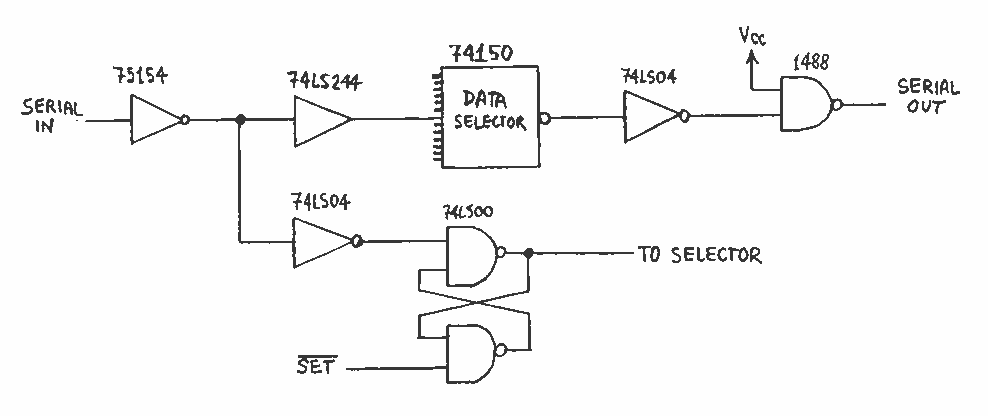
RS-232 Data Switch
This report deals with the design for a small asynchronous serial data switch. The switch architecture allows 14 serial ports supporting a subset of the RS-232 protocol. The requirements for the switch are discussed. The hardware interfaces are described in...
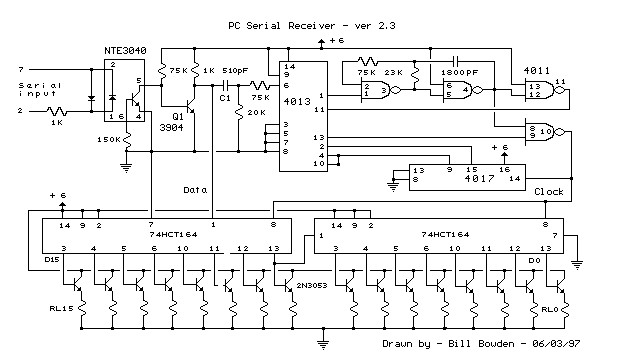
The PC Serial Port Receiver circuit
This circuit requires physical connections to be made to the computer's serial port (COM1 or COM2). It is generally considered difficult to cause harm to oneself or the computer through improper connections to this port; however, there is no assurance...
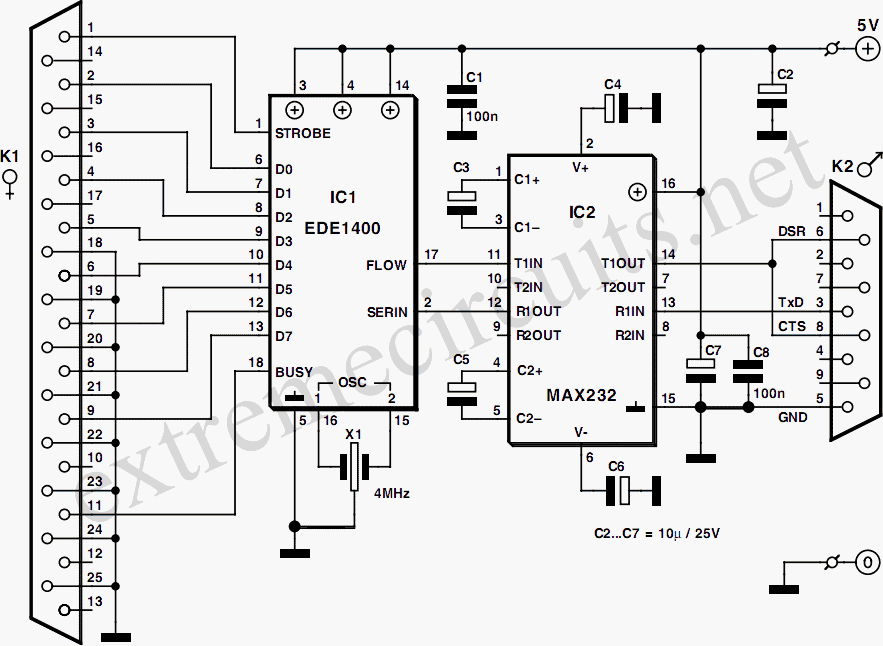
Serial To Parallel Converter
This converter is useful when only the serial port on a personal computer is available, while the printer requires a parallel (Centronics) port. It converts a serial signal at 2400 baud into a parallel signal. The TxD line (pin 3),...
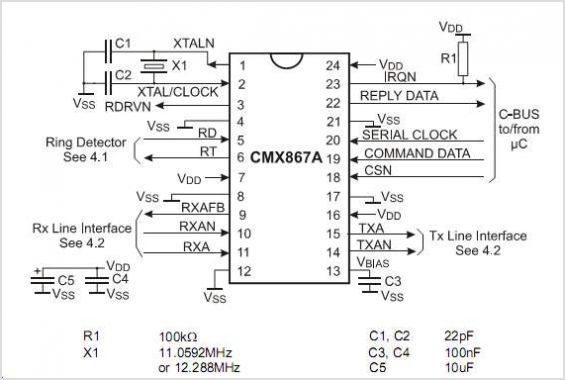
CMX867A Low Power V.22 Modem
This RS-232 to RS-485 protocol converter utilizes two components to form a complete operational system. The circuit adheres to all EIA and ITU specifications for RS-232 to RS-485 RS422 conversion. It features a robust design capable of handling ±15kV ESD...
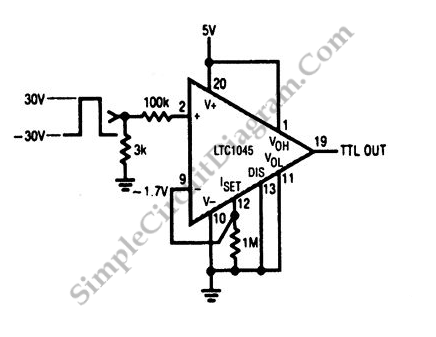
LTC1045 TTL RS-232 Converter
A simple method to construct a battery-powered RS-232 receiver circuit is illustrated in the schematic diagram below. This circuit converts RS-232 levels to TTL levels.
The RS-232 standard is widely used for serial communication, and it operates at voltage levels that...
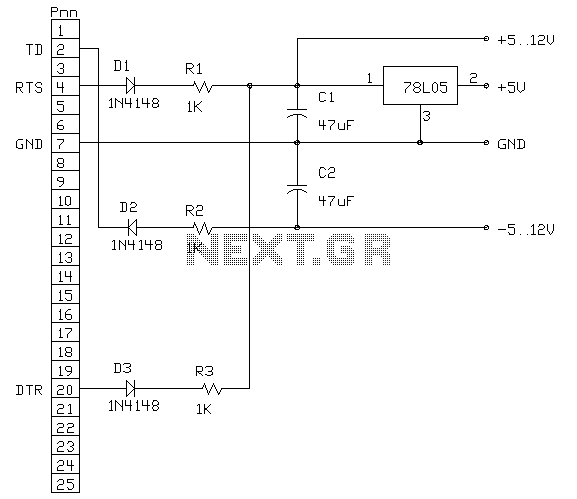
Power from PC's RS-232 circuit
The following circuit is an example of how to get power from an RS-232 serial port. It provides regulated +5V power for logic circuits and also unregulated positive and negative power supplies for the RS-232 transmitting circuit. The circuit delivers...
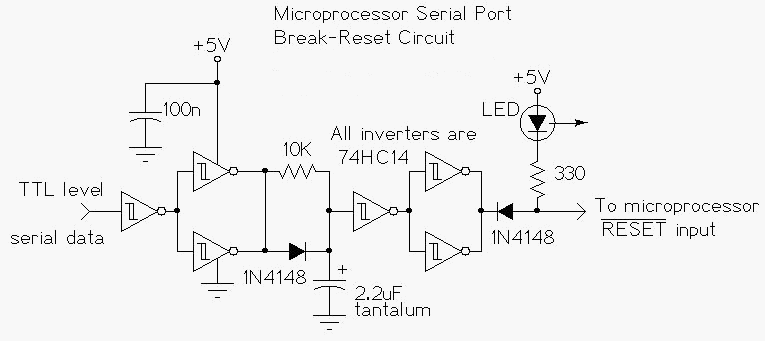
Microprocessor RS-232 Reset
This circuit enables a remote microprocessor to be reset by a controlling host via a remote RS-232 or similar protocol serial line. Utilizing a program loader on the remote host, a program can be downloaded and executed. This functionality allows...
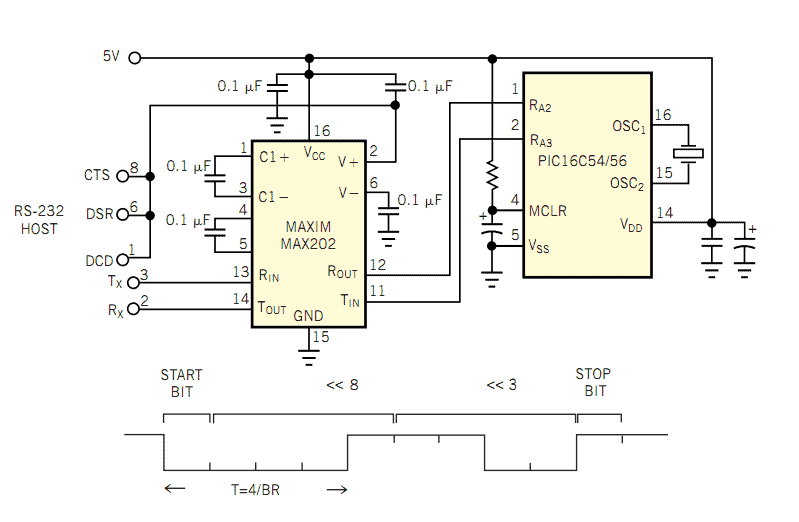
autodetects baud rate circuit MAX202 and PIC16C54
The popularity and easy access of RS-232 ports lend them to many communication projects. You can use a port as is or as a tiny parallel port when the exchange uses only control lines. Before the asynchronous serial-data transfer between...
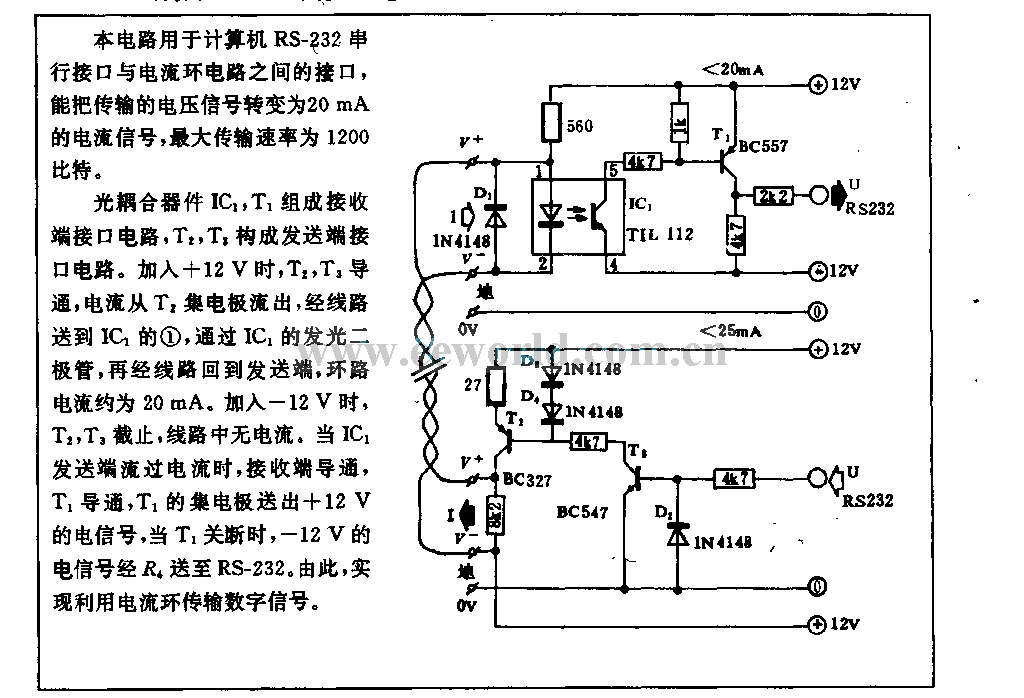
Computer RS-23Z serial interface current loop circuit
This circuit is utilized in RS-232 serial interface and current loop circuit applications. It converts voltage signals into a 20mA current signal, with a maximum transmission rate of 1200 bits per second. The CCD IC1 and transistor T1 form the...