


Dive Computer interface RS232
#dive computer
#RS232
#MAX232A
#serial communication
#interface
#data transfer
#underwater
#electronics
#computer
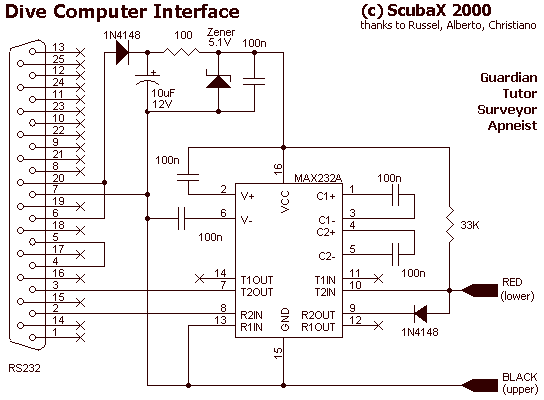
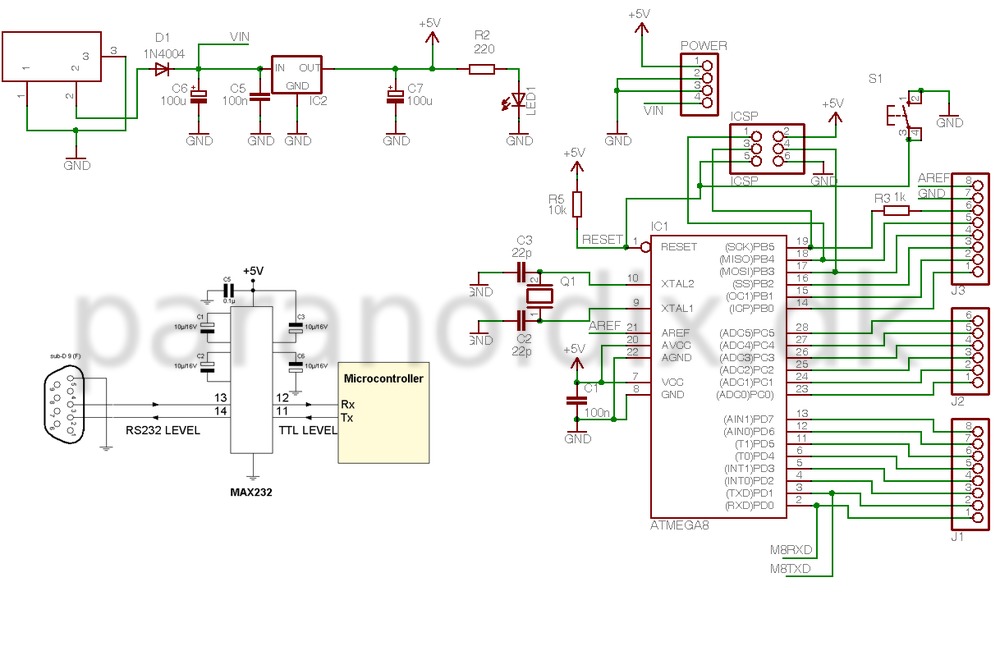
Description: This circuit represents a Dive computer interface for RS232. Uses the MAX232A.
The described circuit serves as an interface for a dive computer utilizing the RS232 communication protocol, incorporating the MAX232A integrated circuit. The MAX232A is a dual voltage-level converter that facilitates communication between devices operating at different voltage levels, specifically converting TTL (Transistor-Transistor Logic) levels to RS232 levels and vice versa.
In this application, the dive computer likely operates at TTL levels (typically 0V to 5V), while the RS232 standard operates at higher voltage levels, ranging from +3V to +25V for logical '1' and -3V to -25V for logical '0'. The MAX232A enables seamless communication between the dive computer and other RS232-compliant devices, such as a PC or a data logger.
The circuit typically consists of the MAX232A chip, several external capacitors for charge pump operation, and the necessary RS232 connectors (DB9 or DB25) to interface with other devices. The external capacitors, often 1µF to 10µF, are connected to the charge pump pins of the MAX232A to generate the required positive and negative voltage levels for RS232 communication.
Pin configuration of the MAX232A is crucial for proper functionality. The chip features multiple pins designated for TTL input and output as well as RS232 output. The circuit design should ensure that the TTL signals from the dive computer are connected to the appropriate input pins of the MAX232A, while the RS232 outputs are routed to the connectors.
In practice, the circuit will require careful attention to grounding and signal integrity to avoid communication errors. Proper layout considerations, such as minimizing trace lengths and avoiding cross-talk, will enhance the reliability of data transmission in this dive computer interface.This circuit represents a Dive computer interface for RS232. Uses the MAX232A.
The described circuit serves as an interface for a dive computer utilizing the RS232 communication protocol, incorporating the MAX232A integrated circuit. The MAX232A is a dual voltage-level converter that facilitates communication between devices operating at different voltage levels, specifically converting TTL (Transistor-Transistor Logic) levels to RS232 levels and vice versa.
In this application, the dive computer likely operates at TTL levels (typically 0V to 5V), while the RS232 standard operates at higher voltage levels, ranging from +3V to +25V for logical '1' and -3V to -25V for logical '0'. The MAX232A enables seamless communication between the dive computer and other RS232-compliant devices, such as a PC or a data logger.
The circuit typically consists of the MAX232A chip, several external capacitors for charge pump operation, and the necessary RS232 connectors (DB9 or DB25) to interface with other devices. The external capacitors, often 1µF to 10µF, are connected to the charge pump pins of the MAX232A to generate the required positive and negative voltage levels for RS232 communication.
Pin configuration of the MAX232A is crucial for proper functionality. The chip features multiple pins designated for TTL input and output as well as RS232 output. The circuit design should ensure that the TTL signals from the dive computer are connected to the appropriate input pins of the MAX232A, while the RS232 outputs are routed to the connectors.
In practice, the circuit will require careful attention to grounding and signal integrity to avoid communication errors. Proper layout considerations, such as minimizing trace lengths and avoiding cross-talk, will enhance the reliability of data transmission in this dive computer interface.This circuit represents a Dive computer interface for RS232. Uses the MAX232A.
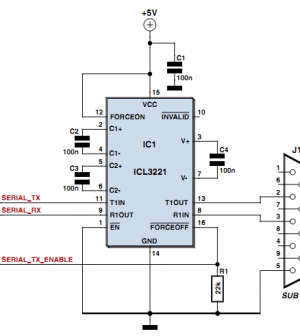
network rs232
A significant number of modules still utilize an RS232 interface. This is understandable, as RS232 can be easily implemented on a microcontroller using just two I/O pins and a line driver such as the MAX232. When the master device is...
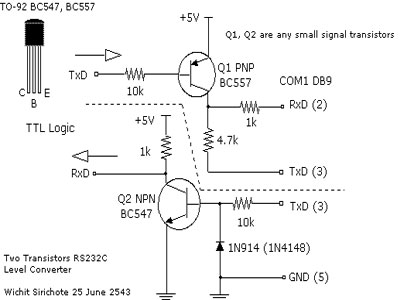
Simple RS 232 Level Converter
To connect a microcontroller project to the COM port of a PC, an RS-232 converter is required. Various chips are available to address this need, such as the MAX232 and DS275.
The RS-232 standard is widely used for serial communication between...
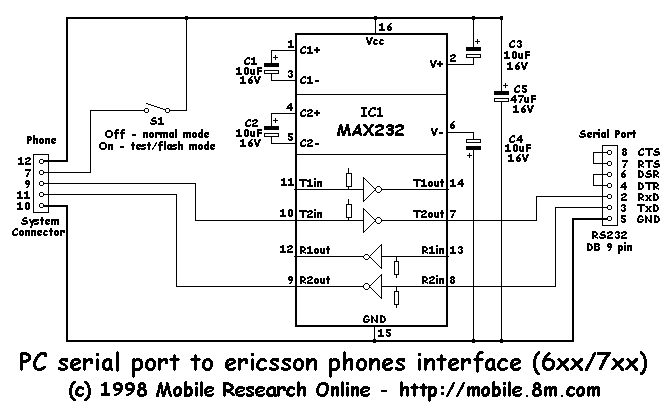
Interface between Ericsson 6xx/7xx phones and a PC
This interface is needed to connect the phone to a PC, because the PC's serial port works with voltage levels between -12 and 12V (RS232 protocol) and the phone operates between 0 and 5V (TTL protocol). Don't even think of...
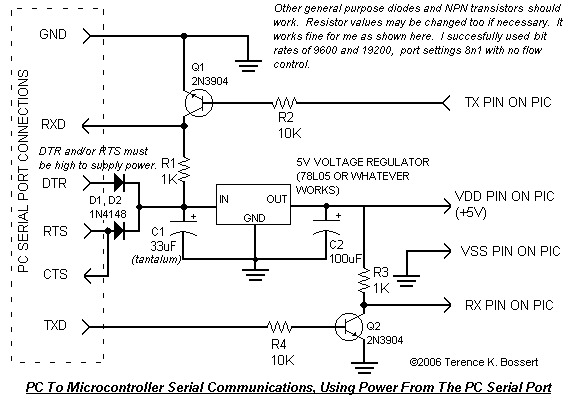
RS232 Dev Board
A simple RS232 example project that draws all its power from the serial port. It is designed to power a microcontroller and facilitate communication between the serial port and the microcontroller. This project utilizes the capability of PC serial ports...
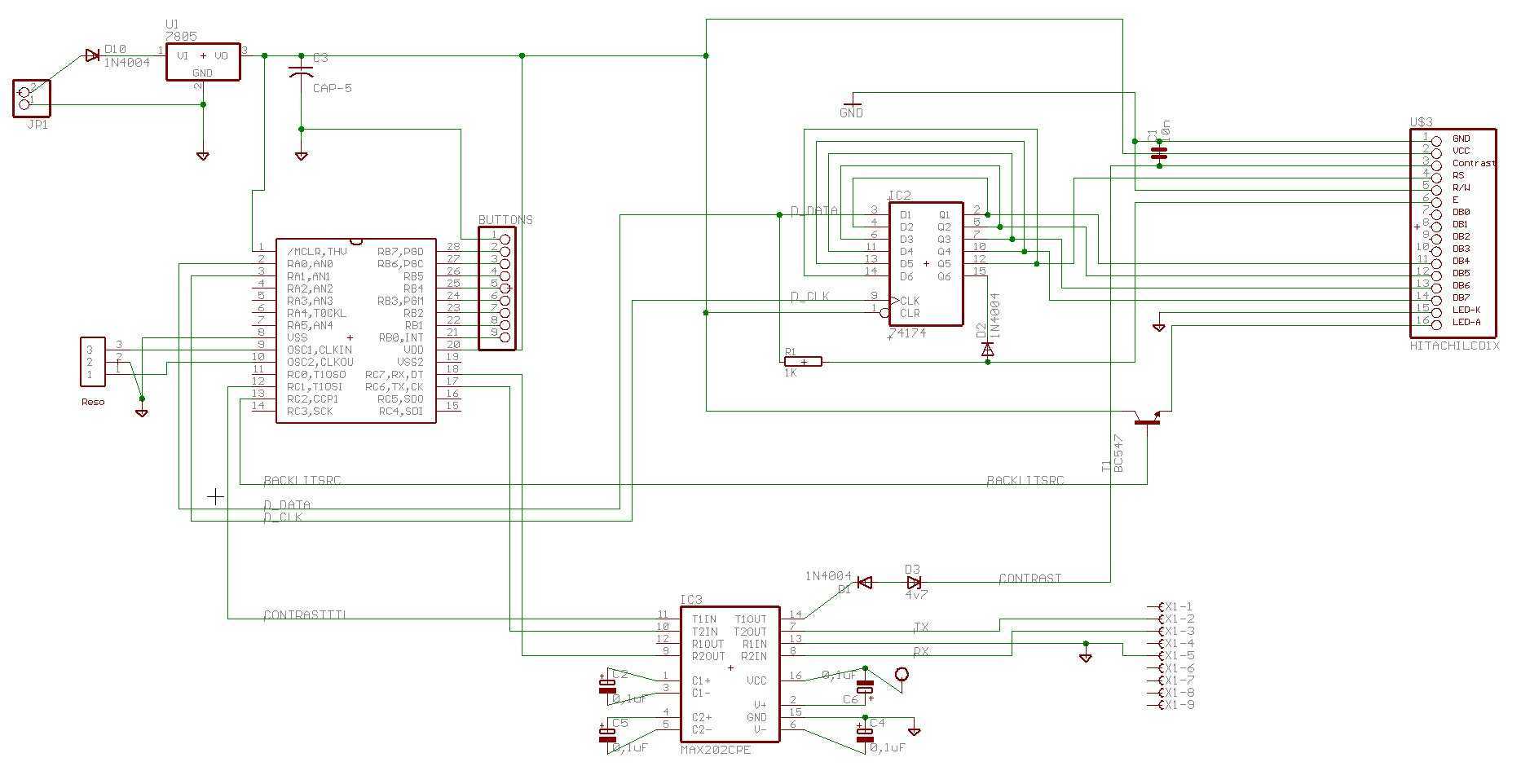
Homebuilt RS232 LCD Interface
There is enough of poorly constructed RS232 alike TTL level interfaces (+5volt), this one generates its own +/- 10..11 volts as RS232 specs require, and is able to use very long cables like RS232 can, and protects computer as well,...
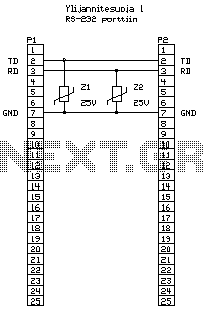
Overvoltage protection for RS232
RS-232C serial port lines are quite prone to be damaged by overvoltages. The damage to computer serial ports has become more and more expensive to replace because of higher integration: usually, you have to buy a new motherboard if one...
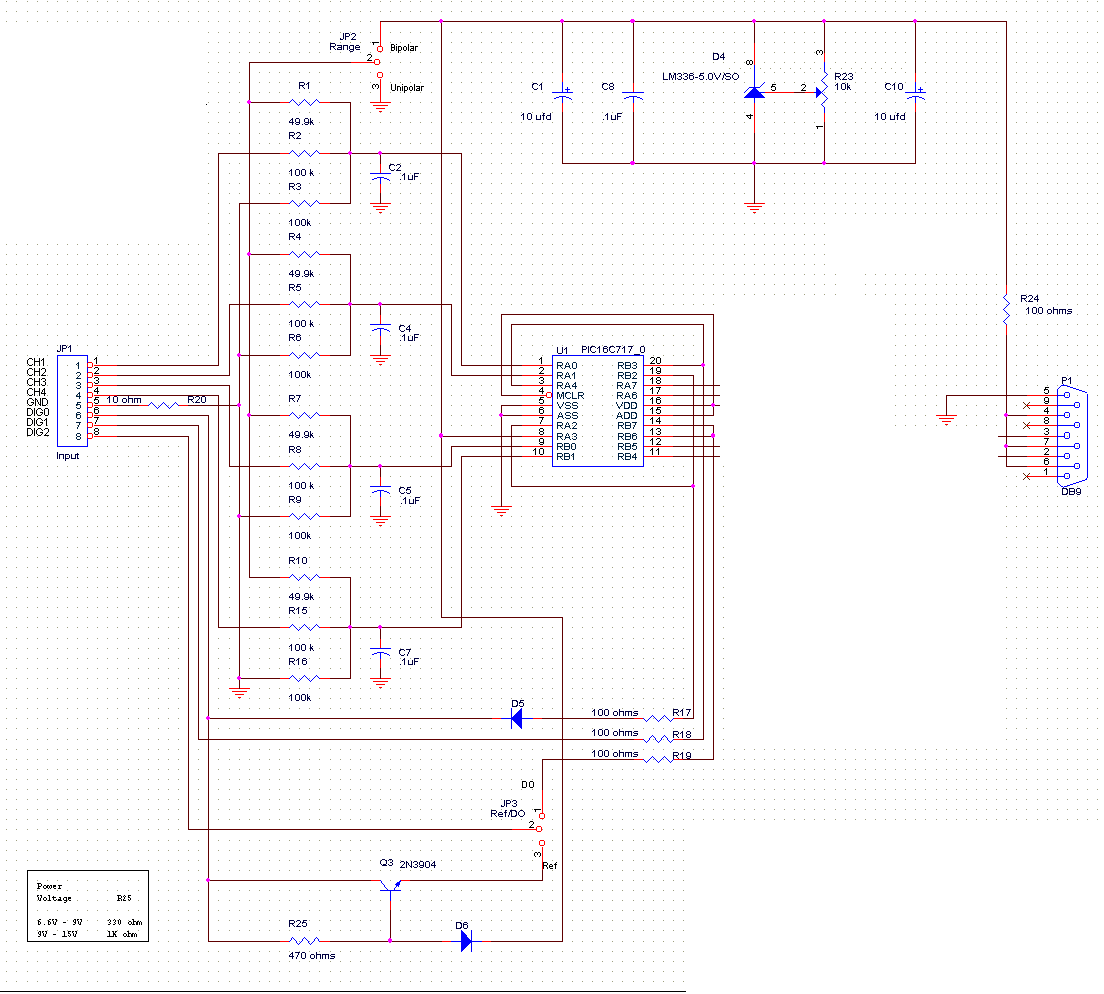
powering circuit using serial port
Power an RS232-TTL converter circuit using the serial port to eliminate the need for an external power supply. It has been noted that the DTR, RTS, and TD pins can facilitate this. Since the TD pin is already utilized for...
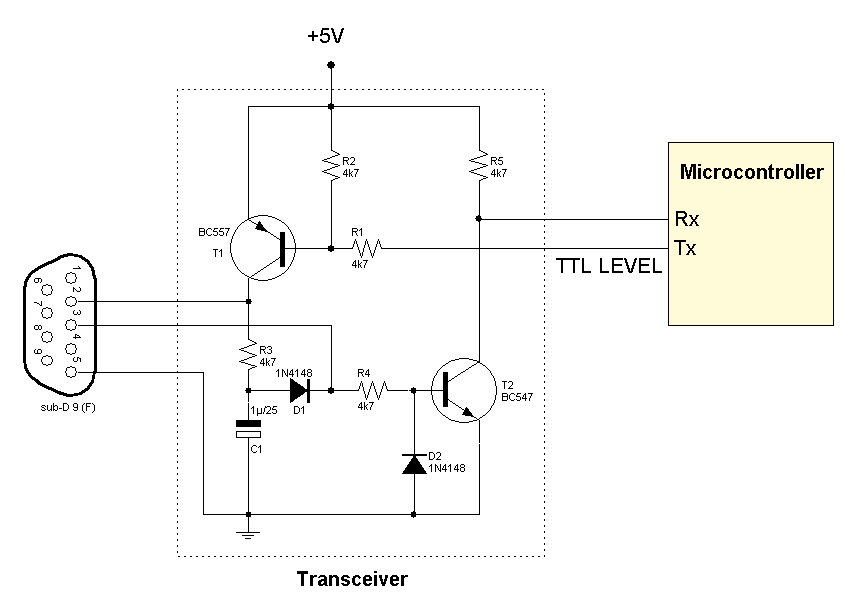
RS232 transceiver circuits
Several RS232 transceiver circuits are used for communication between microcontrollers and other devices, such as PCs or RS232 devices. This document presents a collection of well-known RS232 transceiver circuits. The circuit utilizes the MAX232 from Maxim's devices, which is recognized...
barcode scanner emulator
Built primarily as a proof of concept, this unit is capable of sending an ASCII string terminated with a carriage return (CR) and line feed (LF) via an RS232 connection. It emulates the transmission of a barcode and can be...