


oric 1
#ULA chip
#motherboard
#ROM
#hardware
#Oric-1
#vintage computer
#Andy
#coding
#electronics
#retro computing

Description: Inside the machine, the Oric-1's ULA chip is integrated into a well-organized motherboard. Components are arranged neatly in groups, without any last-minute additions or modifications, unlike the Lynx and Spectrum. This description accurately reflects the hardware, but does not apply to the contents of the computer's ROM chip, which was managed by chief coder Andy Brown, with Peter Halford testing some routines, particularly the cassette handling code. Geoff Philips produced the demo tape. Paul Kaufman, a professional programmer, contributed by coding the Oric's sound routines and Basic commands—most notably ZAP, PING, SHOOT, and EXPLODE—writing them in Forth before passing them to the software team for hand-coding in assembly language on an Apple II. OPI initially aimed to start selling the Oric-1 in October 1982, but later pushed the release date to November, announcing two versions: a £99.95 16KB model and a £169.00 48KB unit. The inexpensive machine was celebrated as the first UK color microcomputer available for under £100. However, in November, OPI acknowledged that the initial batch of 1,000 machines would not be released until mid-December. Despite advertising the machine and taking 2,000 orders by late January 1983, OPI announced that the 48KB model would include Forth as well as Basic, with Forth provided on cassette. A 32KB model was also announced at £139.95, but it never reached the market due to a TV modulator issue that delayed the production of the 16KB and 48KB units. According to Steve Mann, writing in early 1983, PCW received its first pre-production Oric-1 on December 23, 1982, which did not function, nor did a replacement unit. A third unit worked but lacked usable documentation. Eventually, PCW received the manual and a fourth Oric for testing. Other reviewers faced similar challenges, leading to premature reviews that discouraged many potential buyers. These reviews contained inaccuracies and overlooked the Oric's strengths. Mann noted that the journalists could not provide an accurate assessment without the necessary materials. The situation negatively impacted Oric, which would have benefitted from delaying hardware and advertising until the complete manual was ready. This oversight seemed to be lost on Oric's management, some of whom took the early reviews personally. Peter Harding, for instance, expressed frustration over the poor quality of reporting and the prevalence of inaccuracies. Despite being generally favorable, many reviews of the Oric were misleading and failed to highlight its full capabilities, such as the limitation of only two colors in high-resolution mode. OPI's experience was not unique, as many new computer companies rushed to produce manuals while hardware and software were still under development. The final manual for the Oric-1 was eventually compiled from Popular Computing Weekly and the computer book publisher Sunshine. OPI was not alone in facing supply issues, as many customers experienced delays waiting for their ordered Orics.
The Oric-1 is a notable microcomputer that features a ULA (Uncommitted Logic Array) chip, which plays a crucial role in managing the system's operations. The motherboard is designed with a high level of organization, allowing for efficient assembly and maintenance. The ULA chip integrates various functions, including video generation and input/output control, onto a single chip, reducing the complexity of the overall design.
The ROM chip of the Oric-1 is a critical component that houses the system's firmware and essential routines. Chief coder Andy Brown, along with his team, developed the software that runs on this hardware. The inclusion of sound routines and Basic commands, coded by Paul Kaufman, enhances the machine's multimedia capabilities, allowing users to create interactive applications and games. The sound routines, particularly, contribute to the overall user experience by providing audio feedback and sound effects.
The marketing strategy for the Oric-1 was ambitious, with OPI aiming to capture a significant share of the emerging personal computer market. The decision to offer two distinct models—16KB and 48KB—catered to different user needs and budgets, positioning the Oric-1 as an accessible option for consumers. However, production delays and supply chain issues hampered the initial rollout, leading to customer dissatisfaction and negative reviews.
The challenges faced during the launch of the Oric-1 illustrate the complexities of introducing new technology to the market. The initial response from reviewers, often based on incomplete information, can significantly impact consumer perception and sales. The eventual resolution of these issues, including the production of a comprehensive manual, highlights the importance of thorough documentation and support in the successful deployment of electronic products.Inside the machine, the Oric-1`s ULA chip slotted into a tidy, well organised motherboard. components are neatly arrayed in groups and there are no last minute additions or alterations as there are on the Lynx and the Spectrum . That may have been an apposite description of the hardware, but it could not be applied to the contents of the computer`s Rom chip, overseen by chief coder Andy
Brown, with Peter Halford assigned to test some of the routines, particularly the cassette handling code. Geoff Philips produced the demo tape. As professional programmer, Paul Kaufman had a hand in it too: he coded the Oric`s sound routines and Basic commands - most notably ZAP, PING, SHOOT and EXPLODE, writing them in Forth before handing them over to the software team to be hand-coded in assembly language on an Apple II.
OPI originally hoped to begin selling the Oric-1 in October 1982. Early that month, OPI shifted the release date back a month, announcing that it would debut in two versions: a £99. 95 16KB model and a 48KB unit for £169. 00. The cheap machine was immediately heralded as the first UK colour micro available for under £100. Come November, however, and an OPI admitted that its initial batch of 1000 machines would now not be released until mid-December.
Unfortunately, it had begun advertising the machine and soon started taking orders - 2000 of them by late January 1983, according to the company. By way of compensation, the 48KB machine would now come with Forth as well as Basic, it said, the former on cassette.
A 32KB model was announced too, priced at £139. 95, though this version, if it was ever seriously considered, never made it to market, a victim of the need to deal with a TV modulator problem that was holding up manufacture of the 16KB and 48KB units. According to Steve Mann, writing in February or March 1983, PCW received its first Oric-1, a pre-production unit, on 23 December 1982.
It didn`t work, and neither did a replacement unit. A third Oric worked, but came without usable documentation. PCW would eventually receive the manual and a fourth Oric to test. Other reviewers were less lucky, ensuring reviews have already appeared in some magazines that will have dissuaded a large number of prospective purchasers from buying. These reviews have contained wrong information and have failed to mention any of the Oric`s strong points.
This is no reflection on the journalists involved - there is no way they could have done a proper job without the material provided , wrote Mann. The stupid thing about all this is that the worst sufferer of the debacle has been Oric itself. It would have been far better if Oric had held back on the hardware (and the advertising) until the full manual was ready.
That fact seems to have been lost on Oric`s managers, some of whom took the early reviews personally. Peter Harding, for instance, grumbled to Oric Owner that the general standard of reporting is diabolical and there is more inaccurate information printed than actual facts.
The reviews. of the Oric, although in the main very favourable, are often totally inaccurate and do not extol the full virtues of the Oric, eg. only two colours in hi-res mode. To be honest, OPI was not unique in this. Many a new computer company rushed to commission manuals while the hardware and software were still being worked on.
Getting to market quickly meant there was no other way. The Oric-1`s final manual would eventually be sourced from Popular Computing Weekly and computer book publisher Sunshine. OPI wasn`t alone in suffering supply woes, though suffer them it did. It would be unfair to single out OPI because many of the people who have now waited three months for the Orics they ordered
The Oric-1 is a notable microcomputer that features a ULA (Uncommitted Logic Array) chip, which plays a crucial role in managing the system's operations. The motherboard is designed with a high level of organization, allowing for efficient assembly and maintenance. The ULA chip integrates various functions, including video generation and input/output control, onto a single chip, reducing the complexity of the overall design.
The ROM chip of the Oric-1 is a critical component that houses the system's firmware and essential routines. Chief coder Andy Brown, along with his team, developed the software that runs on this hardware. The inclusion of sound routines and Basic commands, coded by Paul Kaufman, enhances the machine's multimedia capabilities, allowing users to create interactive applications and games. The sound routines, particularly, contribute to the overall user experience by providing audio feedback and sound effects.
The marketing strategy for the Oric-1 was ambitious, with OPI aiming to capture a significant share of the emerging personal computer market. The decision to offer two distinct models—16KB and 48KB—catered to different user needs and budgets, positioning the Oric-1 as an accessible option for consumers. However, production delays and supply chain issues hampered the initial rollout, leading to customer dissatisfaction and negative reviews.
The challenges faced during the launch of the Oric-1 illustrate the complexities of introducing new technology to the market. The initial response from reviewers, often based on incomplete information, can significantly impact consumer perception and sales. The eventual resolution of these issues, including the production of a comprehensive manual, highlights the importance of thorough documentation and support in the successful deployment of electronic products.Inside the machine, the Oric-1`s ULA chip slotted into a tidy, well organised motherboard. components are neatly arrayed in groups and there are no last minute additions or alterations as there are on the Lynx and the Spectrum . That may have been an apposite description of the hardware, but it could not be applied to the contents of the computer`s Rom chip, overseen by chief coder Andy
Brown, with Peter Halford assigned to test some of the routines, particularly the cassette handling code. Geoff Philips produced the demo tape. As professional programmer, Paul Kaufman had a hand in it too: he coded the Oric`s sound routines and Basic commands - most notably ZAP, PING, SHOOT and EXPLODE, writing them in Forth before handing them over to the software team to be hand-coded in assembly language on an Apple II.
OPI originally hoped to begin selling the Oric-1 in October 1982. Early that month, OPI shifted the release date back a month, announcing that it would debut in two versions: a £99. 95 16KB model and a 48KB unit for £169. 00. The cheap machine was immediately heralded as the first UK colour micro available for under £100. Come November, however, and an OPI admitted that its initial batch of 1000 machines would now not be released until mid-December.
Unfortunately, it had begun advertising the machine and soon started taking orders - 2000 of them by late January 1983, according to the company. By way of compensation, the 48KB machine would now come with Forth as well as Basic, it said, the former on cassette.
A 32KB model was announced too, priced at £139. 95, though this version, if it was ever seriously considered, never made it to market, a victim of the need to deal with a TV modulator problem that was holding up manufacture of the 16KB and 48KB units. According to Steve Mann, writing in February or March 1983, PCW received its first Oric-1, a pre-production unit, on 23 December 1982.
It didn`t work, and neither did a replacement unit. A third Oric worked, but came without usable documentation. PCW would eventually receive the manual and a fourth Oric to test. Other reviewers were less lucky, ensuring reviews have already appeared in some magazines that will have dissuaded a large number of prospective purchasers from buying. These reviews have contained wrong information and have failed to mention any of the Oric`s strong points.
This is no reflection on the journalists involved - there is no way they could have done a proper job without the material provided , wrote Mann. The stupid thing about all this is that the worst sufferer of the debacle has been Oric itself. It would have been far better if Oric had held back on the hardware (and the advertising) until the full manual was ready.
That fact seems to have been lost on Oric`s managers, some of whom took the early reviews personally. Peter Harding, for instance, grumbled to Oric Owner that the general standard of reporting is diabolical and there is more inaccurate information printed than actual facts.
The reviews. of the Oric, although in the main very favourable, are often totally inaccurate and do not extol the full virtues of the Oric, eg. only two colours in hi-res mode. To be honest, OPI was not unique in this. Many a new computer company rushed to commission manuals while the hardware and software were still being worked on.
Getting to market quickly meant there was no other way. The Oric-1`s final manual would eventually be sourced from Popular Computing Weekly and computer book publisher Sunshine. OPI wasn`t alone in suffering supply woes, though suffer them it did. It would be unfair to single out OPI because many of the people who have now waited three months for the Orics they ordered

nascom
This is the computer that initiated my journey into computing. The image provided is not of the best quality, and the machine is not in its original state. There are several modifications present, and regrettably, the processor is absent. It...
The AmG©lie project
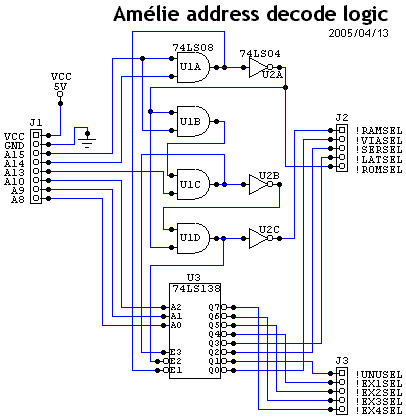
The ROM is mapped at address &F000, which in binary is %1111 0000 0000 0000. This indicates that when accessing the ROM, the address lines A12, A13, A14, and A15 will always be high. Consequently, the I/O device selections will...
Electronics Projects Circuits
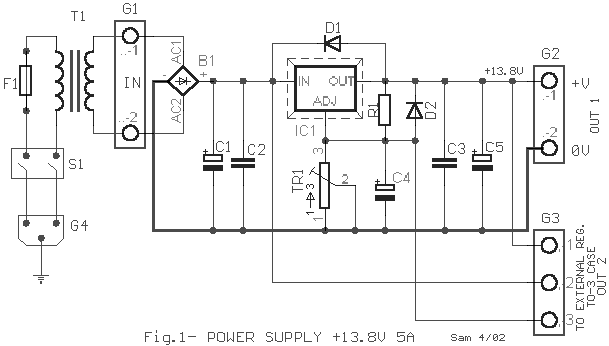
Over 1400 top electronics projects and electronic circuits with photos, datasheets, and easy-to-read schematics, along with explanations of how they work and how to build them.
The collection comprises a vast array of electronics projects suitable for enthusiasts and professionals alike....