


sinclair zx microdrive
#sinclair zx
#microdrive
#home computer
#storage
#floppy drive
#retro computing
#1980s
#data storage
#vintage tech

Description: Clive Sinclair claimed on April 23, 1982, that a new type of home computer storage would revolutionize the market. This storage solution was significantly cheaper than the established 5.25-inch and emerging 3.5-inch floppy drives, although it was not as capacious or as fast in file retrieval. Sinclair Research's advertising touted this breakthrough, but it would take over 18 months to reach the market, becoming synonymous with delays and disappointment during a time when many promised products were also late. At the launch of the ZX Spectrum during the Earl's Court Computer Fair, Sinclair showcased a prototype Microdrive and discussed its capabilities. Journalists were impressed, with Popular Computing Weekly noting the innovation of the ZX Microdrive, a compact disk drive using two quarter-inch diskettes, each capable of holding 100KB with a transfer rate of 16KB per second. Up to eight of these drives could be connected to the ZX Spectrum, priced at £50, a remarkable cost compared to Commodore’s 5.25-inch drive priced at nearly £400. Although the Vic-1540 offered greater disk capacity, the significantly lower price of the Sinclair Microdrive was attractive. However, Sinclair acknowledged that the Microdrive would not be available until later in the year. As production of the Spectrum progressed, complaints about delays shifted toward the Microdrive. Sinclair engineer Martin Brennan asserted that the Microdrive would revolutionize storage, emphasizing its price over speed. By the end of 1982, advertising for the Microdrive shifted from describing it as a "single interchangeable microfloppy" to a "single interchangeable storage medium," and the expected release window moved to early 1983. By spring, the product was still unavailable, and Sinclair was not yet taking orders. Chief Nigel Searle provided updates, stating that the design was finalized and awaiting custom-made semiconductor chips from the UK. Delays were attributed to unforeseen mechanical difficulties, which had since been resolved, improving the drives' reliability.
The ZX Microdrive represents a significant advancement in the personal computing landscape of the early 1980s, particularly in terms of affordability and compactness. Its design featured two quarter-inch diskettes, which allowed for a total storage capacity of 100KB per diskette, enabling users to connect up to eight drives to the ZX Spectrum. This modular capability was particularly appealing for users requiring expanded storage solutions without the prohibitive costs associated with larger floppy drives.
The Microdrive's operational characteristics included a transfer rate of 16KB per second, which, while not the fastest available at the time, provided a reasonable performance for the target market of home computer users. The choice of using smaller diskettes was a strategic decision aimed at reducing manufacturing costs and making the technology accessible to a broader audience, thus democratizing computer storage.
Despite its innovative features, the Microdrive's launch was marred by significant delays, which highlighted the challenges of bringing new technology to market. The reliance on custom semiconductor chips introduced additional complexity, underscoring the importance of supply chain considerations in electronics manufacturing. The shift in advertising language from "microfloppy" to "storage medium" also indicates a pivot in marketing strategy, likely in response to the growing skepticism surrounding the product's release timeline.
Overall, the ZX Microdrive exemplifies the intersection of innovation, marketing, and production challenges in the rapidly evolving field of personal computing during the 1980s. Its eventual release would not only impact Sinclair's product line but also influence the broader market dynamics of computer storage solutions.Archaeologic They would, Clive Sinclair claimed on 23 April 1982, revolutionise home computer storage. Significantly cheaper than the established 5. 25-inch and emerging 3. 5-inch floppy drives of the time - though not as capacious or as fast to serve up files - Uncle` Clive`s new toy would change the face of personal computing , Sinclair Research
`s advertising puffed. Yet this remarkable breakthrough at a remarkable price would take more than 18 months more to come to market. In the meantime, it would become a byword for delays and disappointment - and this in an era when almost every promised product arrived late.
At the launch of the Spectrum, held on the first day of the Earl`s Court Computer Fair, Sinclair presented a prototype Microdrive to assembled journalists and provided a brief overview of the device`s promised capabilities. Many of the gathered hacks were impressed. Perhaps the biggest rabbit that Clive pulled out of his magician`s hat was the ZX Microdrive, wrote Popular Computing Weekly`s Nick Hampshire for the paper`s 6 May issue.
This is a very tiny disk drive using two quarter-inch diskettes, with each diskette capable of holding 100KB, and a transfer rate of 16KB per second. You will be able to connect up to eight of these drives to the ZX Spectrum. The price: £50. That was indeed a remarkable price . Commodore`s single-disk 5. 25-inch drive for the Vic-20, launched around the same time, was priced at just under £400 - eight times the price of the Sinclair offering.
Even Sony`s aggressive launch price for the 3. 5-inch drive it brought to the UK in November 1982 was still, at £235, much higher than that of the Microdrive. Sure, the Vic-1540`s disk capacity was greater - 174KB per disk rather than the 85KB the Microdrive would eventually offer, and the Sony diskette could hold even more - 218KB - but who cared when the up-front cost of the Sinclair drive was so much less There was no question, though, that the Microdrive wouldn`t take some months to come to market.
At the launch of the Spectrum, Sinclair admitted the Microdrive wouldn`t go on sale until later in the year. Over the coming months, the trials and tribulations of getting the Spectrum into production and shipped out to buyers - the company wouldn`t even begin to get over the order backlog until well into the autumn of 1982 - before the focus of complaints about broken Sinclair promises would shift to the Microdrive.
Our Microdrive, when it comes out, will revolutionise mass storage thinking, said Sinclair engineer Martin Brennan in the 18 November 1982 issue of Popular Computing Weekly after being asked about the new Sony drive. His take: yes, 3. 5-inch unit was faster, but it`s the price that really matters. Of course, what Brennan couldn`t then answer was the question posed by his own comment: when would the Microdrive actually come out for people to buy As 1982 came to an end, the section within Sinclair`s Spectrum advertising describing the Microdrive began to change.
Ads from 1982 had described the product as a a single interchangeable microfloppy . But by the end of the year, that text was changed to read a single interchangeable storage medium . The release window went from later this year [1982] to the early part of 1983 . By the Spring of that year there was still no sign of the promised product. At least Sinclair wasn`t yet taking orders. The continuing no-show prompted Sinclair Research computer division chief Nigel Searle to issue an update: The design has been finalised and we are now waiting for custom-made semiconductor chips - being manufactured in the UK - to arrive, he told the press. The delay on the Microdrives has been the result of mechanical difficulties we had not foreseen, he added.
These have now been solved along with an improvement in the performance of the drives. They are now much more reliable than we had hoped to achieve. The designers
The ZX Microdrive represents a significant advancement in the personal computing landscape of the early 1980s, particularly in terms of affordability and compactness. Its design featured two quarter-inch diskettes, which allowed for a total storage capacity of 100KB per diskette, enabling users to connect up to eight drives to the ZX Spectrum. This modular capability was particularly appealing for users requiring expanded storage solutions without the prohibitive costs associated with larger floppy drives.
The Microdrive's operational characteristics included a transfer rate of 16KB per second, which, while not the fastest available at the time, provided a reasonable performance for the target market of home computer users. The choice of using smaller diskettes was a strategic decision aimed at reducing manufacturing costs and making the technology accessible to a broader audience, thus democratizing computer storage.
Despite its innovative features, the Microdrive's launch was marred by significant delays, which highlighted the challenges of bringing new technology to market. The reliance on custom semiconductor chips introduced additional complexity, underscoring the importance of supply chain considerations in electronics manufacturing. The shift in advertising language from "microfloppy" to "storage medium" also indicates a pivot in marketing strategy, likely in response to the growing skepticism surrounding the product's release timeline.
Overall, the ZX Microdrive exemplifies the intersection of innovation, marketing, and production challenges in the rapidly evolving field of personal computing during the 1980s. Its eventual release would not only impact Sinclair's product line but also influence the broader market dynamics of computer storage solutions.Archaeologic They would, Clive Sinclair claimed on 23 April 1982, revolutionise home computer storage. Significantly cheaper than the established 5. 25-inch and emerging 3. 5-inch floppy drives of the time - though not as capacious or as fast to serve up files - Uncle` Clive`s new toy would change the face of personal computing , Sinclair Research
`s advertising puffed. Yet this remarkable breakthrough at a remarkable price would take more than 18 months more to come to market. In the meantime, it would become a byword for delays and disappointment - and this in an era when almost every promised product arrived late.
At the launch of the Spectrum, held on the first day of the Earl`s Court Computer Fair, Sinclair presented a prototype Microdrive to assembled journalists and provided a brief overview of the device`s promised capabilities. Many of the gathered hacks were impressed. Perhaps the biggest rabbit that Clive pulled out of his magician`s hat was the ZX Microdrive, wrote Popular Computing Weekly`s Nick Hampshire for the paper`s 6 May issue.
This is a very tiny disk drive using two quarter-inch diskettes, with each diskette capable of holding 100KB, and a transfer rate of 16KB per second. You will be able to connect up to eight of these drives to the ZX Spectrum. The price: £50. That was indeed a remarkable price . Commodore`s single-disk 5. 25-inch drive for the Vic-20, launched around the same time, was priced at just under £400 - eight times the price of the Sinclair offering.
Even Sony`s aggressive launch price for the 3. 5-inch drive it brought to the UK in November 1982 was still, at £235, much higher than that of the Microdrive. Sure, the Vic-1540`s disk capacity was greater - 174KB per disk rather than the 85KB the Microdrive would eventually offer, and the Sony diskette could hold even more - 218KB - but who cared when the up-front cost of the Sinclair drive was so much less There was no question, though, that the Microdrive wouldn`t take some months to come to market.
At the launch of the Spectrum, Sinclair admitted the Microdrive wouldn`t go on sale until later in the year. Over the coming months, the trials and tribulations of getting the Spectrum into production and shipped out to buyers - the company wouldn`t even begin to get over the order backlog until well into the autumn of 1982 - before the focus of complaints about broken Sinclair promises would shift to the Microdrive.
Our Microdrive, when it comes out, will revolutionise mass storage thinking, said Sinclair engineer Martin Brennan in the 18 November 1982 issue of Popular Computing Weekly after being asked about the new Sony drive. His take: yes, 3. 5-inch unit was faster, but it`s the price that really matters. Of course, what Brennan couldn`t then answer was the question posed by his own comment: when would the Microdrive actually come out for people to buy As 1982 came to an end, the section within Sinclair`s Spectrum advertising describing the Microdrive began to change.
Ads from 1982 had described the product as a a single interchangeable microfloppy . But by the end of the year, that text was changed to read a single interchangeable storage medium . The release window went from later this year [1982] to the early part of 1983 . By the Spring of that year there was still no sign of the promised product. At least Sinclair wasn`t yet taking orders. The continuing no-show prompted Sinclair Research computer division chief Nigel Searle to issue an update: The design has been finalised and we are now waiting for custom-made semiconductor chips - being manufactured in the UK - to arrive, he told the press. The delay on the Microdrives has been the result of mechanical difficulties we had not foreseen, he added.
These have now been solved along with an improvement in the performance of the drives. They are now much more reliable than we had hoped to achieve. The designers
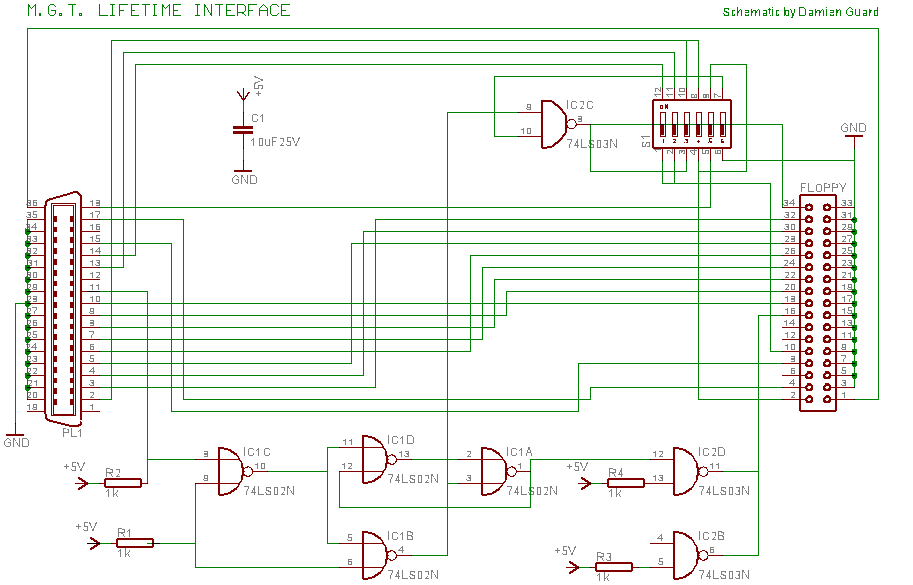
MGT Lifetime/Universal Disc Drive
The Lifetime Drive, later renamed the Universal Drive due to concerns regarding implied warranties, was manufactured by Miles Gordon Technology (MGT) in April 1989. This floppy drive was designed to connect to most popular computers of that era. MGT was...