


bearden MEG
#electromagnetic generator
#permanent magnet
#magnetic core
#input coil
#output coil
#energy harvesting
#non-moving parts
#magnetic path
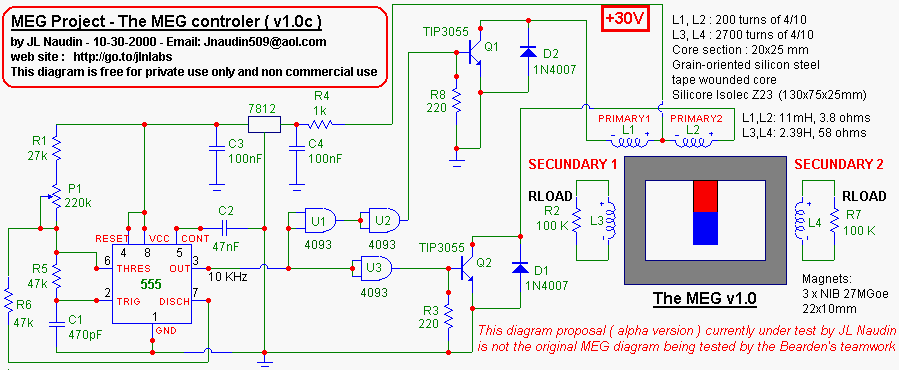
Description: An electromagnetic generator without moving parts includes a permanent magnet and a magnetic core with first and second magnetic paths. A first input coil and a first output coil are wound around portions of the first magnetic path, while a second input coil and a second output coil are wound around portions of the second magnetic path. The input coils are alternately pulsed to induce current pulses in the output coils. Driving electrical current through each of the input coils reduces the level of flux from the permanent magnet within the magnetic path surrounding the input coil. In an alternative embodiment of the electromagnetic generator, the magnetic core consists of annular spaced-apart plates, with posts and permanent magnets arranged in an alternating fashion between the plates. An output coil is wound around each of these posts. Input coils wound around portions of the plates are pulsed to induce current within the output coils.
The electromagnetic generator (MEG) operates based on the principles of electromagnetic induction, leveraging the interaction between magnetic fields and electric currents. The design incorporates a permanent magnet that establishes a magnetic field within the core structure. The core is characterized by two distinct magnetic paths, which enhance the efficiency of the generator by allowing for controlled flux variations.
The configuration of the input and output coils is critical to the operation of the MEG. The input coils are strategically placed to maximize the magnetic coupling with the permanent magnet. When electrical current is driven through these coils, it generates a time-varying magnetic field that alters the magnetic flux experienced by the output coils. This change in flux induces an electromotive force (EMF) in the output coils, resulting in the generation of electrical energy.
In the alternative embodiment featuring annular plates, the design promotes a compact and efficient layout. The alternating arrangement of posts and permanent magnets creates localized magnetic fields that are conducive to inducing current in the output coils. The pulsing of the input coils is synchronized to optimize the induction process, ensuring that the output coils receive maximum energy transfer.
The theoretical underpinnings of the MEG are grounded in advanced concepts of electromagnetic theory, particularly the significance of magnetic vector potential. The magnetic vector potential plays a pivotal role in the interaction of electric and magnetic fields, as it can influence electron movement even in regions devoid of a magnetic field. This phenomenon is exemplified by the Aharonov-Bohm effect, which demonstrates that potentials, rather than fields, can have physical implications in quantum mechanics.
The design of the MEG must account for both scalar and vector potentials, as they interact within the circuit and its surrounding space. The vector potential, which encompasses the magnetic field component, is crucial for understanding the dynamics of the system. In certain configurations, the existence of a field-free vector potential can still exert influence on charged particles, a concept that challenges conventional perceptions of electromagnetic fields.
Overall, the electromagnetic generator is a sophisticated device that integrates principles of electromagnetism and quantum mechanics to achieve efficient energy conversion without the need for moving parts. Its innovative design and operational principles offer significant potential for applications in renewable energy and advanced electrical systems.An electromagnetic generator without moving parts includes a permanent magnet and a magnetic core including first and second magnetic paths. A first input coil and a first output coil extend around portions of the first magnetic path, while a second input coil and a second output coil extend around portions of the second magnetic path.
The input c oils are alternatively pulsed to provide induced current pulses in the output coils. Driving electrical current through each of the input coils reduces a level of flux from the permanent magnet within the magnet path around which the input coil extends. In an alternative embodiment of an electromagnetic generator, the magnetic core includes annular spaced-apart plates, with posts and permanent magnets extending in an alternating fashion between the plates.
An output coil extends around each of these posts. Input coils extending around portions of the plates are pulsed to cause the induction of current within the output coils. - The overwhelming importance of the magnetic vector potential, particularly when one looks through quantum electrodynamic eyes and in various gauges.
- The old notion that potentials were merely mathematical conveniences has long been falsified, particularly by the Aharonov-Bohm effect {2}, extended to the Berry phase {10}, and further extended to the geometric phase {11}. There are some 20, 000 physics papers on geometric phase, Berry phase, and Aharonov-Bohm effect. - The force fields only exist in mass, and are the effects of the interaction of the force-free fields in space that exist as curvatures of spacetime.
There are no force fields in space; there are only gradients of potentials. Spacetime itself is an intense potential. Quoting Feynman {12}: "We may think of E(x, y, z, t) and B(x, y, z, t) as giving the forces that would be experienced at the time t by a charge located at (x, y, z), with the condition that placing the charge there did not disturb the positions or motion of all the other charges responsible for the fields. " " E and B have no independent existence. A purely electromagnetic field in one coordinate system will appear as a mixture of electric and magnetic fields in another coordinate frame.
the fields are completely interrelated, and one should properly speak of the electromagnetic field Fab, rather than E or B separately. " - In other words, one can have a magnetic component and at least partially turn it into an electric component, or vice versa.
This is important to the MEG`s operation. ". transverse radiation fields are given by the vector potential alone, the instantaneous Coulomb potential contributing only to the near fields. This gauge is particularly useful in quantum electrodynamics. A quantum-mechanical description of photons necessitates quantization of only the vector potential. [In the Coulomb gauge] the scalar potential `propagates` instantly everywhere in space. The vector potential, on the other hand, satisfies the wave equation. with its implied finite speed of propagation c. " - Thus it is of primary importance to consider both the scalar potential f and the vector potential A in a system or circuit, and in its surrounding space.
In the MEG, one must particularly consider the magnetic vector potential A. - Magnetic vector potential A comes in two varieties: (i) the normal A-potential, which has a curl component called the B-field, and (ii) a curl-free A-potential without a curl component and therefore without the B-field (also called a field-free A-potential). - In the Aharonov-Bohm effect {2}, the B-field is localized in a specific region. Outside that region, there freely appears a field-free (curl-free) magnetic vector potential A. This is a free regauging process, and its occurrence does not require work. - This field-free A-potential still affects and moves electrons. The difficulty in believing the physical reality of the potentials required
The electromagnetic generator (MEG) operates based on the principles of electromagnetic induction, leveraging the interaction between magnetic fields and electric currents. The design incorporates a permanent magnet that establishes a magnetic field within the core structure. The core is characterized by two distinct magnetic paths, which enhance the efficiency of the generator by allowing for controlled flux variations.
The configuration of the input and output coils is critical to the operation of the MEG. The input coils are strategically placed to maximize the magnetic coupling with the permanent magnet. When electrical current is driven through these coils, it generates a time-varying magnetic field that alters the magnetic flux experienced by the output coils. This change in flux induces an electromotive force (EMF) in the output coils, resulting in the generation of electrical energy.
In the alternative embodiment featuring annular plates, the design promotes a compact and efficient layout. The alternating arrangement of posts and permanent magnets creates localized magnetic fields that are conducive to inducing current in the output coils. The pulsing of the input coils is synchronized to optimize the induction process, ensuring that the output coils receive maximum energy transfer.
The theoretical underpinnings of the MEG are grounded in advanced concepts of electromagnetic theory, particularly the significance of magnetic vector potential. The magnetic vector potential plays a pivotal role in the interaction of electric and magnetic fields, as it can influence electron movement even in regions devoid of a magnetic field. This phenomenon is exemplified by the Aharonov-Bohm effect, which demonstrates that potentials, rather than fields, can have physical implications in quantum mechanics.
The design of the MEG must account for both scalar and vector potentials, as they interact within the circuit and its surrounding space. The vector potential, which encompasses the magnetic field component, is crucial for understanding the dynamics of the system. In certain configurations, the existence of a field-free vector potential can still exert influence on charged particles, a concept that challenges conventional perceptions of electromagnetic fields.
Overall, the electromagnetic generator is a sophisticated device that integrates principles of electromagnetism and quantum mechanics to achieve efficient energy conversion without the need for moving parts. Its innovative design and operational principles offer significant potential for applications in renewable energy and advanced electrical systems.An electromagnetic generator without moving parts includes a permanent magnet and a magnetic core including first and second magnetic paths. A first input coil and a first output coil extend around portions of the first magnetic path, while a second input coil and a second output coil extend around portions of the second magnetic path.
The input c oils are alternatively pulsed to provide induced current pulses in the output coils. Driving electrical current through each of the input coils reduces a level of flux from the permanent magnet within the magnet path around which the input coil extends. In an alternative embodiment of an electromagnetic generator, the magnetic core includes annular spaced-apart plates, with posts and permanent magnets extending in an alternating fashion between the plates.
An output coil extends around each of these posts. Input coils extending around portions of the plates are pulsed to cause the induction of current within the output coils. - The overwhelming importance of the magnetic vector potential, particularly when one looks through quantum electrodynamic eyes and in various gauges.
- The old notion that potentials were merely mathematical conveniences has long been falsified, particularly by the Aharonov-Bohm effect {2}, extended to the Berry phase {10}, and further extended to the geometric phase {11}. There are some 20, 000 physics papers on geometric phase, Berry phase, and Aharonov-Bohm effect. - The force fields only exist in mass, and are the effects of the interaction of the force-free fields in space that exist as curvatures of spacetime.
There are no force fields in space; there are only gradients of potentials. Spacetime itself is an intense potential. Quoting Feynman {12}: "We may think of E(x, y, z, t) and B(x, y, z, t) as giving the forces that would be experienced at the time t by a charge located at (x, y, z), with the condition that placing the charge there did not disturb the positions or motion of all the other charges responsible for the fields. " " E and B have no independent existence. A purely electromagnetic field in one coordinate system will appear as a mixture of electric and magnetic fields in another coordinate frame.
the fields are completely interrelated, and one should properly speak of the electromagnetic field Fab, rather than E or B separately. " - In other words, one can have a magnetic component and at least partially turn it into an electric component, or vice versa.
This is important to the MEG`s operation. ". transverse radiation fields are given by the vector potential alone, the instantaneous Coulomb potential contributing only to the near fields. This gauge is particularly useful in quantum electrodynamics. A quantum-mechanical description of photons necessitates quantization of only the vector potential. [In the Coulomb gauge] the scalar potential `propagates` instantly everywhere in space. The vector potential, on the other hand, satisfies the wave equation. with its implied finite speed of propagation c. " - Thus it is of primary importance to consider both the scalar potential f and the vector potential A in a system or circuit, and in its surrounding space.
In the MEG, one must particularly consider the magnetic vector potential A. - Magnetic vector potential A comes in two varieties: (i) the normal A-potential, which has a curl component called the B-field, and (ii) a curl-free A-potential without a curl component and therefore without the B-field (also called a field-free A-potential). - In the Aharonov-Bohm effect {2}, the B-field is localized in a specific region. Outside that region, there freely appears a field-free (curl-free) magnetic vector potential A. This is a free regauging process, and its occurrence does not require work. - This field-free A-potential still affects and moves electrons. The difficulty in believing the physical reality of the potentials required

Good vibrations for energy harvesting
A wide range of low-power industrial sensors and controllers are turning to alternative sources of energy as the primary or supplemental means of supplying power. Ideally, such harvested energy will eliminate the need for wired power or batteries altogether. Transducers...
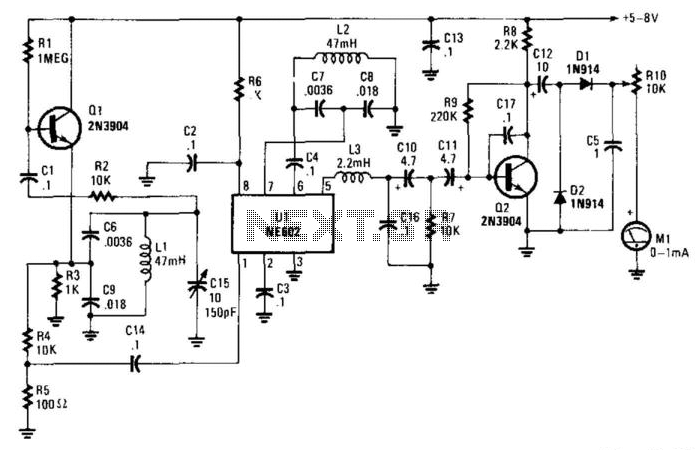
Permanent Magnet Detector
In this circuit, oscillator Q1 operates at approximately 15 kHz and provides input to mixer U1. U1 contains an internal oscillator that also runs at around 15 kHz. Capacitor C15 is employed to achieve zero-beat between both oscillators. When a...
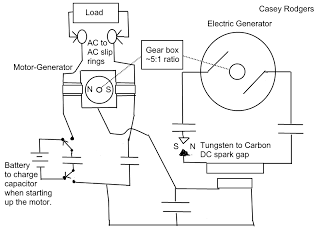
permanent Magnetic motor generator
Locate Permanent Magnet DC Generators, Magnetic Motor Generators, and additional information at Magneticgenerator.info. Discover the best options for Free Energy Magnet Motors, explore topics such as Cash Advances, browse the Debt Consolidation section, or learn about Insurance. Magneticgenerator.info serves as...
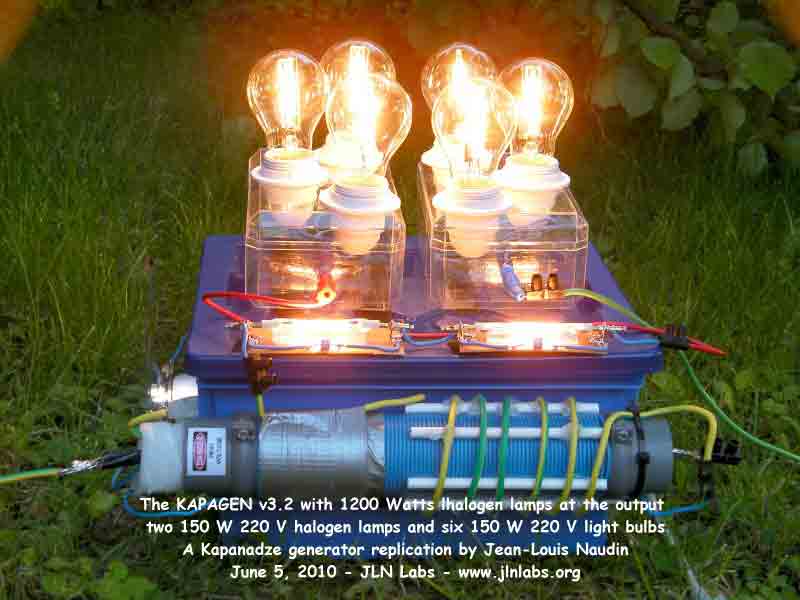
KAPAGEN (earth power multiplier)
The purpose of the Kapagen is to suck the free electrons from the Earth. The Earth is a big capacitor which contains free electric charges. If it is possible to create or to find a potential imbalance between two points...
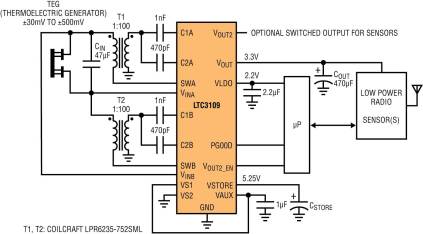
Energy harvesting from thermoelectric sources
The cost of electricity worldwide has been steadily increasing for over the past 40 years. With the exception of a few periods of stable rates and a handful of minor decreases, electricity prices have risen almost every year since 1970....