


Free energy Bicycle lights
#bicycle lights
#free energy
#safety
#flashing lights
#no battery
#energy harvesting
#bright LED
#standby light
#bicycle safety
#sustainable energy
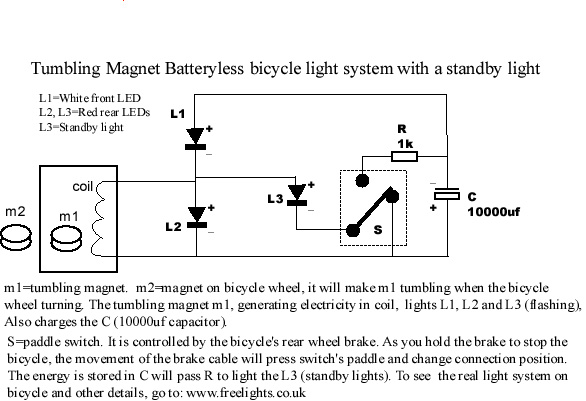
Description: This bicycle safety flashing light system is based on a newly invented electrical generation system that requires no battery and produces no friction on any parts of the bicycle. It generates energy with minimal resistance, making it highly efficient for bicycle use. The system provides a very bright light and includes a standby feature.
The bicycle safety flashing light system utilizes an innovative electrical generation mechanism that harnesses kinetic energy from the bicycle's motion. This system comprises a compact generator integrated into the bicycle's wheel hub, which converts mechanical energy into electrical energy without requiring traditional batteries or causing drag.
The generator consists of a rotor and stator assembly designed to maximize energy conversion efficiency. As the bicycle moves, the rotor spins within the stator, inducing an electrical current through electromagnetic induction. This current is then directed to a high-efficiency LED light source, which offers superior brightness compared to conventional bulbs, ensuring visibility during both day and night rides.
Additionally, the system features a capacitor-based energy storage solution that allows for a standby light function. This feature ensures that the light remains illuminated even when the bicycle is stationary, enhancing safety during stops. The capacitor charges during motion and discharges to power the light when needed, providing a seamless transition without the need for batteries.
The overall design prioritizes minimal weight and compactness, ensuring that the system does not interfere with the bicycle's performance or handling. The absence of friction and drag contributes to an uninterrupted riding experience, making this system an ideal choice for safety-conscious cyclists. The implementation of this technology signifies a significant advancement in bicycle safety lighting solutions, combining efficiency, sustainability, and high visibility.This bicycle safety flashing light system is based on a newly invented electrical generating system, NO battery needed, No friction on any parts of the bicycle. No drag. get the energy almost free (at least on bicycle). Very bright. Standby light..
The bicycle safety flashing light system utilizes an innovative electrical generation mechanism that harnesses kinetic energy from the bicycle's motion. This system comprises a compact generator integrated into the bicycle's wheel hub, which converts mechanical energy into electrical energy without requiring traditional batteries or causing drag.
The generator consists of a rotor and stator assembly designed to maximize energy conversion efficiency. As the bicycle moves, the rotor spins within the stator, inducing an electrical current through electromagnetic induction. This current is then directed to a high-efficiency LED light source, which offers superior brightness compared to conventional bulbs, ensuring visibility during both day and night rides.
Additionally, the system features a capacitor-based energy storage solution that allows for a standby light function. This feature ensures that the light remains illuminated even when the bicycle is stationary, enhancing safety during stops. The capacitor charges during motion and discharges to power the light when needed, providing a seamless transition without the need for batteries.
The overall design prioritizes minimal weight and compactness, ensuring that the system does not interfere with the bicycle's performance or handling. The absence of friction and drag contributes to an uninterrupted riding experience, making this system an ideal choice for safety-conscious cyclists. The implementation of this technology signifies a significant advancement in bicycle safety lighting solutions, combining efficiency, sustainability, and high visibility.This bicycle safety flashing light system is based on a newly invented electrical generating system, NO battery needed, No friction on any parts of the bicycle. No drag. get the energy almost free (at least on bicycle). Very bright. Standby light..
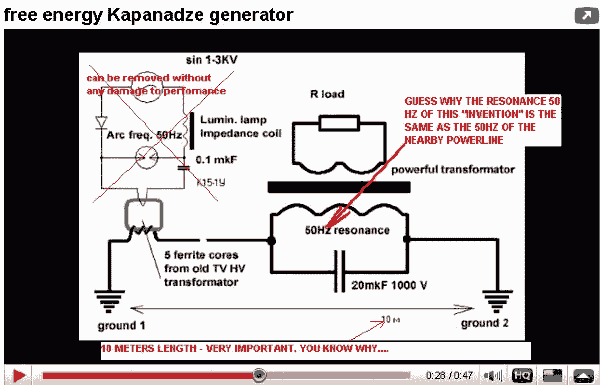
Kapanadze Free Energy Generator
An inventor from the Republic of Georgia, Tariel Kapaladze, claims to have developed a 5-kilowatt free energy generator. In a demonstration video, the device seemingly produces large amounts of energy without any visible source. While it appears to extract energy...
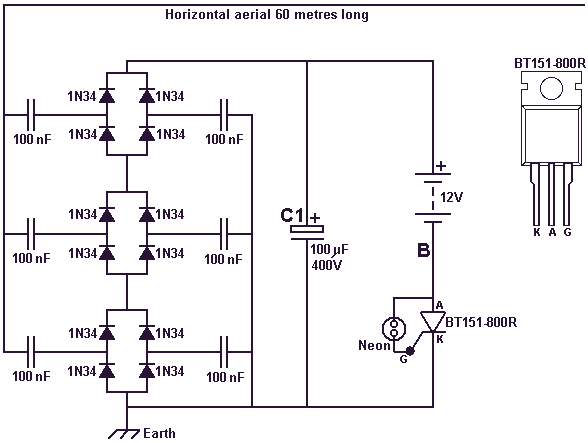
Free energy battery charger
As the circuit operates, the three sets of diodes with their isolation capacitors build up an increasing voltage on capacitor C1. The voltage at point B will also increase and be about twelve volts less than the voltage on capacitor...
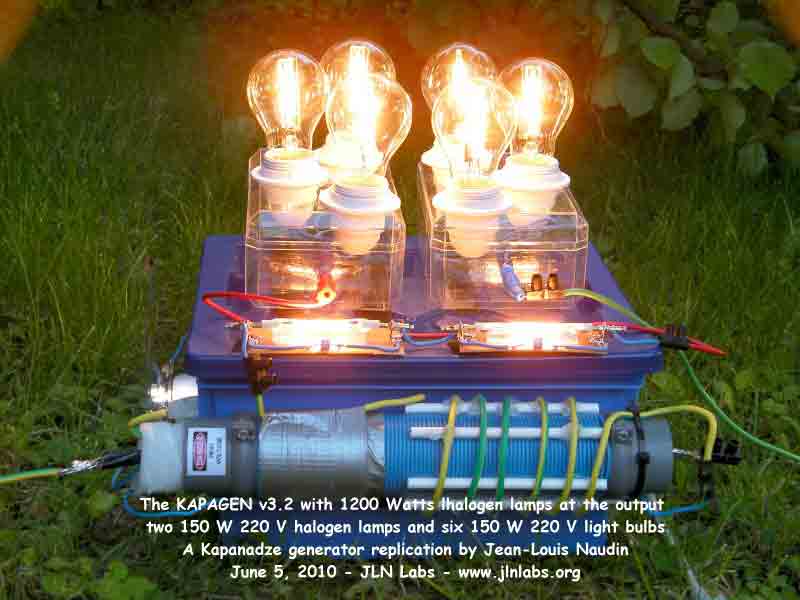
KAPAGEN (earth power multiplier)
The purpose of the Kapagen is to suck the free electrons from the Earth. The Earth is a big capacitor which contains free electric charges. If it is possible to create or to find a potential imbalance between two points...
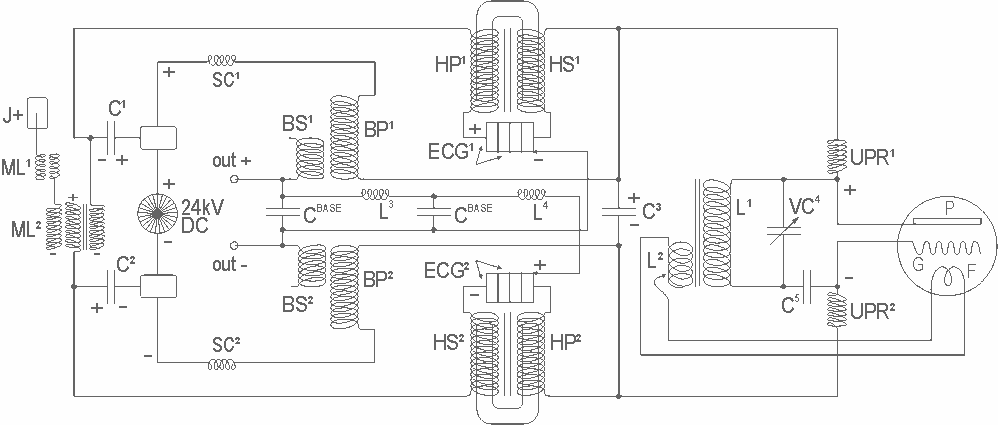
Testatika Free energy
The Testatika design based on the Pidgeon/Wimshurst machine is of course only one type of electrostatic generator to build this system around. Since the early 1900s such power generators have come a long way in sophistication - and in power...
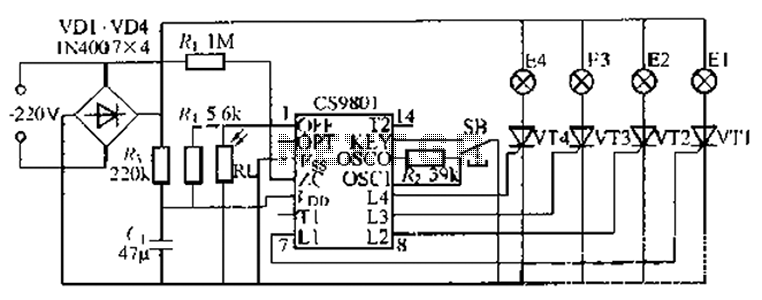
Four flashing lights string circuit 4
The ASIC is a flashing light string controller featuring four outputs. It includes a single key cycle control with six different lighting effects, and it allows for the selection of either 16 or 8 patterns. The circuit incorporates a photosensitive...
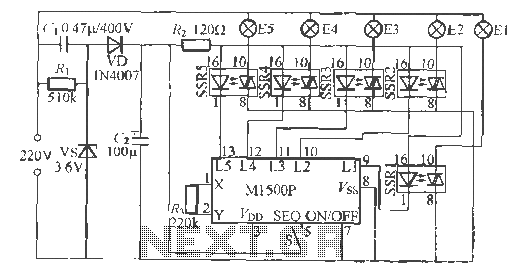
Rd flashing light string circuit
The Shenzhen Skywave Semiconductor Co., Ltd. produces a five-flash integrated circuit controller known as M1500P. This device is manufactured using a DIP 14 standard package and can be customized according to customer specifications for soft seal packaging. It operates on...
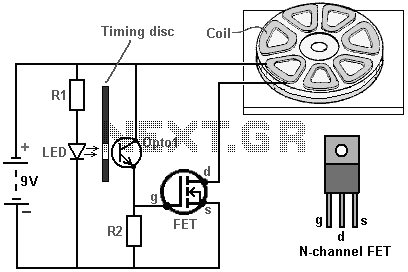
Free energy magnet motor
This invention relates to a method of producing useful energy with magnets as the driving force and represents an important improvement over known constructions and it is one which is simpler to construct, can be made to be self starting,...
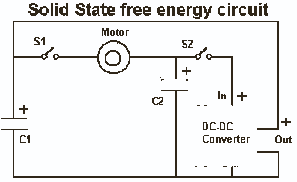
Solid State Free energy Circuit
It's very simple actually. The idea is that we use what we have learned from the capacitor tests to create a circuit that uses the capacitors to run the load and then by discharging the 1/2 full capacitor into a...
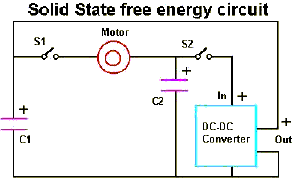
Solid State Free energy Basic
A circuit that utilizes capacitors to power a load, subsequently discharging a half-full capacitor into a DC-DC converter to recharge the initial capacitor, allowing the process to repeat while retaining some surplus energy.
This circuit operates on the principle of energy...