


Joule Thief Circuit Kit
#joule thief
#low voltage
#energy harvesting
#steam engine
#carousel
#DIY
#circuit kit
#power efficiency
#LED lighting
#educational
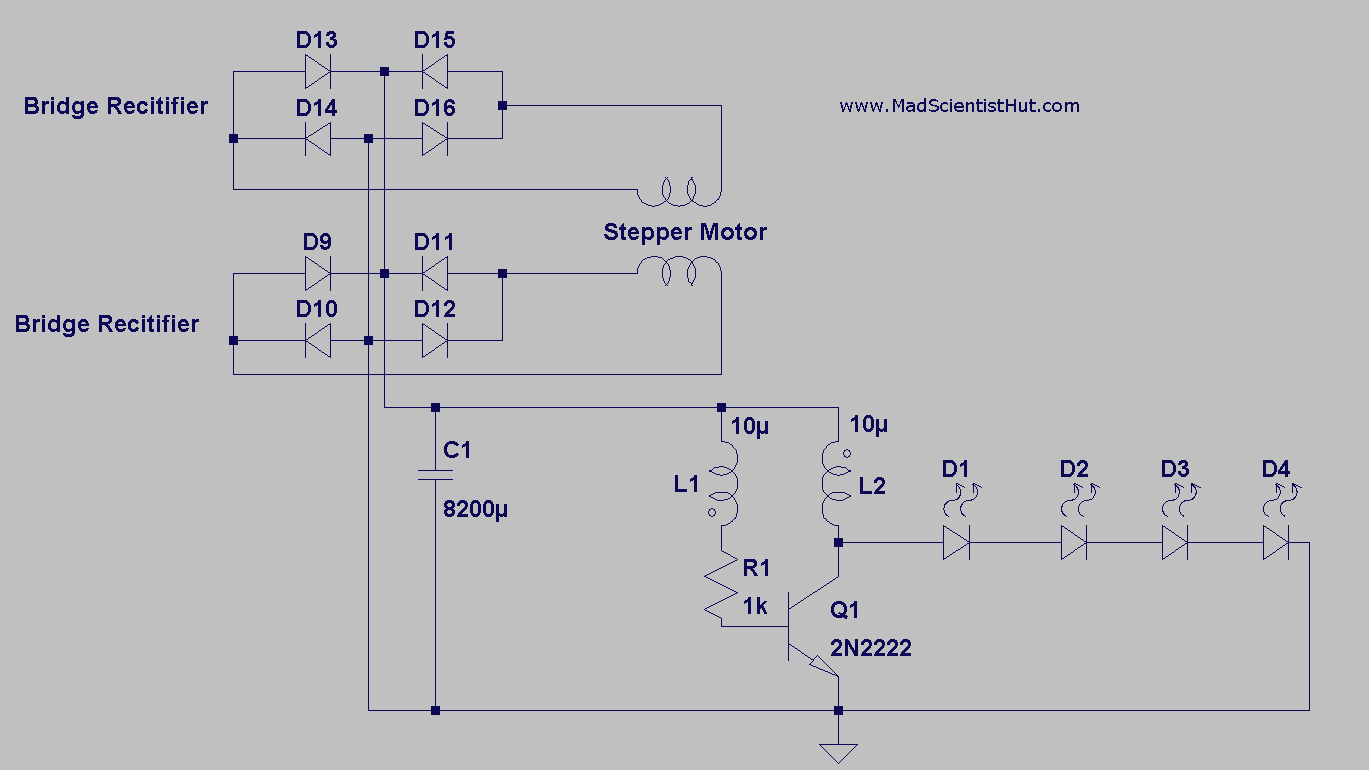
Description: A steam engine powered carousel project that utilizes the Joule Thief circuit.
The project involves the design and construction of a carousel that is powered by a steam engine, showcasing the principles of mechanical motion and energy conversion. The Joule Thief circuit, a simple and effective boost converter, is integrated into the system to optimize the energy usage from low-voltage sources, such as batteries or capacitors.
The steam engine serves as the primary power source, converting thermal energy into mechanical energy to drive the carousel's rotation. The Joule Thief circuit enhances the efficiency of the power supply by allowing the system to operate effectively even with minimal voltage. This circuit typically consists of a transistor, a transformer, and a few passive components, which work together to step up the voltage from the energy source to a level suitable for the operation of the carousel's motor.
In the schematic, the steam engine is connected to a mechanical linkage that drives the carousel, while the Joule Thief circuit is connected to a low-voltage power source. The output of the Joule Thief is then fed into a small DC motor that powers the carousel. The design can be further enhanced with additional features such as LED lighting or sound effects, which can be powered by the same energy source, showcasing the versatility of the Joule Thief in powering multiple components within the project.
Overall, this project exemplifies the integration of classical engineering principles with modern electronic circuits, providing an educational platform for exploring steam power and energy efficiency.A Very Nice Steam Engine Powered Carousel Project That Uses The Joule Thief
The project involves the design and construction of a carousel that is powered by a steam engine, showcasing the principles of mechanical motion and energy conversion. The Joule Thief circuit, a simple and effective boost converter, is integrated into the system to optimize the energy usage from low-voltage sources, such as batteries or capacitors.
The steam engine serves as the primary power source, converting thermal energy into mechanical energy to drive the carousel's rotation. The Joule Thief circuit enhances the efficiency of the power supply by allowing the system to operate effectively even with minimal voltage. This circuit typically consists of a transistor, a transformer, and a few passive components, which work together to step up the voltage from the energy source to a level suitable for the operation of the carousel's motor.
In the schematic, the steam engine is connected to a mechanical linkage that drives the carousel, while the Joule Thief circuit is connected to a low-voltage power source. The output of the Joule Thief is then fed into a small DC motor that powers the carousel. The design can be further enhanced with additional features such as LED lighting or sound effects, which can be powered by the same energy source, showcasing the versatility of the Joule Thief in powering multiple components within the project.
Overall, this project exemplifies the integration of classical engineering principles with modern electronic circuits, providing an educational platform for exploring steam power and energy efficiency.A Very Nice Steam Engine Powered Carousel Project That Uses The Joule Thief
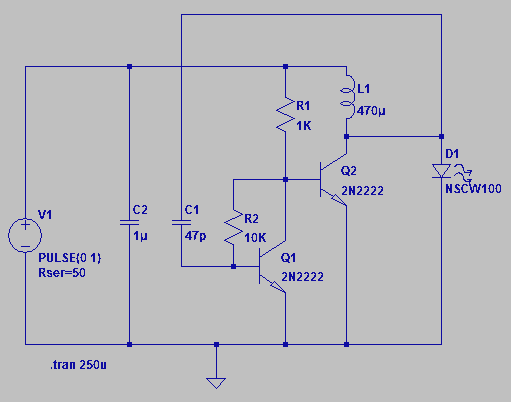
Joule thief AA battery led circuit
Four observations regarding the Joule Thief AA battery LED circuit. The schematic of the LED circuit illustrates the power source (V1), which symbolizes a depleted battery with only 1 volt remaining and an internal resistance.
The Joule Thief circuit is a...
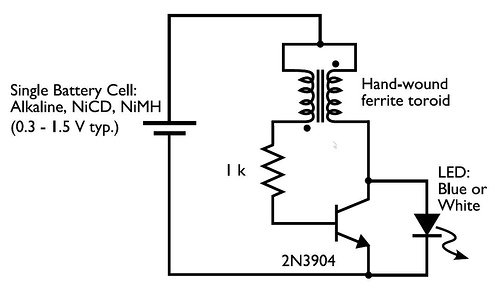
joule thief circuit power a white blue led from a 1 5v battery
This circuit is commonly referred to as a Joule Thief, and it has been frequently encountered in various electronics videos on YouTube.
The Joule Thief is a simple, low-cost circuit designed to extract energy from a single-cell battery, particularly when the...
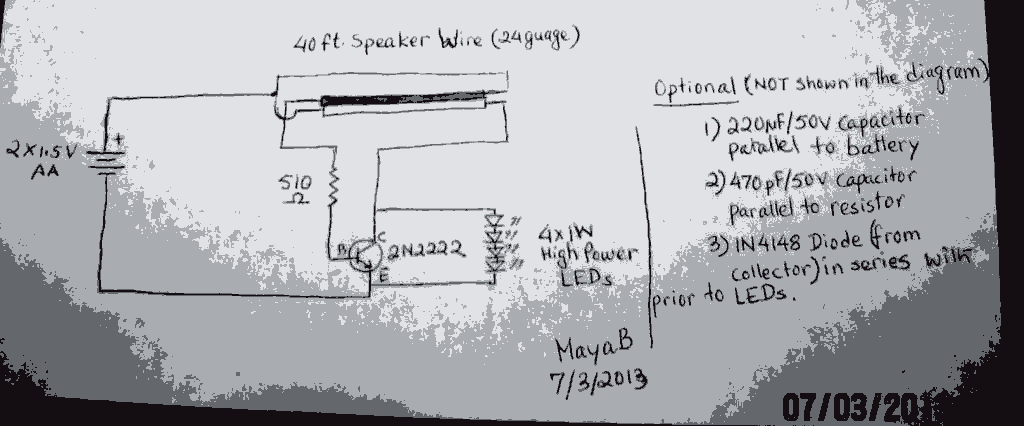
4 watt LEDS with 1.5V from a Joule thief
The post discusses a Joule Thief circuit that drives and illuminates four 1-watt LEDs using a single 1.5V pencil cell.
The Joule Thief circuit is a minimalist boost converter designed to extract energy from low-voltage power sources, such as a single...
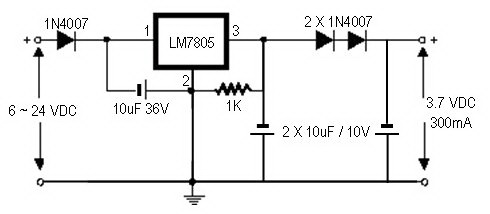
how to convert a 9v battery to 3.7v
A regulator circuit is needed for this DIY project. Familiarity with electronic components, circuitry, the use of a multitester, and a soldering iron is essential. The schematic diagram provided can accept an input voltage ranging from 6 to 24 volts...
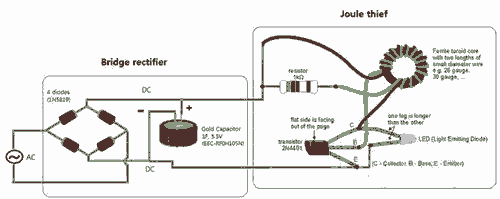
Bright JOULE THIEF flashlight circuit
Breathe down and come out on the bright flashlight. In order to promote the voltage, pieces of a highly skilled Joule thief circuit have been used.
The Joule thief circuit is a minimalist, low-power boost converter designed to extract energy from...
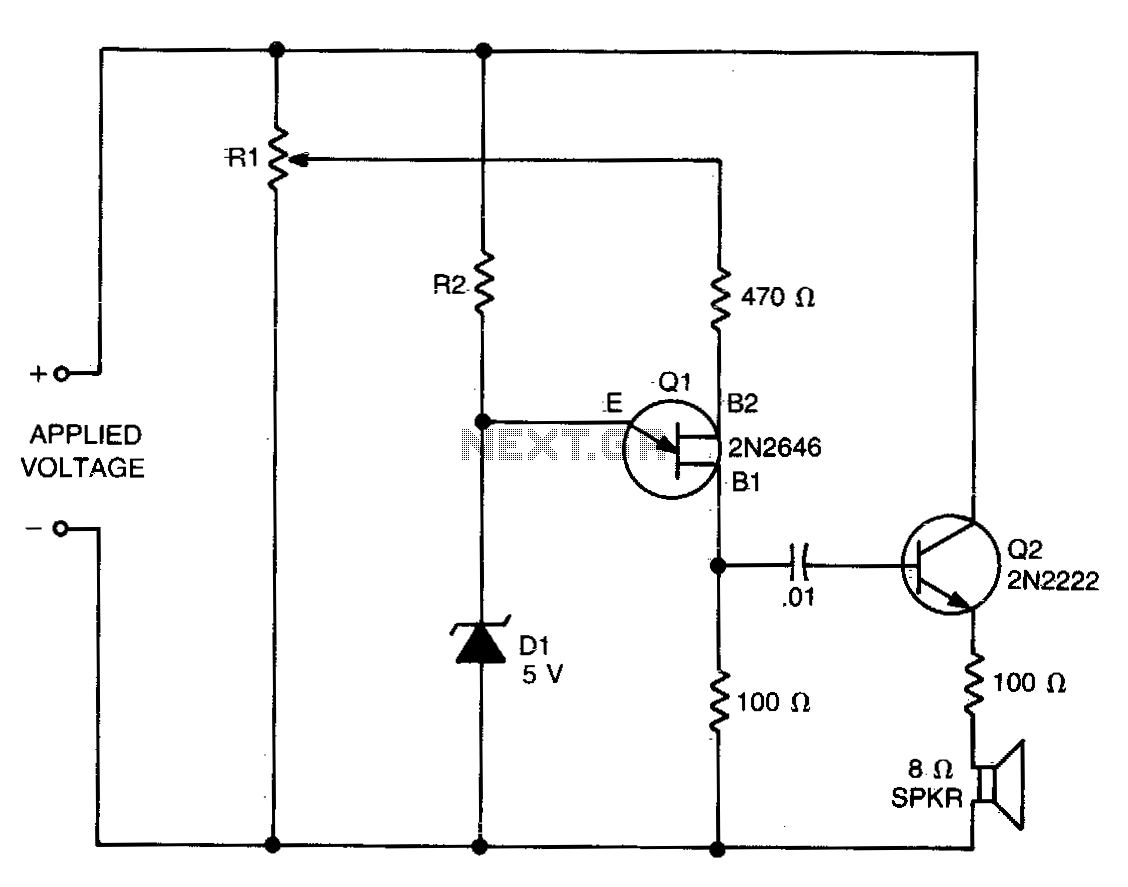
Low voltage detector
The values of R1, R2, and D1 are selected based on the voltage applied. Using a 12-volt battery, R1 is set to 10 kΩ, R2 to 5 kΩ, and D1 is a 5-volt zener diode or a string of forward-biased...
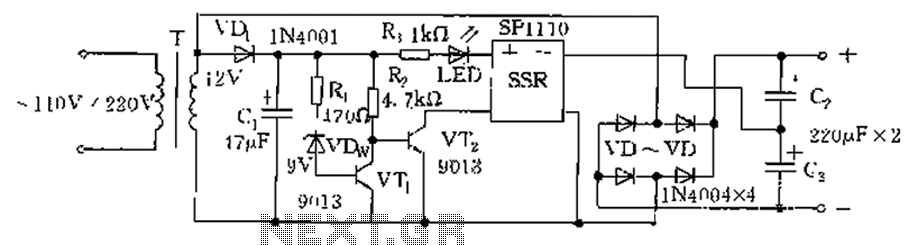
Schematic circuit diagram of low voltage and low voltage automatic conversion
The circuit is automatically converted to a low-voltage configuration. A 220V AC supply is stepped down by transformer T. After this, the breakdown voltage of diode VDw causes transistors VT1 and VT2 to turn off, resulting in the solid-state relay...
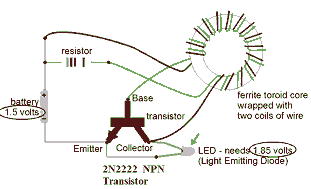
Joule Thief Power Overload circuit
This circuit is known as the Joule Thief. For those unfamiliar with it, an image of the circuit is provided.
The Joule Thief is a minimalist circuit designed to extract usable voltage from a low-voltage power source, such as a single...
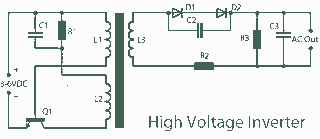
3V to high Joule Thief inverter circuit
A 3V to 1000V inverter circuit has been constructed, but it is not functioning as intended. The creator seeks expert assistance to identify potential errors in the circuit design. Additionally, there is uncertainty regarding the transformer construction, as the same...