


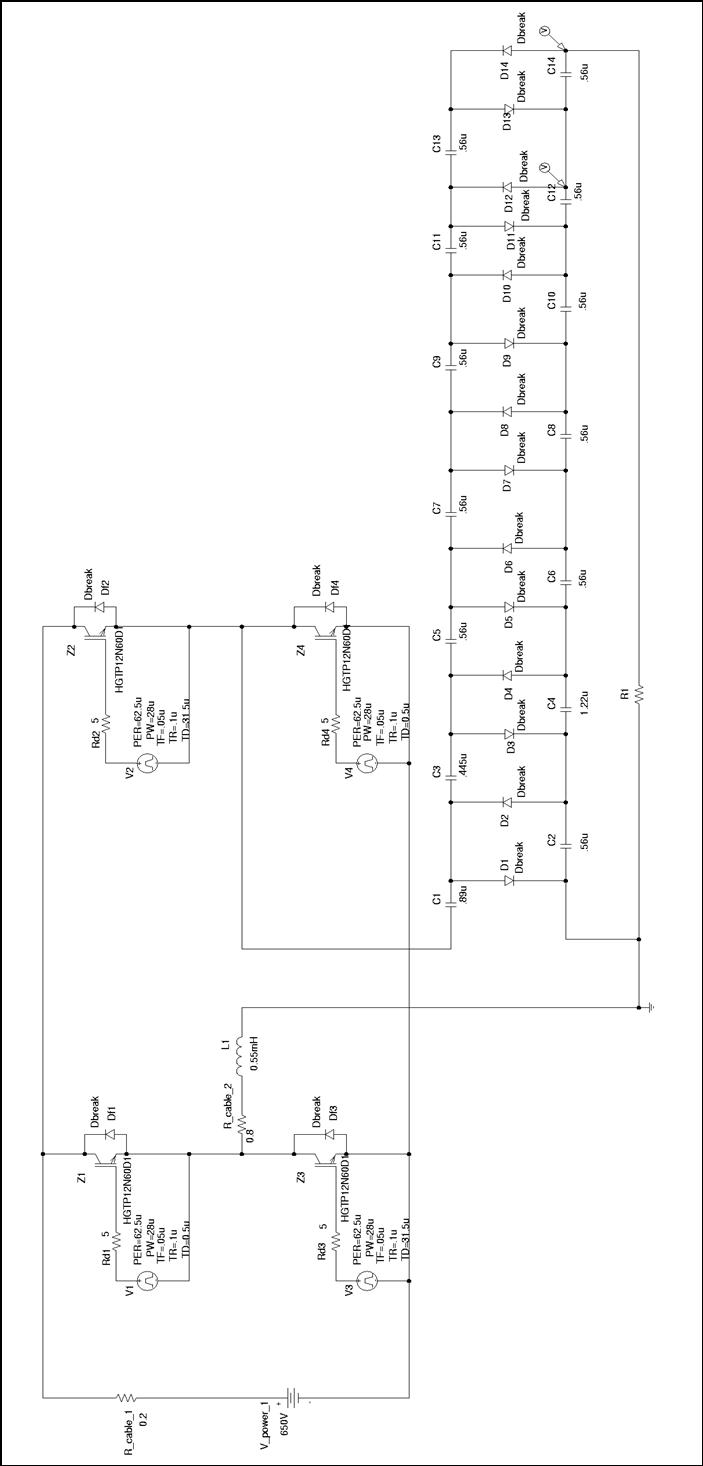
h bridge voltage multiplier at low voltage
#H-bridge
#voltage multiplier
#low voltage
#power electronics
#thesis
#University of Canterbury
#Universität Karlsruhe
#converter
#circuit design
#high voltage
Description: Thesis by Rafael Bräg at the University of Canterbury, New Zealand, in cooperation with the Universität Karlsruhe, Institut Elektrotechnik und Hochspannungstechnik.
The thesis presents a comprehensive study conducted by Rafael Bräg, focusing on advancements in the field of electrical engineering. The collaboration between the University of Canterbury and the Universität Karlsruhe, specifically the Institute of Electrical Engineering and High Voltage Technology, underscores the significance of international cooperation in academic research.
The research encompasses various aspects of electrical engineering, including the design, analysis, and implementation of high-voltage systems. It may involve the exploration of new materials, innovative circuit designs, and the application of advanced simulation techniques to enhance the efficiency and reliability of electrical systems.
In particular, the thesis likely addresses critical topics such as insulation technology, power system stability, and the integration of renewable energy sources into existing electrical grids. The findings and methodologies outlined in this work could provide valuable insights for both academic researchers and industry professionals seeking to improve electrical system performance and safety.
Overall, the thesis serves as a substantial contribution to the field of electrical engineering, reflecting the collaborative efforts and expertise of both institutions involved in the research.Thesis by Rafael Bräg at the University of Canterbury, New Zealand in cooperation with the Universität Karlsruhe, Institut Elektrotechnik und Hochspannungstechnik..
The thesis presents a comprehensive study conducted by Rafael Bräg, focusing on advancements in the field of electrical engineering. The collaboration between the University of Canterbury and the Universität Karlsruhe, specifically the Institute of Electrical Engineering and High Voltage Technology, underscores the significance of international cooperation in academic research.
The research encompasses various aspects of electrical engineering, including the design, analysis, and implementation of high-voltage systems. It may involve the exploration of new materials, innovative circuit designs, and the application of advanced simulation techniques to enhance the efficiency and reliability of electrical systems.
In particular, the thesis likely addresses critical topics such as insulation technology, power system stability, and the integration of renewable energy sources into existing electrical grids. The findings and methodologies outlined in this work could provide valuable insights for both academic researchers and industry professionals seeking to improve electrical system performance and safety.
Overall, the thesis serves as a substantial contribution to the field of electrical engineering, reflecting the collaborative efforts and expertise of both institutions involved in the research.Thesis by Rafael Bräg at the University of Canterbury, New Zealand in cooperation with the Universität Karlsruhe, Institut Elektrotechnik und Hochspannungstechnik..

Low Voltage to 30 kV Out
The circuit detailed in this document is designed to produce up to 30 kilovolts or more from a low-voltage DC source using a flyback transformer (LOPT) salvaged from a black-and-white or color television or computer monitor. With a typical 12...
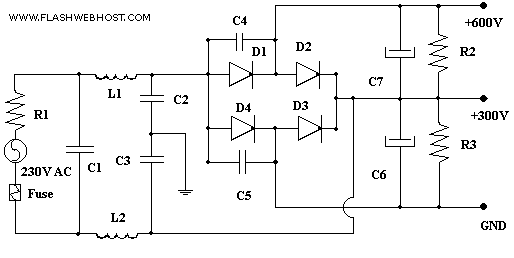
600 VOLTS POWER SUPPLY FOR QRO
Amateur Radio Transmitters using valves such as 807 or 1625 works well with a plate voltage between 600V to 700 Volts. The circuit described here is a full wave voltage doubler. The output voltage is twice the input voltage. For...
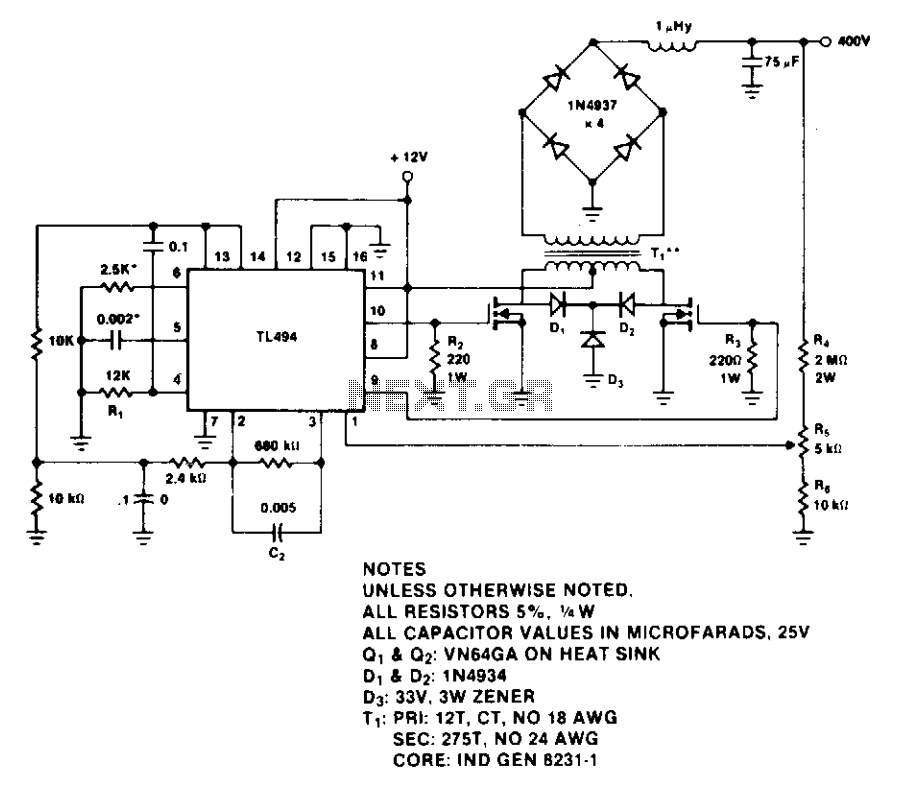
400-Volt 60-watt push-pull power supply
The design provides a regulated output of 400 V and 60 W. The TL494 switching regulator controls the operating frequency and output voltage regulation. Resistor R1 and capacitor C1 set the switching frequency, which is approximately 0.5 to 100 kHz...
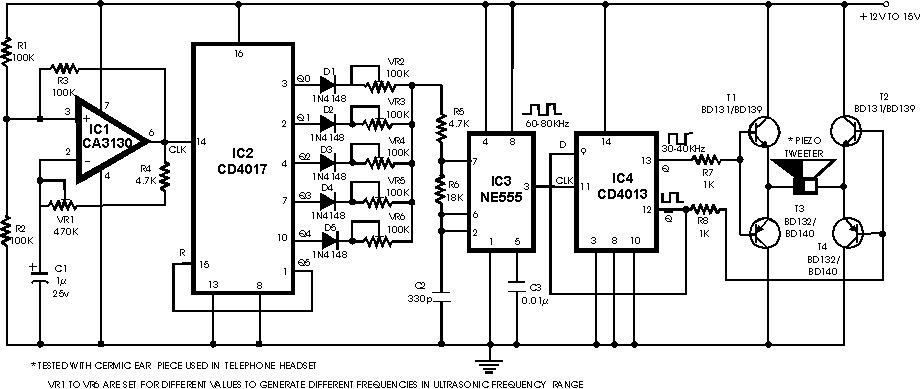
high voltage low current supply circuit diagram
A high voltage power supply is a valuable source that can be effectively used in various applications, such as biasing gas-discharge tubes and radiation detectors. This type of power supply can also serve as a protective measure, such as electrically...
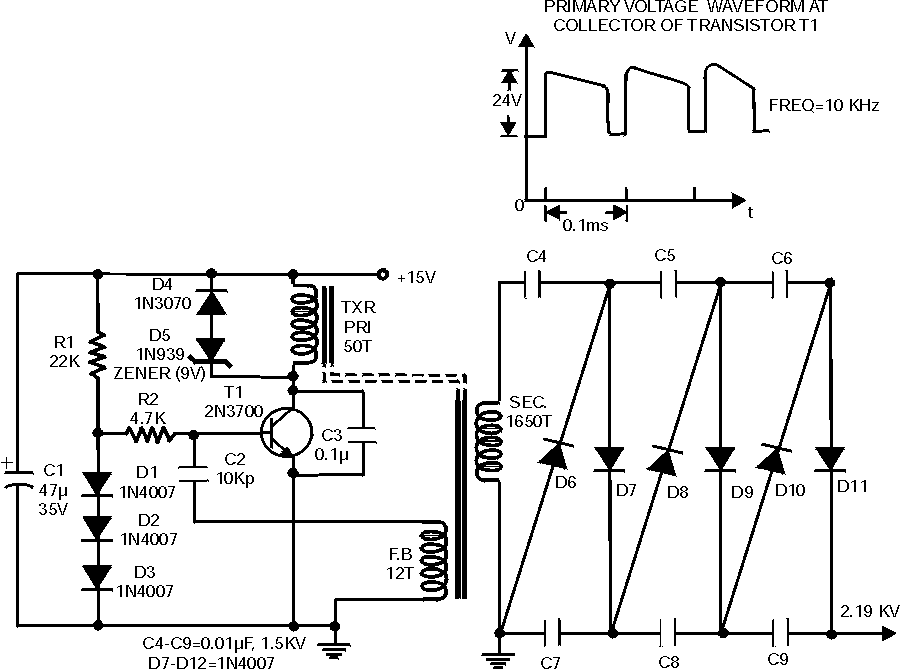
High Voltage power Supply
A high voltage power supply is a very useful source which can be effectively used in many applications like biasing of gas-discharge tubes and radiation detectors etc. Such a power supply could also be used for protection of property by...
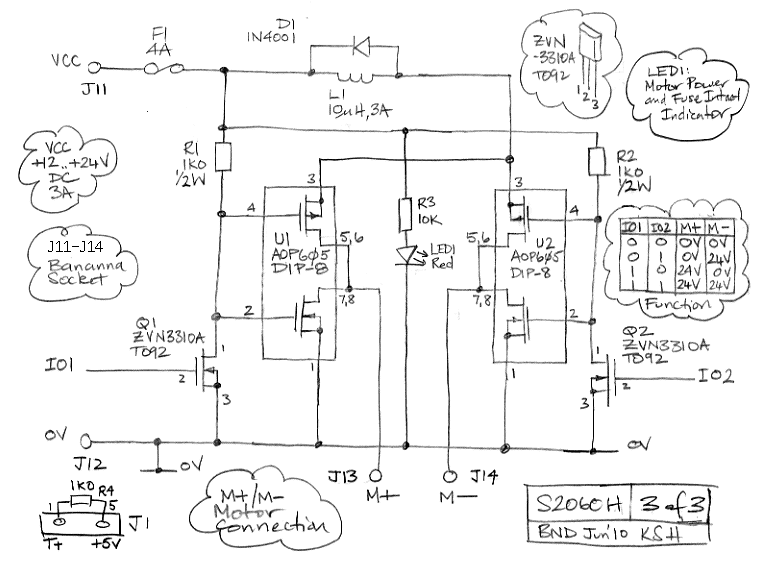
H-Bridge (A2060H) Manual
The A2060H is an H-Bridge extension for the Programmable Logic Head (A2060). Utilizing an external power supply to deliver motor current, the A2060H enables variable-speed, bi-directional control of DC motors. These motors can operate within a voltage range of 6...
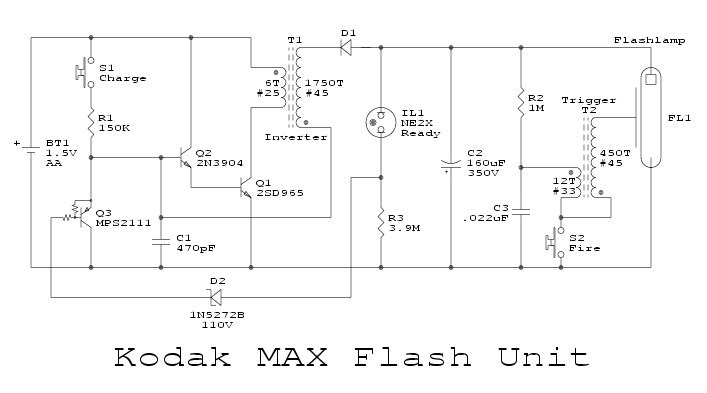
Salvaging Interesting Gadgets Components and Subsystems
The high voltage power supply is likely capable of delivering between 12 to 30 kVDC at a current of 1 or 2 mA. This output is suitable for various high voltage applications, including experiments, plasma globes, negative ion and ozone...
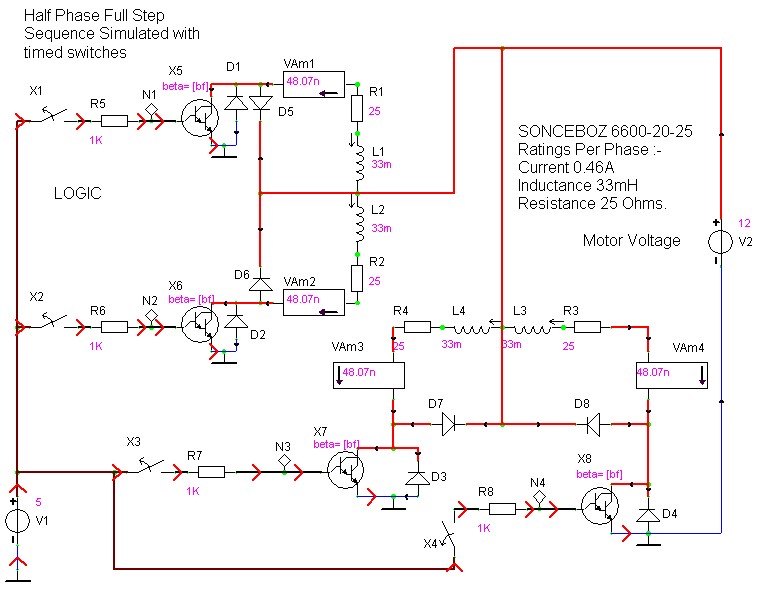
case stepper
Beige Bag Software has been offering affordable and innovative circuit design tools since 1990. B2 Spice provides schematics as well as analog, digital, and mixed-mode electronic circuit simulation. It integrates with EAGLE and CADSTAR PCB software.
B2 Spice is a powerful...
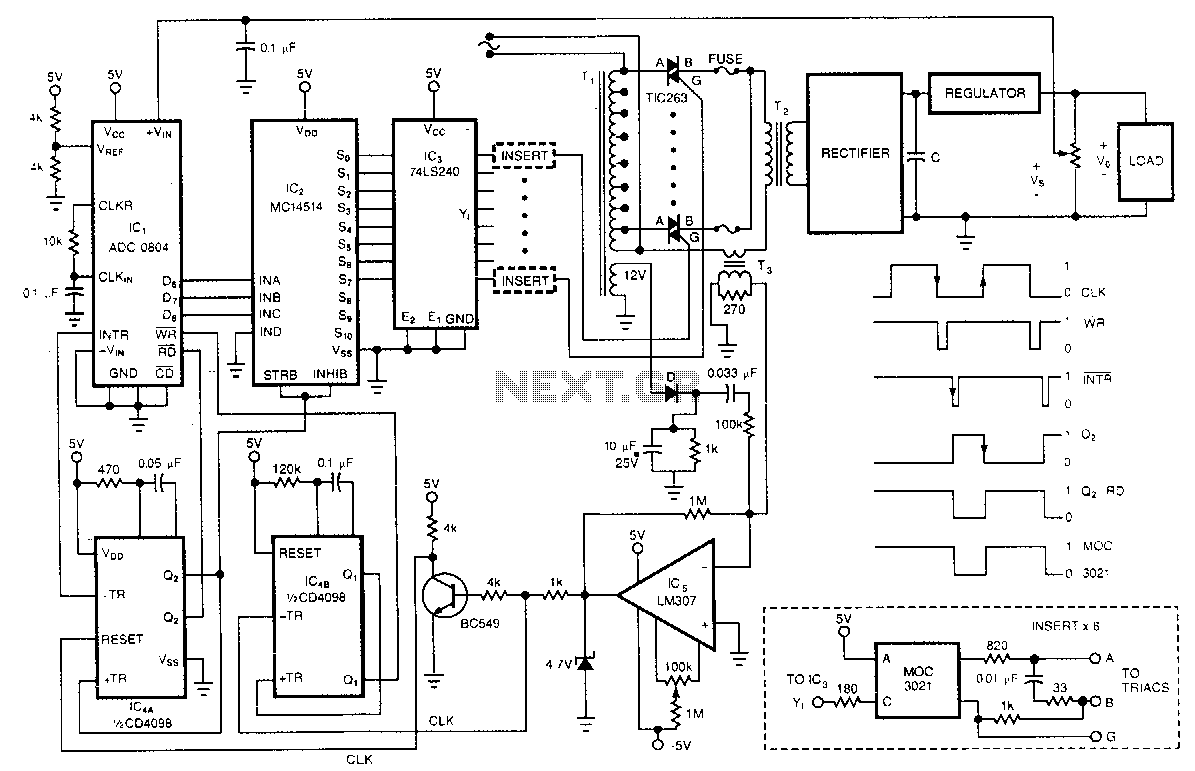
Preregulated-high-voltage-supply
One of the control circuit's triacs selects the tap on the main transformer T1, which provides the proper preregulated voltage to the secondary regulator. T2 and its associated components comprise the secondary regulator. The ADC 0804, IC1, digitizes a voltage...