


Audio-Controlled Incandescent Lamp Light Controller
#audio-controlled
#incandescent lamp
#light controller
#audio input
#low voltage
#pre-amplifier
#tone control
#line level
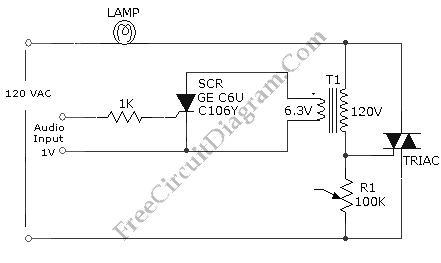
Description: This is an audio-controlled lamp circuit. This circuit requires a low voltage input, such as from pre-amplifiers, tone control, or general audio line level output.
The audio-controlled lamp circuit is designed to activate a lamp in response to audio signals. The circuit typically operates at low voltage levels, making it suitable for integration with various audio sources, including pre-amplifiers and tone control units.
The core of the circuit consists of a microphone or audio input stage that captures sound waves and converts them into electrical signals. These signals are then processed by a signal conditioning stage, which may include filtering and amplification to ensure that the audio input is within the appropriate range for triggering the lamp.
A comparator circuit is often used to analyze the amplitude of the audio signal. When the audio signal exceeds a predefined threshold, the comparator output changes state, activating a transistor or a relay that controls the lamp's power supply. This allows the lamp to turn on or off based on the intensity of the incoming audio signals.
Additionally, the circuit can include features such as adjustable sensitivity to accommodate different audio levels and environments. A potentiometer may be incorporated into the design to allow users to set the threshold level according to their specific needs.
For safety and reliability, it is essential to ensure that the circuit is designed to handle the power requirements of the lamp being controlled. This may involve selecting appropriate components, such as transistors with adequate current ratings or relays that can manage the lamp's voltage and current specifications.
In summary, the audio-controlled lamp circuit serves as an innovative solution for creating interactive lighting effects based on audio inputs, enhancing both functionality and ambiance in various applications.This is a audio-controlled lamp circuit. This circuit requires low voltage input such as pre-amplifiers, tone control, or general audio line level output. It`s.
The audio-controlled lamp circuit is designed to activate a lamp in response to audio signals. The circuit typically operates at low voltage levels, making it suitable for integration with various audio sources, including pre-amplifiers and tone control units.
The core of the circuit consists of a microphone or audio input stage that captures sound waves and converts them into electrical signals. These signals are then processed by a signal conditioning stage, which may include filtering and amplification to ensure that the audio input is within the appropriate range for triggering the lamp.
A comparator circuit is often used to analyze the amplitude of the audio signal. When the audio signal exceeds a predefined threshold, the comparator output changes state, activating a transistor or a relay that controls the lamp's power supply. This allows the lamp to turn on or off based on the intensity of the incoming audio signals.
Additionally, the circuit can include features such as adjustable sensitivity to accommodate different audio levels and environments. A potentiometer may be incorporated into the design to allow users to set the threshold level according to their specific needs.
For safety and reliability, it is essential to ensure that the circuit is designed to handle the power requirements of the lamp being controlled. This may involve selecting appropriate components, such as transistors with adequate current ratings or relays that can manage the lamp's voltage and current specifications.
In summary, the audio-controlled lamp circuit serves as an innovative solution for creating interactive lighting effects based on audio inputs, enhancing both functionality and ambiance in various applications.This is a audio-controlled lamp circuit. This circuit requires low voltage input such as pre-amplifiers, tone control, or general audio line level output. It`s.
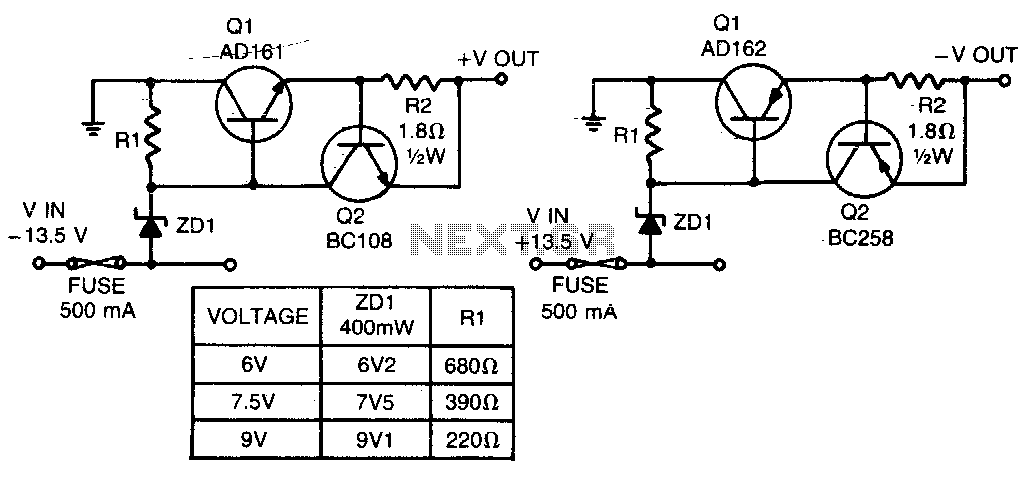
Low voltage regulators
These short-circuit protected regulators provide output voltages of 6, 7, and 9 V from a nominal automobile battery supply of 13 V. They are also compatible with smoothed DC outputs from transformer/rectifier circuits. Two configurations are designed for both positive...
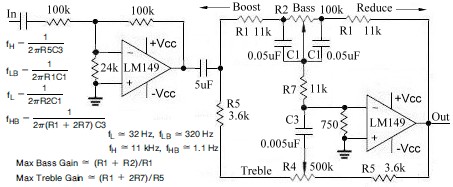
Active Audio Tone Control Circuit Design
This topic continues from the more general Passive Tone Control circuit, which begins using only passive filters. This circuit follows the previous design, although the component values are different and in an alternate configuration. An audio tone control combines both...
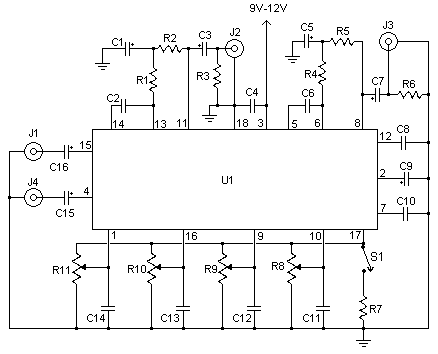
Tone Control
Tone Control. Parts: Total Quantity of Parts: Substitutions C1, C3, C5, C7, C15, C16 - 6 pieces of 2.2µF Electrolytic Capacitors; C2, C6 - 2 pieces of 0.05µF Ceramic Capacitors.
The tone control circuit is designed to adjust the frequency response...
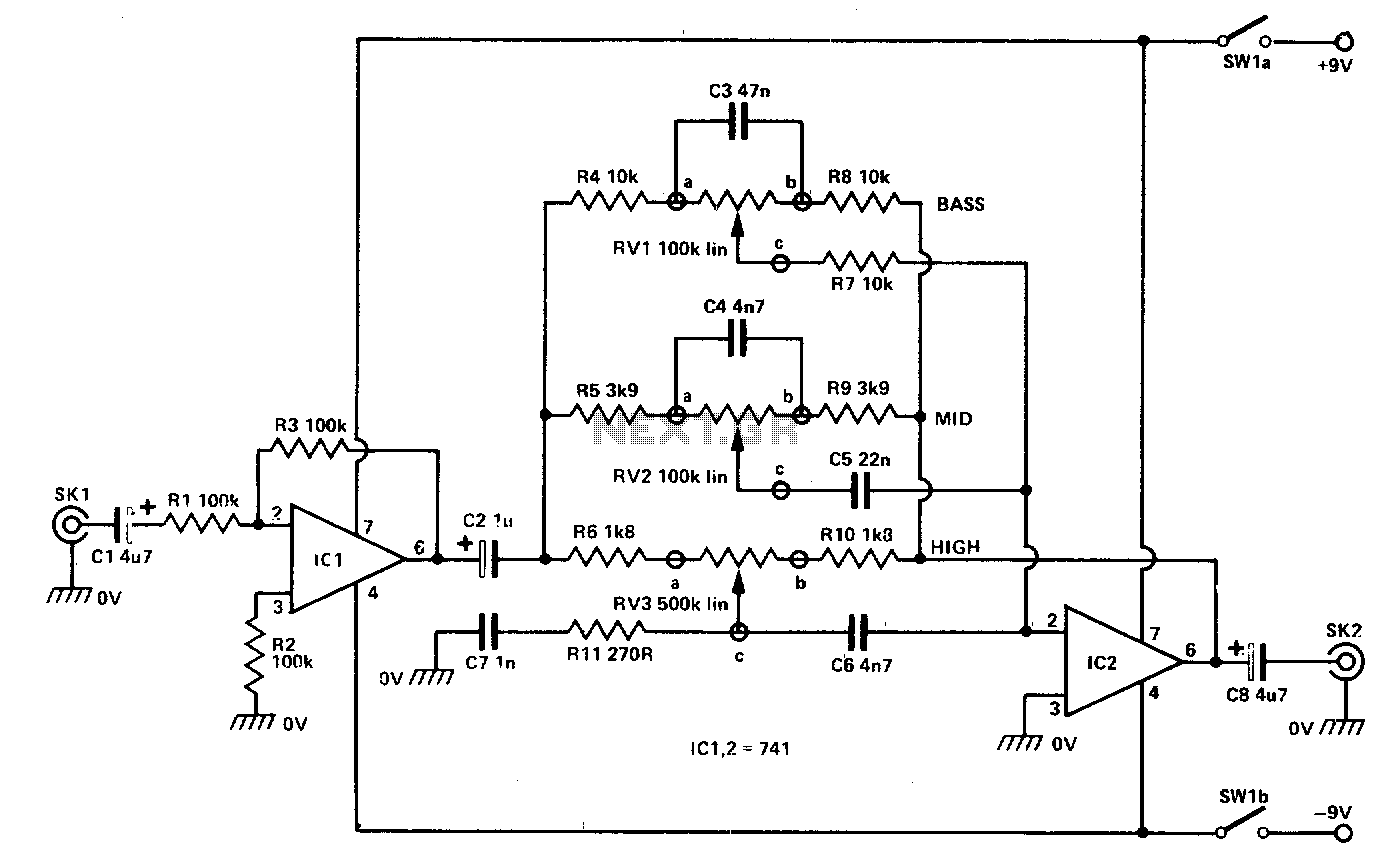
Three-channel tone control
The input signal is fed through SKI to the first active stage, which is constructed around IC1. This stage is configured as a non-inverting amplifier, with its gain determined by the ratio of R3 and R1. In this configuration, the...
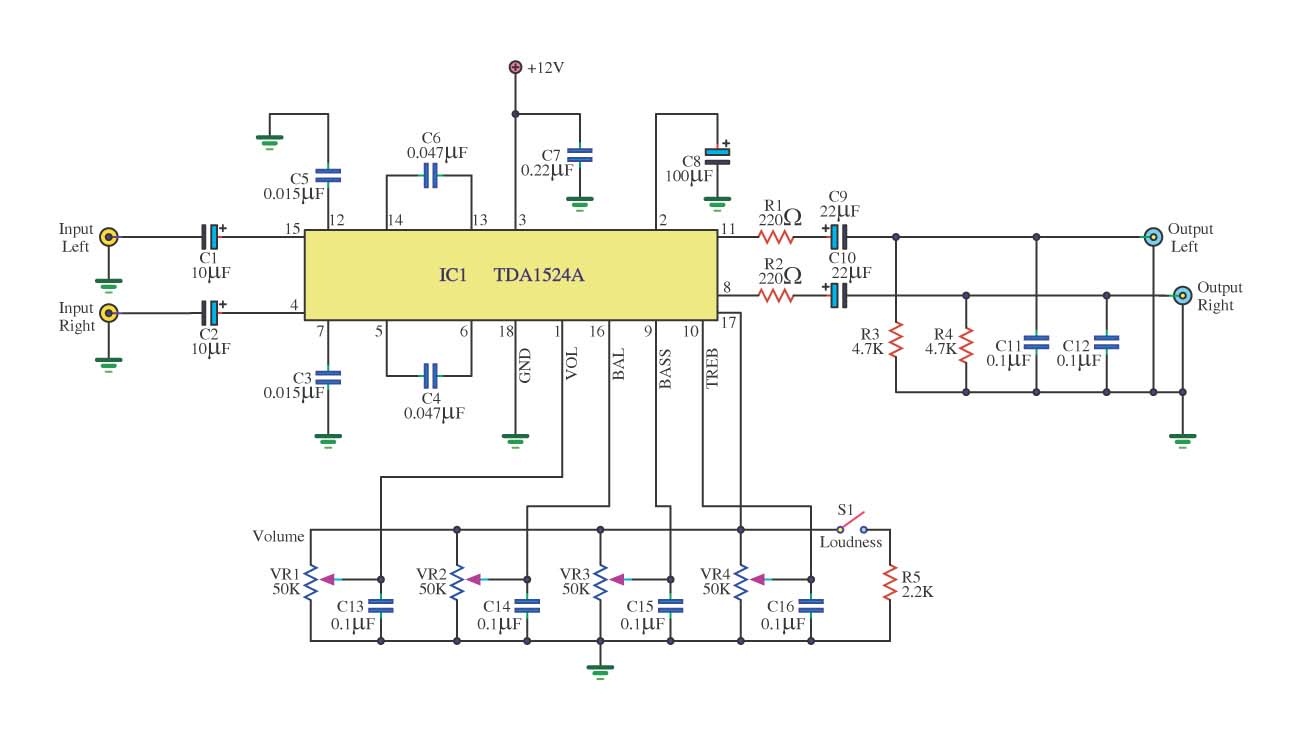
tone control circuit using tda1524a
This is a simple tone control circuit using the TDA1524A, which is a key component in this IC chip diagram from Philips. The circuit allows for tone control adjustments such as bass, treble, and balance, enabling users to fine-tune the...
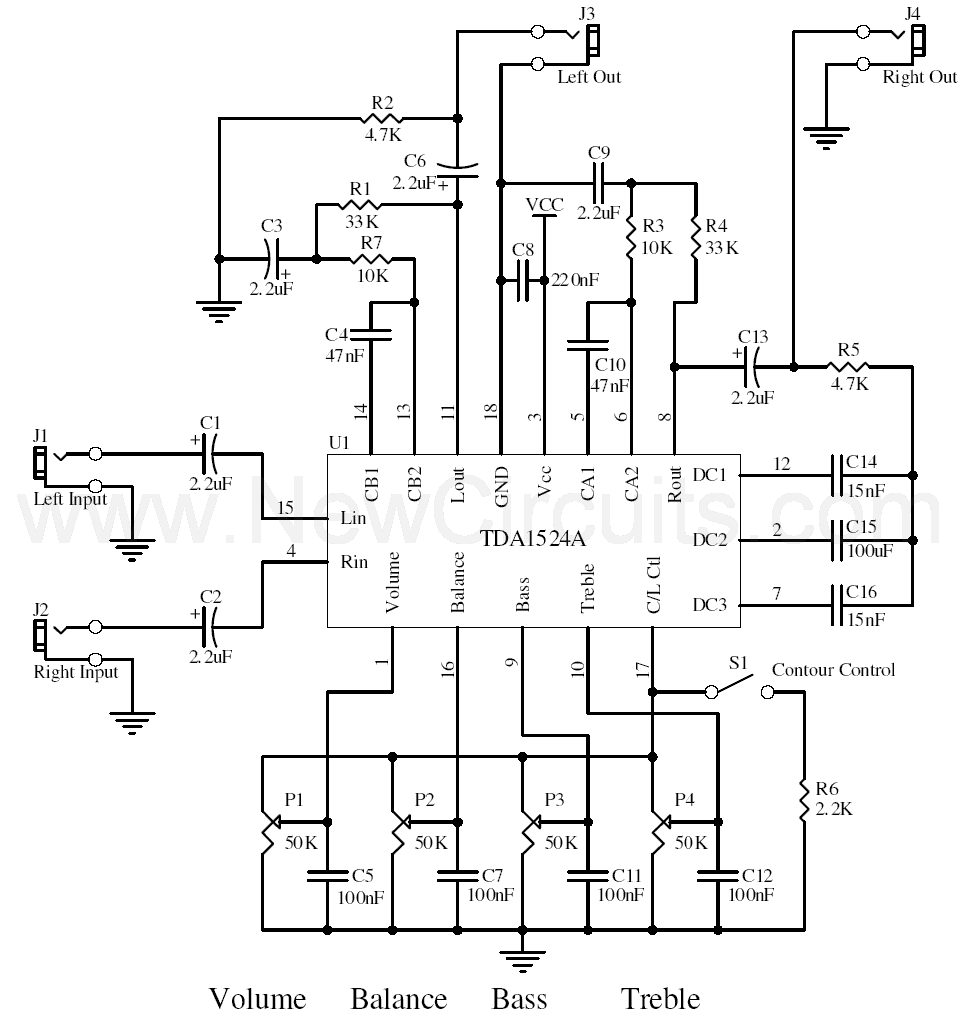
Stereo Tone Control
This simple tone control can be used in many audio applications. It can be added to amplifiers, used as a standalone control module, or even built into new and exciting instruments. Its single integrated circuit (IC) construction makes it a...
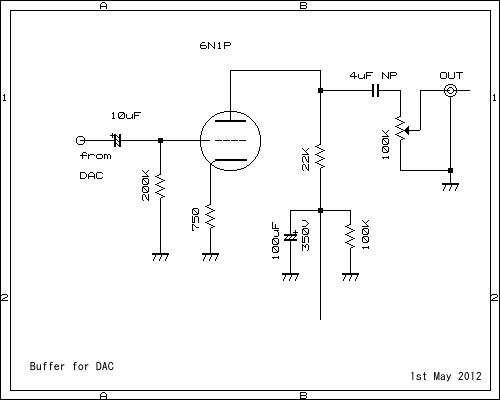
6DJ8 P-G Amp with DAC FN1242A Digital 2ch
This pre-amplifier can be driven directly from the DAC.
The described pre-amplifier is designed to interface directly with a Digital-to-Analog Converter (DAC). This direct connection allows for efficient signal amplification without the need for additional intermediary components, thereby simplifying the overall...
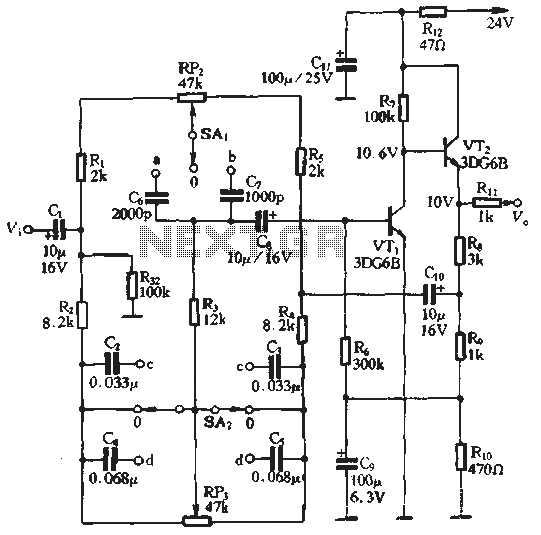
Variable corner frequency tone circuit
An attenuation switch is utilized to modify the pitch of a feedback control circuit's transition frequency, specifically for two treble controls. RP3 is designated for bass control, while SA1 and SA2 are employed to adjust the high bass control corner...
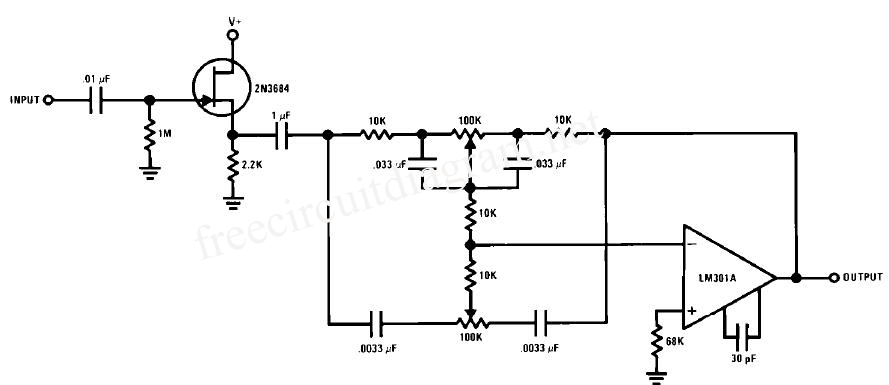
HI-FI simple Tone Control Circuit using the LM301A
This circuit is a simple series tone control circuit utilizing the OP-Amp LM301A. The JFET 2N3684 provides high input impedance and low noise characteristics for the feedback buffer in the op-amp-based tone control.
The tone control circuit described employs an operational...