


bass glow
#EL sheet
#inverter circuit
#battery consumption
#webcam recording
#AVI video
#DIY lighting
#electroluminescent
#low power
#lighting project
#incomplete circuit
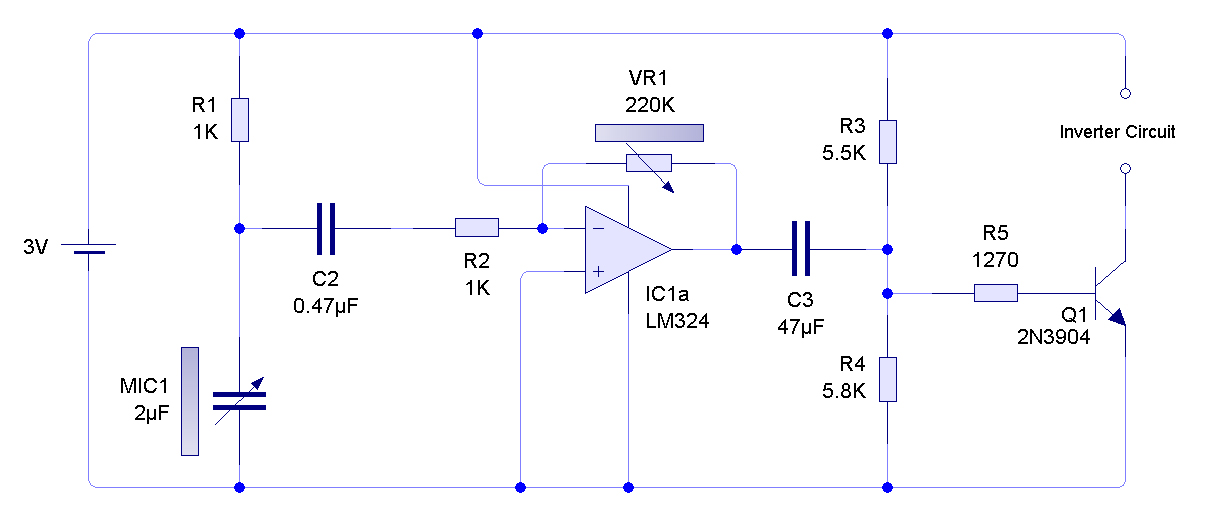
Description: A ready-made inverter circuit was utilized to drive the EL sheet; therefore, the diagram is incomplete. Additionally, the battery consumption appears to be significantly higher than expected. An AVI video file without sound, recorded using a webcam, is available for viewing. Interested individuals can download it from the provided address.
The circuit utilizes an inverter designed to convert a low DC voltage from a battery into a higher AC voltage suitable for driving an electroluminescent (EL) sheet. The inverter circuit typically comprises key components such as a transformer, transistors or MOSFETs for switching, and capacitors for filtering. The design may include a feedback mechanism to stabilize the output voltage, ensuring consistent brightness of the EL sheet.
However, the noted higher-than-expected battery consumption suggests inefficiencies in the circuit. This could be due to factors such as inadequate component ratings, suboptimal switching frequencies, or insufficient power management techniques. It is advisable to analyze the circuit layout for potential improvements, such as optimizing the transformer turns ratio or selecting low-loss components.
The provided video serves as a visual reference for the inverter's operation, showcasing the EL sheet's illumination. Users interested in further enhancing the circuit's performance may consider integrating a more efficient power supply or exploring alternative inverter designs that reduce energy consumption while maintaining output quality.Since I used a ready-made inverter circuit to drive the EL sheet, this diagram is incomplete and also I`d say the battery consumption is much higher than it should be. As seen in the comments, an AVI video file is available without sound (as I used my webcam to record it).
If you are interested, you can download it from the address below.
The circuit utilizes an inverter designed to convert a low DC voltage from a battery into a higher AC voltage suitable for driving an electroluminescent (EL) sheet. The inverter circuit typically comprises key components such as a transformer, transistors or MOSFETs for switching, and capacitors for filtering. The design may include a feedback mechanism to stabilize the output voltage, ensuring consistent brightness of the EL sheet.
However, the noted higher-than-expected battery consumption suggests inefficiencies in the circuit. This could be due to factors such as inadequate component ratings, suboptimal switching frequencies, or insufficient power management techniques. It is advisable to analyze the circuit layout for potential improvements, such as optimizing the transformer turns ratio or selecting low-loss components.
The provided video serves as a visual reference for the inverter's operation, showcasing the EL sheet's illumination. Users interested in further enhancing the circuit's performance may consider integrating a more efficient power supply or exploring alternative inverter designs that reduce energy consumption while maintaining output quality.Since I used a ready-made inverter circuit to drive the EL sheet, this diagram is incomplete and also I`d say the battery consumption is much higher than it should be. As seen in the comments, an AVI video file is available without sound (as I used my webcam to record it).
If you are interested, you can download it from the address below.
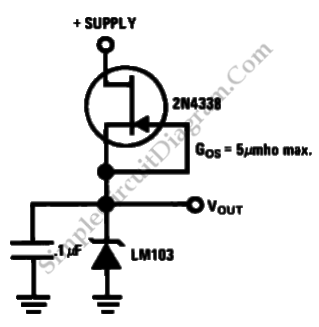
Low Power Regulator Reference
This is a simple circuit of a low-power voltage regulator reference. This circuit can produce a stable voltage reference.
The low-power voltage regulator reference circuit is designed to provide a consistent output voltage, which is crucial for various electronic applications requiring...
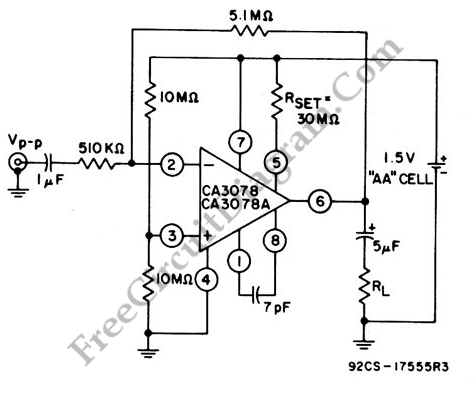
Single Cell Battery 1.5V 20dB Inverting Amplifier
This amplifier circuit exhibits a very low power consumption, with a total current draw of 675 nA. The output voltage swing is 300 mV peak-to-peak (pp) with a gain of 20.
The amplifier circuit is designed to operate with minimal power...
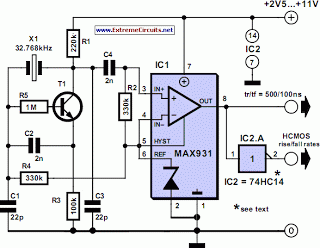
Very Low Power 32kHz Oscillator
The 32-kHz low-power clock oscillator provides several advantages compared to traditional oscillator circuits that utilize a CMOS inverter. These inverter circuits often exhibit issues such as significant fluctuations in supply currents across a 3V to 6V supply range, making it...
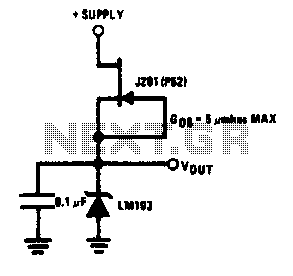
Low power regulator reference
This simple reference circuit provides a stable voltage reference that is nearly free from supply voltage noise. Typical power supply rejection exceeds 100 dB.
The described voltage reference circuit is designed to deliver a consistent output voltage while minimizing the influence...
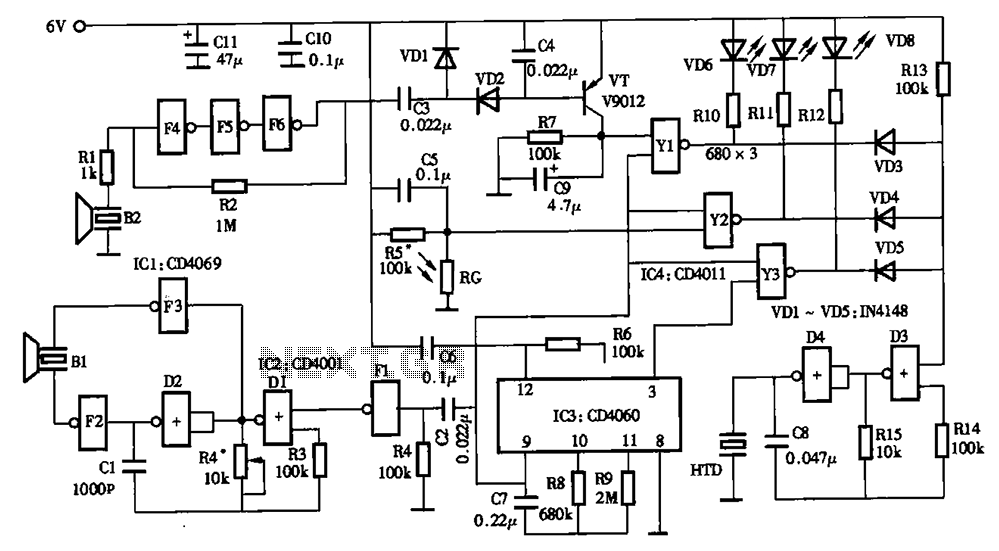
Low power timer switch
The timing circuit utilizes an electronic switch composed of F1, F2, and VT1 to reduce quiescent current to approximately 1 to 2 A with the 555 timer. Upon initial power-up, the voltage across capacitor C2 cannot instantly change, causing the...
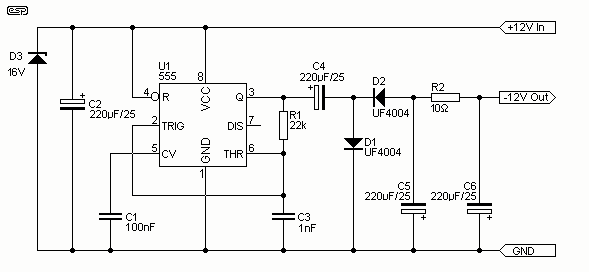
Low Power Negative Car Power Supply
I have had a lot of queries about getting a low power negative supply in cars, to power Linkwitz transform circuits and the like. There is a switchmode converter, but I must admit that it is overkill for what most...
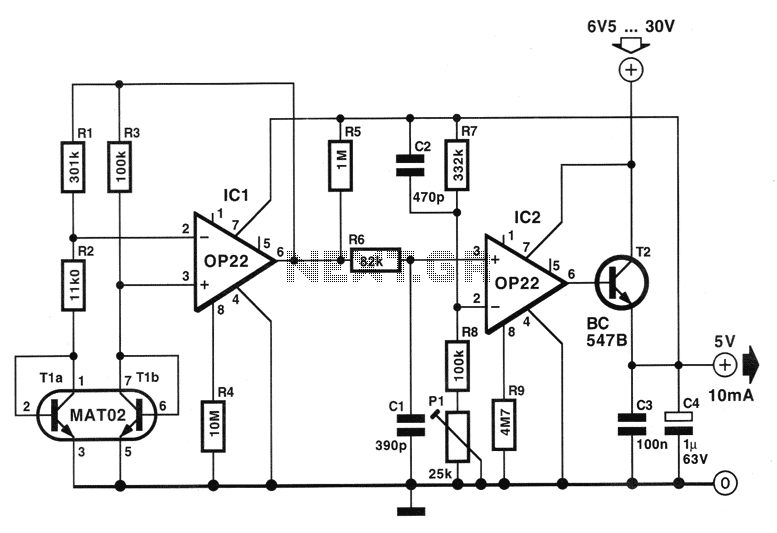
Low Power consumption 5V regulator circuit
The circuit described below is notable for its low power consumption. With a 9V input and no load at the output, it draws only 50 mA, which is significantly lower than the quiescent current of a 78L05 regulator. The circuit...
micro power pulse generator
This circuit generates clean logic pulses with minimal current consumption. It is designed to produce short 2 ms pulses at a frequency of one pulse per second, drawing only 1 microamp from a 9-volt battery.
The described circuit operates efficiently by...
Low Power Regulator Reference
This is a simple circuit of a low-power voltage regulator reference. This circuit can produce a stable voltage reference.
The low-power voltage regulator reference circuit is designed to provide a consistent output voltage, which is crucial for various electronic applications requiring...