


become a VU meter and homemade rhythm lights easy [megapost]
#VU meter
#rhythm lights
#DIY
#LED
#audio visualization
#light control
#sound reactive
#homemade
#electronics
#light display
![become a VU meter and homemade rhythm lights easy [megapost]](/uploads/25/LM3916schematics.jpg "become a VU meter and homemade rhythm lights easy [megapost]")
Description: A post related to a do-it-yourself project for creating a VU meter and homemade rhythm lights that are easy to assemble.
The project involves designing and constructing a visual audio level meter (VU meter) that responds to sound levels, as well as rhythm lights that flash in sync with music or audio signals. The VU meter can be created using a microcontroller, such as an Arduino, which processes audio input and drives LED indicators to reflect the amplitude of the sound.
To begin, the circuit requires an audio input source, which can be connected via a 3.5mm audio jack. An operational amplifier (op-amp) can be used to amplify the audio signal before it is fed into the microcontroller's analog input pin. The microcontroller will then convert the analog signal into a digital value, allowing it to determine the sound level.
For the visual output, a series of LEDs can be arranged in a bar graph format. Each LED will represent a different level of audio intensity, with the microcontroller controlling which LEDs are illuminated based on the processed audio signal. The code running on the microcontroller will include algorithms to smooth out the signal and provide a more visually appealing response, such as fading effects or dynamic flashing patterns.
In addition to the VU meter, the rhythm lights can be implemented using a similar approach. By utilizing a separate set of LEDs, the circuit can be designed to flash in response to specific frequencies or beats detected in the audio input. This can be achieved through frequency analysis, where the audio signal is processed to identify peaks in specific frequency ranges, triggering the corresponding lights to flash in rhythm with the music.
Overall, this DIY project combines basic electronics, programming, and audio processing to create an engaging visual display that enhances the experience of listening to music. The simplicity of the components and the accessibility of microcontrollers make this project suitable for hobbyists and beginners in electronics.Post related to Do it yourself about become a VU meter and homemade rhythm lights easy..
The project involves designing and constructing a visual audio level meter (VU meter) that responds to sound levels, as well as rhythm lights that flash in sync with music or audio signals. The VU meter can be created using a microcontroller, such as an Arduino, which processes audio input and drives LED indicators to reflect the amplitude of the sound.
To begin, the circuit requires an audio input source, which can be connected via a 3.5mm audio jack. An operational amplifier (op-amp) can be used to amplify the audio signal before it is fed into the microcontroller's analog input pin. The microcontroller will then convert the analog signal into a digital value, allowing it to determine the sound level.
For the visual output, a series of LEDs can be arranged in a bar graph format. Each LED will represent a different level of audio intensity, with the microcontroller controlling which LEDs are illuminated based on the processed audio signal. The code running on the microcontroller will include algorithms to smooth out the signal and provide a more visually appealing response, such as fading effects or dynamic flashing patterns.
In addition to the VU meter, the rhythm lights can be implemented using a similar approach. By utilizing a separate set of LEDs, the circuit can be designed to flash in response to specific frequencies or beats detected in the audio input. This can be achieved through frequency analysis, where the audio signal is processed to identify peaks in specific frequency ranges, triggering the corresponding lights to flash in rhythm with the music.
Overall, this DIY project combines basic electronics, programming, and audio processing to create an engaging visual display that enhances the experience of listening to music. The simplicity of the components and the accessibility of microcontrollers make this project suitable for hobbyists and beginners in electronics.Post related to Do it yourself about become a VU meter and homemade rhythm lights easy..
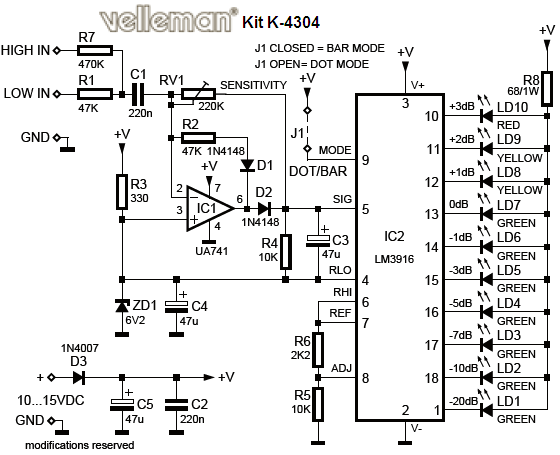
VU LED Indicator Schematic
The VU LED indicator is simpler and smaller than its analog counterparts and is commonly used in audio equipment. This version is based on a National Semiconductor integrated circuit (IC) that utilizes a logarithmic response. Each LED operates with a...
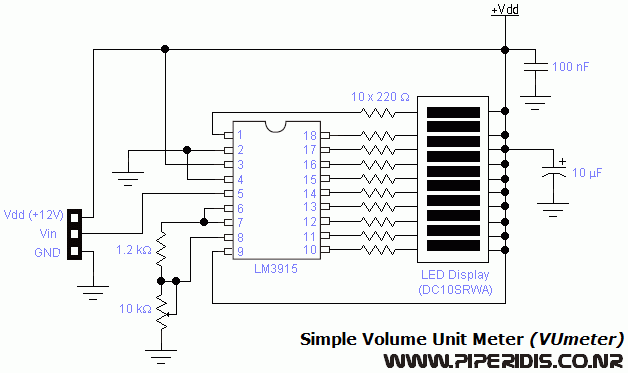
vu meter circuit
This is the simplest VU meter that can be constructed. It is based on a single integrated circuit. A volume unit (VU) meter, or standard volume indicator, is a device used to display the level of any voltage signal source,...
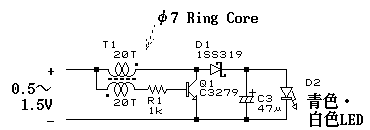
Pocket LED Light
This is a pocket-sized LED flashlight operating with only one AAA battery. However, the super high luminosity LEDs (blue, green, or white) require at least 3.5 volts of forward voltage. This flashlight is boosting input voltage up to the operating...
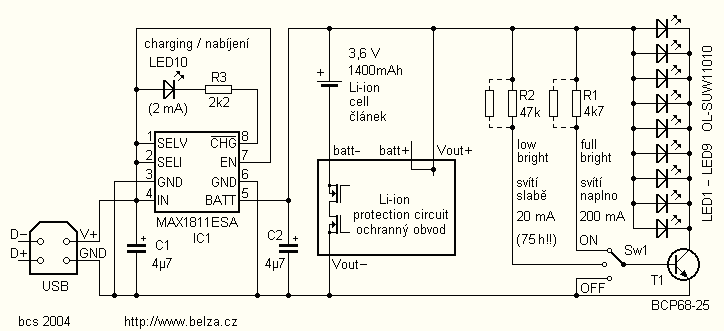
LED Flashlight circuit with MAX1811
White LEDs have a rated current at a voltage drop of about 3.3 to 3.4 V. It is ideal to be powered from the battery voltage which is slightly larger. Then there is the best energy used. In this I...
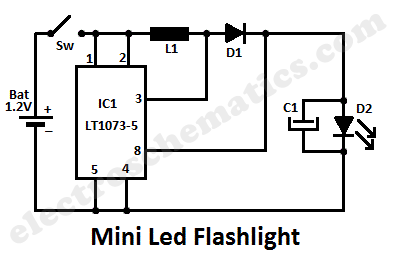
Mini Led Flashlight with LT1073 IC
This LED lamp circuit can be utilized as a mini LED flashlight. When paired with a 1.2 V rechargeable battery, all components can be housed within a compact enclosure.
The mini LED flashlight circuit typically consists of several key components: an...
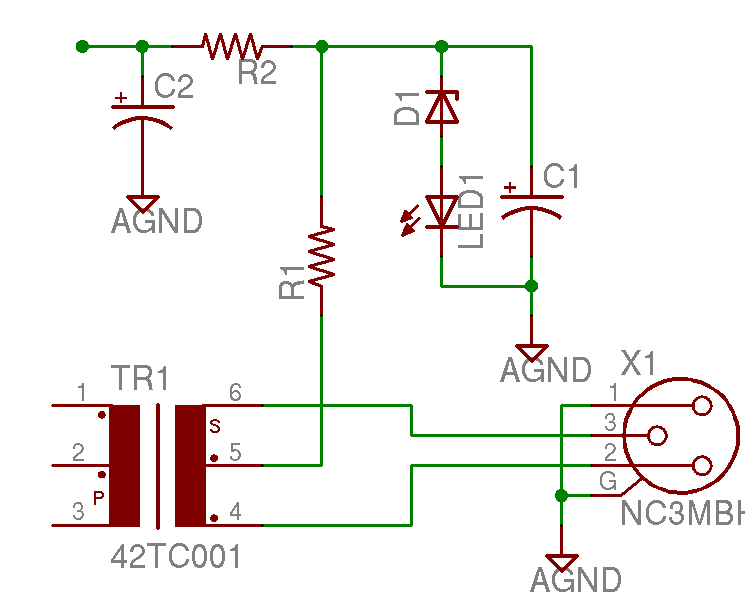
Help with a schematic please
A project is underway to construct the CountryHick DI as illustrated on DIYFactory, incorporating a few minor modifications. The final design aims to be a 1U unit with four inputs.
The CountryHick DI (Direct Injection) box is a crucial tool in...
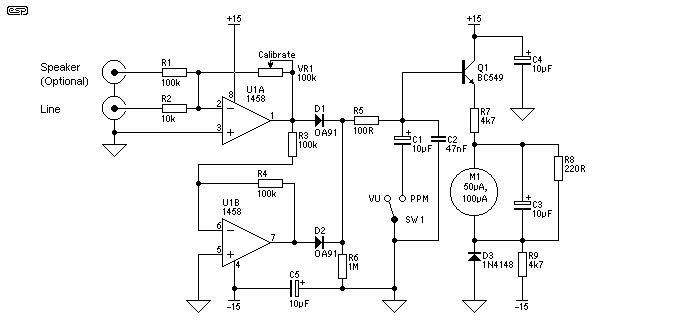
VU And PPM Audio Metering
VU (Volume Unit) meters used to be the mainstay of audio metering systems, but they have been replaced by LED metering in a great many mixers and other applications. Even in software, the most common level meter is made to...
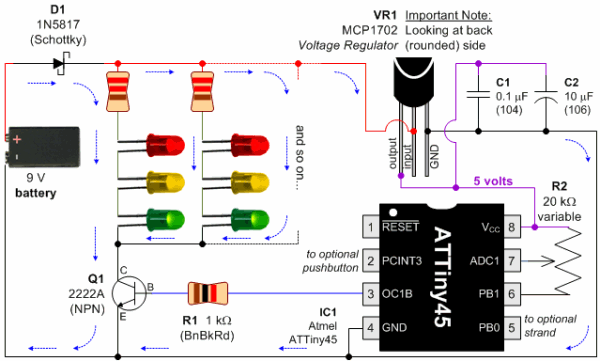
LED Pumpkin Candles for Colorful Halloween Jack-O-Lanterns
Discrete blinking LEDs are convenient, but the blink rate and duration are not configurable. Experimentation with transistors, resistors, and capacitors was attempted to modify the blinking LED behavior. Ultimately, the abundance of additional electronic components led to the conclusion that...
Bicycle Back Safety Light Circuit
This circuit has been designed to provide a clearly visible light, formed by 13 high-efficiency flashing LEDs arranged in a pseudo-rotating order. Due to low voltage, low drain battery operation, and small size, the device is suitable for mounting on...