


Constantly changing light and sound analog controller circuit 07
#analog controller
#light control
#sound control
#LED
#variable output
#sensory feedback
#dynamic lighting
#audio-visual
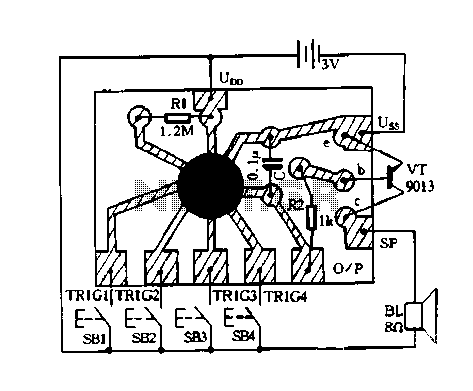
Description: Constantly changing light and sound analog controller circuit 07
The circuit described is an analog controller designed to modulate light and sound in a dynamic manner. This circuit utilizes various electronic components to create an interactive experience where both light intensity and sound output can be adjusted in real-time. The core of the design typically includes operational amplifiers, resistors, capacitors, and possibly transistors to facilitate the modulation processes.
In this circuit, light modulation may be achieved through the use of light-emitting diodes (LEDs) or incandescent bulbs, which can be controlled by varying the voltage supplied to them. The sound output could be generated using a piezoelectric speaker or a small audio amplifier, where the frequency and amplitude of the sound can be altered based on the input signals from the controller.
To implement the constantly changing aspect, the circuit may incorporate a feedback mechanism, such as a light-dependent resistor (LDR) or a microphone, which detects changes in ambient light or sound levels. The feedback is processed through the operational amplifiers, which adjust the output signals accordingly. Additionally, the inclusion of a microcontroller can enhance the circuit's capabilities by allowing programmed patterns of light and sound changes, enabling more complex interactions.
Overall, this circuit exemplifies a versatile approach to creating an engaging environment through the integration of light and sound, demonstrating the principles of analog control in electronic design.Constantly changing light and sound analog controller circuit 07
The circuit described is an analog controller designed to modulate light and sound in a dynamic manner. This circuit utilizes various electronic components to create an interactive experience where both light intensity and sound output can be adjusted in real-time. The core of the design typically includes operational amplifiers, resistors, capacitors, and possibly transistors to facilitate the modulation processes.
In this circuit, light modulation may be achieved through the use of light-emitting diodes (LEDs) or incandescent bulbs, which can be controlled by varying the voltage supplied to them. The sound output could be generated using a piezoelectric speaker or a small audio amplifier, where the frequency and amplitude of the sound can be altered based on the input signals from the controller.
To implement the constantly changing aspect, the circuit may incorporate a feedback mechanism, such as a light-dependent resistor (LDR) or a microphone, which detects changes in ambient light or sound levels. The feedback is processed through the operational amplifiers, which adjust the output signals accordingly. Additionally, the inclusion of a microcontroller can enhance the circuit's capabilities by allowing programmed patterns of light and sound changes, enabling more complex interactions.
Overall, this circuit exemplifies a versatile approach to creating an engaging environment through the integration of light and sound, demonstrating the principles of analog control in electronic design.Constantly changing light and sound analog controller circuit 07
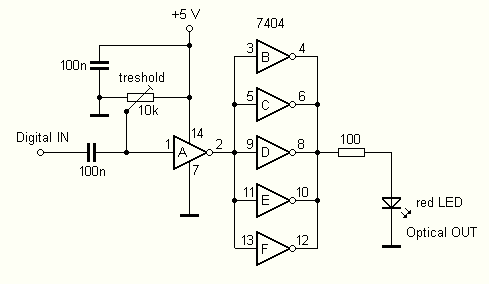
LED output from SB Live! Value
Many modern audio recorders are now compatible with digital input S/PDIF (Sony/Philips Digital Interface). Devices like CD changers, MiniDisc recorders, computer sound cards, and the like work with digital signals using the S/PDIF protocol. This digital connection between two devices,...
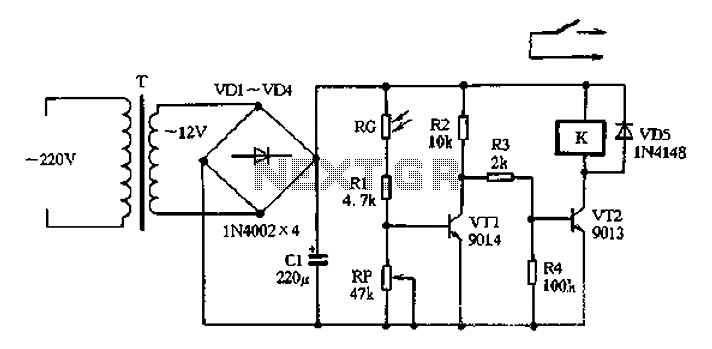
Light control relay control lamp
The circuit operates on 220V AC input, which is transformed to approximately 12V DC using a step-down transformer (T), a diode bridge rectifier (VDI-VD4), and a filter capacitor (C1). This setup is designed to power the entire circuit. The light...
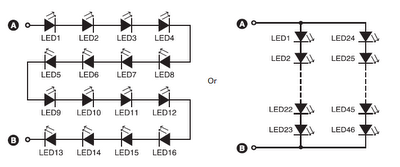
16 led46 led circuit combination
A series combination of 16 LEDs provides a luminance (lux) equivalent to a 12W bulb. However, if two series combinations of 23 LEDs are connected in parallel (totaling 46 LEDs), the output is equivalent to a 35W light bulb. Diode...
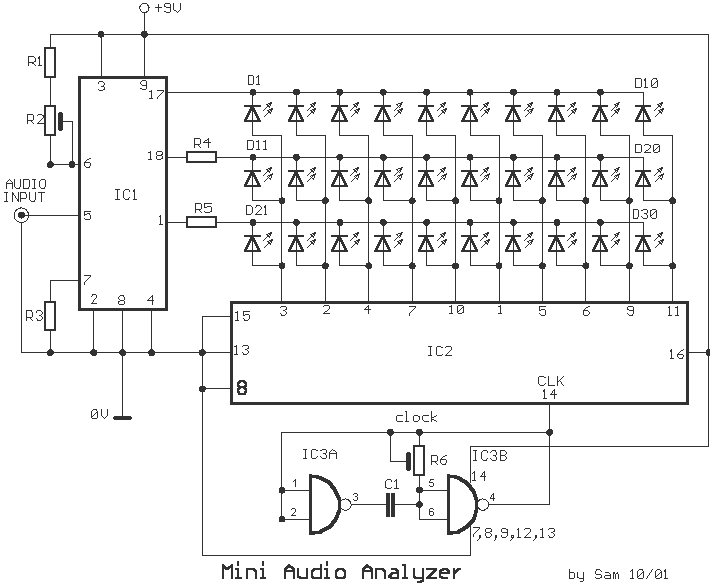
30 LED audio frequency analyzer
This analyst is a sensitive instrument in the frequency changes and width of an acoustic signal. Thus, the brightness of the LED that turns on each moment is proportional to the signal width, while the color is proportional to the...
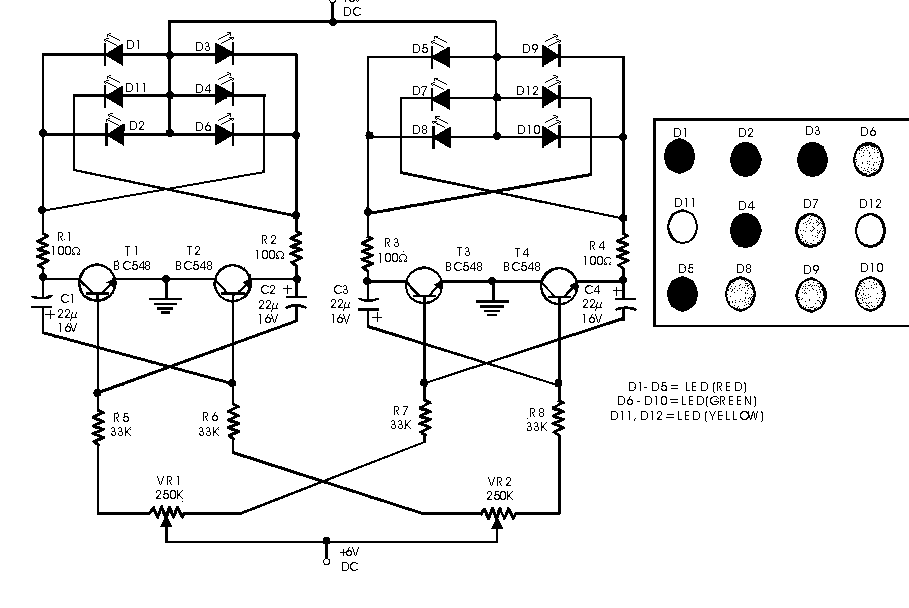
fun electronic circuits
This circuit serves as a decorative element or indicator, featuring adjustable flashing or dancing speeds of LEDs and the ability to create various light patterns. It comprises two astable multivibrators; the first is constructed using transistors T1 and T2, while...
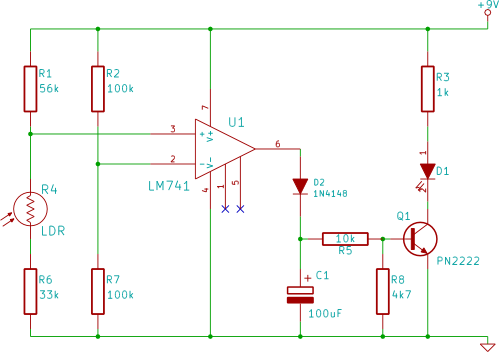
automatic light
This electronic breadboard circuit for beginners in electronics activates an LED automatically when the ambient light level falls below a specific threshold.
This circuit utilizes a light-dependent resistor (LDR) as the primary sensor to detect ambient light levels. The LDR is...
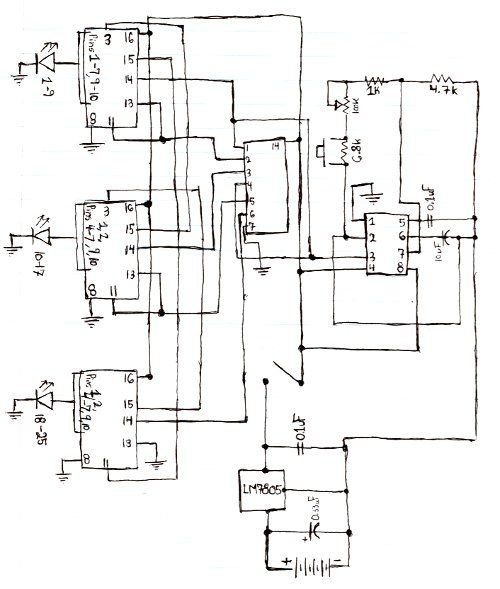
Rotating LED Marquee Hat circuit
Here is the schematic for the circuit. Solder all the components onto a perfboard. The drawings may not be very clear. Essentially, the 555 timer generates a pulse.
The circuit utilizes a 555 timer IC configured in astable mode, which allows...
led thermometer pcb
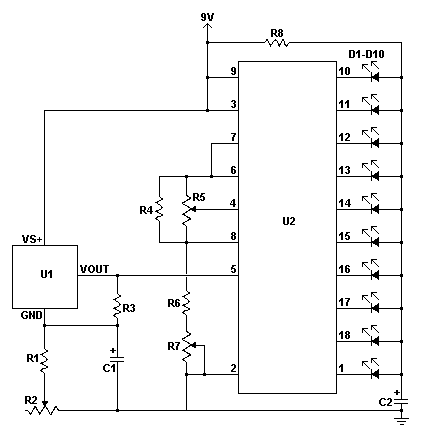
Any LED can be used for D1 - D10; however, blue LEDs require a higher voltage, which may result in them appearing dimmer compared to red, yellow, or green LEDs. If pin 9 of U2 is left disconnected, the circuit...
Using LEDs as colour sensors
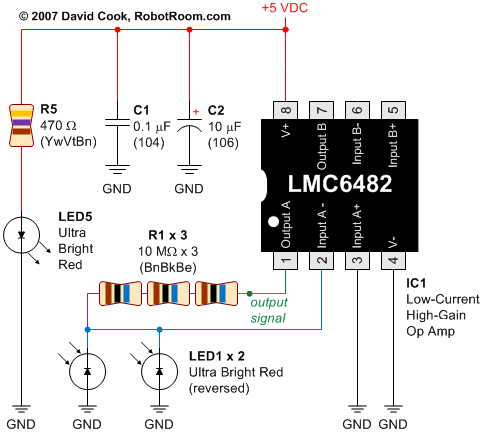
This circuit converts the analog signal from the reversed LED, which is in sensing mode, and amplified by the operational amplifier, into a digital (on/off) signal. The original complex design has been simplified. An alternative approach is discussed in a...