


How Compact Fluorescent Lamps Work and How to Dim Them
#CFL
#dimming
#fluorescent lamps
#light bulbs
#energy efficiency
#lighting control
#home automation
#electrical
#illumination
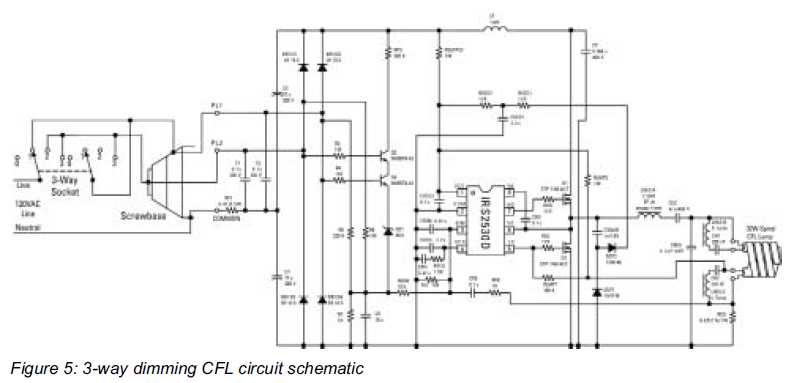
Description: The dimming function introduces a new range of applications for compact fluorescent lamps (CFLs). Compact fluorescent lamps are rapidly replacing incandescent light bulbs due to their energy efficiency and longevity.
The integration of dimming capabilities into compact fluorescent lamps significantly enhances their versatility and usability in various lighting scenarios. Traditional incandescent bulbs have long provided dimming options, allowing users to adjust light intensity based on their needs. The advancement in CFL technology now allows for similar functionality, leading to a broader range of applications in residential, commercial, and industrial settings.
When implementing a dimming function in CFLs, it is essential to utilize a compatible dimmer switch designed specifically for CFLs. Standard dimmer switches designed for incandescent bulbs may not operate effectively with CFLs, potentially leading to flickering, buzzing, or reduced lifespan of the lamp. Specialized dimmers are engineered to accommodate the electrical characteristics of CFLs, ensuring smooth dimming performance and improved energy efficiency.
The circuit design for a dimmable CFL typically includes an electronic ballast that regulates the current and voltage supplied to the lamp. This ballast must be able to handle the varying power levels required during the dimming process. Additionally, the circuit may incorporate a microcontroller to manage the dimming levels, providing precise control over light output. This setup also allows for integration with smart home systems, enabling remote control and automation of lighting based on user preferences.
In summary, the dimming function in compact fluorescent lamps not only enhances their application range but also requires careful consideration of circuit design and compatibility with dimmer switches to ensure optimal performance and user satisfaction.Dimming function opens up a completely new family of CFL applications Compact fluorescent lamps (CFLs) are replacing incandescent light bulbs at a rapid rate due to their..
The integration of dimming capabilities into compact fluorescent lamps significantly enhances their versatility and usability in various lighting scenarios. Traditional incandescent bulbs have long provided dimming options, allowing users to adjust light intensity based on their needs. The advancement in CFL technology now allows for similar functionality, leading to a broader range of applications in residential, commercial, and industrial settings.
When implementing a dimming function in CFLs, it is essential to utilize a compatible dimmer switch designed specifically for CFLs. Standard dimmer switches designed for incandescent bulbs may not operate effectively with CFLs, potentially leading to flickering, buzzing, or reduced lifespan of the lamp. Specialized dimmers are engineered to accommodate the electrical characteristics of CFLs, ensuring smooth dimming performance and improved energy efficiency.
The circuit design for a dimmable CFL typically includes an electronic ballast that regulates the current and voltage supplied to the lamp. This ballast must be able to handle the varying power levels required during the dimming process. Additionally, the circuit may incorporate a microcontroller to manage the dimming levels, providing precise control over light output. This setup also allows for integration with smart home systems, enabling remote control and automation of lighting based on user preferences.
In summary, the dimming function in compact fluorescent lamps not only enhances their application range but also requires careful consideration of circuit design and compatibility with dimmer switches to ensure optimal performance and user satisfaction.Dimming function opens up a completely new family of CFL applications Compact fluorescent lamps (CFLs) are replacing incandescent light bulbs at a rapid rate due to their..
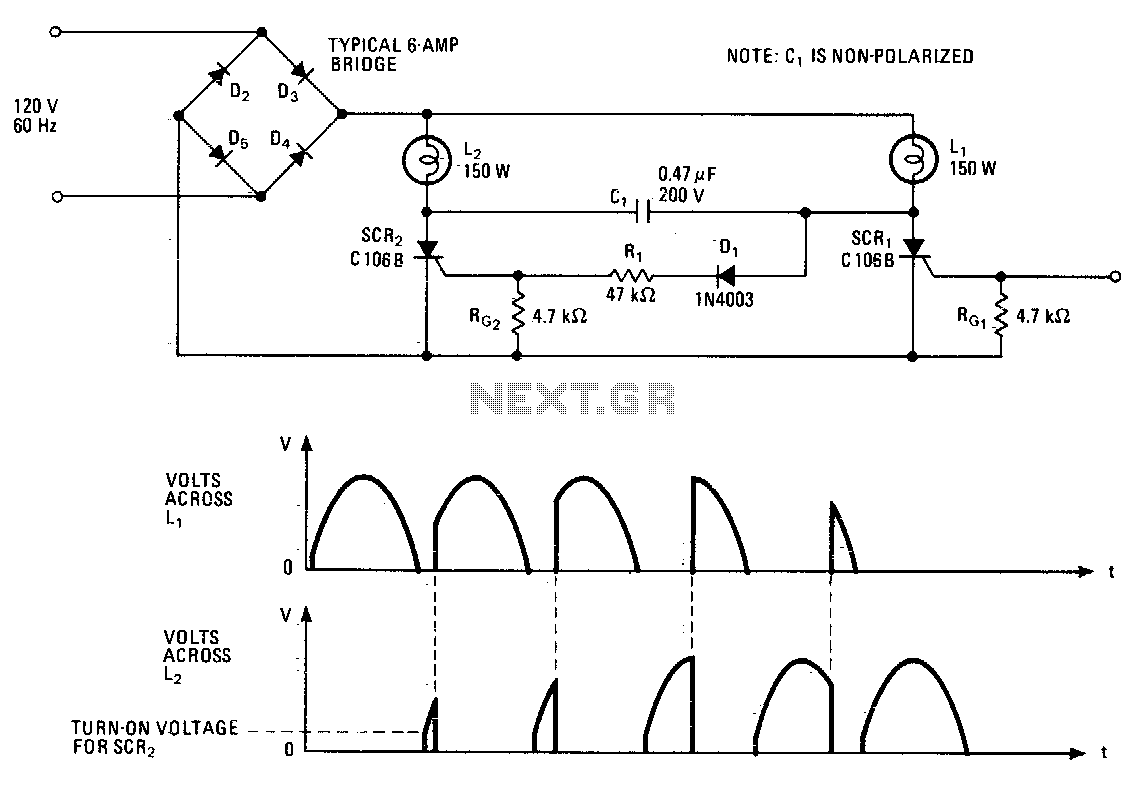
Complementary lighting control
This lighting control unit will gradually decrease the brightness of one lamp while simultaneously increasing the brightness of another. The two loads maintain precise tracking without the need for manual adjustments. The gate of SCR1, a silicon-controlled rectifier, is activated...
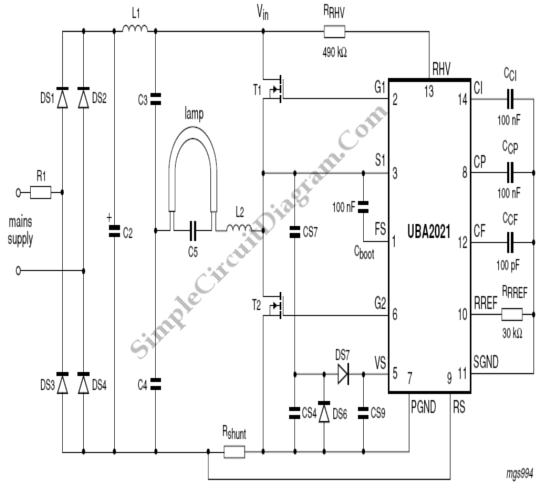
High-Power Long-Life Compact Fluorescent Lamp / Tube lamp Controller
The UBA2021 can be utilized as a 600 V lamp controller and half-bridge driver integrated circuit (IC) for high-power applications. It is designed for long-life compact fluorescent lamp (CFL) and tubular fluorescent lamp (TL) applications.
The UBA2021 is a versatile integrated...
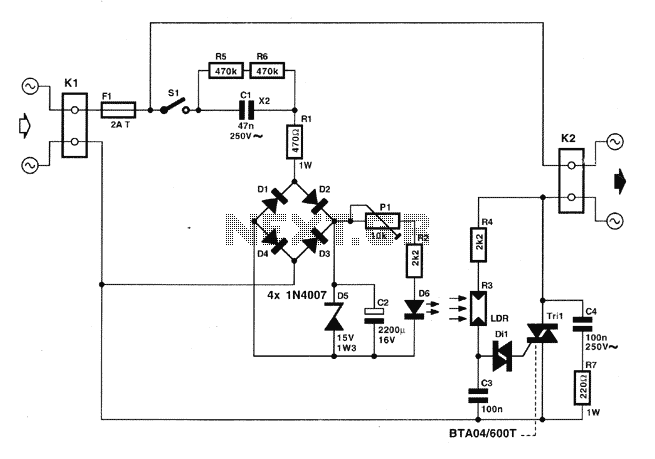
Lighting auto controller
The following governor is designed to regulate the light intensity of a 220 V incandescent lamp. The circuit consists of relatively few components, allowing for easy assembly on a small circuit board. It is recommended to enclose the completed assembly...
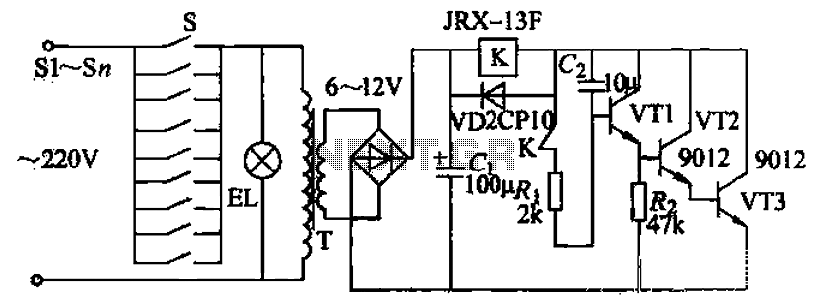
High-rise residential walkway lighting control circuit
Pressing the button switch Sl-Sn activates the circuit, turning on the transformer T. The low-voltage alternating current from the secondary winding is directed to a bridge rectifier and a filter capacitor Ci, which produces a DC voltage. This voltage energizes...
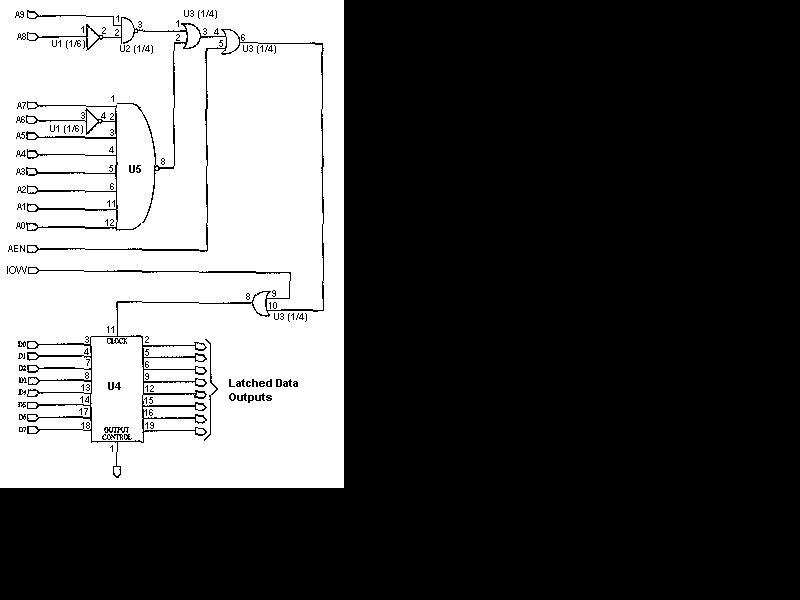
Computerize Your Room/House
You have read about computerized rooms or seen home automation products advertised in electronics magazines. You have decided to try it yourself. However, it is important to note that this project is not inexpensive. A computer is required, which is...
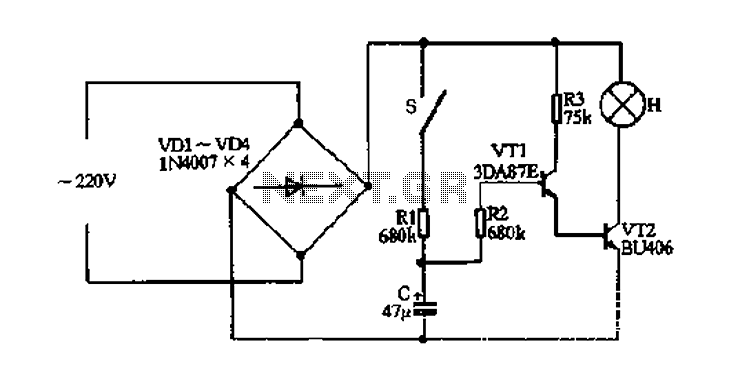
Cool gradually dimming light switches
The fade circuit controls the lighting switch depicted in Figure 1-12. The figure illustrates the light switch S, H, which is responsible for lighting. Transistors VT1 and VT2, along with RC components, comprise the fade dimming control circuit. Given that...
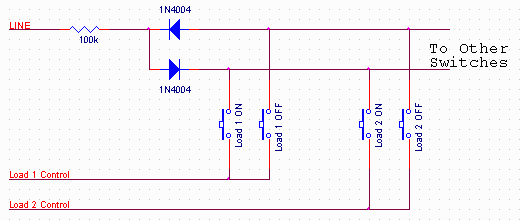
The PCS Scenemaster
The PCS SceneMaster Model LM4LS2 was awarded "Best Web Site" by Home Automator Magazine and was installed in the spring of 1999. This controller can ramp lights on and off and create "scenes," where a single X-10 command can generate...
controlling CFLs with SSRs
A request has been made to automate certain functions within a residence, specifically to control the on and off states of CFL lamps using a triac that is coupled to a logic circuit via a zero-crossing detection mechanism.
To achieve the...
Fluorescent Lamps Ballasts and Fixtures
Gratitude is expressed to Don Klipstein for his contributions to this document. His website serves as a valuable resource for information related to lighting technology and includes additional articles on fluorescent and other discharge lamps. The fluorescent lamp represents a...