


ld168 audio control circuit diagram of a voltage-controlled flash decoration
#audio control
#voltage-controlled
#LED
#flash decoration
#sound level indication
#ASIC
#light emitting diodes
#tape recorder
#speaker
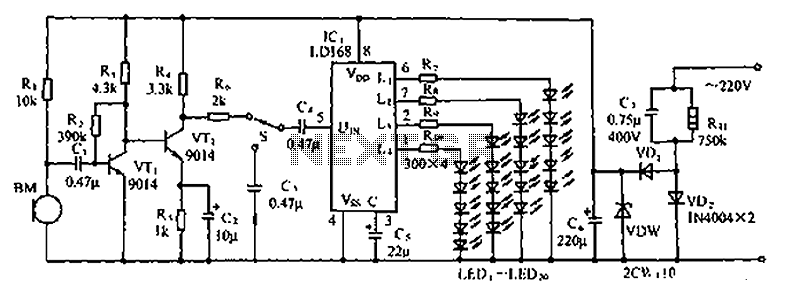
Description: The circuit depicted in the figure involves the LD168, which functions as a sound level indicator for tape recorder speakers. It features four outputs capable of directly driving multiple light-emitting diodes. Additionally, the device can be activated by a thyristor drive for lantern light emission.
The LD168 circuit is designed to provide a visual representation of sound levels through the use of light-emitting diodes (LEDs). Each of the four outputs corresponds to different sound level thresholds, allowing for a clear indication of audio intensity. When the sound level reaches a specified point, the respective LED will illuminate, offering immediate feedback to the user regarding the audio output.
In terms of functionality, the LD168 can operate in two primary modes. The first mode utilizes direct LED drive, where the outputs are connected to the LEDs, allowing them to light up in response to the audio levels detected by the circuit. This mode is particularly useful in applications where real-time visual feedback is essential, such as in live sound environments or recording studios.
The second mode of operation involves the use of a thyristor drive, which enables the circuit to control higher power lantern lights. This feature is beneficial for applications that require more substantial lighting effects or where the use of standard LEDs would be insufficient. The thyristor acts as a switch, allowing the LD168 to handle higher voltage and current levels, thus expanding its usability in various settings.
Overall, the LD168 circuit is versatile and adaptable, making it suitable for a range of audio applications. Its ability to drive multiple outputs and integrate with different lighting technologies enhances its functionality, providing an effective solution for sound level indication. Circuit shown in Figure, LD168 is a flash of tape recorders speaker for sound level indication ASIC. It has four outputs can directly drive a plurality of light emitting diodes , the device can also be driven by lantern light emission thyristor drive.
The LD168 circuit is designed to provide a visual representation of sound levels through the use of light-emitting diodes (LEDs). Each of the four outputs corresponds to different sound level thresholds, allowing for a clear indication of audio intensity. When the sound level reaches a specified point, the respective LED will illuminate, offering immediate feedback to the user regarding the audio output.
In terms of functionality, the LD168 can operate in two primary modes. The first mode utilizes direct LED drive, where the outputs are connected to the LEDs, allowing them to light up in response to the audio levels detected by the circuit. This mode is particularly useful in applications where real-time visual feedback is essential, such as in live sound environments or recording studios.
The second mode of operation involves the use of a thyristor drive, which enables the circuit to control higher power lantern lights. This feature is beneficial for applications that require more substantial lighting effects or where the use of standard LEDs would be insufficient. The thyristor acts as a switch, allowing the LD168 to handle higher voltage and current levels, thus expanding its usability in various settings.
Overall, the LD168 circuit is versatile and adaptable, making it suitable for a range of audio applications. Its ability to drive multiple outputs and integrate with different lighting technologies enhances its functionality, providing an effective solution for sound level indication. Circuit shown in Figure, LD168 is a flash of tape recorders speaker for sound level indication ASIC. It has four outputs can directly drive a plurality of light emitting diodes , the device can also be driven by lantern light emission thyristor drive.
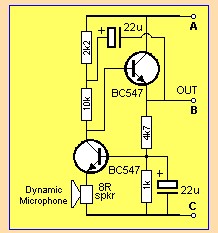
Stereo VU Meter
This is a stereo LED level meter. It is the most affordable and effective bar graph display available, utilizing commonly accessible components. The circuit requires only a few LEDs, 22 transistors, some resistors, diodes, and a set of electrolytic capacitors,...
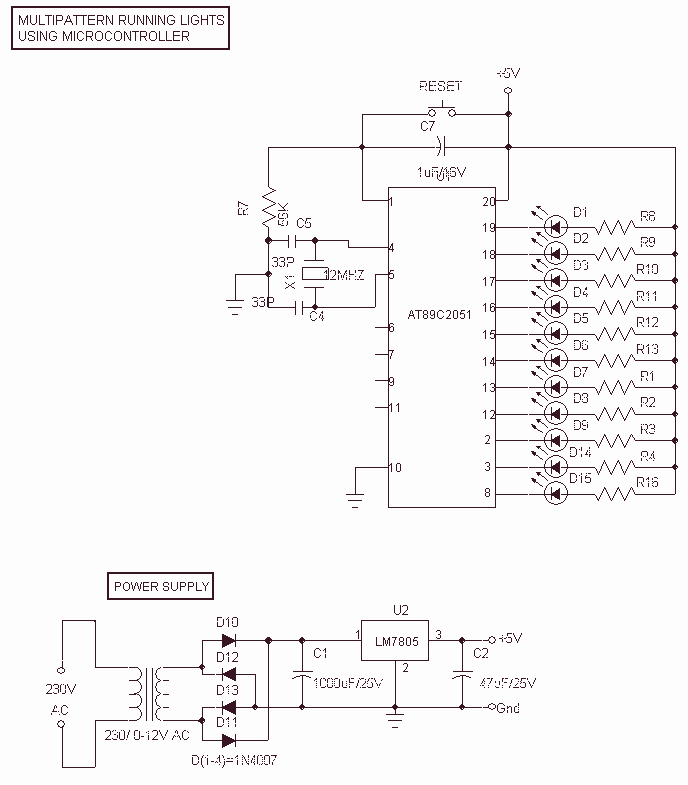
Multipattern Running LEDs
This Project Multi-Pattern Running light is used to generate several designs of Running Lights. We use ten LEDs for display. The designs can be selected by using two switches UP and DOWN. The 8 bit Microcontroller is used to control...
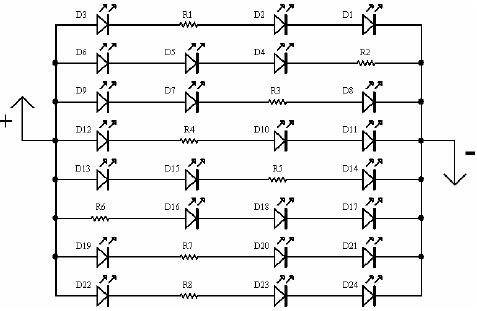
24 LED SpotlightCircuit
A light-emitting diode (LED) lamp is a solid-state lighting device that utilizes light-emitting diodes as its light source. LEDs are a cost-effective and convenient choice for various lighting applications. They are available in an extensive range of colors, styles, sizes,...
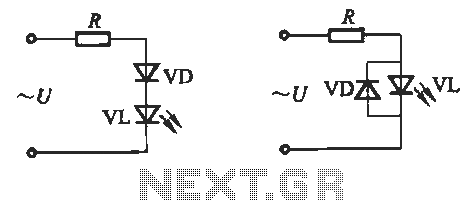
One light emitting diode display circuit
Light-emitting diodes (LEDs) can be powered using direct current (DC), alternating current (AC), and pulse drivers. A typical buck LED display circuit is illustrated in Figure 13-1. The current-limiting resistor (R) for LED tubes can be calculated using the following...
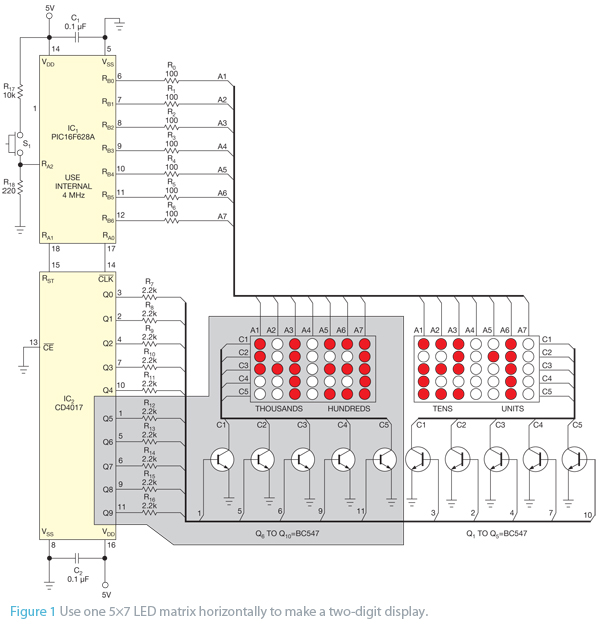
Use an LED Matrix Horizontally
LEDs provide a convenient way to electronically display information. Although the seven-segment LED display, arranged in the form of the digit 8, is common.
The seven-segment LED display is a widely used electronic component for visual representation of numerical information. It...
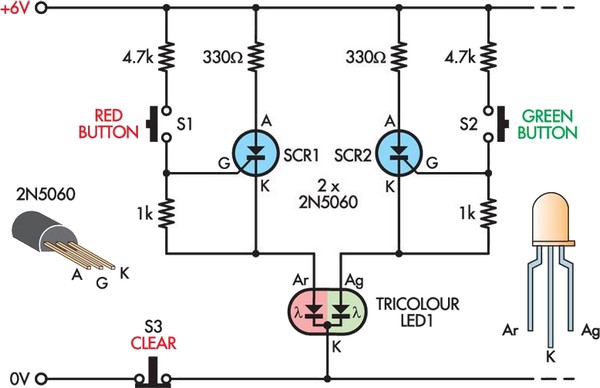
led noughts and crosses
This is a modern twist on the classic game of noughts and crosses, utilizing nine 10mm tri-color LEDs arranged in a 3 x 3 grid. One player has nine red buttons while the other player has nine green buttons, both...
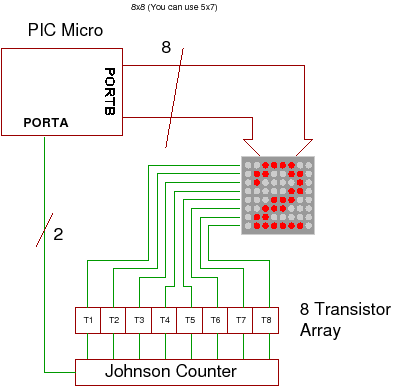
led dot matrix display
This project demonstrates how to drive a dot matrix LED display consisting of 64 LEDs arranged in an 8x8 configuration or a smaller configuration, such as 35 LEDs arranged in a 7x5 layout.
To drive a dot matrix LED display, a...
Using white LEDs
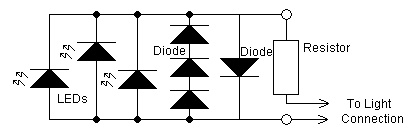
The yellow LEDs are on a small PCB, which are easy to remove. On the PCB there are 3 yellow LEDs and 4 diodes. Pictures of the PCB can be seen here: Top-side - Bottom-side. The schematic is as follows:...
led How should I build this circuit
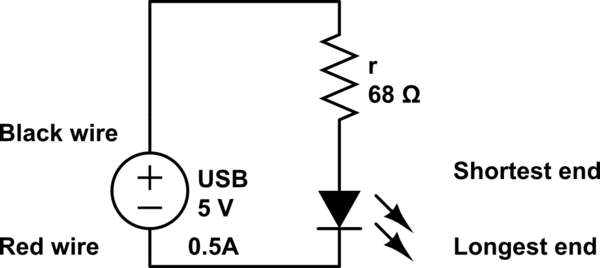
The LED operates at 3V, and based on information available online, a blue LED typically supports a maximum current of 0.03A. Given the available current from the USB source, the intention is to construct a parallel circuit. However, the last...