


LED strip meter circuit diagram of a point
#LED strip
#power meter
#sound system
#bar display
#dot matrix
#peak power
#green LED
#yellow LED
#red LED
#level indicator
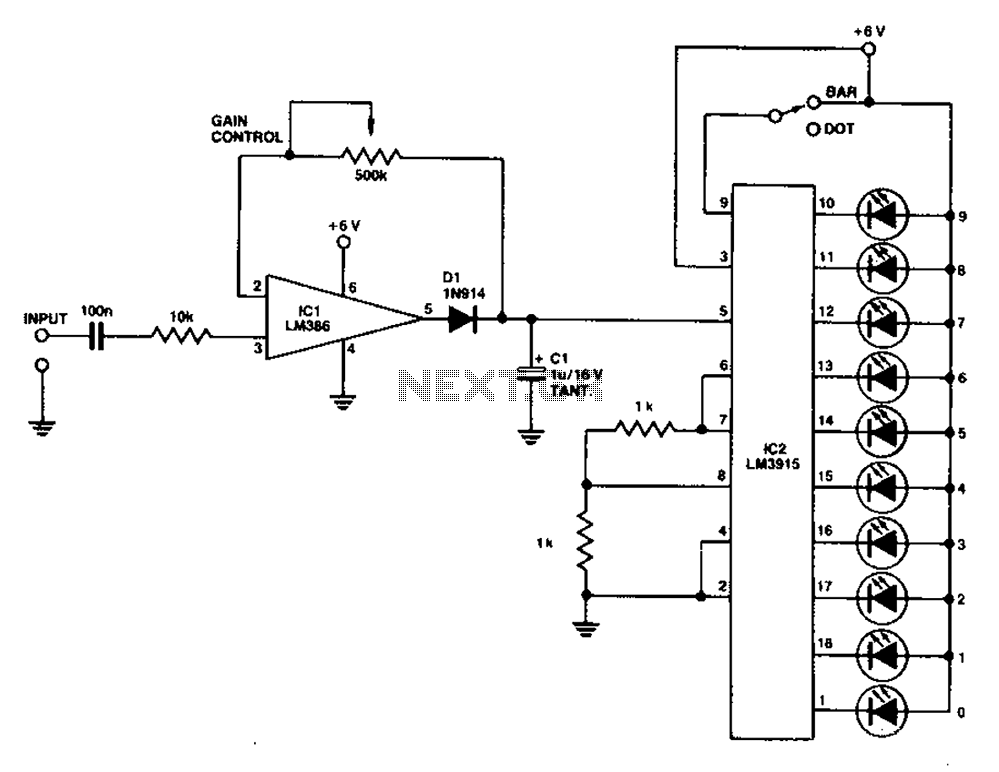
Description: A simple level power meter designed to provide a high-fidelity sound system with a bar or dot matrix display. The green LED display indicates levels from 0 to 7; level 8 is shown in yellow, and level 9 is indicated in red, representing peak power. The circuit also includes gain control for device calibration. Due to its current absorption of 200mA, it is recommended to use a power supply instead of a battery to operate the device.
The described power meter circuit is an essential tool for audio engineers and enthusiasts aiming to monitor audio levels accurately in high-fidelity sound systems. The primary function of the circuit is to visually represent the audio signal levels through a series of LED indicators. The green LEDs signify normal operating levels from 0 to 7, providing a clear and immediate visual feedback to the user. When the audio level reaches 8, the yellow LED activates to indicate a cautionary level, while the red LED at level 9 signals peak power, alerting the user to potential distortion or clipping in the audio output.
In terms of operation, the circuit incorporates a gain control feature that allows for calibration based on the specific characteristics of the audio device being used. This feature is crucial for ensuring that the meter provides accurate readings across different equipment, enabling users to maintain optimal sound quality.
The power requirements of the circuit are significant, with a current draw of 200mA. This level of consumption suggests that a stable external power supply is necessary to ensure consistent performance. Using a battery may lead to inadequate power delivery, resulting in unreliable operation or premature battery depletion. Therefore, a suitable power supply should be selected to meet the current and voltage specifications required by the circuit.
Overall, this simple level power meter circuit is an effective solution for monitoring audio levels, enhancing the user experience in high-fidelity sound applications. Its design considerations, including visual indicators, gain control, and power supply requirements, contribute to its functionality and reliability in professional audio settings.A simple level power meter to provide high-fidelity sound system bar or dot matrix display. Green LED display 0-7; 8 show yellow, red 9, the LED displays peak power. This circu it provides gain control for device calibration. Because this element absorbs 200mA, recommended power supply instead of the battery to run the device.
The described power meter circuit is an essential tool for audio engineers and enthusiasts aiming to monitor audio levels accurately in high-fidelity sound systems. The primary function of the circuit is to visually represent the audio signal levels through a series of LED indicators. The green LEDs signify normal operating levels from 0 to 7, providing a clear and immediate visual feedback to the user. When the audio level reaches 8, the yellow LED activates to indicate a cautionary level, while the red LED at level 9 signals peak power, alerting the user to potential distortion or clipping in the audio output.
In terms of operation, the circuit incorporates a gain control feature that allows for calibration based on the specific characteristics of the audio device being used. This feature is crucial for ensuring that the meter provides accurate readings across different equipment, enabling users to maintain optimal sound quality.
The power requirements of the circuit are significant, with a current draw of 200mA. This level of consumption suggests that a stable external power supply is necessary to ensure consistent performance. Using a battery may lead to inadequate power delivery, resulting in unreliable operation or premature battery depletion. Therefore, a suitable power supply should be selected to meet the current and voltage specifications required by the circuit.
Overall, this simple level power meter circuit is an effective solution for monitoring audio levels, enhancing the user experience in high-fidelity sound applications. Its design considerations, including visual indicators, gain control, and power supply requirements, contribute to its functionality and reliability in professional audio settings.A simple level power meter to provide high-fidelity sound system bar or dot matrix display. Green LED display 0-7; 8 show yellow, red 9, the LED displays peak power. This circu it provides gain control for device calibration. Because this element absorbs 200mA, recommended power supply instead of the battery to run the device.
Bachmann Sound Tips
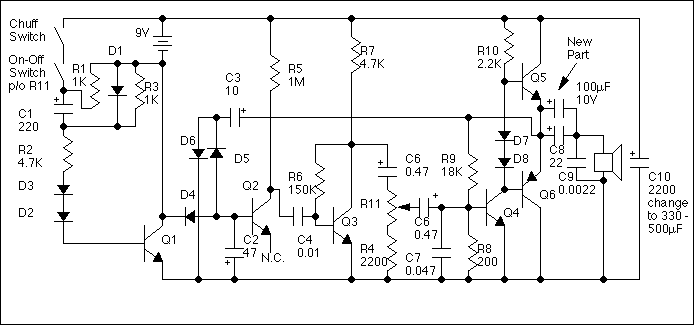
The Bachmann Big Hauler locomotive has significantly improved in appearance, reliability, and noise level over the past few years. However, the sound system remains basic, providing a poor imitation of exhaust sounds in the form of a chuff synchronized with...
Fun with LEDs
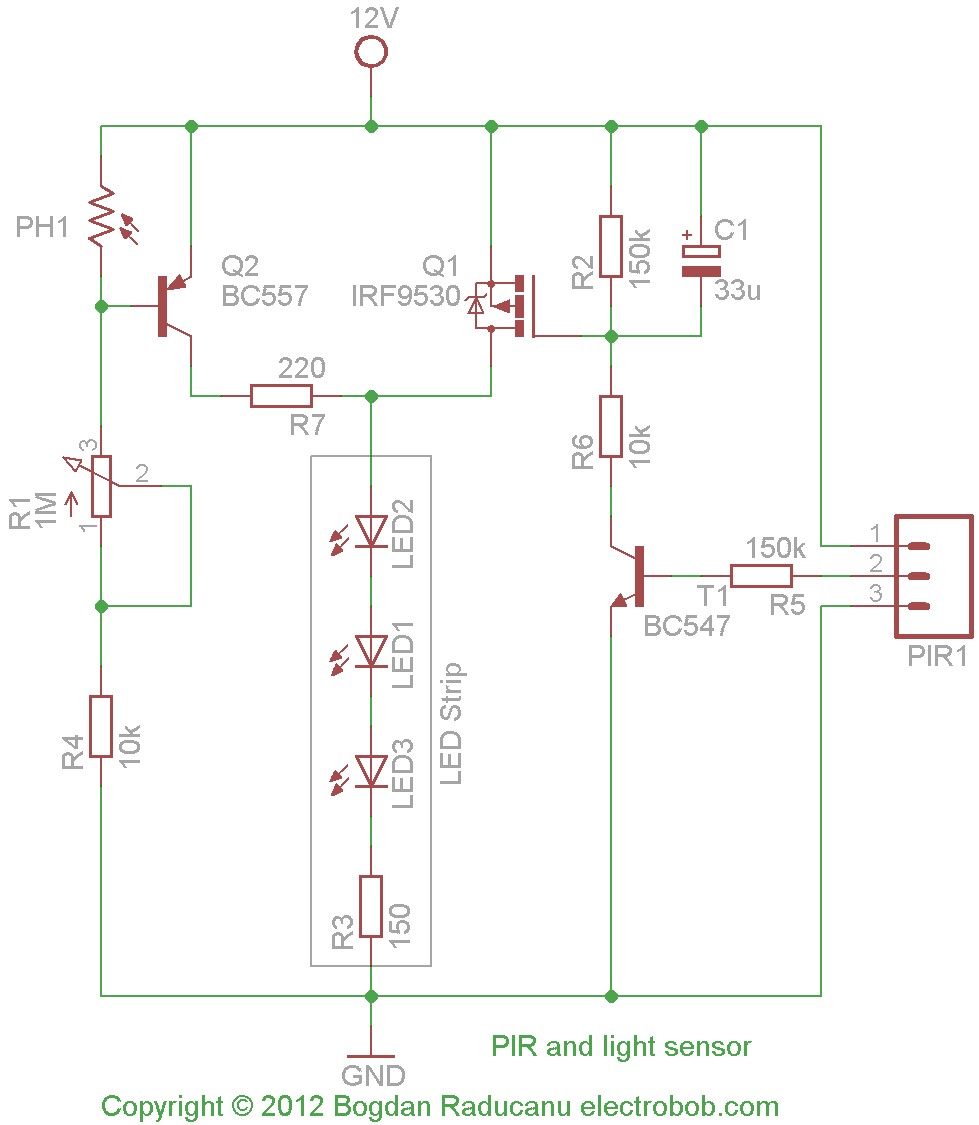
Recently, LED strips were purchased from a local electronics shop to replace spotlights in the kitchen. The chosen strips emit a cold white light, which is effective for nighttime illumination, resembling a moonlight hue. Operating at 12V, they consume approximately...
not so tiny power meter
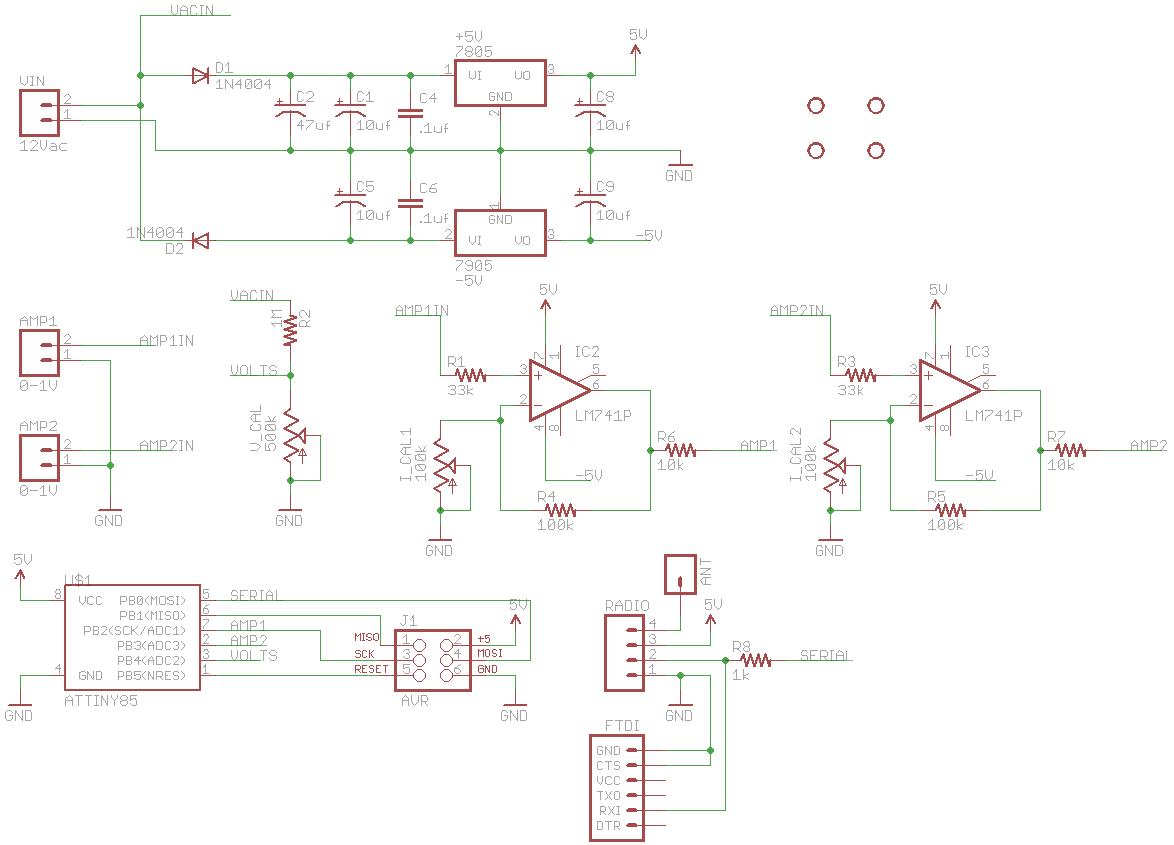
The Kill A Watt is a product that measures volts, amps, and power factor of individual appliances, allowing users to calculate power consumption and running costs. However, a desire for a solution that provides similar data for an entire apartment...
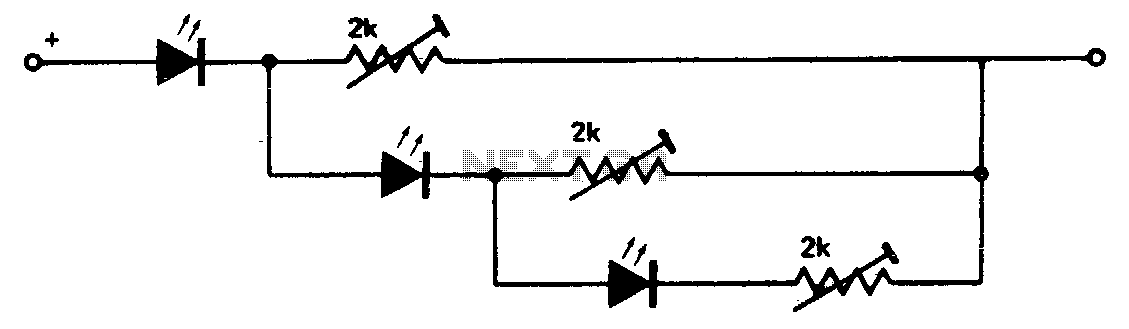
Three-step level indicator
This circuit creates a compact level indicator suitable for situations where a traditional meter would be impractical or cost-prohibitive. The resistor values are contingent upon the type of LED utilized. For MV50 LEDs, resistor values of 2 kΩ are recommended...
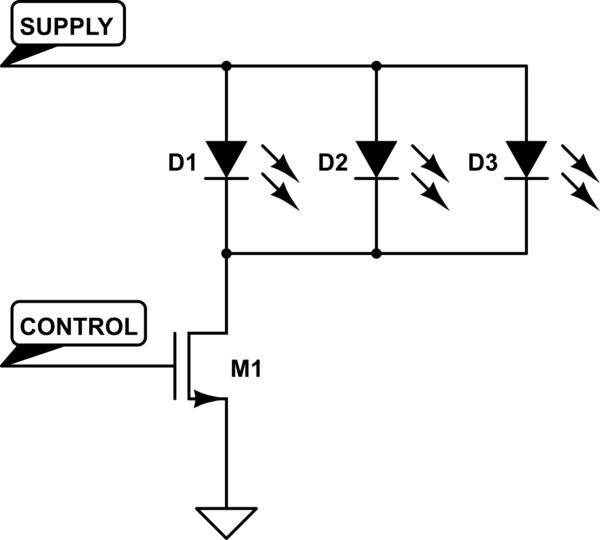
led strip Using a N-Mosfet to switch a common cathode ledstrip
A Common Cathode LED strip is being utilized instead of a Common Anode variant, leading to the development of a modified circuit. The experience with FETs was limited, resulting in challenges as a minimum voltage equal to Vcc is required...
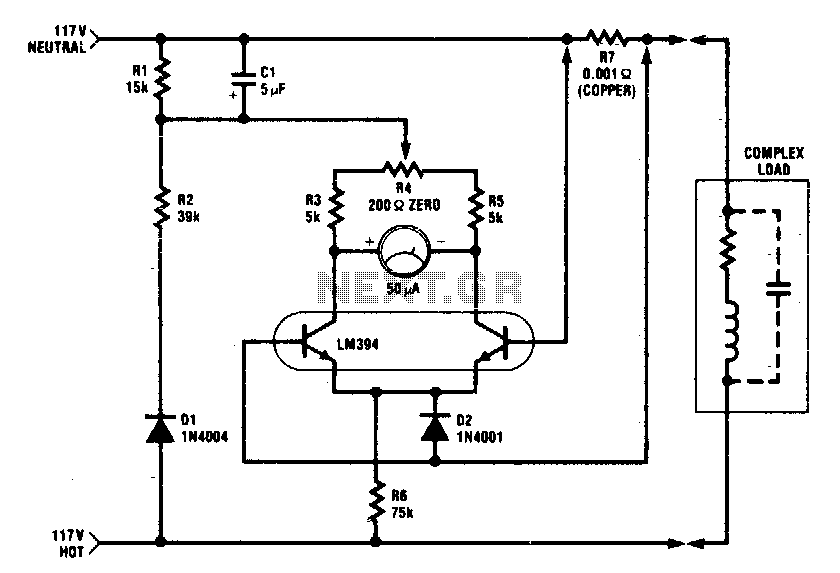
Power meter 1KW
The circuit is designed for operation at 117 Vac ± 50 Vac, with the flexibility to be modified for higher or lower voltage applications. It accurately measures true (nonreactive) power delivered to the load and does not require an external...
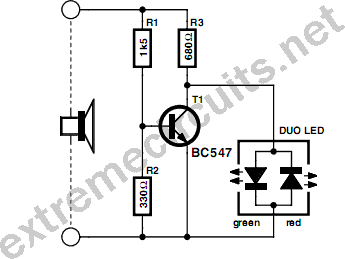
Audio Power Meter
This circuit indicates the power level delivered to a loudspeaker. A dual-color LED displays green at approximately 1 watt, orange at 1.5 watts, and bright red at levels exceeding 3 watts. The circuit is connected in parallel with the loudspeaker...
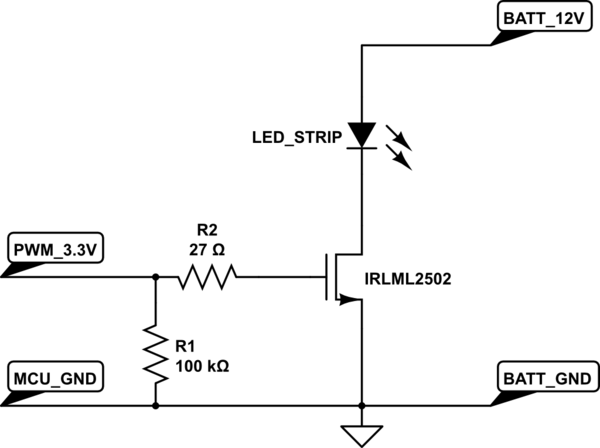
mosfet Driving LED strip from microcontroller
A strip of LEDs is controlled by a microcontroller using pulse-width modulation (PWM) to adjust brightness. The LED strip requires approximately 1.5A at 12V. The user, who has experience only with low-power digital electronics, seeks confirmation of their assumptions and...
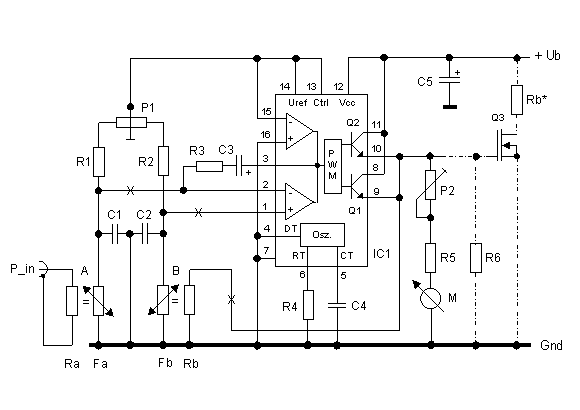
Thermal Power Meter
After one has built a QRP transmitter, it would be interesting to know the exact amount of output power. Without a power meter, the peak to peak voltage Vss is measured at a 50-ohm resistance (dummy load) with the available...