


1300 Mhz Frequency meter with prescaler
#frequency meter
#prescaler
#pic16f84
#u664b
#1300 MHz
#Telefunken
#frequency counter
#Peter Halicky
#sab6456
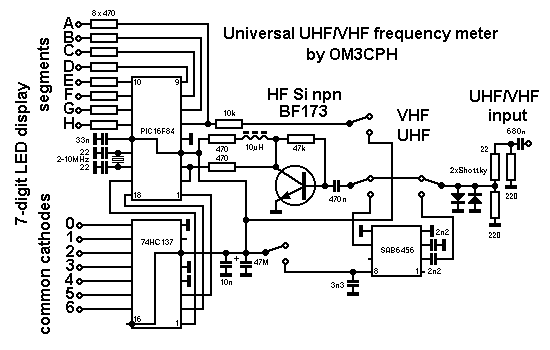
Description: Having found a u664b prescaler chip (Telefunken) from an old TV tuner, I decided to build a valid frequency counter using PIC16F84. The prescaler I use is able to divide by 64 every frequency from 30 to 1300 MHz. The original project is from Peter Halicky, but as he used a SAB6456 prescaler (divider by 256). More: I had to change the code to adjust the gating time to my different divider factor (64) and also to my 4.8 MHz crystal (he used 10 MHz crystal). However, the U664b is perfectly compatible with SAB6456, so you can substitute it pin to pin. The measuring is divided in
The project involves the construction of a frequency counter utilizing the U664B prescaler chip, which is capable of dividing input frequencies from 30 MHz to 1300 MHz by a factor of 64. This allows the circuit to handle a wide range of frequencies effectively. The choice of the PIC16F84 microcontroller serves as the core processing unit, providing the necessary control and measurement capabilities.
The U664B prescaler functions by taking an incoming high-frequency signal and reducing its frequency by the specified division factor. This is crucial for accurate frequency measurement, as the microcontroller can only process lower frequency signals. The compatibility of the U664B with the SAB6456 prescaler allows for a straightforward integration into existing designs, as the pin configurations are identical.
In adapting the original project by Peter Halicky, modifications were made to the firmware to accommodate the U664B's division factor and the different crystal oscillator frequency. The original design utilized a 10 MHz crystal oscillator, while this implementation employs a 4.8 MHz crystal oscillator. The code adjustments ensure that the timing and gating intervals are correctly calibrated for the new operating frequencies, which is essential for maintaining measurement accuracy.
The overall architecture of the circuit involves the prescaler connected to the input frequency source, followed by the microcontroller that processes the divided signal. The microcontroller's firmware is programmed to handle the counting of pulses over a specified gating period, allowing for the display of the corresponding frequency. The output can be interfaced with a display module to present the measured frequency in a user-friendly format.
This frequency counter design is suitable for various applications, including amateur radio, electronics testing, and educational purposes, providing a practical tool for frequency measurement across a broad spectrum of signals.Having found an u664b prescaler chip (Telefunken) from an old tv-tuner , I decided to build a valid frequency counter using pic16f84 , the prescaler I use is able to divide by 64 every frequency from 30 to 1300 MHZ. The original project is from Peter Halicky but as he used a sab6456 prescaler (divider by 256) I had to change the code to adjust the gating time to my different divider factor ( 64) and also to my 4.8 MHZ xtal (he use 10 MHz xtal). However the U664b is perfectly compatible to SAB6456 so you can substitute it pin to pin. The measuring is divided in
The project involves the construction of a frequency counter utilizing the U664B prescaler chip, which is capable of dividing input frequencies from 30 MHz to 1300 MHz by a factor of 64. This allows the circuit to handle a wide range of frequencies effectively. The choice of the PIC16F84 microcontroller serves as the core processing unit, providing the necessary control and measurement capabilities.
The U664B prescaler functions by taking an incoming high-frequency signal and reducing its frequency by the specified division factor. This is crucial for accurate frequency measurement, as the microcontroller can only process lower frequency signals. The compatibility of the U664B with the SAB6456 prescaler allows for a straightforward integration into existing designs, as the pin configurations are identical.
In adapting the original project by Peter Halicky, modifications were made to the firmware to accommodate the U664B's division factor and the different crystal oscillator frequency. The original design utilized a 10 MHz crystal oscillator, while this implementation employs a 4.8 MHz crystal oscillator. The code adjustments ensure that the timing and gating intervals are correctly calibrated for the new operating frequencies, which is essential for maintaining measurement accuracy.
The overall architecture of the circuit involves the prescaler connected to the input frequency source, followed by the microcontroller that processes the divided signal. The microcontroller's firmware is programmed to handle the counting of pulses over a specified gating period, allowing for the display of the corresponding frequency. The output can be interfaced with a display module to present the measured frequency in a user-friendly format.
This frequency counter design is suitable for various applications, including amateur radio, electronics testing, and educational purposes, providing a practical tool for frequency measurement across a broad spectrum of signals.Having found an u664b prescaler chip (Telefunken) from an old tv-tuner , I decided to build a valid frequency counter using pic16f84 , the prescaler I use is able to divide by 64 every frequency from 30 to 1300 MHZ. The original project is from Peter Halicky but as he used a sab6456 prescaler (divider by 256) I had to change the code to adjust the gating time to my different divider factor ( 64) and also to my 4.8 MHZ xtal (he use 10 MHz xtal). However the U664b is perfectly compatible to SAB6456 so you can substitute it pin to pin. The measuring is divided in
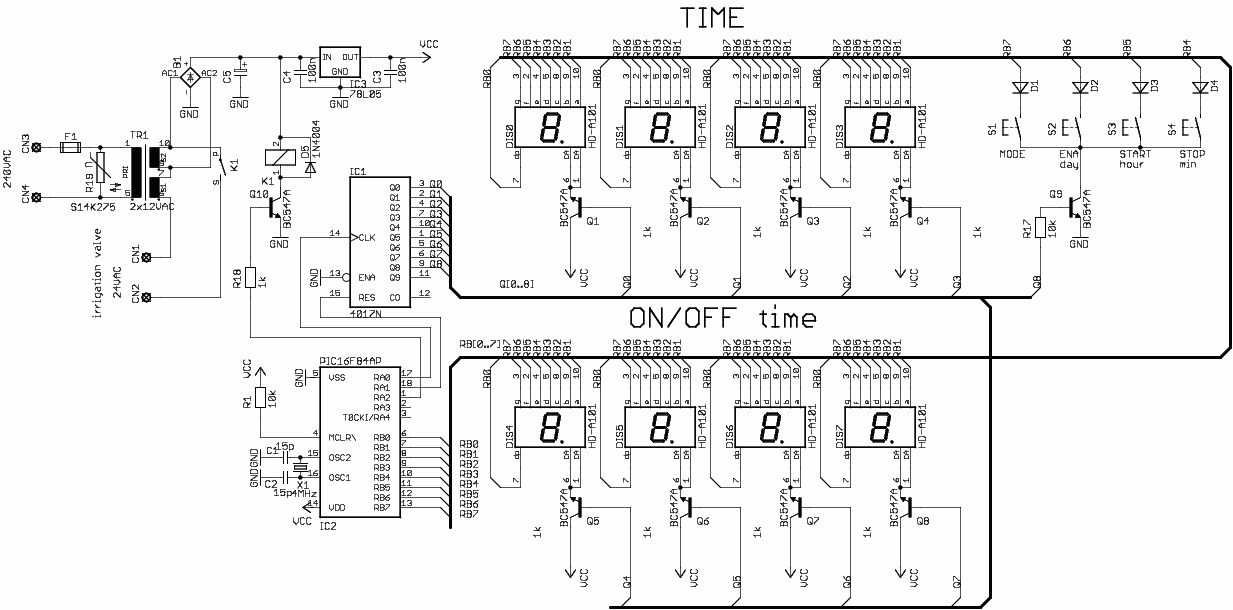
Greenhouse irrigation controller ( PIC16F84 )
This is a simple one-valve irrigation controller made for our greenhouse. The code contains a software real-time clock (RTC) and a multiplexed 8-digit LED display and keyboard you can use in other projects. The operating software is simple, it contains...
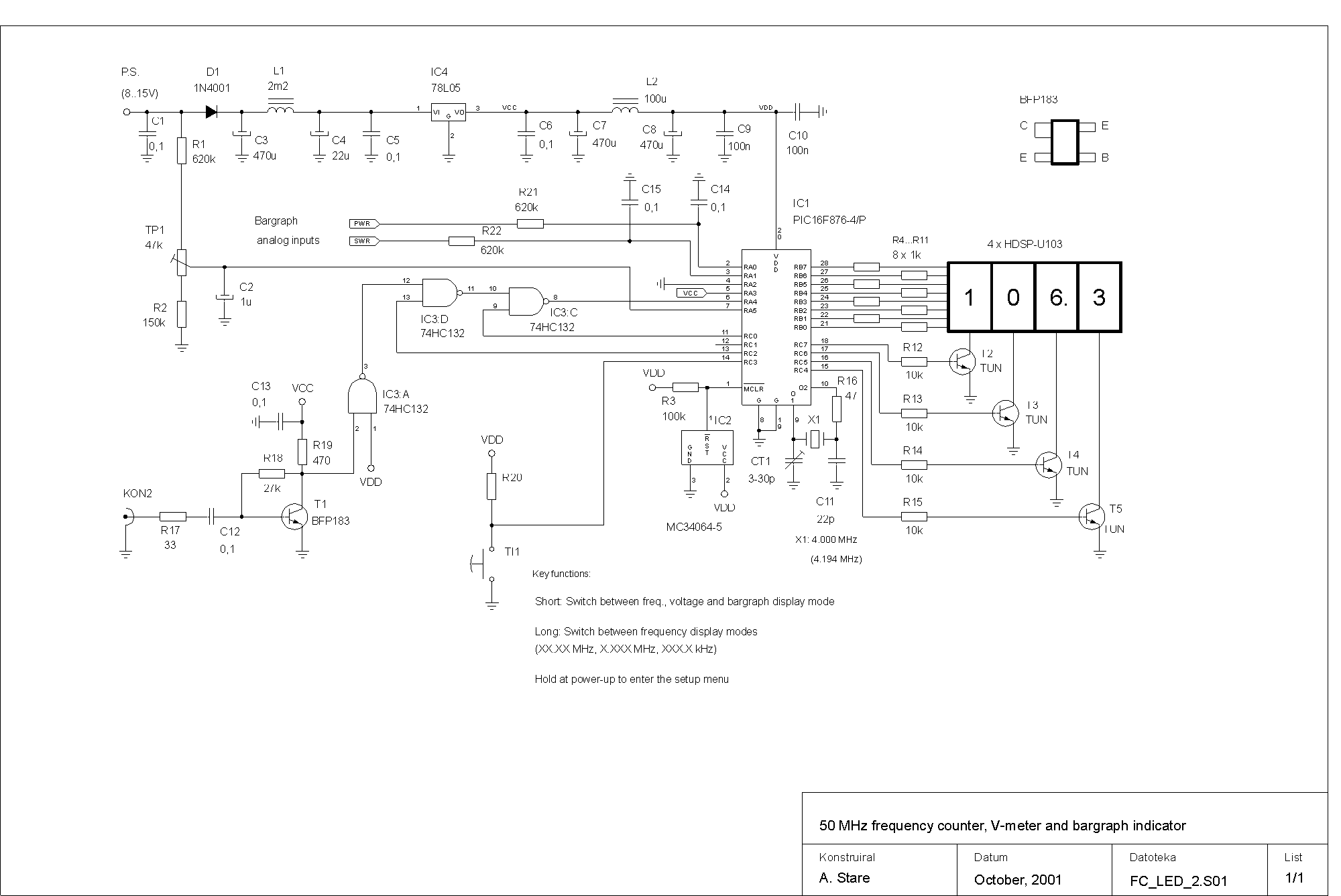
50 MHz frequency counter voltage meter & SWR/PWR indicator
This device is a successor to the PIC16C71 4-digit LED frequency counter and voltmeter. It omits some hard-to-find components from the previous version that have been out of production for some time. The earlier PIC16C71 has been replaced with a...
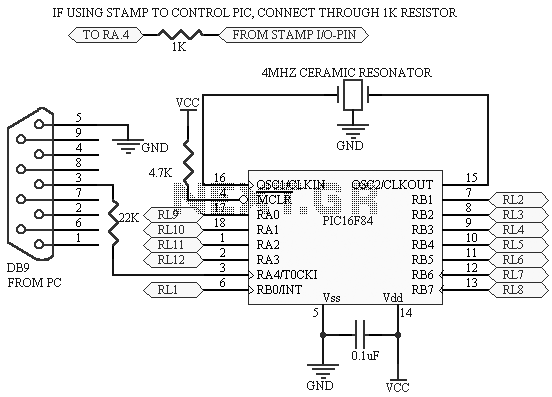
Using PicBasic with the PIC16F84 PIC Microcontroller
This project uses only a few of the instructions that come with PicBasic, but serves to show how easy PicBasic really is. It also shows how PicBasic strongly resembles programming the BASIC Stamp. Here we are using the serin command,...
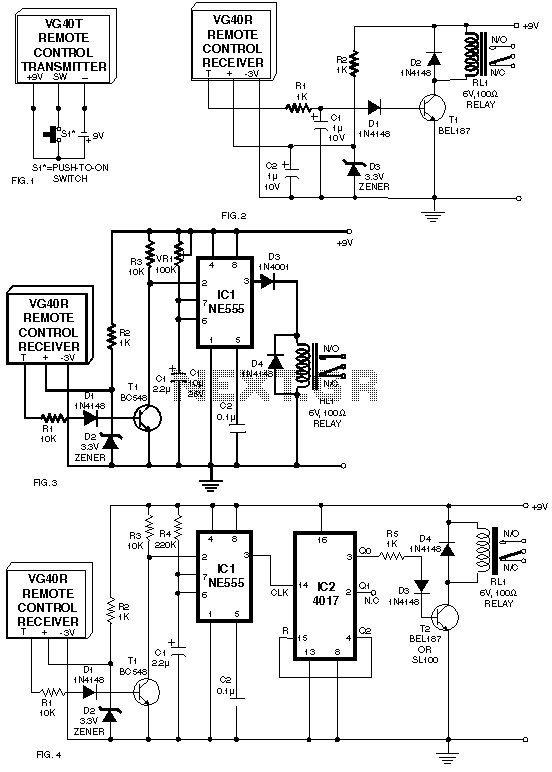
Frequency meter - LC measuring instrument
The frequency meter described not only serves its primary function but also allows for the measurement of inductance in various coils, resonant frequency of circuits, and capacitance of capacitors. The schematic diagram of this combined device is illustrated in Figure...
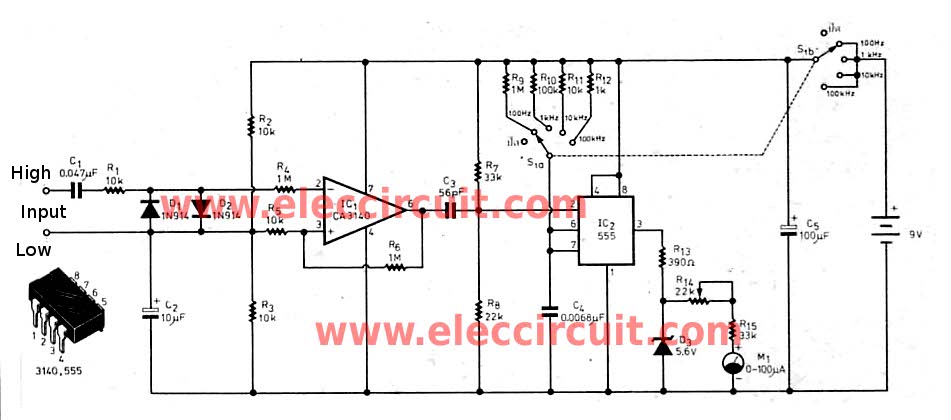
Cheap frequency meter by CA3130
This inexpensive frequency meter circuit is suitable for general use in small laboratories. It is cost-effective, easy to construct, and sufficiently reliable for most electronics enthusiasts. The frequency can be directly read from the meter, with a measurement range from...
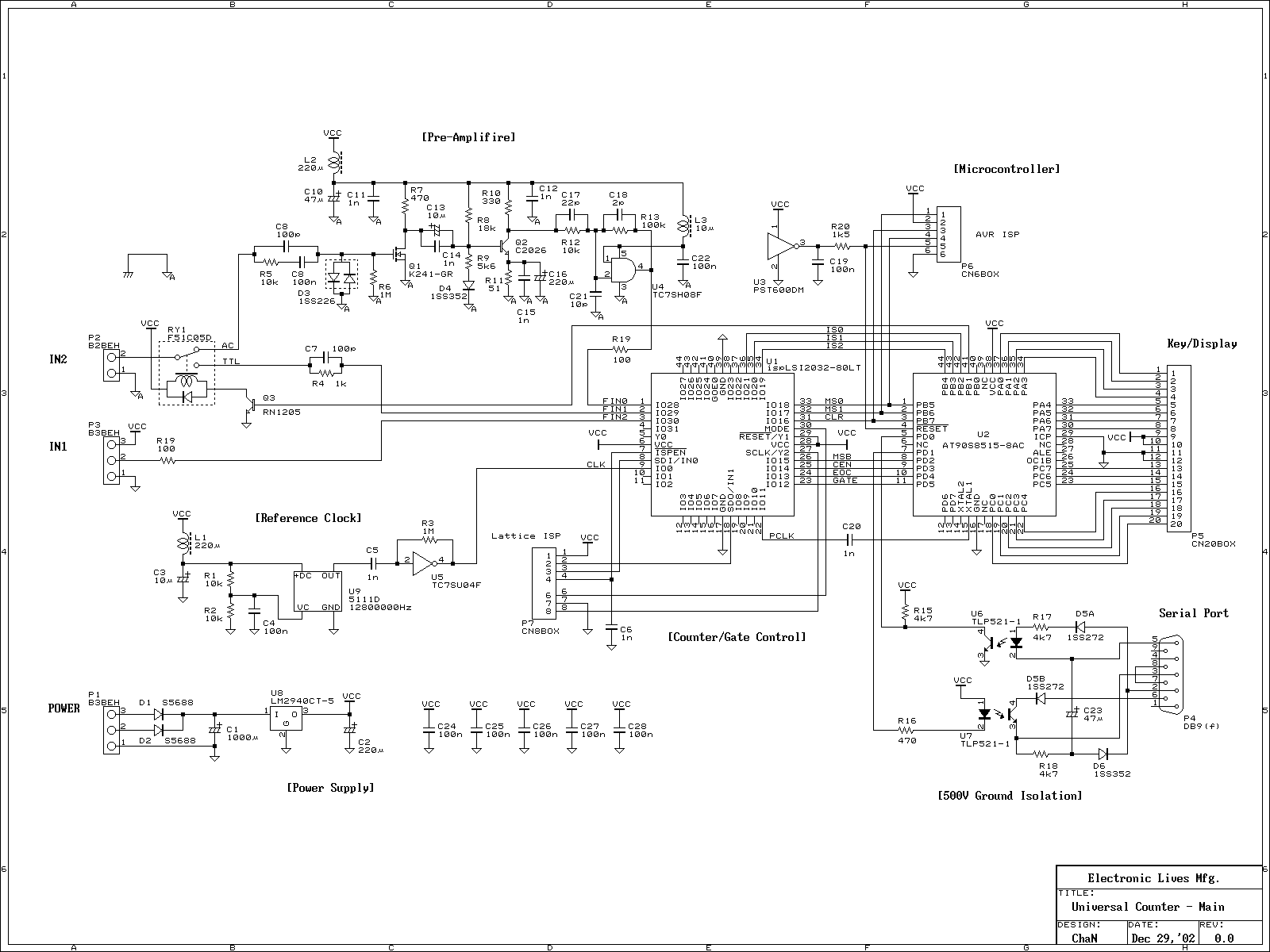
frequency counter
The frequency counter is the most popular instrument in home-made instruments. The reason it is built widely is that it can be built easily because it is a digital circuit, it is a generic measurement, and many construction kits are...
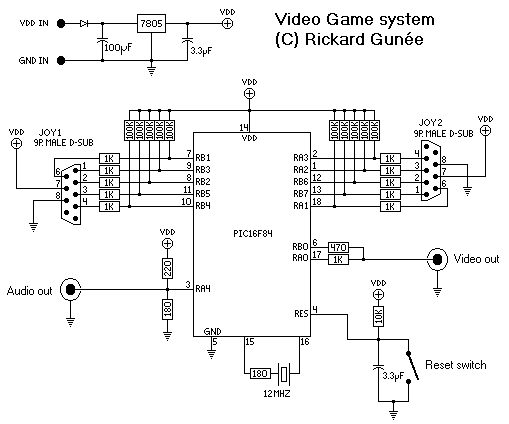
PIC micro Tetris game
The game Tetris is implemented using a PIC16F84 microcontroller operating at 12MHz. Tetris is a classic Russian computer game where players fit blocks into a playfield. In this implementation, the video signal is generated through software, utilizing only two resistors...
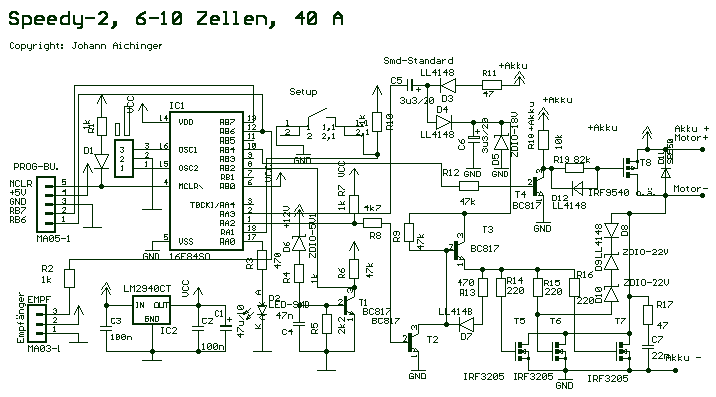
Speed Controller with PIC16F84-04/SO
The controller is a prototype and works well in my plane with 7 cells and a Graupner-Speed 600.
The described controller is a prototype designed for use in a model aircraft, specifically optimized to operate with a battery pack consisting of...
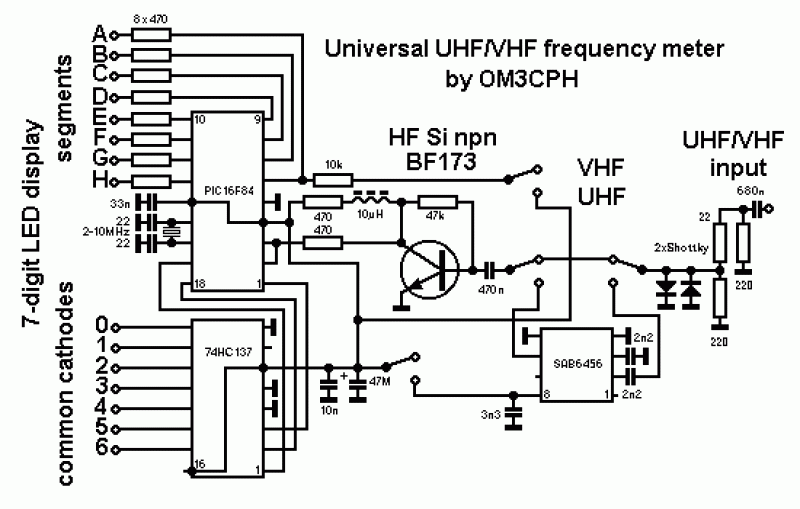
Universal frequency meter
This is a 7-digit frequency meter measuring frequency from 10 Hz up to 1300 MHz. It is based on ideas of PIC16F84 based frequency meter. The measuring range is divided into two subranges: 10Hz - 25MHz and 25 MHz -...